

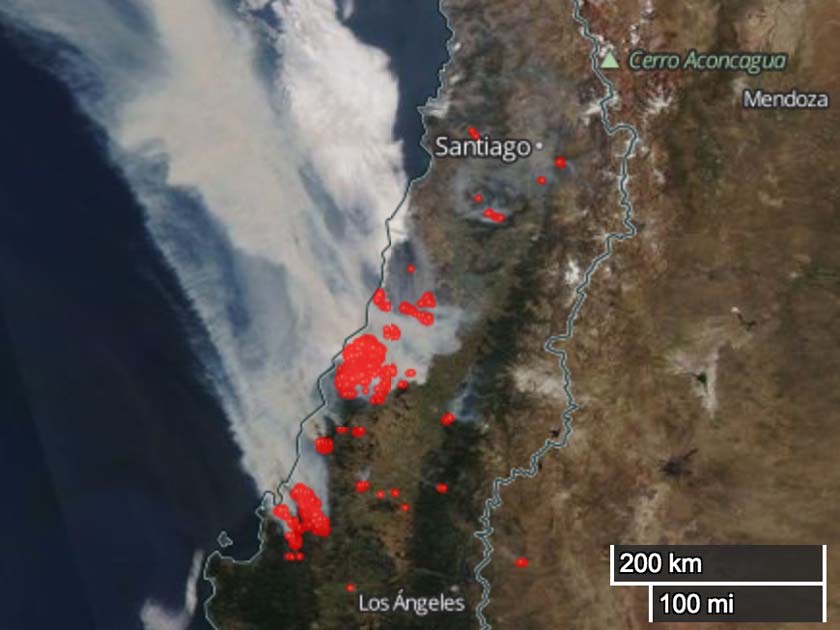
Above: NASA satellite photo showing smoke from the wildfires in Chile January 26, 2017. The red dots represent heat detected by the sensors.
The siege of wildfires in Chile continues to worsen, with more than 1,000 structures destroyed in the last two days. There are reports that virtually the entire town of Santa Olga was consumed, including approximately 1,000 homes well as schools, businesses, and the post office.
The largest fires are in central Chile within 300 miles south of the capital Santiago. At times smoke has reduced visibility in the city to about a mile. On Thursday I watched an air tanker take off at the airport and within 15-20 seconds after leaving the runway it disappeared in the smoke.
The wildfire situation in Chile is the worst in recent memory, occurring during severe drought and higher than average temperatures.
Four wildland firefighters and and one air tanker pilot have been killed battling the fires since December 28. An additional three to six civilians have also died in the fires, with the number varying in different reports.
The 5,000 firefighters assigned are up against a seemingly impossible task as the burned areas 588,108 acres (238,000 ha) have grown substantially in the last few days, damaging towns, ranches, and vineyards.

The world’s largest air tanker, the 747 SuperTanker, has been assisting the firefighters in Chile since it arrived January 25, dropping 19,200 gallons on each mission. At least one and possibly two Russian IL-76 air tankers will also join the fight, with a capacity of 13,000 gallons. Authorities are hoping that other firefighting aircraft from around the world can be found to add to the temporary fleet, including water-scooping tankers.
The weather forecast for Chile indicates the wildfire situation is not going to improve anytime soon, and predicts more hot, dry, and windy conditions.


