Farm bill allows “leasing” of 5 air tankers

A provision in the farm bill (H.R.2642) passed by the House on Wednesday authorized the U.S. Forest Service to “establish a large airtanker and aerial asset lease program”, allowing the agency to “enter into a multiyear lease contract for up to five aircraft that meet the criteria described in the Forest Service document entitled `Large Airtanker Modernization Strategy‘ and dated February 10, 2012, for large airtankers”. That 2012 strategy stated that the next generation of large airtankers would have a 3,000 to 5,000 gallon capacity and would be turbine powered. These are the specifications of the seven next-gen air tankers that received contracts in 2013. The USFS has been contracting for large air tankers for decades. So, we were confused about the purpose of this language in the farm bill, placed there by two Senators from Colorado, Michael Bennet and Mark Udall. It seemingly allows for what the USFS does routinely, but does not appropriate any additional funds.

We checked with the U.S. Forest Service to try to understand if there was an intended difference between the routine contracting for air tankers that has been going on for decades and this new “leasing” language. We received the following, uh, explanation from their Washington, DC office:

The language in the Farm Bill clarifies our existing authority to lease up to five airtankers annually. Depending on our budget resources, this authority may be useful. At present, the Forest Service is relying on next generation airtanker contracts and the seven C-130 planes transferred in the Defense Appropriations Bill to modernize the fleet as we retire the legacy airtankers in the coming years.

That certainly clears that up.

We reached out to the offices of Senators Bennet and Udall, and received the following from James D. Owens, Press Secretary for Senator Udall:

The United States Forest Service is allowed to acquire large air tankers in two ways: (1) as surplus from other federal agencies or (2) contracting. The provision that Senator Udall successfully included in the Farm Bill gives the Forest Service a third, more flexible option to acquire air tankers, i.e. leasing.

“Leasing” might involve renting the air tankers without pilots, and possibly without a maintenance agreement. We have a hard time understanding why the USFS would want to become involved in that type of situation. They are going to have a hard enough time arranging for the operation and maintenance of the 15 Sherpas and 7 C-130Hs recently acquired from the military and the Coast Guard  — aircraft which they will own.

The bill is now in the Senate. The White House says President Barack Obama will sign it if it reaches his desk.

Tesco stores in UK to stop selling fire balloons

Fire balloon
A fire balloon or sky lantern as seen in a testosterone commercial

Bowing to public pressure, a chain of stores has decided to stop selling fire balloons or sky lanterns. Tesco, a British multinational grocery and general merchandise retailer headquartered in Cheshunt, Hertfordshire, England, made the decision after months of lobbying by Farmers Guardian and supporters of the Say No to Sky Lanterns campaign.

Below is an excerpt from Farmers Guardian:

…It comes as campaigners raised concerns about the risk to livestock and the threat of fire, ahead of Chinese New Year tomorrow (Friday) – an event traditionally celebrated by releasing fire lanterns into the sky.

Back in November the retailer told FG it would review its sky lantern sales following a raft of pressure from MPs, local authorities, farming unions and concerned members of the public.

Glastonbury founder Michael Eavis joined the drive after becoming fed up with the dangerous paper and wire objects littering land where his cattle graze.

Tesco agriculture director Tom Hind said: “We have listened to the feedback from customers and other groups including the farming community, and we think the right thing to do is to stop selling sky lanterns. We will not be sending any more stock to stores and any existing stock should be gone within a matter of weeks.”

These incendiary devices use burning material such as rubbing alcohol or a candle to heat the air in a bag made of tissue paper or very thin plastic. The heat makes the device lighter than air causing it to rise into the sky, staying aloft for 10 minutes to 2 hours. They can be very pretty to watch especially when they are released dozens or hundreds at a time such as at a wedding or some other celebration. One of the problems is that they sometimes start wildfires or structure fires.

Oklahoma: 35 mph winds challenge firefighters in Craig County

News9.com – Oklahoma City, OK – News, Weather, Video and Sports |

News9 has some excellent footage of fire engines attacking grass fires in Craig County, Oklahoma on Thursday. Firefighters are appreciating some wet weather today, but yesterday a fire burned 800 acres and destroyed a barn. Wind gusting up to 35 mph challenged firefighters from more than 20 departments to contain the fire that was three miles long and a half mile wide. According to reports the fire jumped two county roads and a state highway.

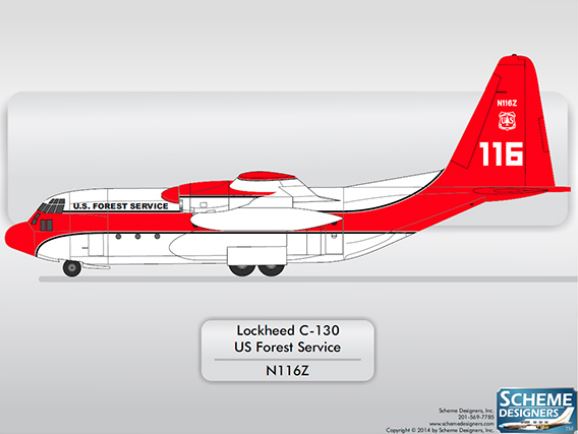
Paint design approved for USFS C-130H air tankers

C-130H paint design
C-130H paint design, by Scheme Designers

The Chief of the U.S. Forest Service has approved the paint design for the seven C-130H aircraft the agency is receiving from the Coast Guard. The National Defense Authorization Act required the transfer of the C-130Hs plus 15 Shorts C-23B Sherpas from the military. The C-130Hs are being converted by the Air Force into air tankers, while the Sherpas will be used to deliver smokejumpers and cargo and to perform other wildfire support missions. The C-130Hs will be owned by the USFS but will be operated and maintained by contractors. Some of the Sherpas will be flown by agency personnel and others by contractors. All of the Sherpas will all be maintained by private companies.

The paint for the C-130Hs was designed by a company in New Jersey, Scheme Designers. Craig Darnett, their founder and CEO, told Fire Aviation that they have also designed the paint for other USFS aircraft, including the DC-3 and some smokejumper planes. Other examples of their work can be found at Airliners.net. Scheme Designers will not actually paint the C-130Hs; most of their work is done on computers, however sometimes the aircraft owner will pay them to be on site and monitor the painting as it is done.

If someone is restoring an automobile that is at least 27 years old, as these C-130Hs are according to our research, paint is the very last step in the process. Five of the seven have to go through a 10-month wing box replacement, and then the rest of the conversion process can begin, including cutting a hole in the belly and installing a retardant tank system.

Initially bringing the 22 aircraft into the agency will be extremely complex and time-consuming, with FAA approvals, inspections, evaluating, painting, writing then awarding contracts for maintenance and pilots, deciding on a tanking system, contracts for installing tanking systems, avionics, etc. And, developing a comprehensive PLAN of how to manage the aviation assets now and in the future. The Air Force will do some of this, other than the planning, before the actual final transfer of the C-130s to the USFS (the Sherpas will not receive retardant tanks), but the Forest Service has to be involved in the decision making. Then, after the 22 aircraft are completely up and running, managing the programs on a continuing basis is not simply a part time job for one person.

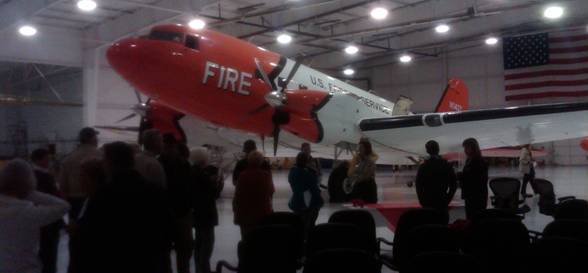
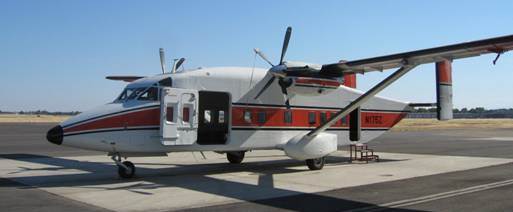
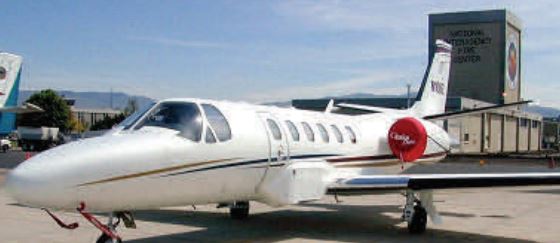
Below are some other paint designs on USFS aircraft:

McCall DC-3 retirement
J-42, a US Forest Service DC-3, retires. USFS photo, taken at Ogden, Utah, October 24, 2012.
Redding smokejumpers' Shorts 330 Sherpa
Redding smokejumpers’ Shorts 330 Sherpa. USFS photo.
Smokejumper aircraft, N143Z
Smokejumper aircraft, N143Z. USFS photo.
USFS IR aircraft, Cessna Citation Bravo
One of the U.S. Forest Service’s Infrared aircraft, their Cessna Citation Bravo, N144Z
Lead planes at Cheyenne
Lead planes at Cheyenne, WY, May 7, 2013. These were not government owned, but were under contract to either the USFS or BLM. Photo by Bill Gabbert.
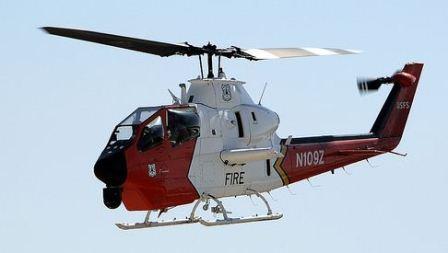
Fire Watch helicopter
The U. S. Forest Service’s Fire Watch Cobra helicopter. July 28, 2011.
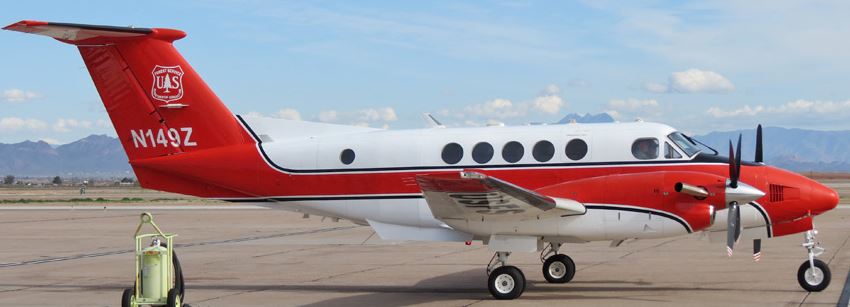
US Forest Service infrared aircraft N149Z
USFS infrared aircraft N149Z at Phoenix in 2013


Thanks and a hat tip go out to Leo

Update from John Maclean about Yarnell Hill Fire

John N. Maclean and Holly Neill sent us some updated information about their quest to ferret out details about what happened on the Yarnell Hill Fire the day 19 members of the Granite Mountain Hotshots were killed outside of Yarnell, Arizona, June 30, 2013. The text below builds on their previous information that we published here and here.

****

“The discussion about what actually was said by members of the Granite Mountain Hotshots and others in the final minutes before the fatalities on the Yarnell Hill Fire has sometimes been instructive. But the online discussion is missing the larger picture.

The radio transmissions uncovered in the background by Holly Neill conclusively show that the hotshots were communicating extensively, and not just among themselves, during the critical period from just after 1600 hours until the end. There was no substantial gap in communications, one of the several allegations used in effect to discredit the decision making and actions of the hotshots, and in particular of their superintendent, Eric Marsh. On the contrary, Marsh’s voice can be heard — and has been authenticated by those who knew him — making several radio transmissions during the crucial time. Perhaps the person or persons to whom Marsh was speaking in several of those transmissions could come forward: there is no mention of these conversations in any of the interviews with participants.

What the background communications do not show, at least not so far, is any formal communication by Marsh or anyone else explaining why the hotshots left the ridge and headed down into what became known as deployment valley. The background transmissions also do not disclose, at least so far, any direct order to the hotshots to go down to Yarnell and engage in structure protection.

Put in context, however, the background transmissions add a great deal to the picture of what happened, and what likely happened, during those final minutes. Obsessing about a single word, “house,” is appropriate up to a point. That’s the word Holly and I and many others hear in that one of several conversations we disclosed; it is not the word everyone hears. It would be best, perhaps, if investigators for the Arizona Department of Occupational Safety and Health, who are well alerted to the background communications, could have the recordings analyzed by some outside audio expert and themselves make a report. Meanwhile, a consideration of those transmissions should not be restricted to the credibility of one word, with everything hanging on that, but rather should look at what all the communications say about what happened, because they add new, contrary, and vital information to the picture of those events.”

Introducing — Safety Matters: A Wildland Firefighter Forum for Change

A group of people who care about firefighters have been looking at the safety and fatality record of wildland firefighters over the last 20 years. They are convinced that more effective steps can be taken to slow down the accident and fatality rates and will be establishing a forum in which firefighters and others can contribute toward that goal. In the coming months they will be organizing a more formal means for two-way communication with those involved in this effort, but until then, we have been asked to provide this introductory information that they submitted:

****

“Introducing:  Safety Matters: A Wildland Firefighter Forum for Change

We are a diverse group of individuals who are passionate advocates for wildland firefighter safety. We seek and encourage participation in this dialog with relevant comments and suggestions from a wide audience including but not limited to:

  • wildland firefighters
  • fire managers and policy makers
  • families and friends who have lost a loved one
  • homeowners in the wildland urban interface

The purpose of this paper and forum is to call attention to deficiencies in wildand firefighter safety presented by current wildland fire management systems.  We encourage firefighters, the public, and their representatives to support and demand changes in policy and practices so that wildland firefighter and public safety is truly the first priority in all fire management actions.

In the coming weeks, following our introductory paper, we will post several specific safety topics for review and discussion. Please direct your interest to our email address below (preferred), or you may leave a reply at the end of this article.

Safety Matters: A Wildland Firefighter Forum for Change

Dan O’Brien: Career Wildland Firefighter: National Park Service: Retired
Elizabeth Anderson: Fire Ecologist:National Park Service & U.S. Forest Service: Retired
Barry Hicks: U.S. Forest Service: Retired
Judy Edwards: Ruby River Consulting
Holly Neill: Wildland Firefighter: National Park Service & U.S. Forest Service: Retired

EMAIL: SafetyMatters  a t  aol . com

correction EMAIL: Safety.Matters a t aol . com

Thank you to Bill Gabbert for hosting this Forum!

————————————————-

Safety Matters: A Wildland Firefighter Forum for Change

A.  Overview:  The primary aim of wildland fire suppression is to safely suppress wildland fires and protect values at risk. While this objective has remained the same across a century of fire suppression, the wildland fire environment has changed dramatically over the last 30 years. Decades of effective wildland fire suppression has led to a heavy loading of burnable fuels in wildland areas. Shifts in global weather patterns have produced consistently longer and more severe fire seasons. Together, these changes have resulted in historically unique conditions in which high fire frequency, rapid fire growth and extreme fire behavior have become the new norm.

Additionally, values at risk to wildland fire have exponentially increased in number and complexity. Public and political demand for firefighters to effectively protect resources located in the wildland-urban interface- particularly homes- has made structure protection a permanent aspect of wildland fire suppression.

It has been twenty years since fourteen firefighters died on the South Canyon Fire in Colorado.  Subsequent to those fatalities, there have been positive changes made to improve firefighter safety.  In spite of those developments, the total number of firefighter fatalities has steadily increased.  In 2013, 34 wildland firefighters perished, 19 of which were members of the Granite Mountain Hotshot Crew on the Yarnell Hill Fire. In spite of these tremendous losses, to our knowledge, no action toward the improvement of firefighter safety has been initiated or scheduled by any governing wildland fire management agency.

The continued annual occurrence of firefighter fatalities suggests that existing fire suppression practices routinely fail to adequately prioritize firefighter safety over the protection of values at risk.

Improvements to firefighter safety should come from field experience, review of existing data, and research.  The fire organization has never developed a comprehensive plan or process for determining trends, needs, strengths or deficiencies concerning firefighter safety.  This need is partially being filled by independent parties and individuals.

B.  National Wildland Firefighter Policy and Guidance:  Policy regarding the prioritization of firefighter safety is established by the Department of Agriculture, Department of Interior and the National Association of State Foresters.  This policy was adopted in 1995 and, while later modified, still reads:

“Firefighter and public safety is the first priority in every fire management activity.”

The National Wildfire Coordination Group chartered the Federal Fire and Aviation Safety Team (FFAST) to help coordinate firefighter safety issues.  This team states:

“The goal of the fire safety program is to provide direction and guidance for safe and effective management in all activities. Safety is the responsibility of everyone assigned to wildland fire, and must be practiced at all operational levels from the national fire director, state/regional director, and unit manger, to employees in the field. Firefighter and public safety always takes precedence over property and resource loss.”

C. Current Wildland Fire Situation:  Vegetation and weather conditions have significantly changed over the last three decades to produce historically extreme fire behavior, growth potential and fire frequency.  The current wildland fire situation can be attributed to significant changes in three variables:

1.  Following a century of aggressive fire suppression, the amount of burnable vegetation has dramatically increased in wildland areas.

2.  The wildland-urban interface has become increasingly populated by private residences and other values at risk.  The increase in residential homes in these areas is accompanied by increasing public and political demand that firefighters protect these structures from wildfire.  Efforts to defend homes and communities through hazard fuel reduction programs have not kept pace with the increasing threat.  Funding cuts for hazard fuels reduction projects have compounded this trend.

3.  There has been a continued and significant change in weather patterns across the US that is characterized by record high average temperatures, low average humidities, droughts, and longer fire seasons.

These three factors have synergistically combined to produce fire behavior and rates of spread that many veteran firefighters have never before experienced.  Firefighters operating under rapidly deteriorating conditions have found they can quickly become at higher risk than the structures they are attempting to protect.  The expectation and pressure to succeed imposed by firefighters themselves, their supervisors, the fire organization, and the public, further clouds this issue of firefighter safety being the first priority.  These situations have repeatedly occurred over the last 20 years and on multiple occasions have resulted in firefighter fatalities.

D.  Common Factors in Wildland Fire Burnover and Entrapment Fatalities:  A recent independent study showed that four critical factors can jeopardize firefighter safety.  As these independent factors intersect, firefighter safety is increasingly compromised.

1.  A recent independent study showed that entrapment fatalities almost entirely occurred on low management complexity fires that escaped initial attack and  were rapidly expanding in size and complexity.

2.  Rapid and unforeseen changes of weather variables (particularly changes in wind direction and speed) under conditions of extreme fire danger resulted in unanticipated, explosive fire growth.  Accelerated fire expansion and extreme fire behavior quickly rendered existing strategies and tactics to be ineffective and/or unsafe. As time frames for evaluation and decision-making became compressed, key incident personnel found themselves functioning at an incident complexity level that exceeded their abilities and qualifications.

3.   Land managers with jurisdictional responsibility often failed to provide timely and clear management direction and priorities to fireline personnel.  This was especially true during times when conditions and situations were rapidly worsening.

4.  Structures threatened by wildfire may often require the presence of firefighters. Firefighters can be subject to intense external and internal expectations pressures concerning structure protection.  These factors alone can make it extremely difficult to objectively prioritize firefighter safety. Recent independent studies strongly suggest that decisions made under these circumstances have been a major factor in incidents that resulted in firefighter fatalities.

E.  Conclusion:  For 20 years federal policy has identified firefighter and public safety as the first priority of all wildland fire management actions. Despite this policy and efforts made to implement it, records for the same period demonstrate that fatality rates for burnovers and entrapments have remained relatively constant.  During this same time period, the fire organization has not identified all of the critical factors that contribute to firefighter fatalities. Without this understanding, it is improbable that needed changes will be made.  In order to effectively reduce future wildland firefighter fatalities, a comprehensive and impartial review of all current wildland fire management procedures and practices must be completed.”

Prescribed fire photos

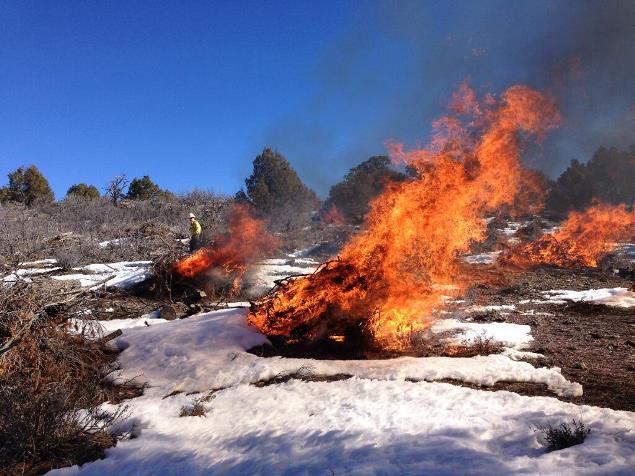
BLM, Devil Canyon Rx 1-28-2014
BLM Utah, Devil Canyon pile burning, January 28, 2014

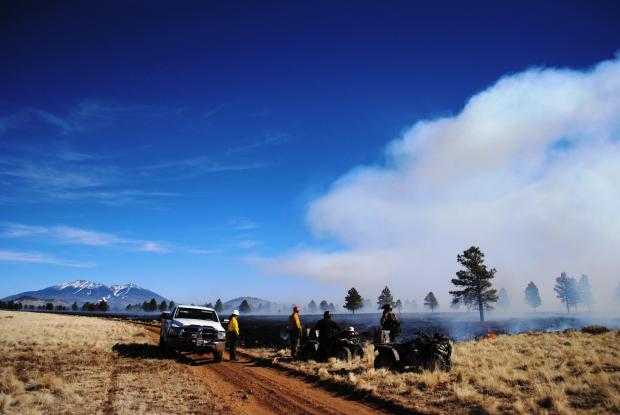
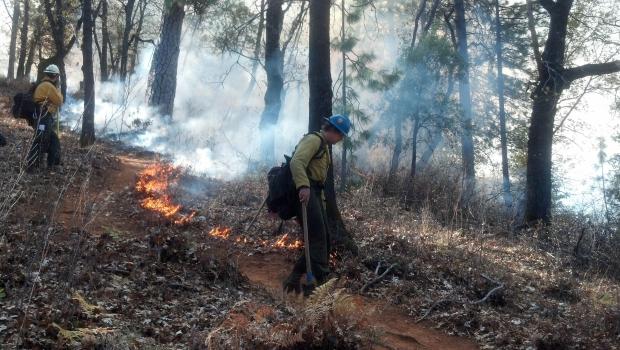
While it may be too dry in some areas to conduct prescribed fires, that is not the case everywhere as you can see in these photos.

BLM Devil Canyon Rx  1-28-2014
BLM Utah, Devil Canyon pile burning, January 28, 2014
Kiabab NF Gov Prairie Rx 1-2014
Kiabab National Forest in Arizona, Government Prairie prescribed fire, January, 2014
Kiabab NF Gov Prairie Rx, 1-2014
Kiabab National Forest in Arizona, Government Prairie prescribed fire, January, 2014
Shasta T Northwood Deuce Rx 11-1-2013
Shasta Trinity National Forest in Callifornia, Northwood Deuce prescribed fire, 11-1-2013

And below is a bonus photo, not from a prescribed fire, but after a wildfire.


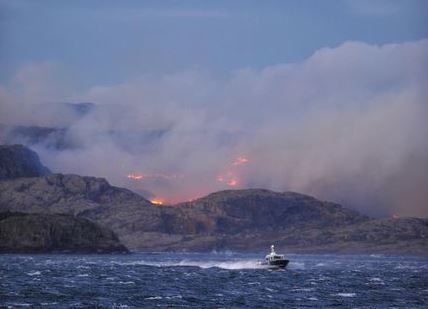
Norway: rare winter brush fire burns numerous structures

Norway fire
Norway fire
Photo by Ole Martin Dahle.

(Updated at 10:23 MST, January 30, 2014)

IR image Frøya Fire
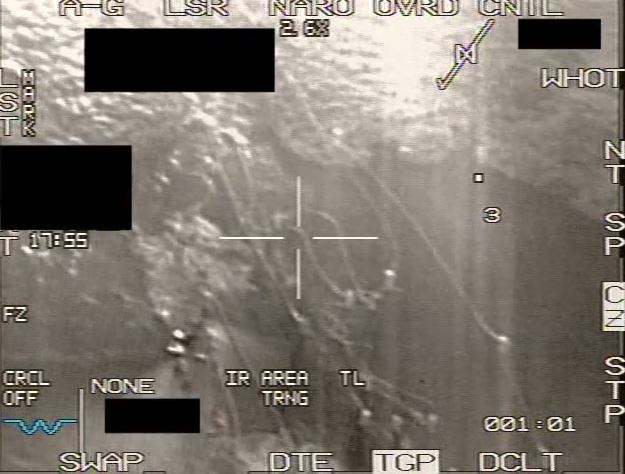
Screen shot image from F-16 infrared video of firefighters at a fire near Frøya, Norway. In the video you can see firefighters dragging hoses, and appear to have to retreat as they are subjected to a shower of burning embers, which show up as white in the video.

Wildfire Today reader Bjørn Ivar Haugdal reports that the 3,000-acre fire in Norway we told you about earlier did not destroy as many structures as previously thought, and the number now stands at 55.

A new fire in Norway near Frøya has burned about 2,000 acres. Lighter winds have made it possible for civilian (Eurocopter AS350) and military (Bell 412SP) helicopters to assist firefighters. Water sources in lakes have to be opened with axes and chain saws, and water sprayed on vegetation quickly freezes in the -2C (28F) weather. There are reports that the fire started when children who were ice skating were playing with a lighter in the dry grass.

An F-16 fighter has been used as an aerial observation platform, streaming live video down to big screens at a command center on the ground. In a recording of the infrared video, at the 40-second mark you can see firefighters dragging hoses away from the head of the fire while they are being showered with hot embers, which show up as white in the video.

Below is a rough Google translation of a description of how military assets assisted firefighters:

Wednesday afternoon, two fire engines with eight soldiers from fire, rescue and room service (BRP) at Orland Main Air Base sent to the fire-ravaged Freya to participate in fire fighting. They were joined by a separate fire pump and a sekshjuling (ATV).

Defence Logistics Organisation sent a tank of fuel which ensures that the helicopters can easily access the fuel to get the most effective fighters. Four Bell 412 helicopters from Bardufoss and Rygge was sent to the fire area to assist in extinguishing efforts.

An air coordination element of defense contributes to coordinate air traffic in the area so the helicopter quenching capacity was utilized in the best possible way.

Coast guard vessels KV Bergen and KV Njord took part in extinguishing the work after the engagement in Flatanger was completed.

National Guard participates with 30 soldiers from the HV-12. In addition to Hitra and HV area are several nearby HV areas alerted and are ready to provide support if the need arises.

An F-16 fighters from Orland Main Air Station filmed fire and sent this live on big screens at the police control so the police and fire department received an overview of how the fire progressed.

A video clip taken from fighter plane Wednesday night shows how firefighters use fire pumps out on the ice in Langvatnet by Måsheia and smoke, sparks and burning objects flying over them.

The video below was shot from a drone over the earlier fire at Laerdalsoyri Village.

****

(Updated at 12:33 p.m. MST, January 28, 2014)

Wildfire Today reader Bjørn Ivar has given us some updated information, saying about 90 structures have burned. Strong winds are still making it impossible to use helicopters, but Civil Defense personnel are using chain saws to cut holes in the ice on lakes so that the freshwater sources can be used for dip sites for the helicopters with water buckets. Some degree of containment has been reached, Mr. Ivar said, and the fires are still within the peninsula.

****

(Originally published at 9:54 a.m. MST, January 28, 2014)

A rare January brush fire has burned scores of structures in the Norway villages of Hasvag and Smavaeret. Police believe the fire started Monday when strong winds blew two powerlines together.

The reports on the number of homes and other structures that have burned vary greatly. There could be as many as 95 that are damaged or destroyed.

Norway fire. Photo by Crews RS Harlald V.
Photo by Crews RS Harlald V.

Continue reading

USFS report: no aviation accidents in last three years

The U.S. Forest Service has released an aviation safety report titled “FY 2013 Aviation Safety Summary” which theoretically analyses, or at least lists, accident trends. Their presumed safety goal, although we could not find in the report any goals or objectives, is to reduce accidents. We were astounded to read on page 4 a statement that was repeated in various ways on pages 8, 18, and 33:

The Forest Service did not have any accountable accidents again in FY 2013; this was the third year in a row without an accident.

That statement was backed up by these two charts, and others in the report:

USFS Aircraft accident statistical summary USFS air tanker accidents 10-yr stats

At least four accidents since 2008 with a total of nine fatalities do not show up in these stats:

  • 2008, September 1: crash of a Neptune air tanker at Reno with three fatalities;
  • 2012, June 3: crash of a Neptune air tanker in Utah with two fatalities;
  • 2012, June 3, crash of a Minden air tanker at Minden, Nevada (one landing gear did not lower), irreparable damage, no fatalites;
  • 2012, July 1, crash of a MAFFS air tanker in South Dakota, four fatalities.

There may have been other accidents between 2004 and 2007 that also were not listed.

We checked with the USFS about the discrepancy and spokesperson Jennifer Jones told us that the accidents “were not included in the document because it was a U.S. Forest Service aviation safety report and the airtankers were under the operational control of other agencies when the accidents occurred, so they are not considered reportable accidents for the U.S. Forest Service.”

It turns out that if an air tanker under contract to the USFS is flying on a fire for another agency and crashes, the USFS will not include that accident in the report. However, the MAFFS air tanker crashed while making a drop on the White Draw fire on the Black Hills National Forest.

C-130 MAFFS crash, July 1, 2012
C-130 MAFFS air tanker crash, July 1, 2012. US Air Force photo

A statement in the report absolves the USFS from responsibility for accidents involving military aircraft:

Military aircraft remain under the operational control of the military even while supporting USFS operations.

But the military does not totally agree. In the Air Force report on the MAFFS crash it says on page 5:

Fire suppression management is under civilian control.

And later on page 29:

Second, due to the need for swift reaction to live fires, the practical supervision of executing a MAFFS mission, by default, is under civilian control.

We could not find the word “MAFFS” anywhere in the 33-page FY 2013 Aviation Safety Summary document, or any reference to the nine fatalities we listed above.

In 2012 MAFFS air tankers dropped 2.45 million gallons of retardant on fires, frequently under USFS operational control.

The 2012 landing gear failure on the Minden air tanker was not listed, the USFS said, because “the National Transportation Safety Board determined that it did not meet the definition of an accident”. But part of the definition of an “accident” in this summary report (page 3) is one “in which the aircraft receives substantial damage.”

A reasonable person would think that an aviation summary document that compiled accident statistics would at least mention that aircraft on long term exclusive use contracts to the USFS crashed and killed nine crewmembers, even if they were on temporary loan to another organization for an hour or a few days. The agency selected these aircraft and the contractors, and the fact that there were four major accidents involving their chosen aircraft and contractors deserves mention, at least to honor their service. The nine fatalities and four crashes in a five-year period is a very disturbing trend that should not be ignored. And even more so when you also consider the 2010 accident that does show up in the stats. That one may be the June 26, 2010 accident in which Neptune’s T-44 went off the end of the runway at Rocky Mountain Regional Airport (Jeffco) near Denver due to a hydraulic system failure.

If the USFS analyzed the crash trends involving their contractors, including those occurring on non-USFS fires, they might find, for example, they should reconsider the specs in the contracts, the crash history of  contractors, the suitability of aircraft designed for maritime patrol in the 1950s that are then used for flying in and out of canyons under air frame stresses the engineers did not consider, and the age of the aircraft. If what you are doing is not working, and these crashes and fatalities indicate it is not, then you need to do something different. The next-generation air tanker concept is a step in the right direction, but using jet airliners to fly into canyons is a concept that needs to be proven.

At a minimum, future reports should have a separate section to list the mishaps and accidents that involve their contracted aircraft even if they are on a non-USFS fire. And, accidents that involve MAFFS air tankers working under an agreement with the USFS, and accidents that result in major damage, should be listed as reportable accidents, regardless of specific jargon used by the NTSB.

It should not make any difference, for statistical, reporting, and accident prevention purposes, if the cause of an accident is mechanical, weather, or pilot error — they all should be recorded and reported. If the objective is learning lessons and preventing future accidents. they must be tracked and remembered. Splitting hairs and using imaginative criteria for leaving out certain accidents can turn the entire accident reporting program into a farce.