When a water-scooping CL-215 air tanker crashed in Greece on June 26, the pilots of two Aircrane helicopters who were working a fire diverted to the site, saw that the aircraft was on fire, and each helicopter dropped three loads of water on the flames. This helped make it possible for one of the CL-215 pilots to extract the other pilot who had a back injury.
[Erickson Aircrane pilots Mike Strasser and Jeff Shelton] and another Aircrane, operated by Jeff Brenhaug and Don McLeod, were fighting a fire about eight miles northwest of Athens, Greece, on June 26, when a Hellenic Air Force Canadair CL-215 waterbomber—known as a “duck”—crashed on a wooded hillside. Thick black smoke was rising into the air as the two Aircranes arrived above the wreckage.
“It was pretty obvious that it had gone down and it was on fire,” Strasser told Skies. “We decided to switch to light coverage and began dropping water on the plane. As we came in behind the other Crane for our first drop, I was looking out the bubble window and I saw two people on the right side of the aircraft. It looked like one of them was dragging the other out.”
“Just seeing somebody outside [the aircraft] was a good feeling,” said Strasser. “It crashed close to a road, and soon I saw firefighters on the ground rescuing them. We finished up there and headed back to fight the fire.”
But the story didn’t end there for the Aircrane crews. The next day they received a special visitor. Taxiarchis Papamarkos, one of the CL-215 pilots, sought them out to say his thanks.
“He told us the other guy had a back injury and couldn’t walk,” recounted Strasser. “He was trying to help him, but it was getting very hot and his flight suit was singed. He thought he would be dead in 10 seconds. He expected the plane to blow up, so he started counting backwards from 10. But when he got to four, he felt cool rain falling on him. It helped him to pull his friend out.”
The other CL-215 pilot is in the hospital but is expected to recover.
Air Tanker 60, an Erickson Aero Tanker DC-7B, made an emergency landing at the Chico, California airport Thursday morning. A person who was monitoring radio traffic told Fire Aviation that the pilot declared an emergency after shutting down the #3 engine and losing all hydraulics. The video was apparently captured by someone on the nearby Eaton Road that borders the airport.
The pilots deserve kudos for keeping the aircraft on the runway.
Click on the image above and you’ll be taken to the Action News Now website where you can view it. The resolution on the video is very poor, but you can pretty much tell what is happening.
File photo of Tanker 60 taken by Bill Gabbert at Madras, Oregon June 13, 2016.
This DC-7B is 58 years old, manufactured in 1958. Over the last three to four years several P2V air tankers in that same age range have had serious problems with hydraulics that resulted in problems as they landed.
Air Force Reserve and Air National Guard units can install a Modular Airborne Firefighting System (MAFFS) in a C-130 in a few hours when a surge capacity of air tankers is needed. But rarely do you see a MAFFS aircraft in the eastern United States.
I was surprised when I ran across the photo below of a MAFFS air tanker at Andrews Air Force Base near Washington, D.C.
The 302nd Airlift Wing (Air Force Reserve) at Peterson Air Force Base in Colorado Springs sent one of their C-130s outfitted with a MAFFS unit to the Air Force Reserve Command’s C-130 Special Mission fly-in at JB Andrews on Wednesday.
We can’t confirm that two UR-77 Meteorit missile-firing mine clearing vehicles were actually used to help control a wildfire in Siberia, but that is the report. The missile may be towing detonation cord, which is sometimes used by wildland firefighters to build fireline or to fell a dangerous snag.
Several times in the last 10 days drones flying near wildfires have required that firefighting aircraft cease operations, sometimes for hours at a time.
Yesterday the Federal Aviation Administration sent a mass email to individuals who have registered their drones with the agency, warning them that “drone operators who interfere with wildfire suppression efforts are subject to civil penalties of up to $27,500 and possible criminal prosecution”.
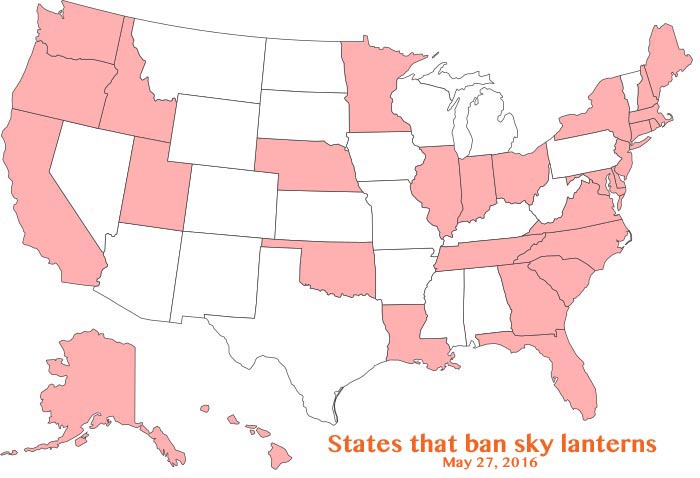
A sky lantern recently landed on a fire chief’s roof in York Beach, Maine. For years Chief David Bridges has been trying to educate the public about the lantern law and the fire dangers they pose. He believes it is a common misconception that Maine legalized the lanterns after legalizing fireworks in 2012. However they are banned in Maine and in 28 other states.
Yesterday we showed you a couple of videos produced by Global Supertanker, the company that resurrected the 747 air tanker first created by Evergreen. Here are two more featuring the new Tanker 944. I was surprised how interesting it was to see a HUGE aircraft being painted and having the retardant delivery system installed.
Today the BIA released a “24 Hour Report” about the fire shelter deployment on the Cedar Fire. It provided a few facts that were not previously disclosed by the agency.
The six firefighters deployed their shelters in an area that had already burned, and they were evaluated in the hospital for “smoke inhalation”.
The Serious Accident Investigation Team will be led by Jon Rollins, Chief Investigator for the National Park Service.
****
(Originally published at 9:52 p.m. MDT, June 29, 2016)
The Bureau of Indian Affairs provided more information today about the six firefighters on the Cedar Fire south of Show Low, Arizona who on June 28 found themselves in a situation where they had to deploy fire shelters. The firefighters, all from the Navajo Interagency Hotshot Crew, walked away from the site and were transported to Summit Healthcare in Show Low where they were treated and released that evening.
A Serious Accident Investigation Team has been formed and will investigate the circumstances surrounding the deployment.
We don’t know why or how the incident occurred, but if recent history holds true, we may never know, thanks to the unintended consequences of Senator Maria Cantwell’s and Representative Doc Hastings’ hastily conceived Public Law 107-203 signed into law in 2002.
But putting aside the unknown details of fire behavior, decisions made on the fireline, and the strategy and tactics being used on the Cedar Fire yesterday, there a few things that we do know.
The Type 1 Incident Management Team issued an update titled “Final Cedar Fire Update” on Monday, June 27. It said in part, “While 554 firefighters are working on the fire [Monday] morning, only the Team itself will remain by Tuesday afternoon. The Bureau of Indian Affairs (BIA) will assume command of the fire at 6 A.M. Tuesday.” That Monday update said the fire received rainfall on Sunday and more rain was expected on Monday.
The Type 1 Team turned the fire over to the Fort Apache Agency at 6 a.m. on Tuesday, June 28. There was no mention of a Type 2 or Type 3 Incident Management Team.
The Fort Apache Agency posted a fire update on Facebook at 1:05 p.m. on Tuesday, June 28 saying the resources on the fire that day were, “Navajo Hotshots, 3 Type 6 Engines, Fort Apache Fuels Type 2 IA Crew.” And, “Fire Personnel will continue to hold and mop up the fire.” These two crews and three engines probably amounted to a maximum of 50 people, plus miscellaneous overhead. This was down from 554 the previous day, a 91 percent reduction in personnel overnight.
Candy Lupe, a Public Information Officer with the Bureau of Indian Affairs’ Fort Apache Agency, told Wildfire Today that she was not sure exactly when the incident occurred but estimated it happened around 3 p.m. Arizona time on Tuesday, June 28.
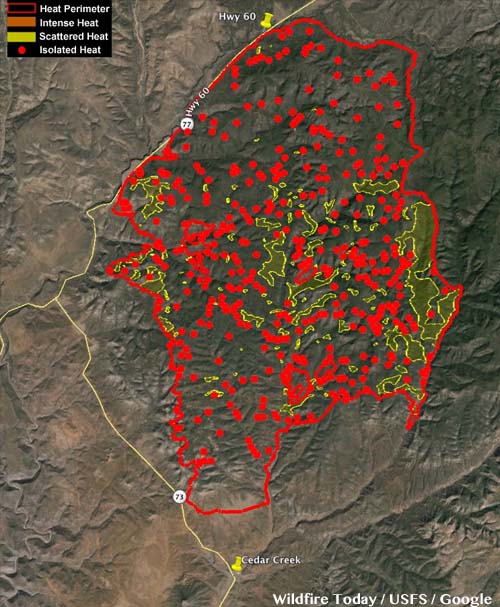
The infrared scan of the fire conducted very early Monday morning, June 27, showed “scattered” and “isolated” heat over much of the fire. There was no record of an infrared scan prior to the day shift on Tuesday June 28, but they had been completed every day from June 17 through June 27.
We’re not pointing fingers or attempting to lay blame on anyone. Hopefully the investigation will bring to light some lessons that can be learned.
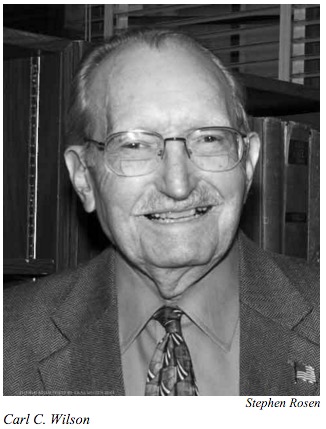
The incident brings to mind the Common Denominators of Fatal and Near-Fatal Fires, developed by Carl Wilson in 1976. Mr. Wilson put two lists together, a four-item list based on his studies of 61 fatal fires, and a five-item list that included an additional 31 near-fatal fires. More information about these lists is in our February 1, 2016 article, Are there 4 or 5 common denominators of fire behavior on fatal fires?Almost all recent wildland fire publications, if they publish the list, only have the four-item list.
These lists are not intended as a quick and easy checklist for investigators, nor are they rules or guidelines that must be followed. They are simply interesting commonalities seen on many fatal and near-fatal fires. Things to think about, not rules that must be adhered to.
Here is the five-item list that includes data from fatal and near-fatal fires:
Most of the incidents occurred on relatively small fires or isolated sectors of larger fires.
Most of the fires were innocent in appearance prior to the “flare-ups” or “blow-ups”. In some cases, the fatalities occurred in the mop-up stage.
Flare-ups occurred in deceptively light fuels.
Fires ran uphill in chimneys, gullies, or on steep slopes.
Suppression tools, such as helicopters or air tankers, can adversely modify fire behavior. (Helicopter and air tanker vortices have been known to cause flare-ups.)”