The lack of precipitation this fall, along with a prolonged period of warm, dry, and occasional windy weather has caused fuels to be extremely dry across portions of Southern and Central California.
Continue readingBLM to develop EISs for fuel breaks and fuel reduction

The programmatic Environmental Impact Statements would streamline approvals for projects
Continue readingSecretary of Interior used wildfire funds for helicopter tour of National Monuments
The tour was prior to deciding which monuments to shrink
Continue readingGeorgia buys two single engine air tankers

Above: File photo of two Thrush 510G aircraft, a standard model and one with a dual cockpit. Thrush photo.
(Originally published at 6 p.m. MDT December 27, 2017)
The state of Georgia’s Forestry Commission has purchased two Thrush 510G Switchback single engine air tankers (SEATs).
The 510G model was introduced by Thrush in 2012 featuring a redesign of everything forward of the firewall including a different engine, the 800 shp GE H80 turbine.
The version acquired by Georgia has a dual cockpit and control systems, unusual in a SEAT, but it enables the aircraft to serve in a training role for Georgia Forestry Commission pilots.
The “Switchback” part of the name is an option which means in addition to delivering 500 gallons of water or fire retardant, it has the ability to switch from agricultural spray duties to firefighting capabilities in a matter of minutes thanks to its unique fire gate delivery system. These were the first Switchbacks delivered by Thrush, even though they have sold more than 100 510G’s.
“We’re extremely proud to be adding the Switchback to our aerial firefighting fleet,” said Georgia Forestry Commission’s director, Chuck Williams. “It boasts many advantages for our firefighting efforts and heralds an exciting new chapter in our commitment to protect and conserve the more than 24 million acres of timber land across our state. You’ll see these aircraft deployed not just for rapid fire suppression – but also in the very important role of rapid fire detection, which can sometimes make all the difference in being able to contain a wildfire, versus having it become uncontrollable.”
Specifications of the 510G:
- Working speed: 90-150
- Stall speed as usually landed: 55 mph
- Take-off distance at 10,500 pounds: 1,500 feet
- Landing Distance as Usually Landed w/Reverse: 350 feet
- Cruising speed at 55% power: 159 mph
Mapping defensive actions and exposure at the 2017 california Tubbs Fire
How effective were firefighters’ defensive actions in limiting the destruction?
Continue readingHazardous tree on the White House lawn

Firefighters would not work under this tree.
Continue readingNot all wildland firefighting gear works well for women

Above: The Mt. Taylor Hotshots on the Shep Canyon Fire in South Dakota, 2011.
(Originally published December 27, 2017)
An article in the Los Angeles Times by Melissa Etehad describes how wildland firefighting gear designed for men can be a problem for female firefighters.
Below are some excerpts:
“Kelley Whitelens hiked a steep hill toward the backyard of a home on Coyote Road in Santa Barbara, one hand wiping the sweat from her face, the other pulling up her sagging pants.
“Whitelens is the only female firefighter in a 19-person team from South Dakota fighting the fierce Thomas fire…
[…]
“For the last six months, Hannah Key, a firefighter with the Sierra National Forest and a fire captain on the Thomas fire, has gathered hundreds of surveys from female firefighters across the nation about their body measurements, firefighter gear and improvements they hope to see.
“Her efforts stemmed from an email she sent during the Cascade fire in the spring of 2016 complaining about the lack of fire gear made for women. “Within the hour, I had three people from the company on the phone with me telling me that they’d like to make equipment for women,” Key said.
“Since then, Key has been gathering testimonials from female firefighters in California, Oregon, Texas, Florida and other states, gauging their needs and issues they’ve encountered in the field.
“The response has been overwhelming,” Key said. “There’s a market for this.”
McClellan Air Field becomes Sacramento McClellan Airport

Above: Static Display March 23, 2016 at Sacramento McClellan Airport during the aerial firefighting conference.
(Originally published at 12:44 p.m. MST December 26, 2017.)
The former McClellan Air Force Base near Sacramento has changed hands for the second time in the last 17 years and is now known as Sacramento McClellan Airport (KMCC). It was operated by the U.S Air Force from 1939 until 2000 when it was transferred to Sacramento County. In October of this year the 1,100-acre property was purchased by McClellan Business Park.
In addition to serving private plane owners and companies, the airport also functions as a main flight hub and home for many government agencies and emergency services operators, such as the U.S. Coast Guard Air Station Sacramento, CAL FIRE, HeliMax, and the U.S. Forest Service C-130 air tanker program. According to the new owners of the airport, it has the largest aerial fire retardant reload base in the United States.
McClellan Jet Services will continue to provide fixed-base services.
First flight for China’s amphibious water-scooping aircraft

Above: screen grab from the BBC video showing (through dense smog) the AG600 taxiing after its first flight December 24, 2017.
China’s new amphibious aircraft that can scoop water and drop it on wildfires made its maiden flight December 24 at Jinwan Civil Aviation Airport in Zhuhai, Guangdong.
(Note: the original BBC video became no longer available. On March 15, 2021 it was replaced with the video below.)
The AG600 can carry up to 3,000 gallons of water, and like the CL-215/415 and Air Tractors it can scoop water from a lake and drop it on wildfires. When not fighting fires it can hold 50 passengers in a military or civilian role and has a range of 5,500 km (3,418 miles). It has four turboprop engines, can handle a wave height of two meters, and will have a maximum speed of 354 mph (570 kph, 308 knots).
In 2015 The Coulson Group, operator of the two huge Martin Mars water-scooping aircraft, trained 14 test pilots from China who were expected to be the first to fly the AG600 (also known as the TA-600). The training included ground, water taxi, flight, scooping, and dropping water. The pilots went through classroom and hands on training using Coulson’s Hawaii Martin Mars aircraft, actually taxiing and flying the huge flying boat.
Thanks and a tip of the hat go out to Micah.
Typos or errors, report them HERE.
On Christmas Eve thousands of firefighters still battle the Thomas Fire

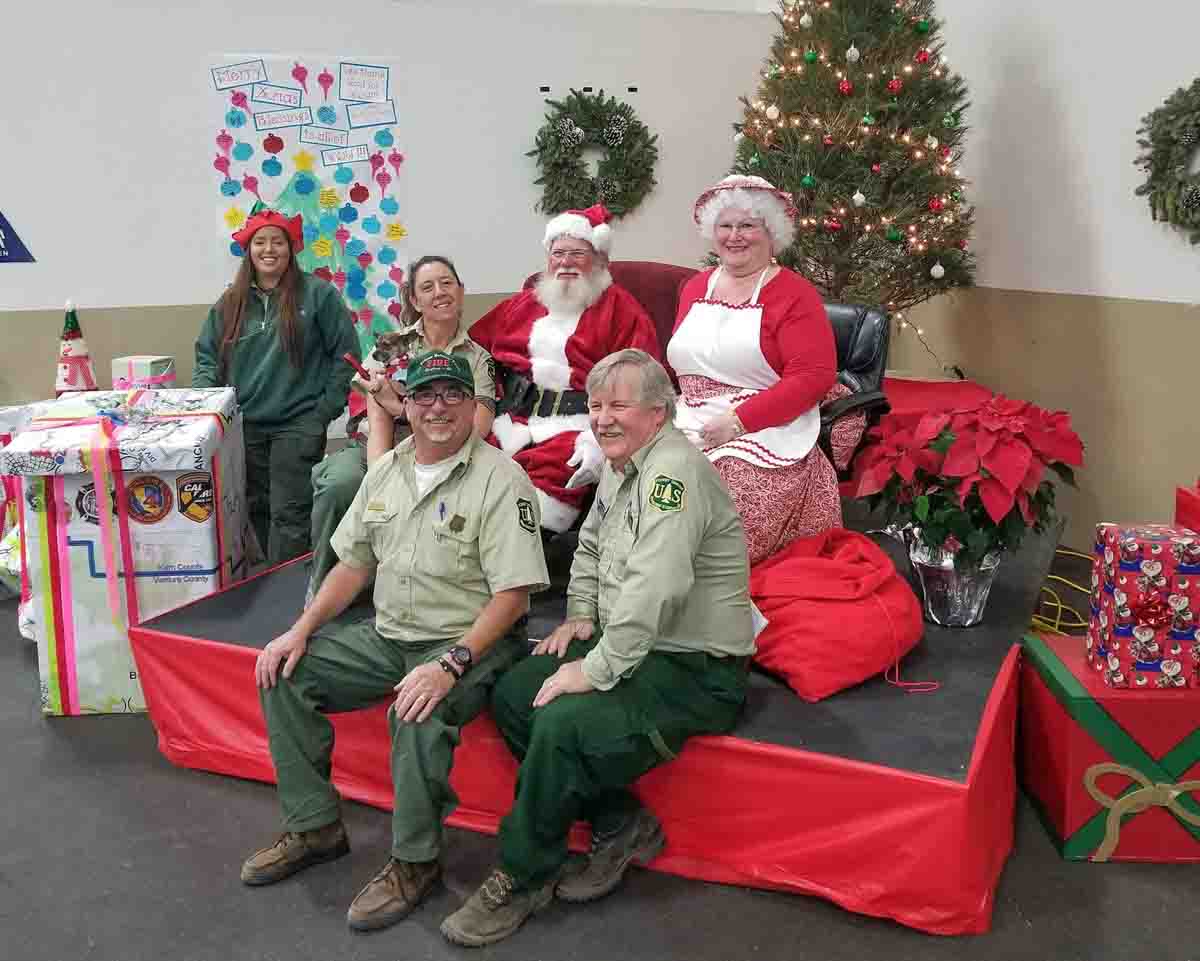
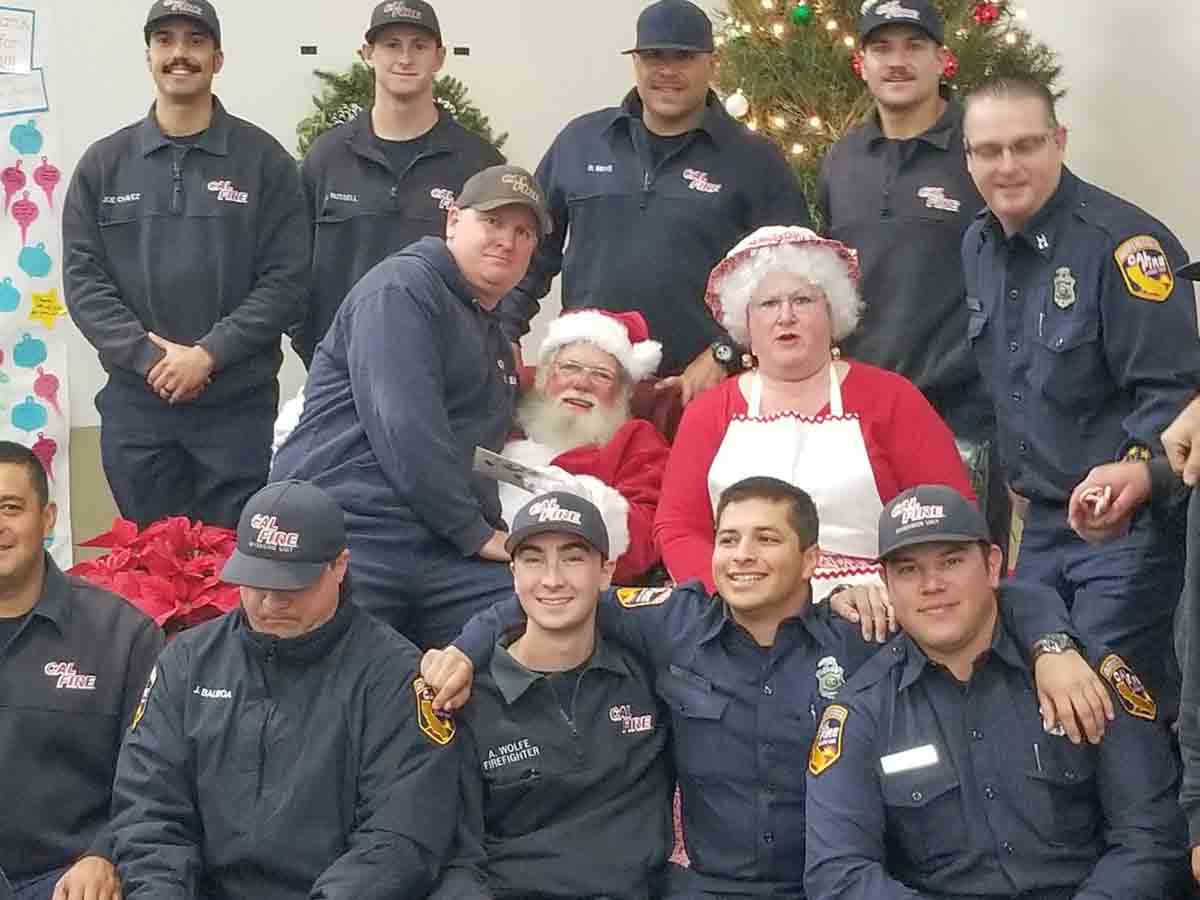
Above: Santa and Mrs. Claus greet firefighters during the Christmas Eve morning briefing on the Thomas Fire. Photo credit: Ventura County Fire Department.
(Originally published at 8:38 a.m. PST December 24, 2017)
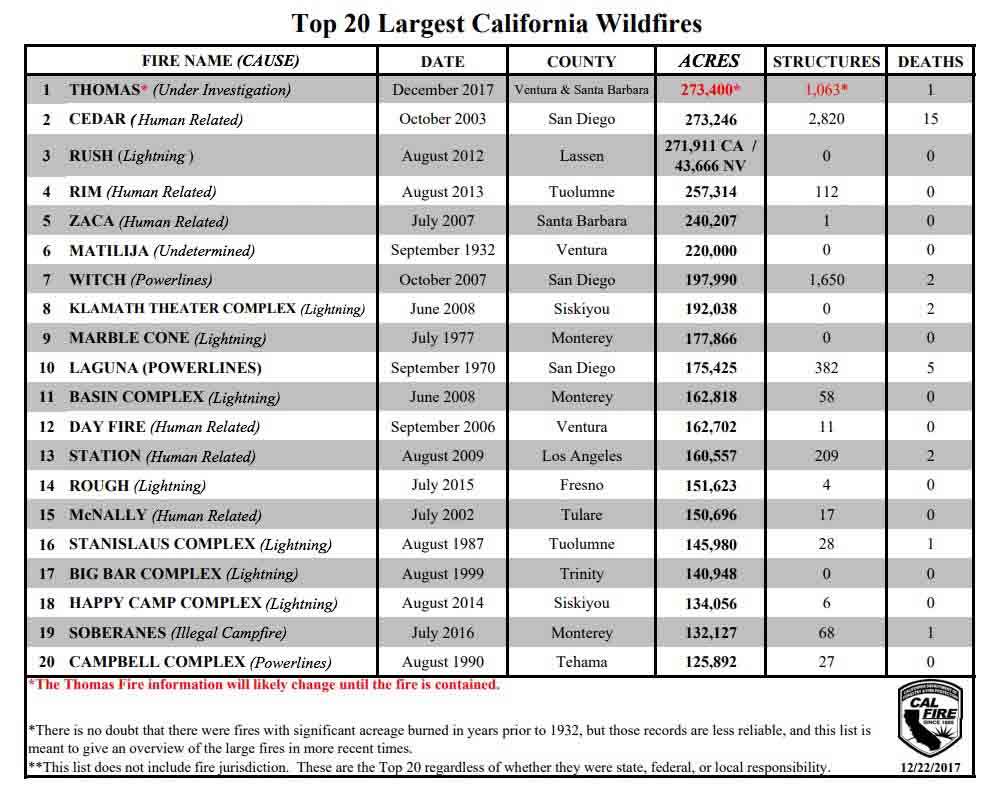
Many veteran firefighters in California have stories about spending Thanksgiving on wildfires. Fewer have experienced Christmas on a large fire. But today, on Christmas Eve, over 2,500 are working on the Thomas Fire that has become the largest in the recorded history of California — 273,400 acres so far. It started in December and is only 78 percent contained.
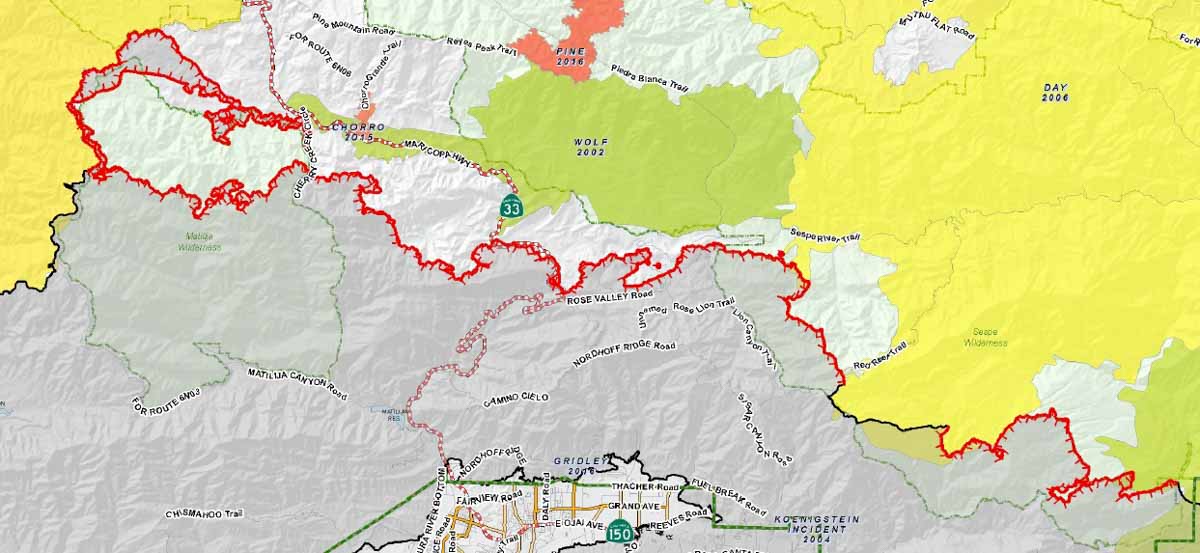
The southern boundary of the fire from Santa Barbara to Ventura is contained and secure. Thanks to shorter days and a lack of strong winds the Incident Management Team does not expect any additional significant spread of the fire, other than strategic burning to secure the fire edge.
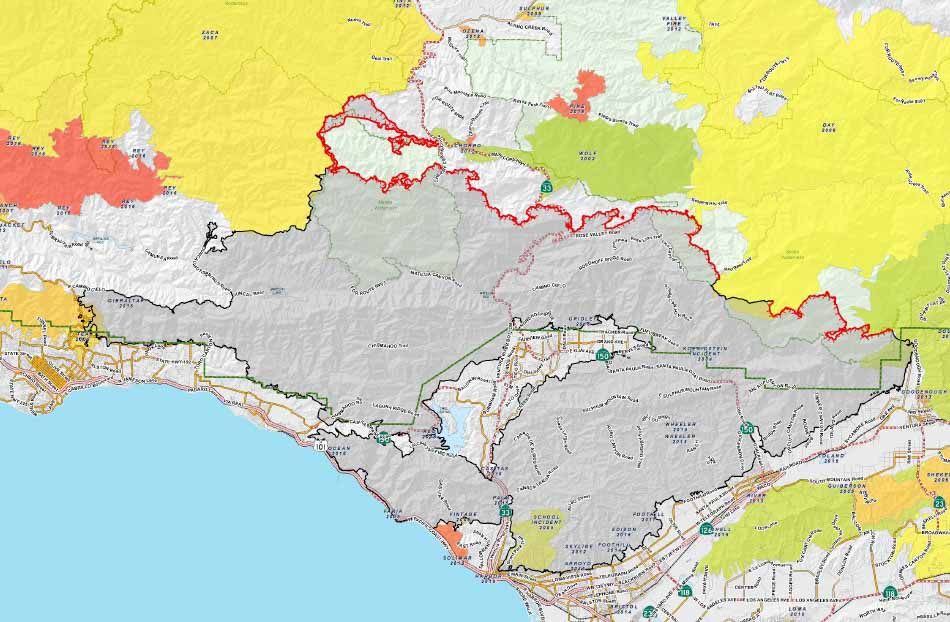
The planned 20,000-acre firing operation that would have removed fuel and secured approximately 17 miles on the north side apparently was halted by the weather, including a few snow flurries. That area is still shown as uncontrolled on the Team’s map. But on Saturday firefighters conducted firing operations on the northern flank along Cherry Creek Road near Highway 33 to keep the fire from moving to the north.
All articles on Wildfire Today about the Thomas Fire are tagged “Thomas Fire”.
The blaze would have been much larger if it had not burned into previous fires, including the 2009 Jesusita, 2007 Zaca, and 2006 Day Fires. If the weather had not changed, the 2002 Wolf Fire would have assisted in controlling it on the north side near Highway 33.
Saturday at 6:00 p.m. responsibilities were transferred to California Interagency Incident Management Team 3 under the leadership of Incident Commander Mark Von Tillow. Most fire suppression activity is now on National Forest System lands.
There are currently no mandatory evacuation orders in effect. Residents on Highway 33 between Rose Valley north to Hartman Ranch remain under a voluntary evacuation warning due to fire activity in the nearby areas.