TBT, 10 years ago: Researcher says humans “mastered fire” 790,000 years ago

From an article we posted on February 28, 2009:


A researcher who excavated 12 layers of soil deposits from the shore of an ancient lake near the river Jordan found evidence that fire had been used by humans in every layer. The soil layers were laid down by waters from the lake in between occupancies by the different societies of humans that inhabited the site 790,000 years ago. Nira Alperson-Afil from the Hebrew University of Jerusalem, Israel, concluded that humans would have had to have mastered the art of creating fire for it to have shown up in all 12 layers.

Previous research had shown that humans from this period could manipulate and use fire, but it was not clear whether they had the ability to create the fire themselves.

The researcher did not say if 790,000 years ago the users of fire had to obtain burning permits, get NEPA compliance, or write burn plans before they started their fires.

Bell 412 lands in water after tail rotor strike while refilling water bucket

The tail rotor of a Bell 412 struck a tree while it was attempting to refill its water bucket February 26, 2019 in the northwest part of Spain. The firefighting helicopter (EC-MAQ) operated by Babcock settled upright in a couple of feet of water in the Narcea River in Belmonte de Miranda, Asturias (map).

Photos show damage to the tail rotor. There were no reported injuries.

Anonymous Twitter account blasts employee housing at NPS site

National Park Service substandard employee housing
Photo posted by @NastyWomenofNPS

A Twitter account that has been verified by Snopes as having a legitimate connection to the National Park Service has described the substandard living conditions of employee housing at one NPS site.

Firefighters and other land management agency employees that work in remote areas sometimes find that government housing is their only option. The agencies are required to charge them rent at the going rate in the area — they don’t get a bargain just because it is far from civilization.

The details and the seven photos posted by @NastyWomenofNPS are specific about one NPS location and do not necessarily represent conditions at other parks.

The person described what it is like living in a $500 a month 50-year old mobile home that is 80 miles from the closest real grocery store —  no key to lock the door, no heat or air conditioning in the bedroom, walls falling apart, mice enter through holes in the floor, no hot water in bathroom, ice forms in electrical outlets, insulation falls from ceiling, and the electrician said get renters’ insurance because “there will be a fire”.

Click on the tweet below to see the photos and the multiple-message thread.

Not all government housing is as dilapidated as described here. In some cases the local unit is doing the best they can with a very limited infrastructure budget and staff.

Are you aware of any other particularly good or bad examples of government housing?


An electrifying retardant drop

This has been around for a couple of years, but it’s worth seeing again. Google translates the caption as, “Fire in Corsica, EDF forgot to cut the line”.

Forest Service plans 75,000-acre fuel treatment project northwest of Wenatchee, Washington

Upper Wenatchee Pilot Project
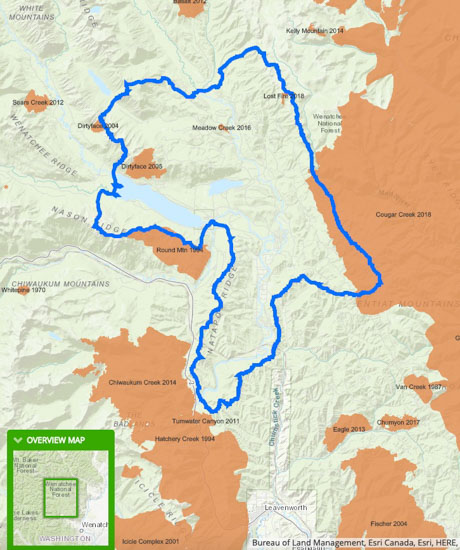
Upper Wenatchee Pilot Project. USFS map.

The U.S. Forest Service is planning a 75,000-acre project in central Washington intended to restore forest health, reduce wildfire risk, improve wildlife habitat, and improve watershed function on a landscape scale.

The area is northwest of Wenatchee and north of Leavenworth.

The work may include both terrestrial and aquatic components such as prescribed fire, stream improvement, road system work, as well as commercial and non-commercial thinning.

Much of the area within the perimeter of the project does not have a fire history recorded within the last several decades.

Upper Wenatchee Pilot Project
Upper Wenatchee Pilot Project(in blue), showing wildfire history. USFS map.

“With collaboration and sound science, it is possible to move towards a sustainable landscape that is better for the forest and communities alike” said Wenatchee River District Ranger Jeff Rivera. “We want to hear from you early on about wildlife, fish, fire, roads, and other important considerations for this landscape and the people who use it and live by it.”

Forest Service staff will be on hand to answer questions and share an interactive map at an open house Tuesday March 12, 2019 from 6-7:30 pm at the Lake Wenatchee Recreation Club at 14400 Chiwawa Loop Road Leavenworth, WA. This meeting will also be available via Facebook Live. The 30-day formal scoping comment period began February 25, 2019. A draft Environmental Analysis is expected in the fall of 2019.

More information about the project.

Are stand replacement fires “bad”?

Cranston Fire
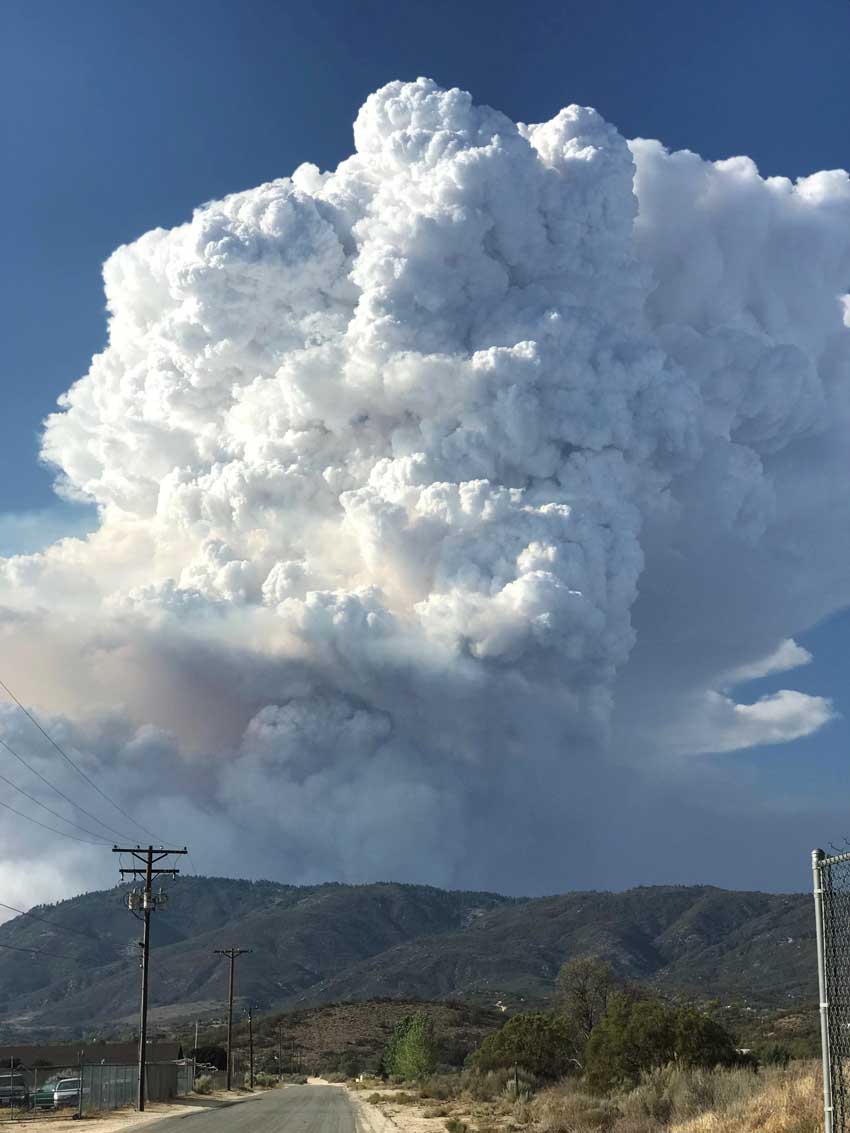
Cranston Fire, July, 2018. InciWeb photo.

The video below, paid for by a grant from the U.S. Forest Service, advocates active management of forests as one of the methods of preventing catastrophic wildfires. Most land managers and members of the public will agree with that very general statement, with exceptions for certain parks and wilderness areas.

The video defines active management as thinning to reduce fuels,  prescribed fires, and “managing natural fires when they start”. It begins with Doug Grafe, Fire Protection Chief of the Oregon Department of Forestry stating,”It’s the public perception that catastrophic stand replacement fires are bad. And they are.”

The interviewer enthusiastically said, “Yes they are”.

Chief Grafe continued, “And they’re not natural.”

At the end of the video the narrator says “fire is complex”.

Agreed. It is too complex to throughly explain in a 96-second film which is apparently intended to shape public opinion about how to manage forests.

Not all stand replacement fires, in which most or all overstory trees are killed, are catastrophic, unnatural, or bad. Fires in lodgepole pine, for example, are either creeping and slow moving or rapidly spreading, intense, stand replacing crown fires occurring at 50 to 300-year intervals.

In addition to prescribed fire, thinning, and fuel management, “active forest management” in recent years has been a dog whistle for increasing logging, used by lobbyists and others that make their living from the timber industry. The president used the term along with “health treatments” in a Presidential Order signed on the Friday before Christmas in which he directed a 37 percent increase in timber harvesting.

The moral of this story is, active forest management in most landscapes has many benefits, but beware of how it is defined.

Fire “is like giving the forest a bath”

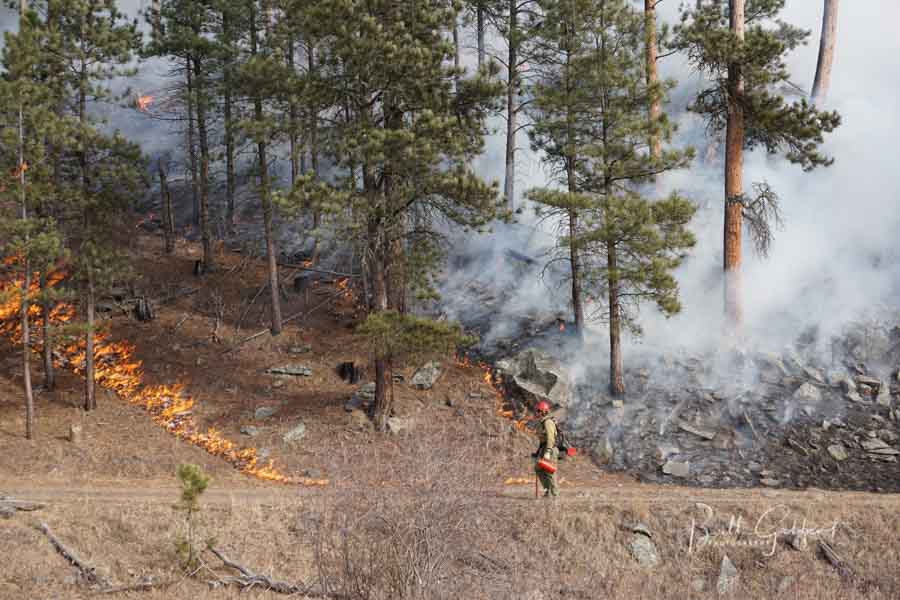
Whaley Prescribed Fire Black Hills of South Dakota
The Whaley Prescribed Fire in the Black Hills of South Dakota, January 13, 2016. Photo by Bill Gabbert.

In this video, Matt Jolly, an ecologist at the U.S. Forest Service’s Rocky Mountain Research Station, talks about the natural and important role of fire in maintaining a healthy ecosystem. He explains that fire “is like giving the forest a bath”.