
The crew is based in Redding, California
Continue readingArkansas firefighter who had heart attack while responding, passes away
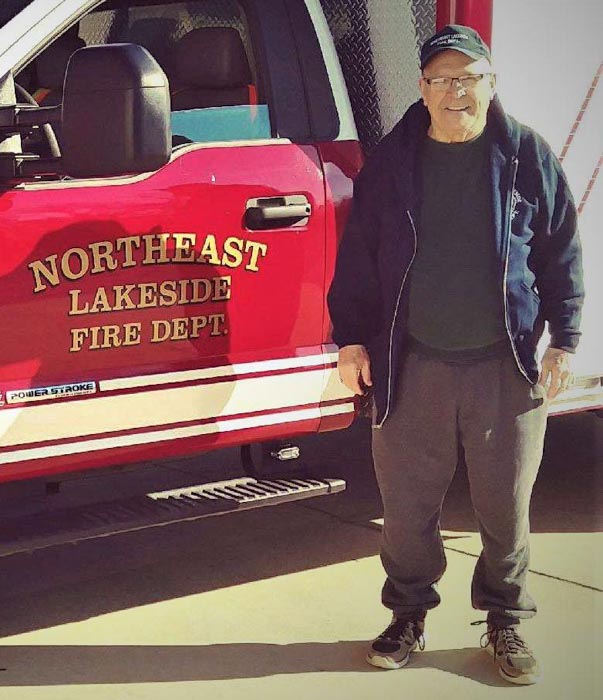
The U.S. Fire Administration has received notice of a firefighter fatality:
Michael Watkins
Driver/Engineer
Northeast Lakeside Fire Department
Mountain Home, Arkansas
On April 21, 2019, Driver/Engineer Michael Watkins was responding to a brush fire when he suffered a heart attack. He was immediately taken to the hospital where he passed away on April 24, 2019 at the age of 75. He had been a firefighter for 5 years.
A celebration of Mr. Watkins’ life will be held May 4 at First United Methodist Church, 605 W 6th St, Mountain Home, Arkansas.
Our sincere condolences go out to his family, friends, and co-workers.
Pete Barry wins Lead by Example Award
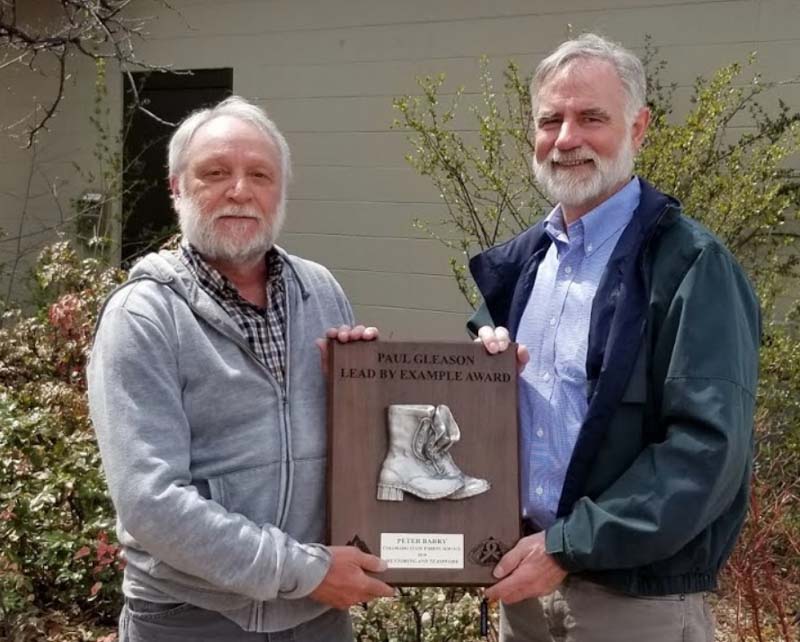
Pete Barry of the Colorado State Forest Service has been selected as one of the recipients for the 2018 Paul Gleason Lead by Example Award.
The award was created by the National Wildfire Coordinating Group Leadership Committee to remember Paul Gleason’s contributions to the wildland fire service. During a career spanning five decades, Paul was a dedicated student of fire, a teacher of fire, and a leader of firefighters. The intent of this award is to recognize individuals or groups who exhibit this same spirit and who exemplify the wildland fire leadership values and principles. Pete’s work in support of the Wildland Fire Leadership Development Program has been a demonstration of mentoring and teamwork.
Pete was recognized for his involvement and mentorship of the student of fire initiative at Colorado State University. Pete’s efforts to advance Paul’s vision that firefighters realize the importance of being a student of fire are commendable. Creation and continued support of the CSU Student Firefighter Association, securing lasting funding for the Paul Gleason Scholarship, as well as connecting students studying wildfire science with land management agencies and fire departments directly aligns with that vision. Pete’s influence will be realized for years to come.
The award was also presented to three other individuals or groups for 2018: Kim Lightley, Kim Kelly, and the BLM Boise Helitack Crew.
Winners of the award prior to 2018.
From Wildland Fire Leadership
Blackhawk helitack crew wins Lead by Example Award
 BLM’s Boise Helitack Crew received one of the 2018 Lead by Example Awards. Screenshot from BLM video.
The Bureau of Land Management’s Boise Helitack crew has been named one of the 2018 winners of the Paul Gleason “Lead By Example” award.
The Boise Helitack crew was recognized for its innovation and leadership in introducing the use of the Sikorsky UH-60 Blackhawk helicopter into the initial attack environment of wildland fire suppression. The Boise crew’s use of a Blackhawk helicopter for crew transport and deployment represents the first time a wildland fire agency has configured and tested a Blackhawk for this purpose.
“Your crew’s vision and constant motivation to see the program come into its full potential in spite of delays and challenges is the epitome of resilience,” said John Wood, who co-chairs the leadership committee for the National Wildfire Coordinating Group—the entity that bestows the Paul Gleason “Lead by Example” award.
During the 2017 and 2018 fire seasons, the Boise Helitack crew voluntarily took on the assignment of working through the rigorous regulatory, configuration and testing requirements necessary to certify the Blackhawk before it could be used in the interagency wildland fire suppression arena. The crew carefully developed the methods and standard procedures necessary to adapt the large helicopter to the crew’s initial attack mission.
A “helitack crew” is a group of highly trained wildland firefighters who fly by helicopter into remote and inaccessible areas on wildland fires. Once the crew is delivered to the fire, they quickly assess the fire and begin suppressing it.
The “Lead By Example” award is named for Paul Gleason, a long-time fireline supervisor and fire manager who developed a foundational philosophy of fireline safety. Mr. Gleason’s Lookout, Communication, Escape route and Safety zone checklist is now standard across the United States and other parts of the world.
The award was also presented to three other individuals for 2018: Kim Lightley, Peter Barry, and Kim Kelly.
Winners of the award prior to 2018.
From Wildland Fire Leadership
NWS develops system for quickly notifying land managers when satellites detect wildfires
The NWS may one day issue watches and warnings based on the predicted spread of a dangerous wildfire.
Continue readingAnalysis of how precipitation affects wildfire occurrence
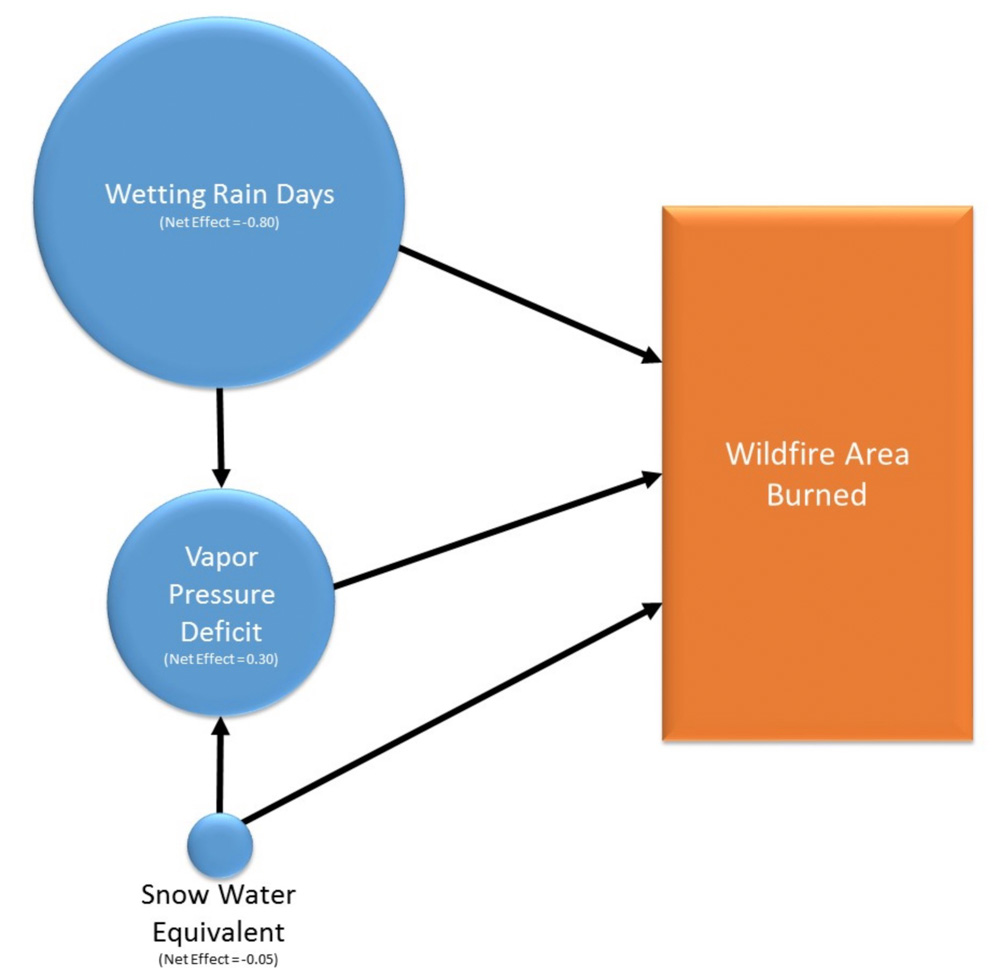
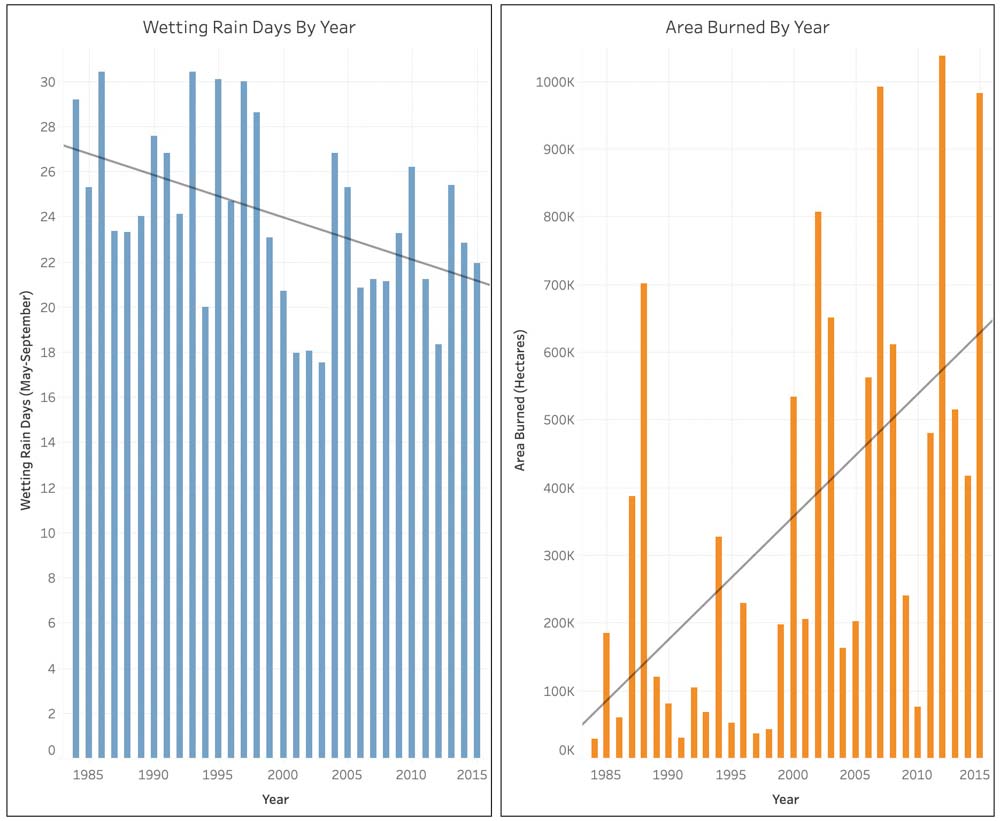
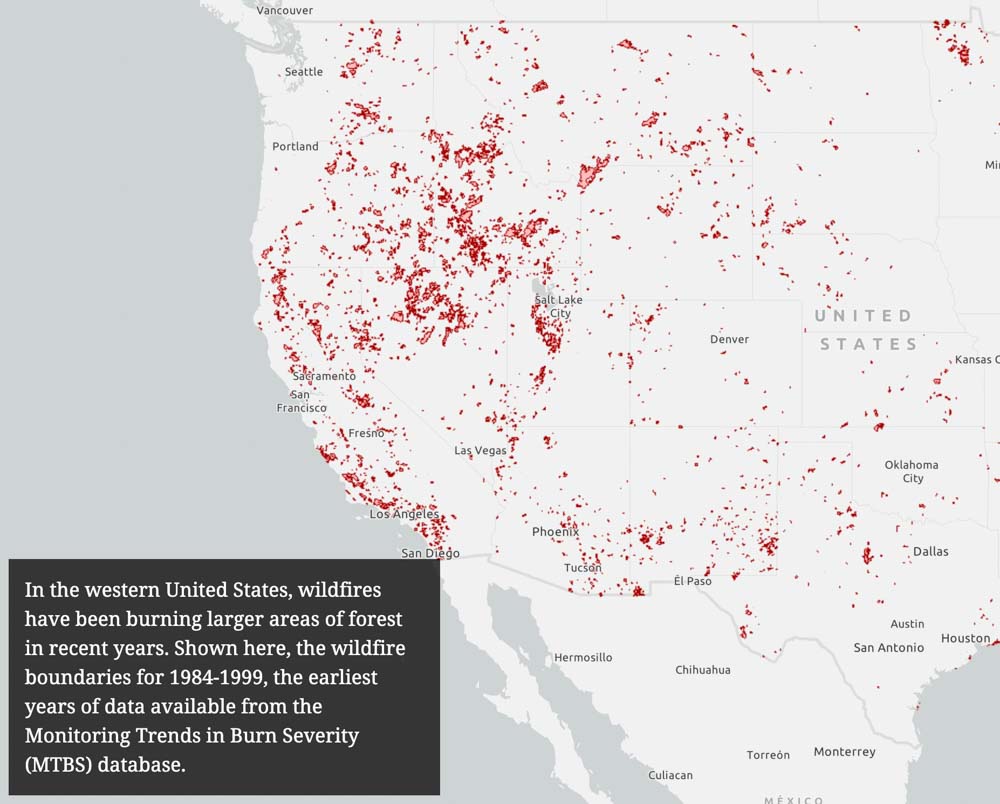
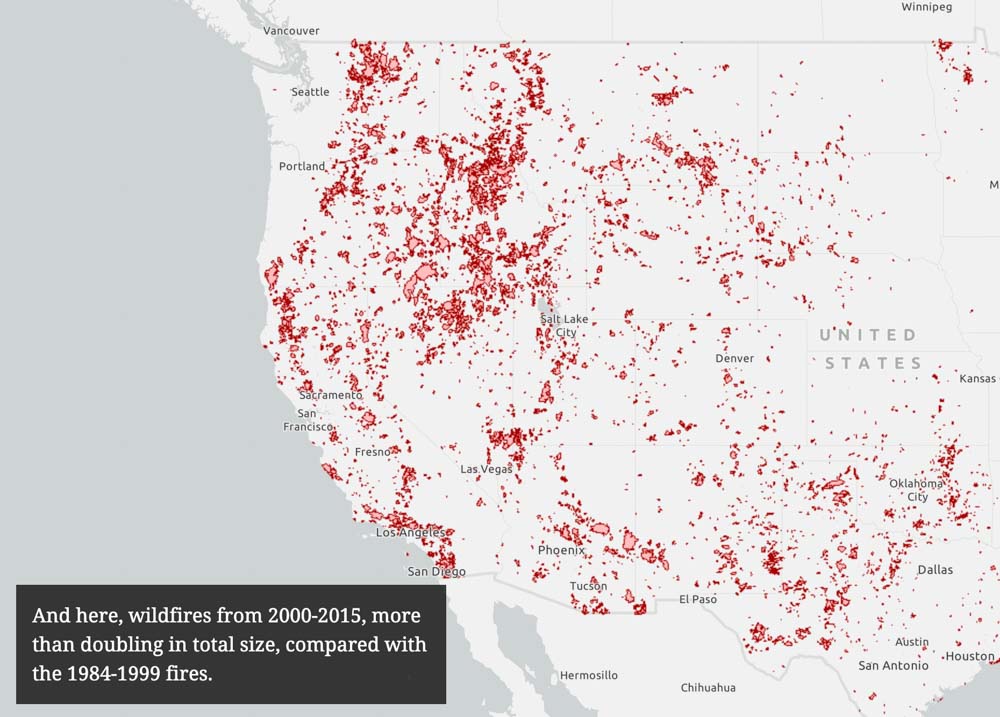
Researchers have developed a fancy graphic presentation that explores the relationship between precipitation and the annual area burned in the Western United States. You should check it out.
They concluded that weather conditions DURING the fire season, humidity and rain, have far more effect on total acres burned than winter snow.
The figures and text (below) here are excerpts from the document.
“Wildfires have been increasing: but why? Is it the effect of increasing temperatures? Declining snowpack? Decreasing precipitation? In their recent paper, “Decreasing fire season precipitation increased recent western US forest wildfire activity,” Zachary Holden and his co-authors explore the relative influence of these factors. They first identified the variables related to temperature, snow, and precipitation that best predicted area burned:
“Temperature: vapor pressure deficit [VPD] (the difference between the maximum amount of water the air can hold and the amount it actually holds)
“Snow: maximum annual snow water equivalent [SWE], and
“Precipitation: wetting rain days [WRD], days with more than 1/10 inch of rain, in the months of May through September.”
CAL FIRE’s Military Helicopter Managers training
It included underwater helicopter egress procedures
Continue readingFirefighters learn from the Battle of San Pasqual
A Staff Ride to the battlefield
Continue readingIrish Air Corp AW139 assists villagers and firefighters in Ireland
Seven hours after the fire started the military approved the use of an AS139 helicopter to assist firefighters.
Continue readingFirefighters and hundreds of villagers battle large wildfire in Ireland
Seven hours after the fire started the military approved the use of an AS139 helicopter to assist firefighters.
Continue reading