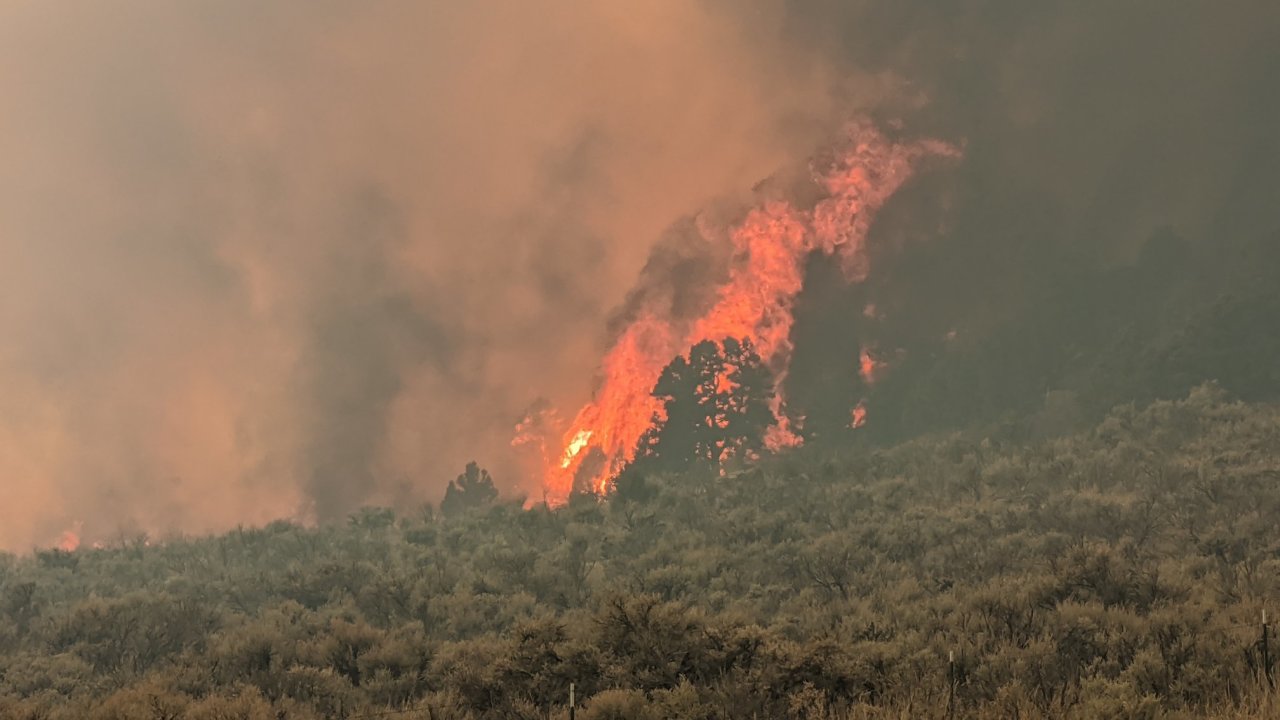
Photos from Peterson Air Force Base and the training event near Denver
Continue readingCDC changes COVID-19 guidelines for testing firefighters
First responders with symptoms are now in the high-priority category
Continue readingAerial photos of the prescribed fire at Mount Rushmore

Yesterday a pilot from Colorado was flying to Rapid City and grabbed some photos of the prescribed fire at Mount Rushmore.
“Just shot with my iPhone so sorry for the quality,” said Matt Danilchick. “I didn’t expect to see it!”
Actually, the quality was very good, Matt. Thanks! They were taken at about 4:11 p.m. April 29, 2020. Judging from the photos and the time of day, the ignition was probably about 80 to 90 percent complete.
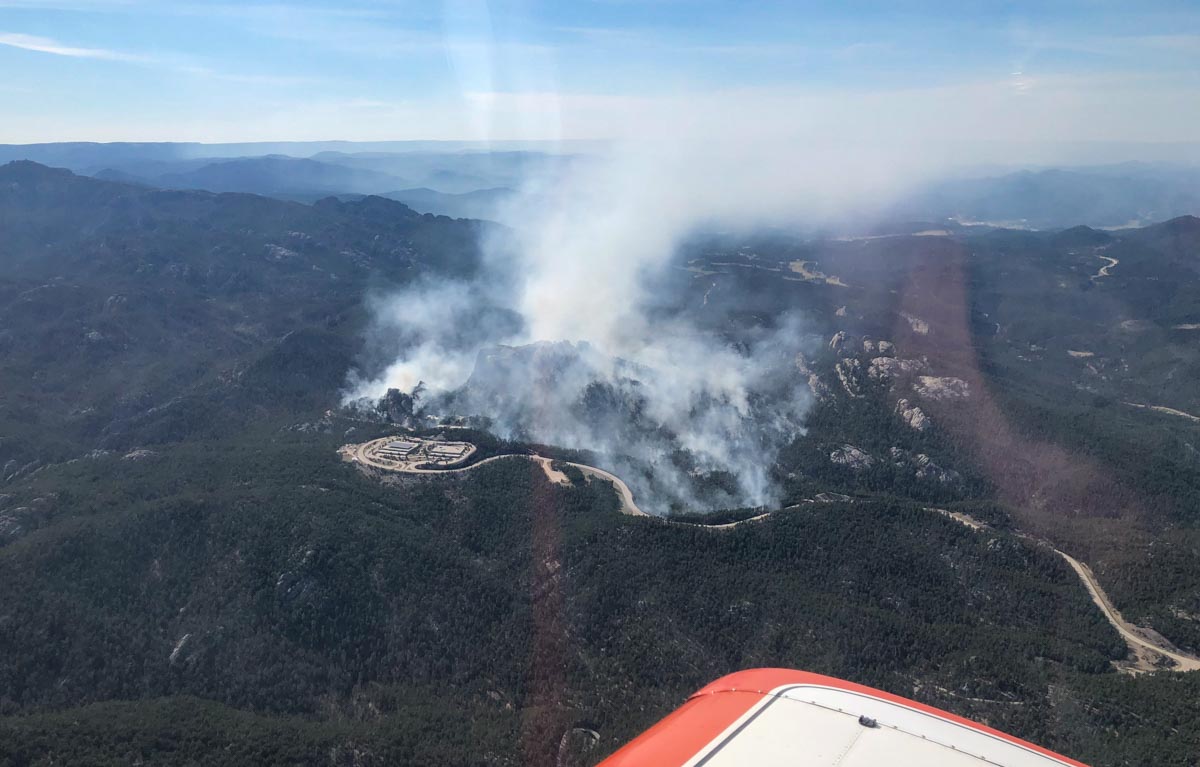
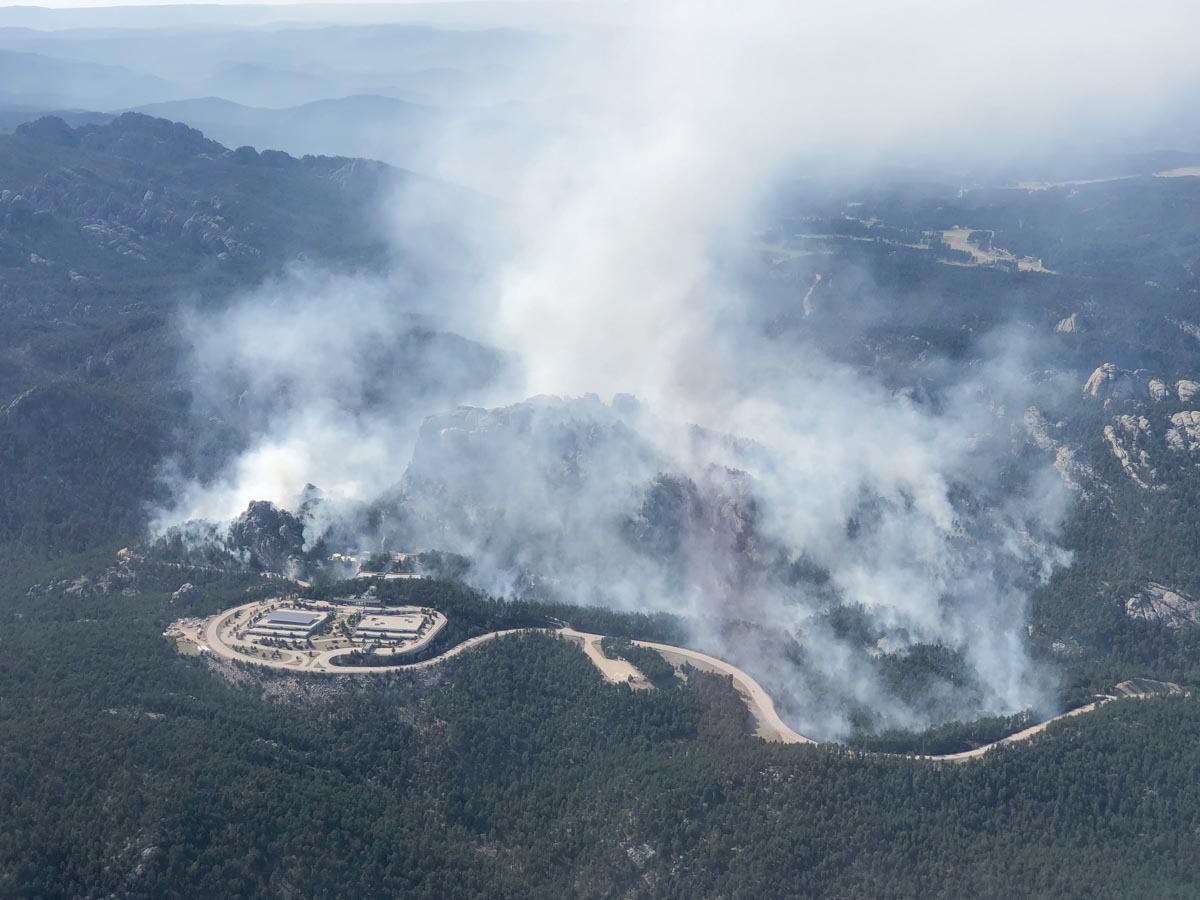
Prescribed can be an excellent method for restoring fire as a natural component of an ecosystem, and reducing hazardous fuels. As far as we can determine, this was the first ever broadcast prescribed fire at Mount Rushmore National Memorial. One worker at the prescribed fire told a photographer that it was conducted to prepare for the July 3 fireworks. On at least two occasions, May 7, 2019 and December 18, 2019, President Trump said fireworks were going to be restored at Mount Rushmore long before the Environmental Assessment process was finished.
Professional photographer Paul Horsted also shot photos of the prescribed fire, but from the ground.
Park Service conducts prescribed fire at Mount Rushmore
One firefighter said it was to prepare for the July 3 fireworks show
Continue readingTillman Road Fire burns 1,700 acres in south Mississippi
The fire was about two miles northwest of Gulfport
Continue readingNational Park Service decides to explode fireworks over the Mount Rushmore sculpture
The Environmental Assessment released today led to a finding of “no significant impact” from the fireworks that were announced by President Trump May 7, 2019
Continue readingNumerous USFS permanent firefighter jobs available in several states

On Monday the U.S. Forest Service advertised numerous permanent firefighter job openings in the agency’s Region 1, Montana, North Dakota, and northern Idaho. Some of the notices say “Job Corps graduates of fire certified programs are encouraged to apply,” which is interesting in that students at USFS Job Corps centers have been sent home due to COVID-19. A massive recruitment beginning just as the wildland fire season starts is unusual.
Some of the announcements are only open for a very brief time.
The information below dated April 27, 2020 was copied from the Helena-Lewis and Clark National Forest Facebook page:
OPEN TODAY ON USAJOBS!??
Region 1 Summer Fire Hire PERMANENT Jobs
Vacancy Number — Title — USAJOBS link:
20-FIRE-UHE-MT-FFTR-34DH Forestry Aid/Forestry Technician (Fire Suppression) https://www.usajobs.gov/GetJob/ViewDetails/566648700
20-FIRE-UHE-ID-FFTR-34DH Forestry Aid/Forestry Technician (Fire Suppression) https://www.usajobs.gov/GetJob/ViewDetails/566648000
20-FIRE-UHE-MT-ENGSRFF-5DH Forestry Technician / Engine Senior Firefighter https://www.usajobs.gov/GetJob/ViewDetails/566648400
20-FIRE-UHE-ID-ENGSRFF-5DH Forestry Technician / Engine Senior Firefighter https://www.usajobs.gov/GetJob/ViewDetails/566647200
20-FIRE-UHE-MT-HSHCSRFF-5DH Forestry Technician (Hotshot/Handcrew) https://www.usajobs.gov/GetJob/ViewDetails/566648900
20-FIRE-UHE-ID-HSHCSRFF-5DH Forestry Technician (Hotshot/Handcrew) https://www.usajobs.gov/GetJob/ViewDetails/566647800
20-FIRE-UHE-MT-AFEO-6DH Lead Forestry Technician (AFEO) https://www.usajobs.gov/GetJob/ViewDetails/566649400
20-FIRE-UHE-ID-AFEO-6DH Lead Forestry Technician (AFEO) https://www.usajobs.gov/GetJob/ViewDetails/566648200
20-FIRE-UHE-MT-HCREW-6DH Lead Forestry Technician (Hotshot/Handcrew) https://www.usajobs.gov/GetJob/ViewDetails/566649300
20-FIRE-UHE-ID-HCREW-6DH Lead Forestry Technician (Hotshot/Handcrew) https://www.usajobs.gov/GetJob/ViewDetails/566684100
20-FIRE-UHE-MT-FEOH-7DH Forestry Technician (FEO) https://www.usajobs.gov/GetJob/ViewDetails/566648800
20-FIRE-UHE-ID-FEOH-7DH Forestry Technician (FEO) https://www.usajobs.gov/GetJob/ViewDetails/566647700
20-FIRE-UHE-MT-HCREWH-7DH Forestry Technician (Handcrew) https://www.usajobs.gov/GetJob/ViewDetails/566649200
20-FIRE-UHE-ID-HCREWH-7DH Forestry Technician (Handcrew) https://www.usajobs.gov/GetJob/ViewDetails/566647900
20-FIRE-UHE-MT-SFEOH-8DH Supervisory Forestry Tech (Fire Engine Op) / SFEO https://www.usajobs.gov/GetJob/ViewDetails/566649000
20-FIRE-UHE-ID-SFEOH-8DH Supervisory Forestry Tech (Fire Engine Op) / SFEO https://www.usajobs.gov/GetJob/ViewDetails/566647400
20-FIRE-UHE-MT-HCREWH-8DH Supervisory Forestry Tech (Handcrew Supervisor) HIGH https://www.usajobs.gov/GetJob/ViewDetails/566648600
20-FIRE-UHE-ID-HCREWH-8DH Supervisory Forestry Tech (Handcrew Supervisor) HIGH https://www.usajobs.gov/GetJob/ViewDetails/566647600
Other areas are also hiring, with very short response dates. Here is another example.

Check out USAJobs.gov
BLM is concerned that some states will not permit state and local firefighters to respond to wildfires outside their local jurisdictions
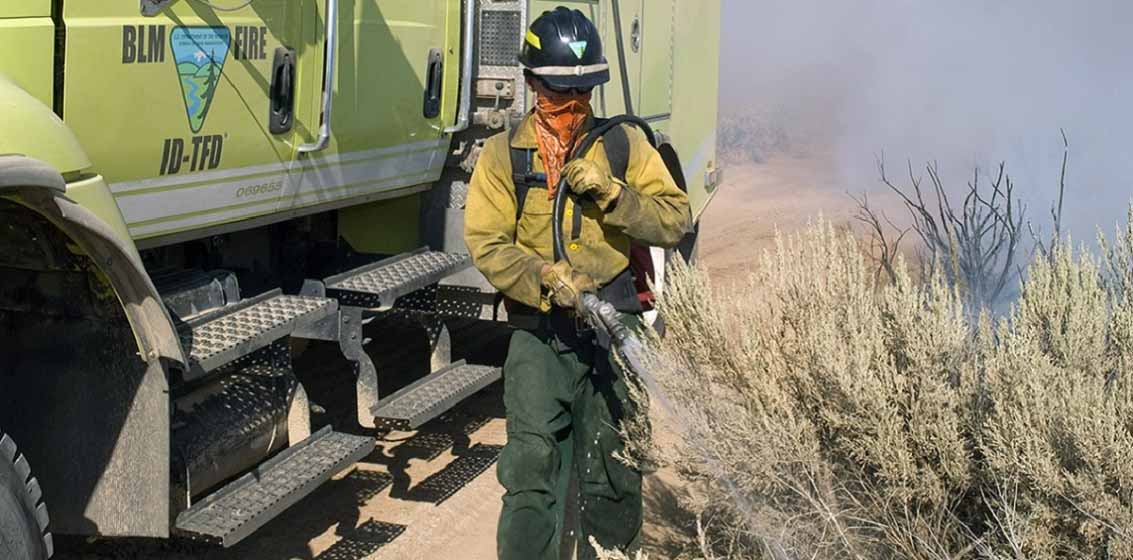
While taking active measures to protect the public and employees and minimize exposure to COVID-19, the Bureau of Land Management (BLM) continues to reduce hazardous fuels across the West and in Alaska and to plan for the upcoming fire season by maintaining and strengthening firefighting capabilities.
“We are committed to protecting our colleagues in the BLM and those with whom we come in contact during this challenging time; however, as westerners we know we must fight fire all year long and we will do exactly that,” said BLM Deputy Director for Policy and Programs William Perry Pendley. “Guided by the Center for Disease Control and Prevention as well as state and local health authorities, we continue to implement proactive COVID-19 measures to protect employees and the public, but, when it comes to fire, we have no intention of standing down.”
The BLM Fire and Aviation program works closely with, and relies on, its state and local partners for all wildfire suppression efforts. During the COVID-19 outbreak, some state governments have declared they will not permit state and local resources to respond to wildfires outside of their local jurisdiction, which will greatly limit the national response capabilities of these valuable resources. The BLM is working with these governments to address concerns and to ensure, to the greatest extent possible, that shared resources are available to be deployed wherever need may be greatest.
“In order to ensure smooth interstate wildfire suppression operations, all wildland firefighters must be permitted to cross state boundaries without restriction to ensure safe and effective wildfire operations throughout the country,” said Pendley. “We beseech our federal, state, and local partners to ensure that ability.”
Every year, the BLM works with its Federal, state, and local partners to conduct initial attack on all wildland fire incidents to suppress wildfires as soon as they ignite. Aggressive initial attack is the single most important method to ensure the safety of firefighters and the public; it also limits suppression costs. During the COVID-19 outbreak, the wildland fire agencies will continue to work to suppress wildfires with the goal of reducing wildfire size and intensity.
The BLM is also working with its Federal, state and local partners to develop specific COVID-19 wildfire response plans to provide for wildland fire personnel safety. These plans outline best management practices to limit the spread of the virus and to provide a safe working environment for all wildland fire personnel.
In addition to large air tankers and Type 1 and 2 helicopters under contract with the U.S. Forest Service, the BLM will have on contract 34 Single Engine Airtankers (SEAT), 4 water scooping air tankers, 7 smokejumper planes, 19 tactical support aircraft, and 25 helicopters for wildfire suppression efforts this year. The BLM also has access to call when needed helicopters, SEATs, Large and Very Large Airtankers, water scoopers, and tactical support aircraft.
-BLM
Red Flag Warnings in 5 states, April 28, 2020

On Tuesday the National Weather Service issued Red Flag Warnings in areas of Montana, Nebraska, Colorado, Kansas, and New Mexico.
(Red Flag Warnings can be modified throughout the day as NWS offices around the country update and revise their weather forecasts.)
AAR completed for the Lion Fire near Meeker, Colorado
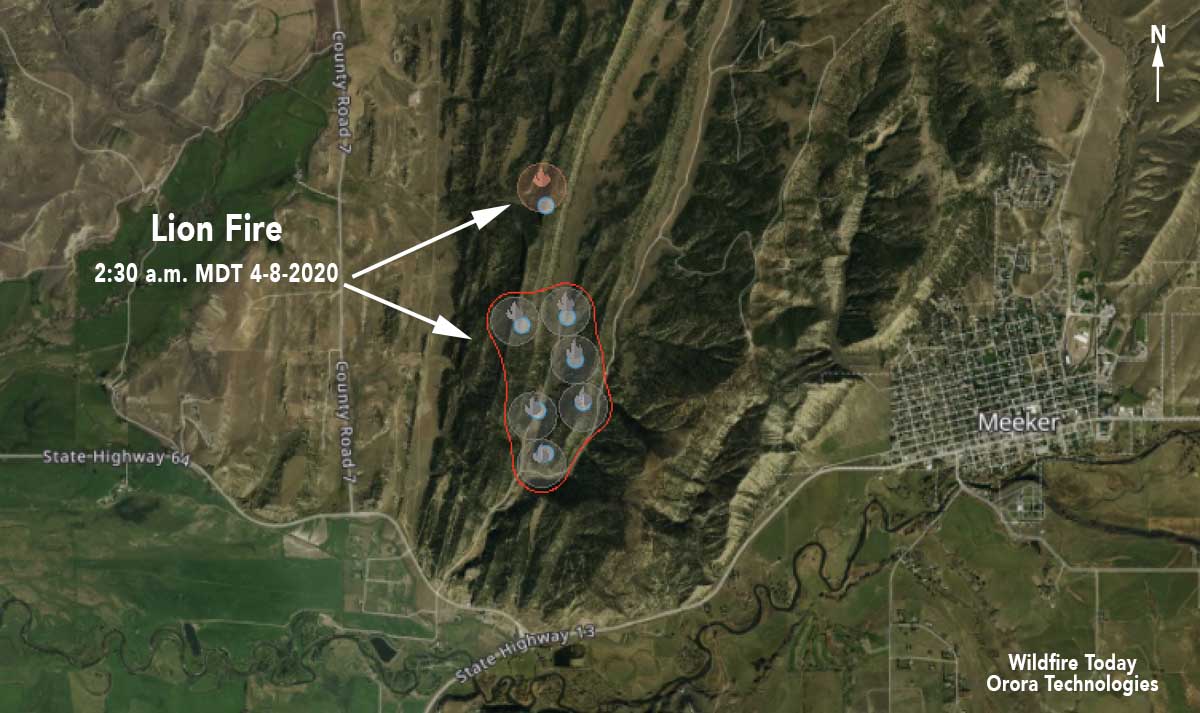
An informal After Action Review has been produced for the Lion Fire that burned about 229 acres west of Meeker, Colorado on April 7. The fire was attacked by the Meeker Volunteer Fire Department, Bureau of Land Management, and the Colorado Division of Fire Prevention and Control. By the end of the day firefighters had stopped the spread. Investigators determined that it started near a mobile home which was consumed in the fire. Several outbuildings and vehicles were also destroyed, according to Meeker Fire Chief Luke Pelloni.
Below is the ARR, distributed by the Zone Fire Management Officer:
As many of you know we had the Lion Fire last week just west of Meeker involving multiple jurisdictions/agencies. I was tasked with letting you all know how things went as far as COVID-19 measures and mitigation’s.
We have taken multiple steps in our station to limit and minimize exposure to firefighters as we are entering fire season. I believe there have been lots of good discussions and decisions made in regards to COVID-19. However, just like in everything we do the plan looks good on paper until the smoke is flying in the air. Listed below are some of the lessons learned from on the ground experiences last week.
- Social distancing is very tough in stressful situations. The crew discussed social distancing before leaving for the fire and to try and abide by the guidelines, upon arrival multiple structures/vehicles were burning and instincts to protect life and property take over.
- When evacuating public, maintaining distance is difficult when property/landowners are panicked and looking for answers and guidance.
- When working with multiple agencies the COVID-19 mitigation measures and messages have varied widely and are hard to enforce or maintain.
- Briefings are hard to conduct in the field with large crowds and maintain the appropriate distance that is recommended. We usually don’t have microphones or platforms in initial attack so harder to hear and voice critical information to multiple crews.
- Once dispatched we utilized four vehicles with eight firefighters. This idea seemed like a good idea until arrival and the parking and safety areas for vehicles was minimal. It added a bit of cluster you could say to the initial arrival to the incident.
- Upon arrival personnel jumped into different trucks and engines to engage on the fire creating more “contaminated” surfaces by different people at different times of the incident.
- It is very difficult to keep equipment sanitized throughout an incident (examples: truck radios, hand tools, chainsaws, steering wheels, compartment doors, etc.)
- A few individuals did wear masks and experienced a harder time communicating to one another thus decreasing the distance between individuals. The people who did wear masks seemed to be touching their faces and adjusting masks more.
These are a few of the lessons or experiences that we noticed on our first wildfire of the year. I think we are taking adequate measures to address issues and potential situations that crews will experience this summer. I think the list above will be some of the issues or challenges that firefighters will encounter on incidents. One concern I have is the ability to sanitize and clean work areas. We have spent an entire day trying to purchase items but our current credit card procedures are making that difficult to achieve. If anyone has any questions or concerns feel free to give me a shout anytime. Hope everyone is safe and making it through these interesting times.
End of AAR