
Average fire size decreased by 95 percent
Continue readingViking Air delays rollout of CL-515 water-scooping air tanker
Effects of the pandemic are blamed
Continue readingVideo, driving through the Bond Fire
The fire burned more than 6,600 acres in Southern California December 3, 2020
Continue readingCreek Fire on Camp Pendleton forces 7,000 to evacuate on Christmas Eve
The fire burned more than 4,200 acres west of Fallbrook, California
Continue readingPhotos of firefighting helicopters from Chicago, Sacramento, Kern County, and Santa Barbara County
Updated December 29, 2020
 Bell 412EP helicopter, Chicago Fire Department. N682FD. Photo by Jon Goldin, July 31, 2018.
At Fire Aviation we always like to receive photos of fire service aircraft, but we look forward to receiving shots of helicopters that are not often seen over wildland fires. Here are a couple of examples of ships from the Chicago Fire Department and the Sacramento Fire District.
 Bell Uh-1H helicopter, Sacramento Fire District. N114FD. Photo by Jon Goldin, Sept. 29, 2018.
Kern County and Santa Barbara UH-1H helicopters are often used on fires in Southern California. These are good shots taken by Jon Goldin, who also took the ones above. Thank Jon!
 Bell UH-1H helicopter, Kern County Fire Department. N408KC. Photo by Jon Goldin, Jan. 1, 2018
 Bell UH-1H helicopter, Kern County Fire Department. N407KC. Photo by Jon Goldin, Jan. 1, 2018
 Santa Barbara County Helicopter 308. N205KS. Photo by John Goldin
Updated December 29, 2020 to add photo of Santa Barbara County helicopter.
Neptune adopts new livery for their air tankers
The DC-10s operated by 10 Tanker will begin receiving new paint in January
Continue readingCongress passes funding bill for federal firefighting agencies
The legislation pushes, again, for the implementation of tracking system for fire resources, due by March 12, 2021
Continue readingU.S. Congress suggests Forest Service consider longer term aviation contracts
10-year contracts are being considered
Continue readingWildfire smoke carries microbes that can cause infectious diseases
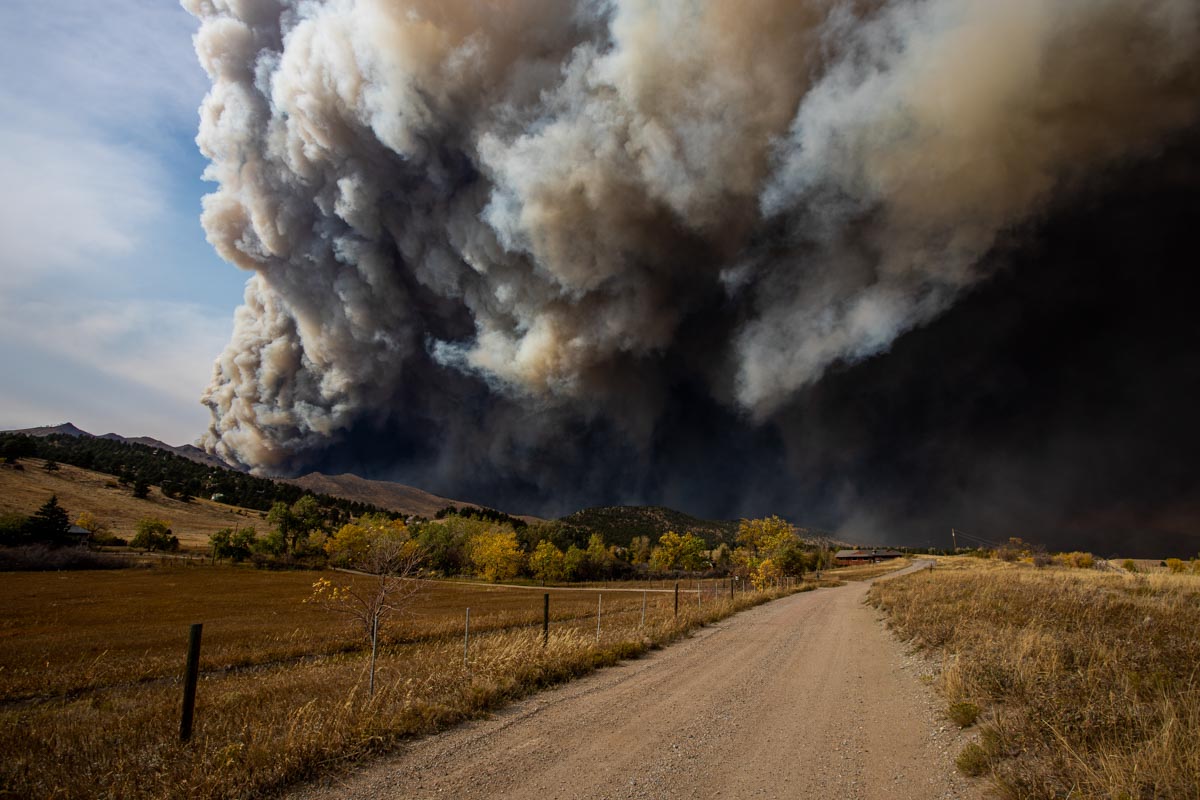
Wildfire smoke contains microbes, a fact that’s often ignored, but one that may have important health repercussions.
In 2008, Captain Matthew P. Moore, a firefighter with the Murrieta, California Fire Department, died after being infected with a rare brain-eating amoeba that usually lives in soil. A biopsy showed his brain had been invaded by the parasite Balamuthia mandrillaris which enters the body through the lower respiratory tract or through open wounds. It is believed Captain Moore inhaled the parasite while fighting wildfires.
In an article published December 18 in Science, Leda Kobziar and George Thompson called the attention of the scientific community to the health impacts of wildfire smoke’s microbial content.
Smoky skies caused by wildland fires are becoming seasonal norms, especially in some parts of the United States and Australia. In 2020, wildfires in the Western U.S. set new records and led to extremely unhealthy or hazardous air quality levels for many weeks in a row.
It’s well-documented that exposure to wildfire smoke can damage the heart and lungs. Respiratory allergic and inflammatory diseases, including asthma and bronchitis, are also worsened by smoke exposure.
“The health impact of inhaling wildfire smoke increases dramatically during high-emissions wildfires and with long exposure,” said Kobziar, associate professor of Wildland Fire Science at the University of Idaho. “Yet, the risk of infection to the respiratory tract after this exposure is frequently overlooked.”
What role do microbes in wildfire smoke play in the spread of disease?
Wildland fire is a source for bioaerosol, airborne particles made of fungal and bacterial cells and their metabolic byproducts. Once suspended in the air, particles smaller than 5 μm can travel hundreds or even thousands of miles. Their movement depends on the fire behavior and the atmospheric conditions.
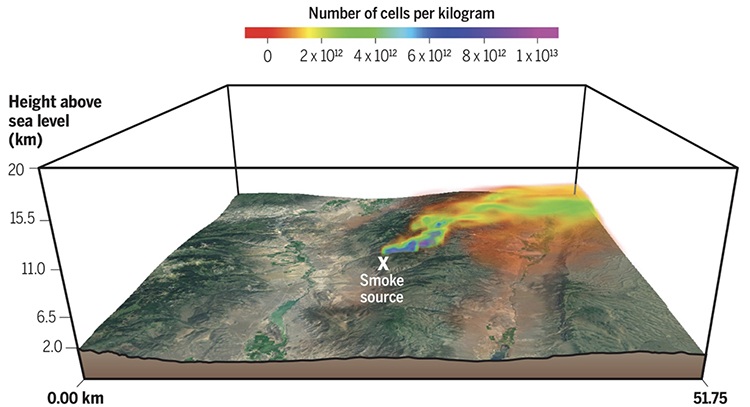
Bacteria and fungi can be transported in these wildland fire smoke emissions. The consequences for more immediate populations, such as firefighters on the front line who often spend up to 14 consecutive days in smoky conditions, are likely greater given that microbial concentration in smoke is higher near the source of a fire. For example, the U.S. Centers for Disease Control and Prevention counts firefighting as an at-risk profession for coccidioidomycosis, an infection caused by a pathogenic fungus well known to be aerosolized when soils are disturbed.
“We don’t know how far and which microbes are carried in smoke,” said Thompson, associate professor of Clinical Medicine at UC Davis. “Some microbes in the soil appear to be tolerant of, and even thrive under, high temperatures following wildfires.”
As Kobziar explained, “At the scale of a microbe, fire behavior research has shown that heat flux is highly variable, so it may be that many microbes aren’t even subjected to the high temperatures for very long. They may also be protected in small clusters of particulate matter.”
The potential for wildland fire’s microbial content to affect humans who breathe in smoke, especially from high-emissions wildfires or for multiple weeks, is appreciable. How far and which microbes are transported in smoke under various conditions are critical unknowns, but the relevance of these questions is increasing with longer wildfire seasons and higher severity trends.
Learning from the centuries-old prescribed fire practices of Native Americans
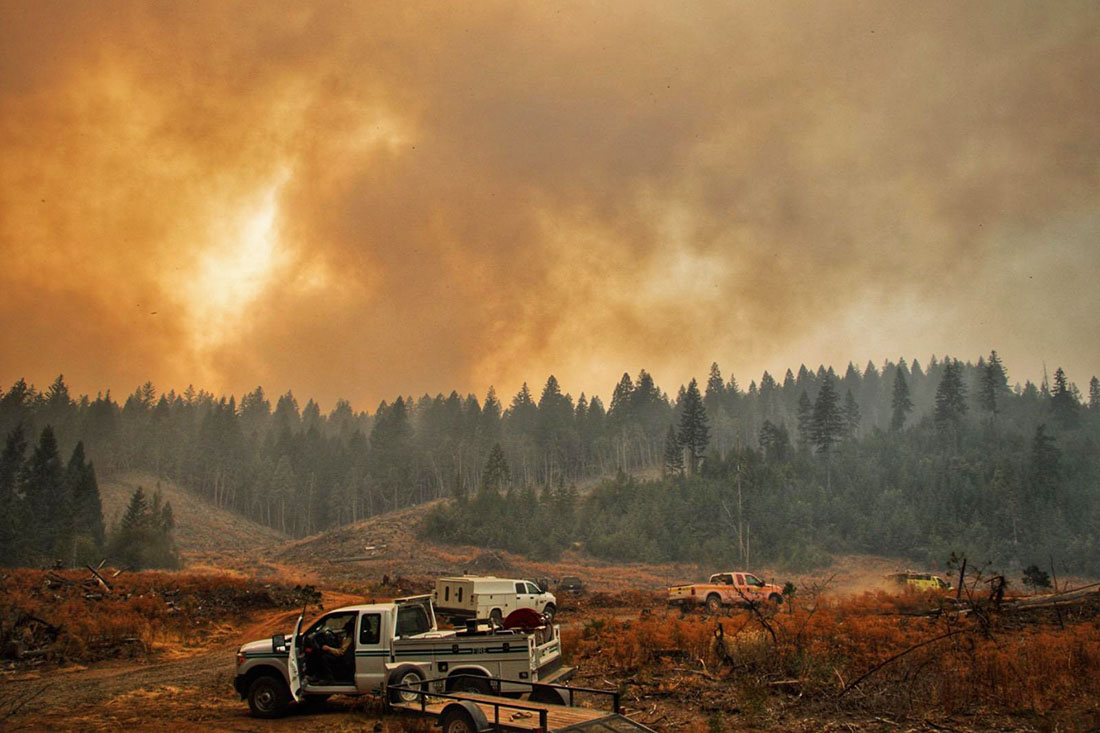
National Geographic has a long, interesting article about the differences in Northern California forests before and after the resident native Americans were prohibited from continuing their practice of prescribed burning. The author, Charles C. Mann, interviewed members of the Karuk tribe that were affected by last summer’s fires, including the Slater Fire that destroyed hundreds of structures near Happy Camp. They are hoping to restore, in a current-day context, a more robust prescribed fire program.
Below is an excerpt:
…The anti-flame campaign profoundly altered the American environment. Wildfire had been common in western forests. Much or most of that burning was due to the area’s first humans, who torched away the undergrowth that fueled future fires before it could build to dangerous levels. Thousands of years of controlled, targeted combustion created a landscape that was a patchwork of new and old burns—meadows, berry patches, park-like woodland, and so on. As these flames ceased, a new kind of forest emerged: a nearly fire-free ecosystem that was unlike anything that had existed since the end of the Ice Age.
[Kathy] McCovey is a retired Forest Service anthropologist. With [Joe] Jerry, she belongs to a Karuk fire-lighting brigade. For years they had been begging the Forest Service to let them burn the brush on the slopes around their homes. If you don’t let us burn, they had warned, there will be a catastrophic fire.
“Whoops,” McCovey said.
When something—lightning, a campfire, a downed utility line, a spark from a tool hitting a rock—sets the forest debris on fire, the flames climb the “fuel ladder” to shrubbery and young trees, then jump to the crowns of the older trees, creating a high wall of flame that can be caught by the wind. “We’re going to have to get these trees out,” she said, pointing to the mass of fire-blasted fir around us. “If they don’t, in five years it will burn again and be worse.” (Here’s how wildfires get started—and how to stop them.)
To McCovey, the problem was not just that the new forests were flammable. It was that they were “a food desert for animals and people.” The Forest Service and western state governments, like her ancestors, had managed the forest—had, in effect, farmed it. But the Forest Service and the states had farmed the forest to produce a single commodity: timber. McCovey’s ancestors had farmed the landscape for many reasons.
(end of excerpt)
More information is at the Indigenous Peoples Burn Network, a growing collaboration of Native nations, partnered with nonprofit organizations, academic researchers, and government agencies. It is a support network among Native American communities that are revitalizing their traditional fire practices in a contemporary context.