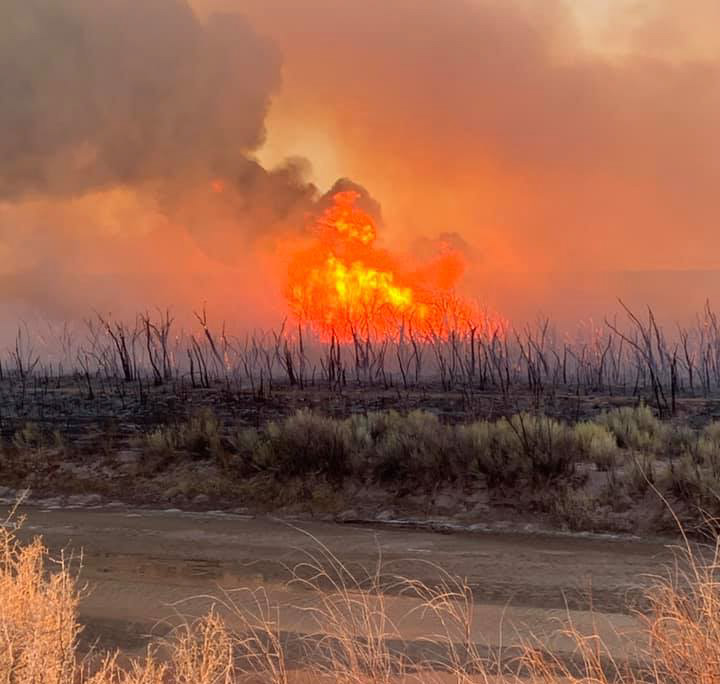
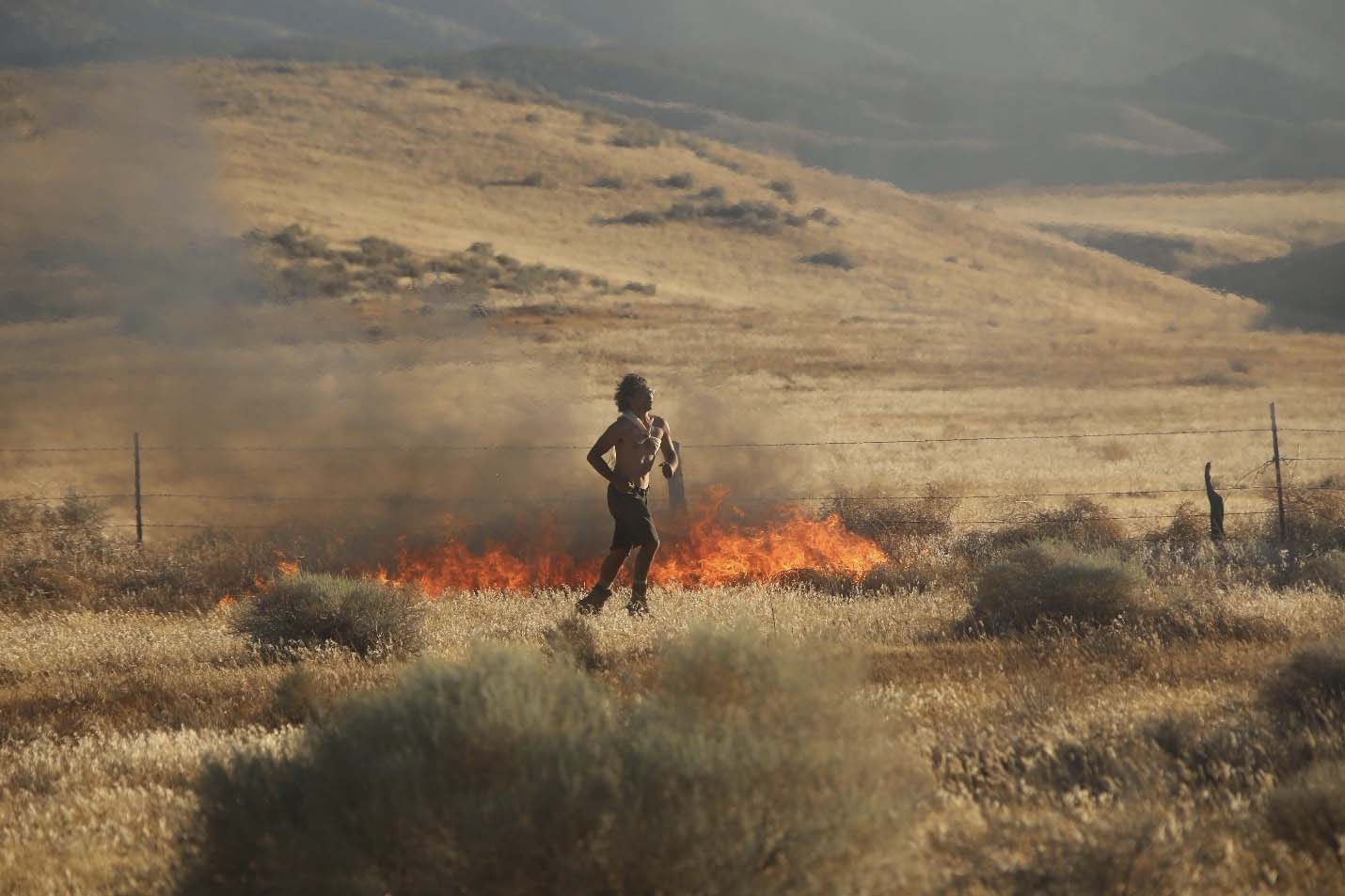
Little Fire SE of Winslow, AZ March 1, 2021. AZ State Forestry photo
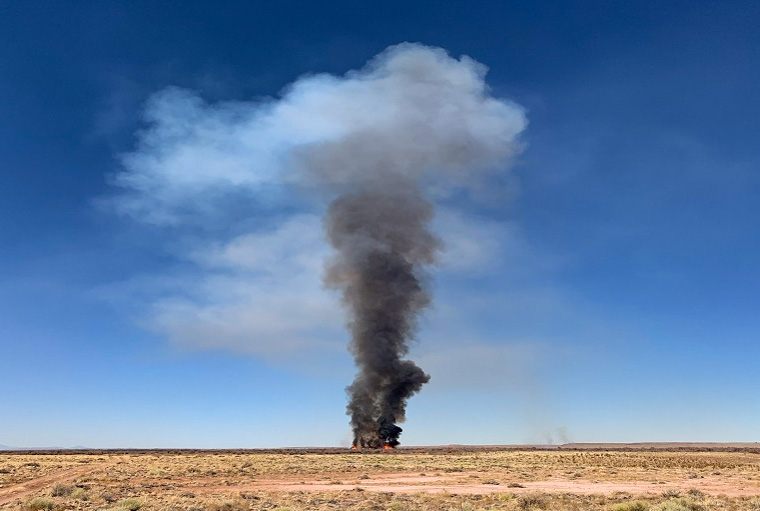
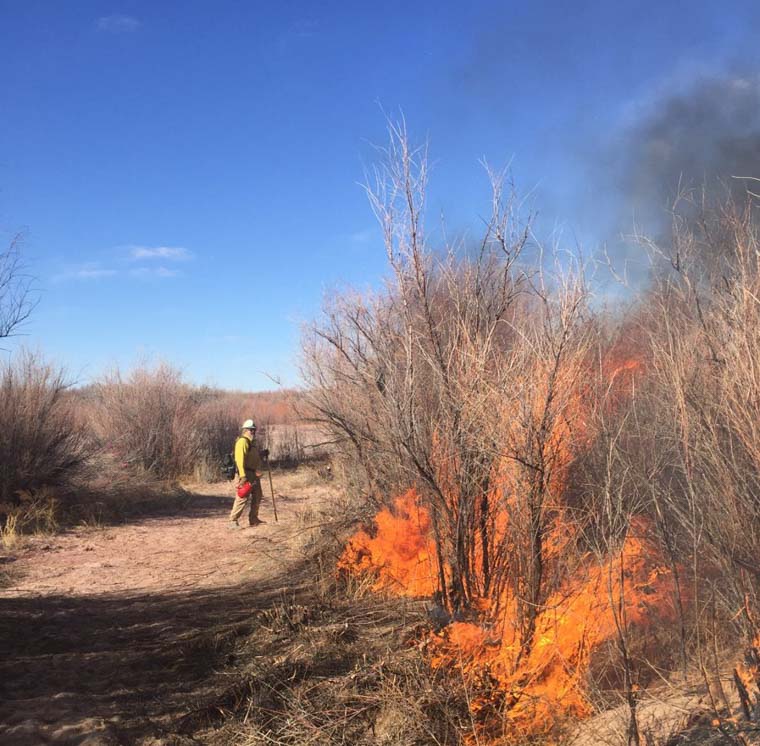
The “Little Fire” six miles southeast of Winslow, Arizona was mapped Monday at 461 acres. Much of the additional growth can be attributed to a burnout operation along two miles of the Little Colorado River, which incidentally, removed invasive salt cedar near the river.
Little Fire SE of Winslow, AZ March 1, 2021. AZ State Forestry photo
The cause is still listed as human, but no ignition source has been released.
Originally published at 12:20 p.m. MST February 28, 2021
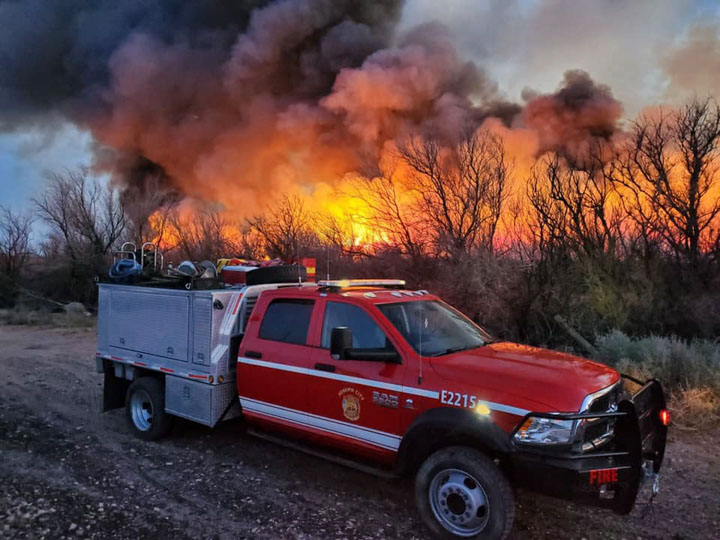
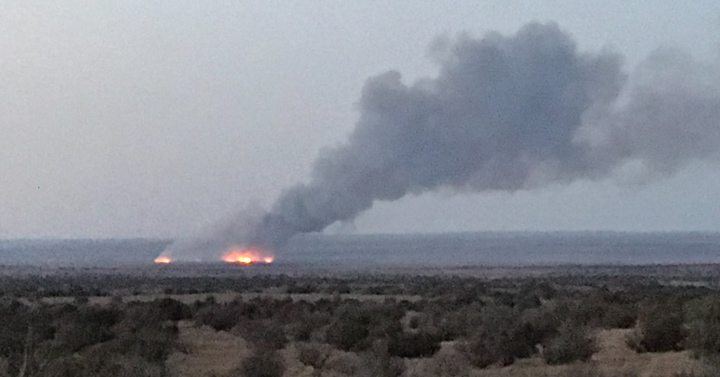
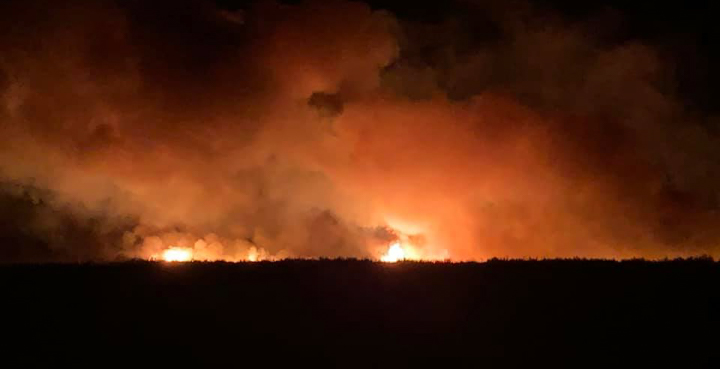
Little Fire, Feb. 27, 2021. Photo by Joseph City FD.
The “Little Fire” that started Saturday six miles southeast of Winslow has burned at least 100 acres, the Arizona Department of Forestry and Fire Management said in a Sunday morning update. Firefighters from Winslow, Joseph City, and the ADFFM stopped the spread Saturday night but winds are predicted to increase Sunday afternoon out of the north at 16 to 22 mph. The temperature will be in the low 40s.
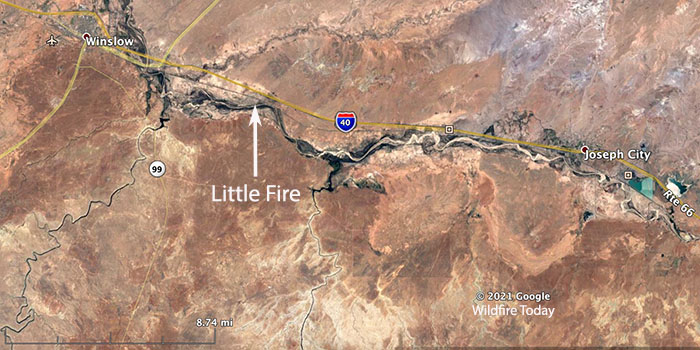
Map showing the location of the Little Fire in Arizona, Feb. 27, 2021.
The Little Fire started on tribal property and moved onto state protected land, burning through salt cedar near the Little Colorado River. Smoke has been visible from Interstate 40 near mile markers 261-263.
Investigators determined the blaze is human-caused, but the ignition source is unknown.
Little Fire, Feb. 27, 2021. Photo by Joseph City FD. Little Fire, Feb. 27, 2021. Photo by Jeff Zimmerman. Little Fire, Feb. 27, 2021. Photo by Joseph City FD.
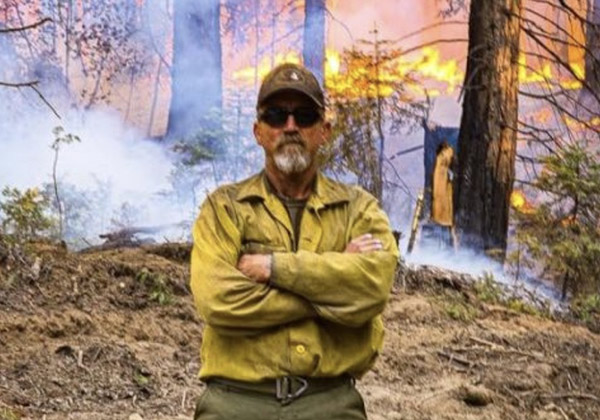
A hotshot Superintendent who needs a kidney transplant is hoping someone will step forward who can spare one in order to save his life.
Bill Kuche, Superintendent of the Flagstaff Interagency Hotshots is suffering from a kidney disease that started when as a child he contracted an illness that permanently damaged the organ.
His wife has started a GoFundMe page to raise funds for his treatment and to search for a live donor. Here is the text from the site:
BILL (WILLIAM) KUCHE NEEDS A KIDNEY
My name is Lyndsey Kuche, my husband Bill Kuche is the Superintendent of the T1 Flagstaff Interagency Hotshots in Arizona. We celebrated our 20th Wedding Anniversary today! We have 4 children together, Grace is 20, Carson is 19, Dharma is 11, and our adopted son Marcel who we welcomed to our family back in 2015 is also 20. Bill has dedicated his life the past 30 years to wildland firefighting, mentoring others, and has created unlimited opportunities for thousands of firefighters and citizens. Bill has always led a positive life of health, fitness, and unconditional devotion to his family, friends and colleagues.
Bill has Chronic Kidney Disease (CKD), he is in stage 5 of this disease and is desperately in need of a kidney transplant. I’ll offer you some background information of how CKD came into Bill’s life. When Bill was a child, he contracted “Strep Throat” (streptococcal virus). The virus attacked his kidneys and created a condition called “glomerulonephritis”, creating “holes” in both his kidneys. Bill has always demonstrated the ability to persevere throughout his life despite what happened to him when he was a kid.
Now, I am reaching out for help!
If anyone out there is willing to become a “Live Donor” for my husband Bill Kuche, please visit mayoclinic.org/livingdonor to get started.
The average wait time for a deceased organ donor’s kidney is approximately 5 years. Unfortunately, the wait time is not on our side. This fuels my need to reach out to you all asking your help for Bill. Please share this through your networks and help us spread the word in our wildland community to inspire others to become a potential living kidney donor for Bill.
My main priority is to find him a new kidney, as soon as possible. We have some friends who have learned of his need, reached out to me for information and have attempted to become a “Live Donor” for him. But, having gone through the process and screening myself, I know that sometimes the ability to be a live donor can very suddenly not be a possibility. Therefore, abruptly eliminating a person’s altruistic kidney donation to him. This is another reason why I am reaching out to you to help me spread the word.
Thank you for your attention and time to read my letter to you all,
A Coulson Chinook and Blackhawk, at Talca, Chile. Coulson photo.
(From Coulson Aviation)
Coulson team members work all over the world supporting communities and firefighters which means adapting to different systems, operations and firefighting partners.
In Chile, it’s also meant adapting to operating in a different language. While some of the team members speak Spanish, each of the 4 Chinooks and a Blackhawk fly with a pilot translator whose job it is to translate the instructions from the aerial supervisor or ground crews.
Pilot Andy Thomas is currently flying a tanked Chinook in Chile and said it was a lot of fun working with the translators, some of whom have fire experience.
“A lot of the translators are highly experienced airline pilots who are a great help on the radios navigating the flight paths and fire operations,” he said.
Coulson pilot Colin Morgan, who has been operating a Chinook with a Bambi bucket, said the pilot translators did an amazing job in dynamic circumstances. Colin worked in Chile last year for Coulson, also flying a Chinook.
“The CH47 is, in my own opinion, the best helicopter operating today. It was designed for the military to be versatile, technologically advanced, yet forgiving and simple to operate. It’s also simply a pleasure to fly,” he said.
Andy, who has decades of experience operating heavy helicopters, said the Chinooks were designed to lift a tremendous amount of weight.
“With us that’s water, and it’s really good at it,” he said. “It’s a lot of fun to fly and it makes us pilots look good!”
Coulson photo.
Coulson has four Chinooks and one Blackhawk working on fire contracts in Chile.
It defines critical, core fire science capabilities for understanding fire-related and fire-responsive earth system processes, and informing management decision making
An arsonist in the midst of setting over a half-dozen fires in dry vegetation during a “red flag” condition in California. Photo courtesy of Jeff Zimmerman
By Joe Konefal and Ed Nordskog
The one criminal who possesses the power of a nuclear weapon at his fingertips is the wildland arsonist.In certain areas of the world, if the weather and fuel conditions are favorable, a wildland arsonist has the instant ability to burn an entire community to the ground, and kill scores of people, their pets, livestock, and the wildlife in the area.All of this carnage for the mere price of a match, a lighter or a road flare.
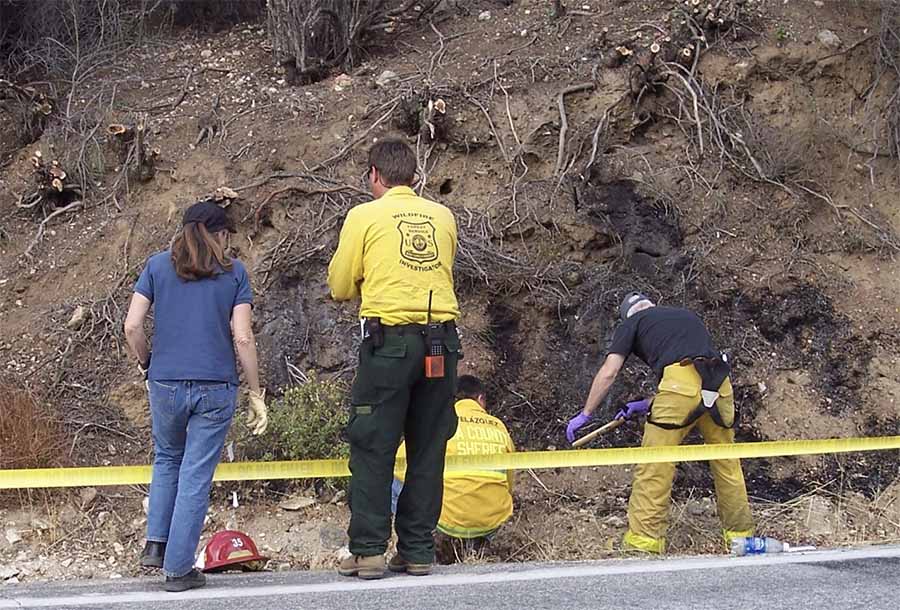
The good news is that there aren’t that many people intentionally setting arson fires in the wildlands, as yearly statistics prove that the overwhelming number of wildfires are not acts of arson.The less good news is that historically, many of the actual wildland arson cases go “unsolved”.The reasons for this are many, but one important reason is that compared to their urban counterparts, wildland arson investigators working for public agencies get very little money for resources and investigative training.Wildland arson cases have two distinct phases; the scene work, and then the follow-up criminal investigation.Many wildland investigators have a high degree of skill when conducting the “Origin and Cause” investigation at the scene, but they often lack the years of experience and ongoing certified training to pursue the criminal investigation portion of the case.There are currently very few schools, books, or online sources out there dedicated specifically toward conducting an arson investigation in the wildlands.
That’s too bad.Analysis of case histories shows that a significant portion of wildland arsons are committed by a small number of persons…the serial arsonists.The majority of arson series are eventually solved, provided that the arsonist continues setting fires.It is not unusual for investigators to learn that a single serial arsonist in the wildlands had set twenty to one hundred fires (or more) prior to the arrest.
Threat Assessment
Traditionally, the fire service (urban and wildland) rates arson fires by their damage (dollar loss) or their size in acreage.This may greatly affect how much attention, manpower, and resources are devoted to an investigation.But, to an investigator, the size of the fire has very little to do with assessing the threat level of an arsonist, as the size of the fire event is completely out of the hands of the arsonist.The below factors are much more important to consider when conducting any threat assessment during a wildland arson investigation of an unknown subject.These factors are important when considering the intent of the arsonist.
-Large number (more than three) of suspicious or arson fires in an area
-Rapid frequency of suspicious or arson fires in an area
-Arson fires purposely set in extreme fire conditions
-The use of an incendiary device by the arsonist
If any of these four factors are present, then even small fires or failed arson events (all serial arson cases have these) are to be considered high threat.If an investigator determines that an offender is high threat, then the investigator must take immediate steps to approach this investigation as a major case investigation, and employ an arson task force approach to the case.
It is well known among modern criminal investigators that if you dedicate enough resources on any case, you can probably solve it fairly quickly.The real issue is that public agencies seldom have the luxury to focus on any one case until it gets media attention.This causes “small” fires set by arsonists to be classified as a “nuisance”, and put on the back burner for weeks or months until the arsonist sets a much larger or more destructive fire.
Our position is that through training, and a proper threat assessment after every arson event, (small or large), investigators will more quickly focus resources on an emerging problem before the disastrous arson attack takes place.
Arson Task Force Approach and Investigative Mindset
Task Force: Federal and local investigators team up to work a serial arson case. The suspect was convicted for nine fires and had three prior serial arson convictions dating back thirty years. Courtesy Ed Nordskog’s case files.
This investigative mindset simply means treating the case as a major case from the beginning and using sufficient resources to solve the problem.A task force can be as few as three to four investigators, or up to hundreds of investigators and support personnel.The key to every task force is simple:Bring the right people to the team, not the most.