
Off topic comments encouraged
Continue readingStudent wins CSPAN prize for creating wildland fire video
 Linnea Gebauer, prize winner in CSPAN documentary competition.
C-SPAN announced that earlier this month that Linnea Gebauer, a 12th grade student at Klamath Union High School in Klamath Falls, Oregon, is a second prize winner in C-SPAN’s national 2022 StudentCam competition. Ms. Gebauer will receive $1,500 for the documentary, “Fire Season,” about the National Cohesive Wildland Fire Management Strategy. The competition, now in its 18th year, invited all middle and high school students to enter by producing a short documentary. C-SPAN, in cooperation with its cable television partners, asked students to explore a federal policy or program and address the theme: “How does the federal government impact your life?”
In response, more than 3,000 students across the country participated in the contest. C-SPAN received over 1,400 entries from 41 states, Washington, D.C., Morocco and South Korea.
In February we reported that Ms. Gebauer had entered the competition and included her video in the article. We wrote, “It is obvious that Linnea put a great deal of time and effort into research, planning, interviewing subject matter experts, and editing the dozens of clips into the finished product. Excellent job, Linnea!”
Here again is her video:
Several government officials recorded congratulatory videos for Ms. Gebauer, including National Park Service Division Chief for Fire and Aviation Management Bill Kaage and Oregon Governor Kate Brown.
Introduction to the drone academy
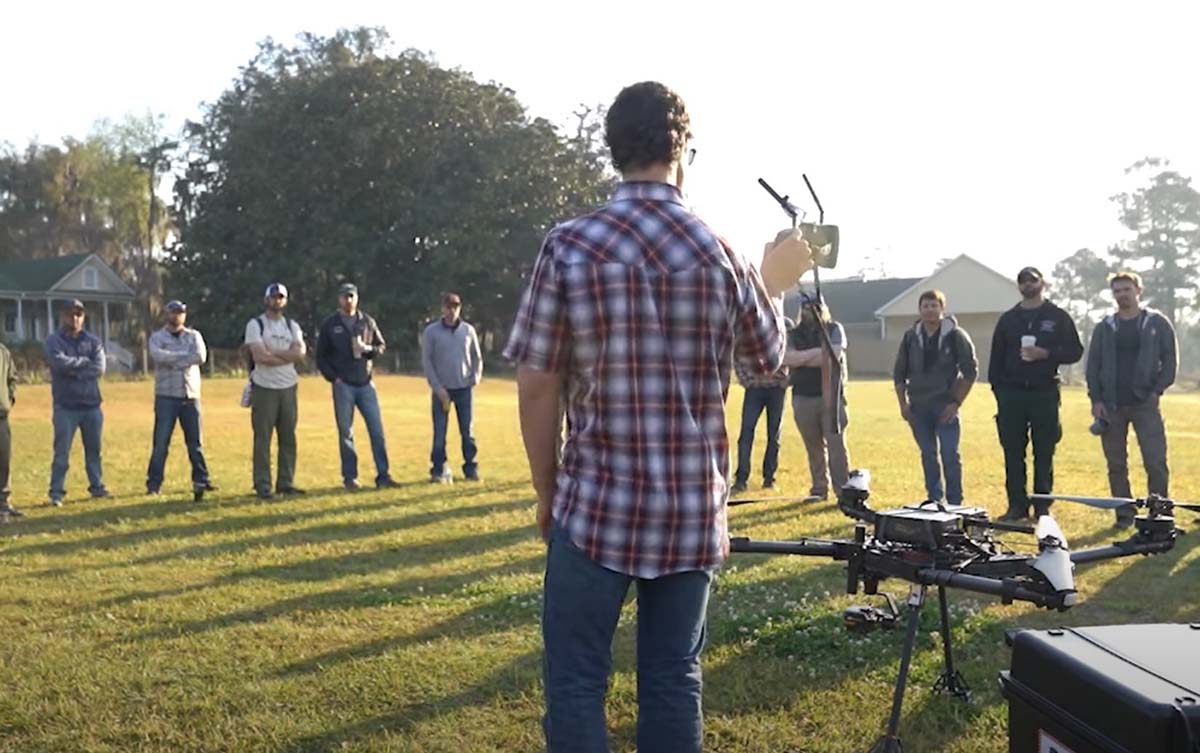 Still image from the Unmanned Aerial System Aerial Ignition Academy video, which is below.
The Unmanned Aerial System Aerial Ignition Academy trains personnel in the use of drones on prescribed fires and wildfires. The video below is a brief description of the academy.
San Diego County Sheriff agrees to purchase Bell 412EPX helicopter
It will be the first twin-engine helicopter in the Sheriff’s fleet
Continue readingStrong south winds kept the Crooks Fire active Wednesday
Eight miles south of Prescott, Arizona
Continue readingFrom the evils of fire, to using and living with fire
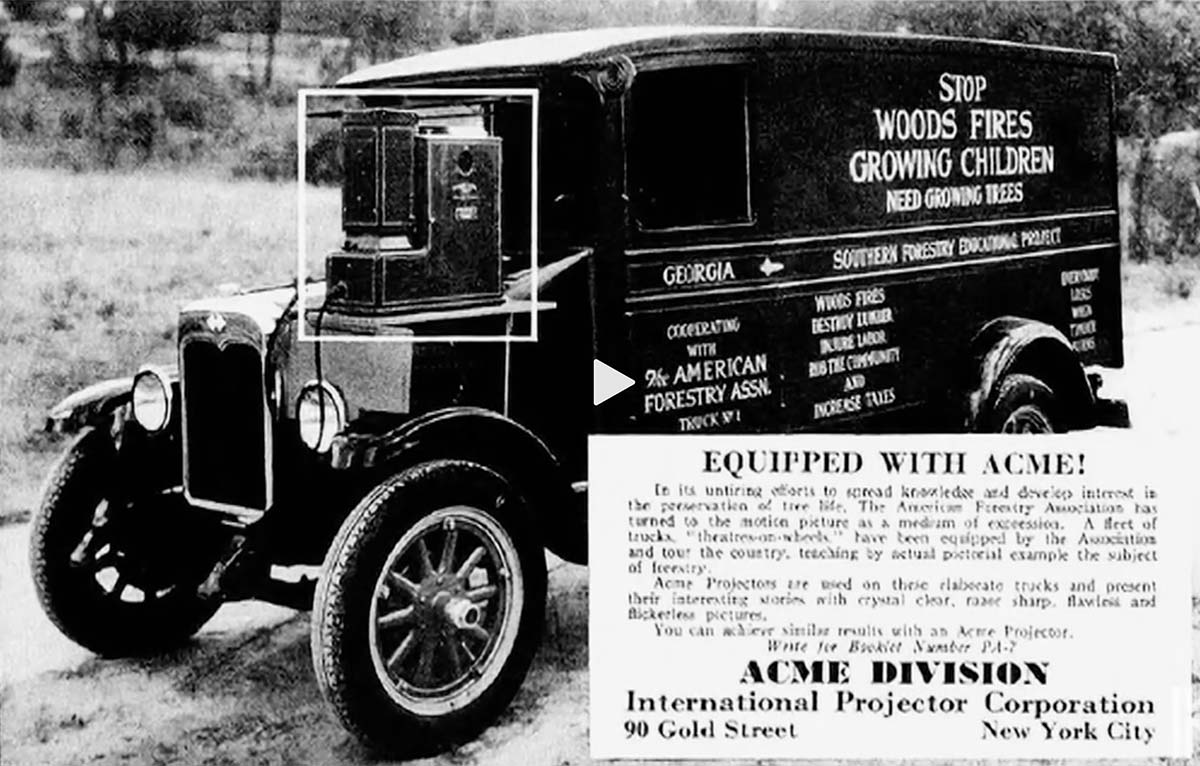 A truck with a movie projector visited rural communities to teach people about the evils of wildfire. PBS.
A PBS program, “The future of Fire,” takes us from the 1920s when trucks visited rural communities in the Southeast and used a projector to show a movie on the side of barns about the evils of fire, to today when modeling tools help fire managers make better decisions about using and managing fire.
"Her vision is that she'd be able to sit on her front porch and just watch the fire go by and be completely unconcerned because the conditions around her home were such that she would be confident that she had done her work and her neighbors had done their work and it was safe to actually have fire play an active role in restoring the landscape. And that we don't look at all smoke as bad, that we be really working toward seeing smoke and have that be a positive experience, that it's like, oh, the forest is under renewal right now."

Anne Bradley, Forest Program Director, The Nature Conservancy, paraphrasing someone she knows who lives in the forest.
Forest Service facing difficulties hiring firefighters
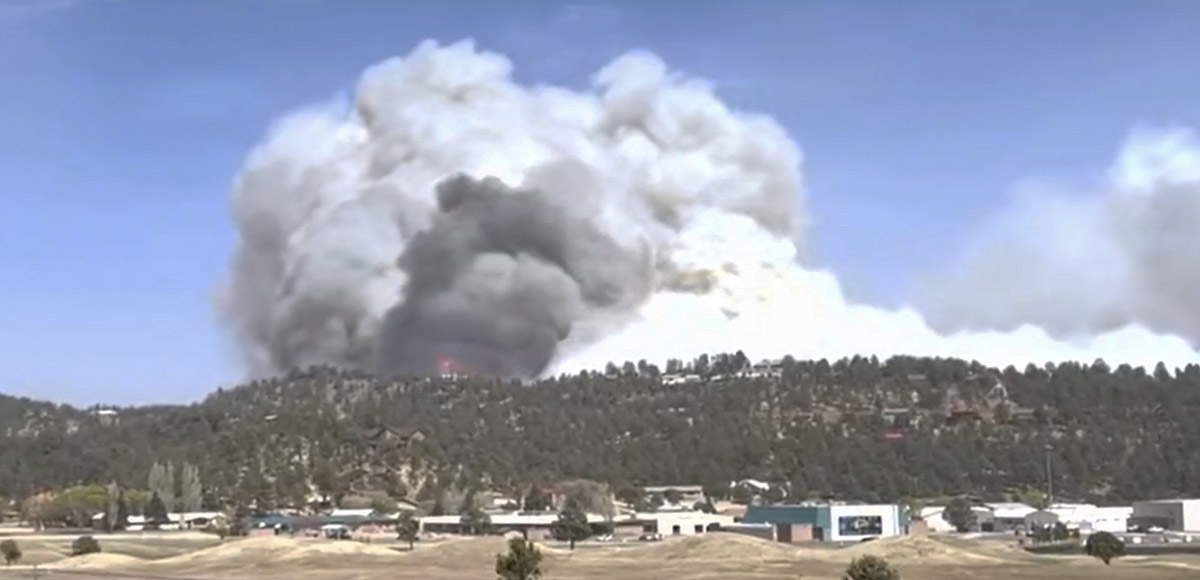 McBride Fire in southern New Mexico. From Melissa Gibbs KRQE video April 12, 2022.
When the US Forest Service Deputy Chief of State and Private Forestry testified before members of Congress on April 5 that a firefighter hiring event “went very well”, the event had not started yet.
 Jaelith Hall-Rivera, US Forest Service Deputy Chief of State and Private Forestry, testified April 5 before a House Committee.
“We just completed an additional fire hire event in California at the end of March and those numbers are still coming in,” Ms. Jaelith Hall-Rivera said. “I do think we are on pace. By all accounts that hiring event went very well. Importantly what we are seeing is a very high acceptance rate in our permanent and seasonal permanent firefighting positions, which is what we want.”
In an article published today, Brianna Sacks of BuzzFeed News reported that the hiring event actually began April 11, six days after Ms. Hall-Rivera’s testimony, and is scheduled to go through April 29.
Ms. Hall-Rivera’s statement was in response to a series of questions from Rep. Katie Porter from California. You can watch this exchange in the video of the hearing we posted April 5 as part of a summary of the testimony before the House Subcommittee on National Parks, Forests, and Public Lands. Rep. Porter’s excellent questions begin at 138:35.
Below are excerpts from the BuzzFeed article:
A Forest Service spokesperson told BuzzFeed News that the deputy chief made an “error” because she “didn’t have all the information in front of her.”
“There are several hiring events throughout the year, and I think she was thinking of a different one in a different region,” the spokesperson said, but he did not provide specifics as to which one that might have been. The spokesperson also did not have hiring numbers that might back up Hall-Rivera’s assurances.
Interviews with firefighters in Colorado, New Mexico, Oregon, Washington, and California, as well as internal communications, hiring data, org charts, and surveys from the nonprofit Grassroots Wildland Firefighters, also tell a different story.
For example, in a Feb. 15 meeting hosted and attended by senior Washington officials, fire directors from across the US shared their issues with hiring, according to meeting notes obtained by BuzzFeed News. In New Mexico, where fires are currently raging, leaders said multiple hotshot crews would not be fully staffed. In the Pacific Northwest and Alaska, leaders said there is a “lack of candidates” and they are “unable to staff seven days in many places.” There is a “continued decline of folks to do the work.”
As California, Oregon, Utah, Washington, and Colorado gear up for fire season, interviews with three Forest Service employees familiar with hiring say the situation is grim. Without a serious staffing push, engines will sit idle, helicopters won’t be able to fly daily, crews won’t be able to start the season on time, and those who have worked multiple seasons in the field aren’t sure how much more they can stretch themselves without falling apart, they said. The Thomson Reuters Foundation, which also recently investigated systemic staffing issues, highlighted retention issues due to pay and housing.
In parts of Montana and Idaho, which had 700 seasonal workers last year, only 460 have returned for this fire season, a source familiar with the numbers said. And after last year’s Fire Hire, California had filled only 56 of 781 open positions, according to data obtained by BuzzFeed News. As of April 8, two days before this year’s hiring push, California had more than 1,560 vacancies, according to a review of the state’s openings.
More and more articles like this are being published documenting the hiring and retention difficulties that face the US Forest Service and Bureau of Land Management.
From Thomson Reuter Foundation News, April 25, 2022:
An engine captain involved in temporary hiring in northern California indicated that almost all Forest Service forests in the area expected to have less than 65% of full staffing for firefighters this year, some below 50%, according to a federal firefighting source who spoke on condition of anonymity.
“Fundamentally, people don’t want to take jobs because they can’t find a place to stay,” [Kelly] Martin [of the Grassroots Wildland Firefighters] said.
One female wildland firefighter – who lives out of her camper in California to save on rent – said proposals to increase base pay would not make up for the lack of an attractive career path for more experienced firefighters.
“Just raising the wages for those coming into fire is not going to be enough to keep people around,” she said, asking not to be named.
Wildfire in Southwest Alaska burns more than 10,000 acres
Less winter snow than usual, and dry, windy weather contributed to the growth
Continue readingMexican helicopter on firefighting mission crashes
Near Mazatlan
Continue readingChannel Islands air tanker base refurbished to store five times as much retardant
It can now accommodate Very Large Air Tankers
Continue reading