


Mid-Missouri communities are ripe for an LA-style wildfire disaster, and experts have rung the alarm bells for years. Communities near the Lake of the Ozarks, in particular, have a higher chance of wildfires igniting than nearly every other community in the nation, and the likelihood is only expected to increase in the years to come.
Ground zero for severe urban wildfire concerns in Missouri is Lebanon. The city’s wildfire likelihood is higher than 84% of communities in the nation, and 99% higher than other communities in Missouri, according to the US Forest Service’s “Wildfire Risk to Communities” dataset.
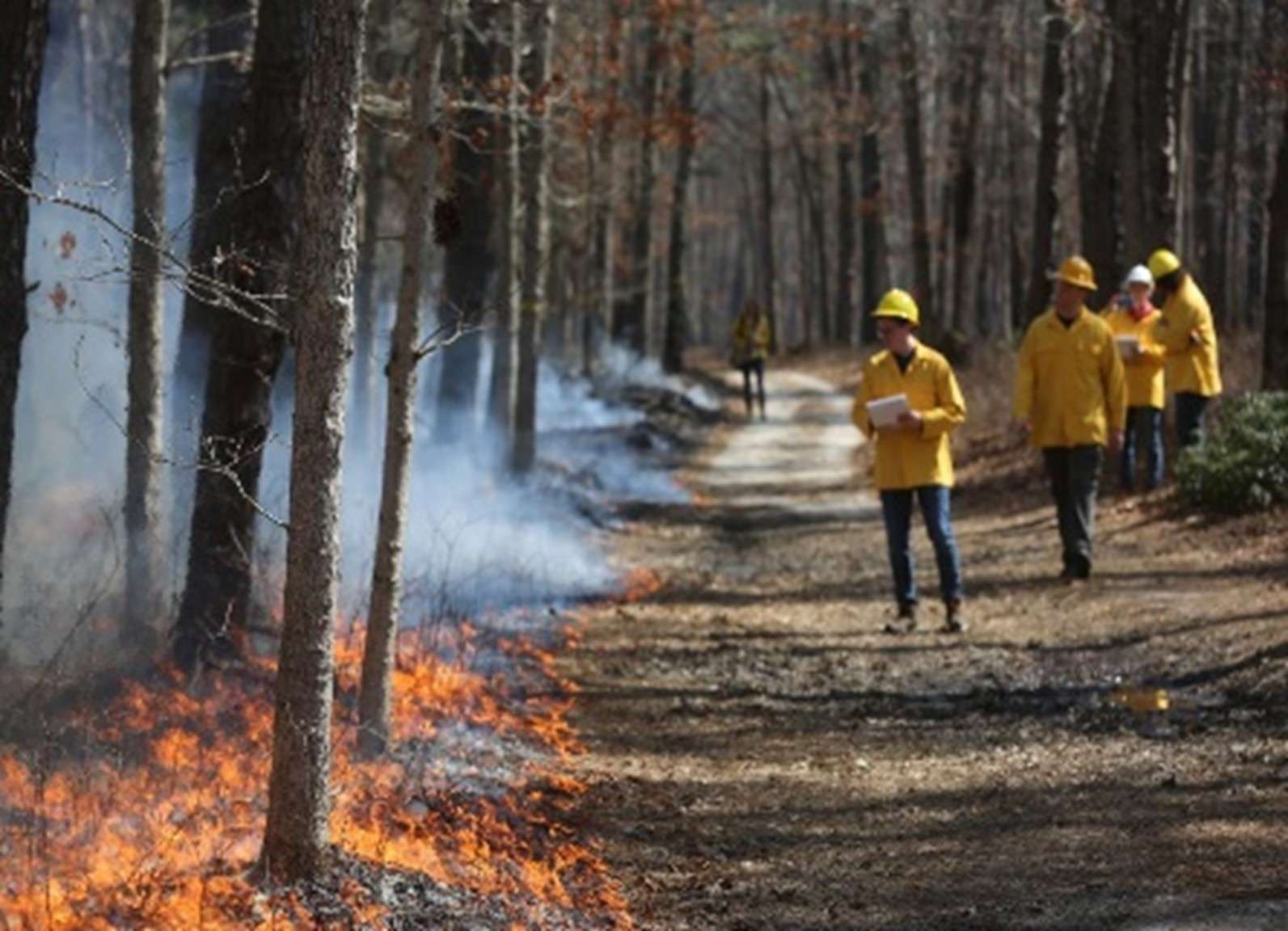
The cause is, in part, due to the region’s woody encroachment of eastern red cedar and other non-fire-tolerant vegetation, driven by a more-than-century-long absence of fire on Missouri’s landscape. The fire suppression regime, however, is slowly being reversed throughout the state. A Prescribed Burn Association movement is working to reintroduce “good” fire to Missouri through prescribed low-intensity fires.
Federal and state agencies largely can’t burn in the state because of the wide-sweeping privatization of land. Around 93% of Missouri’s 44.6 million acres is privately owned, meaning officials have to convince landowners that fire is both good and necessary on their land before a prescribed fire can be set.
That convincing is done on the neighborhood level by Prescribed Burn Associations, or PBAs, in the state overseen by the Missouri Prescribed Fire Council. The most consequential of these associations is the Niangua Basin Prescribed Burn Association, which oversees Missouri’s most wildfire-prone counties of Camden, Dallas, Hickory, and Laclede.
“It’s become an organization of learning and neighbors helping neighbors,” Lance Dunbar, who runs the PBA, said. “The PBAs were the genesis of the Missouri Department of Conservation to help organize prescribed burning. They’re now in almost every county in the state.”







