


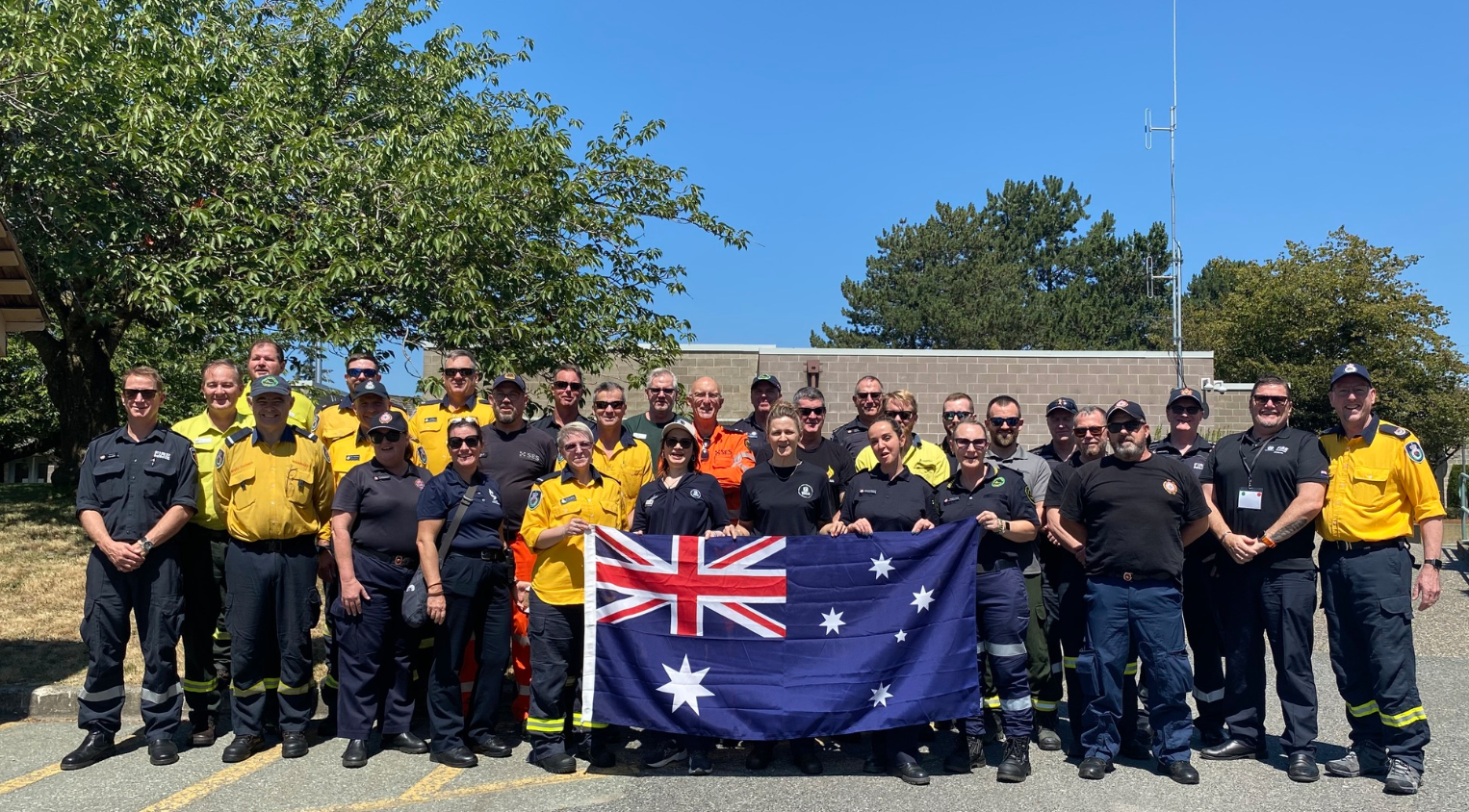
A decades-long arrangement that shares firefighting resources between Australia, United States and Canada is under threat from increasingly overlapping fire seasons.
The two regions’ wildfire seasons historically peaked at opposite points of the year, making the partnership a no-brainer. Lengthening fire seasons in both regions, thanks to climate change, is placing more constraints on the resource-sharing partnership and shortening pre-season preparation windows.
A new report from researchers in Australia, Germany, and Switzerland used data from the Canadian Fire Weather Index and computed season length statistics to estimate how much the two seasons’ wildfire seasons will overlap over the next decades. The researchers found the overlap in western North America and eastern Australia has increased annually for generations, and the overlap’s increase is expected to quicken.
“We find that the overlap is projected to increase by ∼4 to ∼29 days annually by 2050,” the report said. “Our analysis shows that the length of fire weather season overlap between eastern Australia and western North America has increased by approximately one day per year since 1979.”
The overlap between the two regions was most consistent during the end of the fire weather season in western North America and the beginning of the fire weather season in eastern Australia. Specifically, the years with greatest overlap were seen when the fire weather season in eastern Australia was longer than average, while high overlap still happened during times of average fire weather days in western North America.
Researchers were also concerned that Fire Weather Index values, or measurements of major drivers of fire weather like high temperature, low humidity, and wind speed, were also higher during years of greater overlap, heightening the risk of extreme fires.
“We argue that the changes in risks to firefighting cooperation come not only from a general increase in fire weather season overlap, but also from the increased probability of extreme fires,” the report said. “An increased probability of extreme fires … implies possible changes in the frequency of disasters that require an emergency response, for example, with an exchange of personnel as experienced in 2019–20 or 2023.”







