


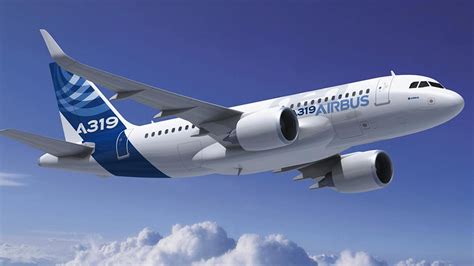
An aerial firefighting company will soon introduce a new aircraft to the United States’ wildfire suppression arsenal as it begins upgrading a portion of its air tanker fleet.
Neptune Aviation Services, based in Missoula, Montana, recently announced it would begin partially transitioning its airtanker platform from BAe 146s to Airbus A319s. The transition is expected to be completed by 2027, with the company operating between 10 to 15 aircraft in its fleet, a mix of A319s and BAe 146s depending on the evolving aerial firefighting market.
The company is the first to convert A319 planes for aerial firefighting operations, the United States Forest Service (USFS) confirmed with WildfireToday. The aircraft can hold a minimum of 4,500 gallons of fire retardant, compared with the maximum 3,000 gallons that the BAe 146 could hold, along with a greater fuel capacity.
The A319’s retardant capacity rides the edge between large airtankers (LATs) and very large airtankers (VLATs) as characterized by USFS. LATs have historically only been able to deliver 2,000 to 4,000 gallons of retardant, while VLATs are capable of delivering over 8,000 gallons.
 Credit: Julian Herzog via Wikimedia Commons
Airbus, the manufacturer of A319s, will reportedly provide comprehensive support for the lifecycle of the fleet to ensure long-term success. The company originally created the A319, part of the A320 aircraft family, in the mid-90s and paired it with the “fly-by-wire” (FBW) digital flying system, according to Airbus’ website. The then-revolutionary and now-standard system allowed a computer to control wing and tail functions to a pilot’s wishes.
A new and improved FBW system will reportedly accompany the converted planes entering Neptune’s fleet.
“The FBW system uses computers to process pilot inputs and then sends electrical signals to control the aircraft’s flight surfaces, ensuring the desired flight path,” the company said in a press release to WildfireToday. “These capabilities enhance safety, reliability, and maneuverability, while reducing weight by eliminating traditional cables, pulleys, and rods.”





2 Comments
Well that’s evolution and great to see. But I can’t help looking back at what was the Global SuperTanker. I think somewhere around 19,000 gallons along a 3 kilometer swath. The fires are getting bigger and more frequent, will be interesting to see how this and the autonomous black hawk goes in the future. Hope we see these new ones in Australia.
The A319 will make an incredible air tanker. When I was qualifying on the A319/20/21 three years ago, learning about all of the protections built into the flight controls, I was convinced that that airplane is perfectly suited to operating in the FTA. The A319 is a race car. Lose a motor on final for a drop? No problem. TOGA, full back stick, consider the load, speed brakes retracted. That’s it. The airplane Will. Not. Stall. Can’t wait to see this beast in action.
Comments are closed for this article!