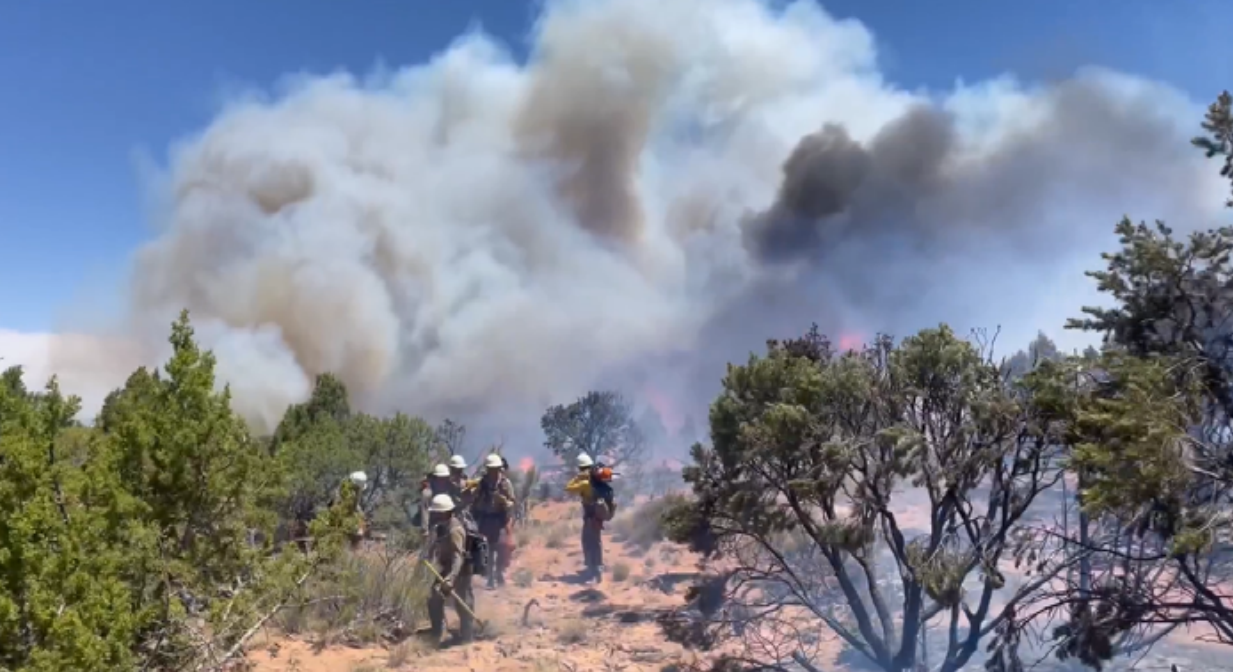
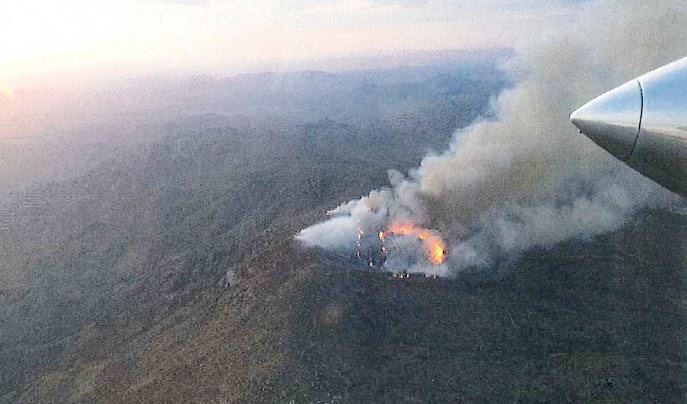
We received some photos today of the Yarnell Hill Fire that we had not previously seen. Most of them are snapshots of smoke coming up from behind a ridge or distant air tankers in the sky, but one of them captured our interest, the image above. It does not generate much new information, but it appears to show that when it was taken, at 8:16 p.m. on June 29, 2013 (according to the time stamp on the file), 27 hours after the fire started, it was still not a large fire. This photo is consistent with the photo below taken at 7:30 p.m. on June 29, 2013 which has been public since last year.
According to information released by the Arizona State Forestry Division on July 16, 2013, on the second day of the fire at 5:30 p.m. on June 29 there were 13 firefighters working on the fire and it had burned six acres. By the afternoon of day three of the fire, June 30, it had grown to be much, much larger than it had been the evening before. At 4:47 p.m. that day the incident commander and the Arizona Dispatch Center received notice from Air Attack that firefighters had deployed fire shelters. The Granite Mountain Hotshots, 19 of them, died in the fire when a predicted wind shift changed the direction of the spread of the fire and entrapped the firefighters. The intensity of the fire exceeded the protection capabilities of the shelters.
On September 28, 2013 when the ASFD released their Serious Accident Investigation report on the fatalities, we wrote this about the lack of aggressive suppression action on the fire:
The ordering and use of ground and aerial firefighting resources was less than aggressive on June 29, the day before the tragedy when the fire was still small. The only air tankers used that day were two single engine air tankers, and for only part of the day, dropping a total of 7,626 gallons. After being released, they were requested again by Air Attack, but dispatch only allowed one to respond to the fire, wanting to keep one in reserve in case there were other fires.
General Norman Schwarzkopf’s philosophy when confronting the enemy was to use “overwhelming force”. This strategy also is effective when confronting a wildfire. Overwhelming force for a short amount of time can prevent megafires burning for weeks, consuming many acres, dollars, and sometimes homes and lives.
The bottom line: Being timid or TOO cost-conscious during initial attack or the first burning period of a fire can be far more expensive in dollars and in the worst case, lives.