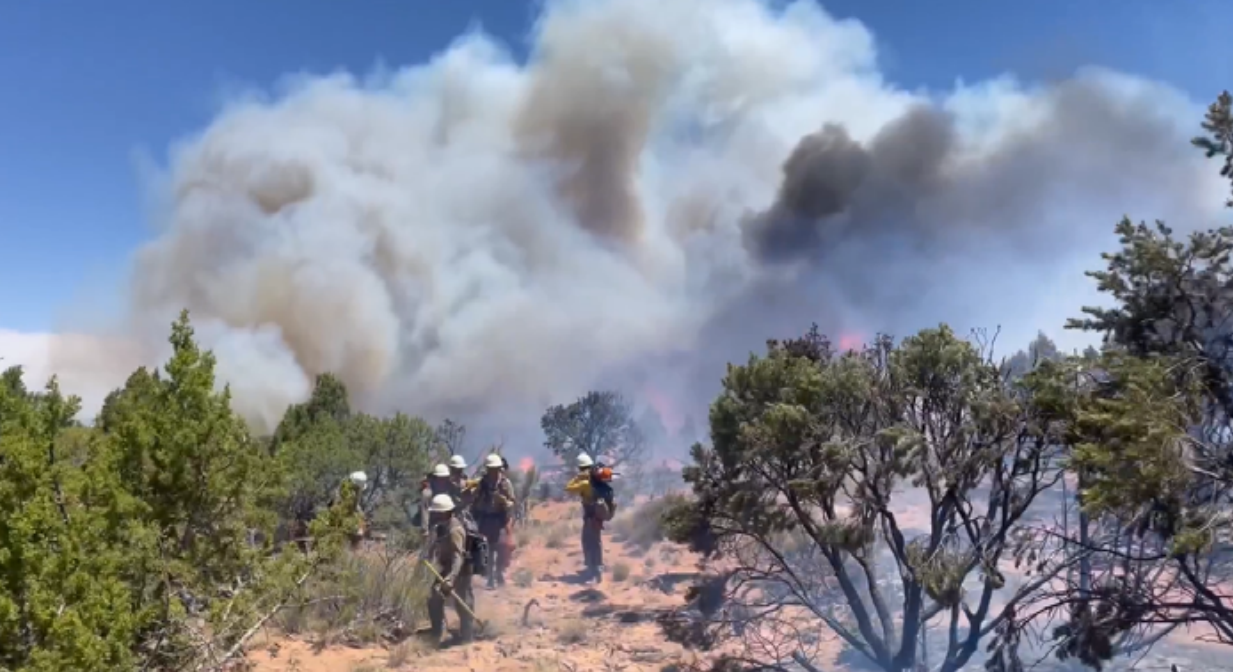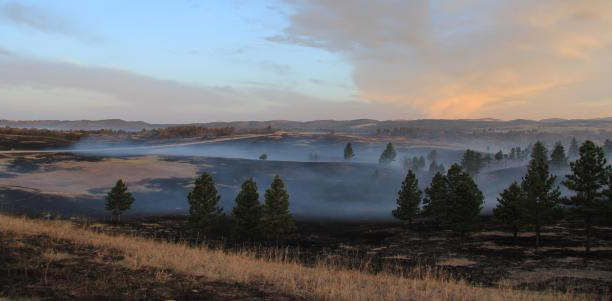
South Dakota Senator John Thune sent a strongly worded letter to Secretary of the Interior Sally Jewel criticizing the National Park Service for the escaped prescribed fire, (the Cold Brook Fire in Wind Cave National Park in South Dakota), that burned 5,420 acres of NPS land outside of the intended burn unit. The escape was entirely within the boundaries of Wind Cave National Park.
In the letter, Senator Thune makes assumptions about the cause of the escape, citing “extremely dry conditions”, and saying it “could easily have been prevented”.
A rational person would wait until an investigation or review sheds more light on what actually caused the prescribed fire to go out of control. However, recent investigations of federal fires with a negative outcome have consciously avoided determining the cause or listing conclusions. Or if they do, it is kept secret.
Below is the complete text of Senator Thune’s letter to Secretary Jewel, and below that the response from the NPS:
****
“On April 13, 2015, the National Park Service Forest Service (NPS) conducted a prescribed burn in the southern portion of Wind Cave National Park, located in the Black Hills of South Dakota. The prescribed burn was intended to cover 1,100 acres; however, due to the extremely dry conditions present at the prescribed burn site the fire, named the Cold Brook Fire, quickly escalated out of control consuming more than 6,500 acres of Wind Cave National Park.
In certain circumstances prescribed burns play an important role in federal lands management. However, when a prescribed burn is the recommended management tool, intentionally setting one for any reason in tinder dry forestland or grassland when extremely dry conditions exist is entirely unwarranted and inexcusable and once started has a high likelihood of burning out of control. Historically, carelessly set prescribed burns have resulted in unnecessary endangerment of firefighters, and have destroyed homes, personal property, and public lands.
I strongly urge a thorough and critical review of the Department’s prescribed burn policies and collaboration with local and state authorities and adjacent landowners prior to initiating any future burn. The current prescribed burn practice of following a “prescription” checklist before starting a fire obviously is not adequately preventing prescribed burns from being set in unsafe conditions that are resulting in out-of-control wildfires. There is an urgent need for you to do more to ensure that prescribed burns can continue to be used as a management tool without jeopardizing lives and property.
I fully expect the Department of Interior to assume complete liability for any damages caused as a result of the Cold Brook Fire. Even though the fire was contained to Wind Cave National Park property, I have been informed that fire lines were established on private property and that the intense smoke will likely damage the lungs of young calves in the vicinity resulting in high risk of pneumonia and death loss.
Within 30 days please provide me with a detailed plan for reimbursement to all who were damaged due to this fire, including private individuals, landowners, and local, county, and state entities who suffered economic losses or contributed resources to fighting this fire. Included in the requested plan please provide how claims will be established and processed, and the timeline for reimbursement.
The Cold Brook Fire could easily have been prevented and I strongly urge you to take whatever actions necessary to prevent future occurrences. I fully expect the Department to accept full responsibility and liability for the damages, losses, and expenses due to this fire.”
****
A day or two after receiving Senator Thune’s letter, the National Park Service issued this response:
“The National Park Service has performed thousands of prescribed burns over the past decades and successfully burned millions of acres as a way to prevent more catastrophic wildfires. It is unfortunate that the fire at Wind Cave escaped prescribed boundaries, but no lives were lost and no structures burned. The fire was almost wholly contained within the boundaries of the park, with a small section of U.S. Forest Service property burned (20 x 20 yards). The fire did not burn onto private land. We are dedicated to determining what happened in this particular instance and will begin the review process immediately. We will share the outcome of that review process with the Congressional delegation, community members and other partners in order to help determine how to prevent similar occurrences in the future.”