


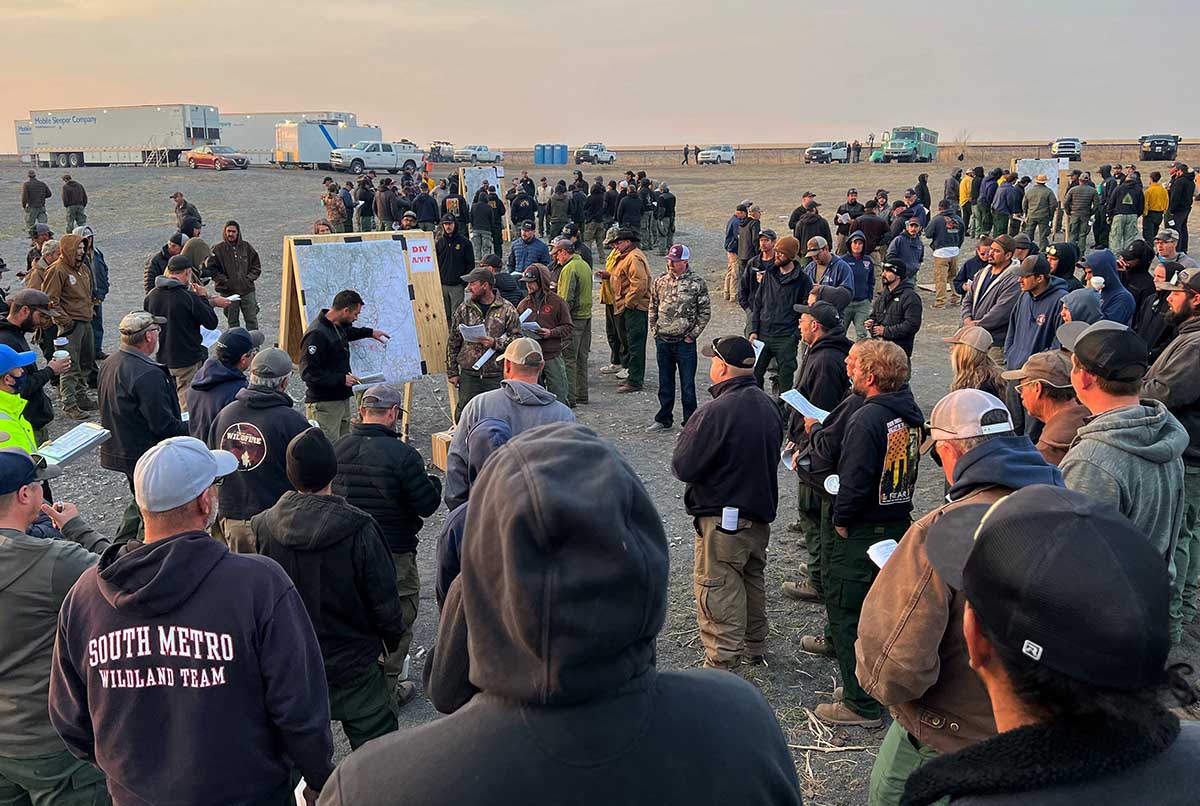
 Morning briefing May 8, 2022 on the Calf Canyon – Hermits Peak Fire as firefighters break out into Divisions. USFS photo.
A survey of 708 federal wildland firefighters found that they reported dissatisfaction with recruitment and hiring processes, insufficient base salaries, poor mental health outcomes, elevated risks to health and safety, and significant effects of wildland firefighting on family status.
It was conducted by Robin M. Verble, Rachel Granberg, and Seth Person, the latter two of which are federal wildland firefighters. On their wildlandfiresurvey.com website all three are seen in photos wearing Nomex fire clothing.
“Given the ever-increasing length, extent, and intensity of wildfire season, recruitment and retention of qualified WFF is a critical issue for national security,” the researchers concluded. “Concentrated legislative, organizational, and agency efforts are needed to systemically address the issues identified in this survey: Our survey provides specific actionable items that can improve retention and recruitment, as prioritized by current federal WFFs.”
The majority of respondents had a bachelors degree or higher, had a mean base salary of $28,545 to $37,113, and 75 percent worked for the US Forest Service.
Here are a few of the survey’s many findings:
- 92% of the respondents stated that they needed more than 300 hours of overtime work annually to pay their bills. 27% needed over 900 hours of overtime work annually to pay their bills.
- Most of the respondents disagree or strongly disagree that they have affordable childcare options.
- Approximately 67% of respondents reported that they have experienced an injury or illness as a result of their work in wildland fire.
- Wildland firefighters divorce at a rate 2.5 times the national average.
- Approximately 60% said they have missed out on jobs because of mistakes that Human Resources made.
- Conservatively estimated rates of suicidal thoughts and ideation among WFFs is 16.5%.
- Respondents report rates of ADHD at approximately 4 times the national average.
Based on the survey, the researchers listed ten strategies that federal agencies can implement to improve working conditions for wildland firefighters. In the report each one is explained in detail, but here are the topics:
- Provide the right pay for the right job
- Recognize the strain on families
- Increase mental health care accessibility and resources
- Combat unhealthy and unsustainable work-life imbalance
- Rectify issues with workplace safety (rates of injury, violence, and sexul assault)
- Improve health insurance benefits and timely injury compensation
- Reimagine the hiring process
- Address chronic mismanagement at the Albuquerque Service Center (human resources and hiring)
- Promote a new deal for diversity
- Build organizational trust through empowering local units
Data from Granberg, R., Pearson, S., and Verble, R. 2022. Survey of federal wildland firefighters: working conditions, safety, morale, & barriers to recruitment & retention. Report. Available online at wildlandfiresurvey.com







