


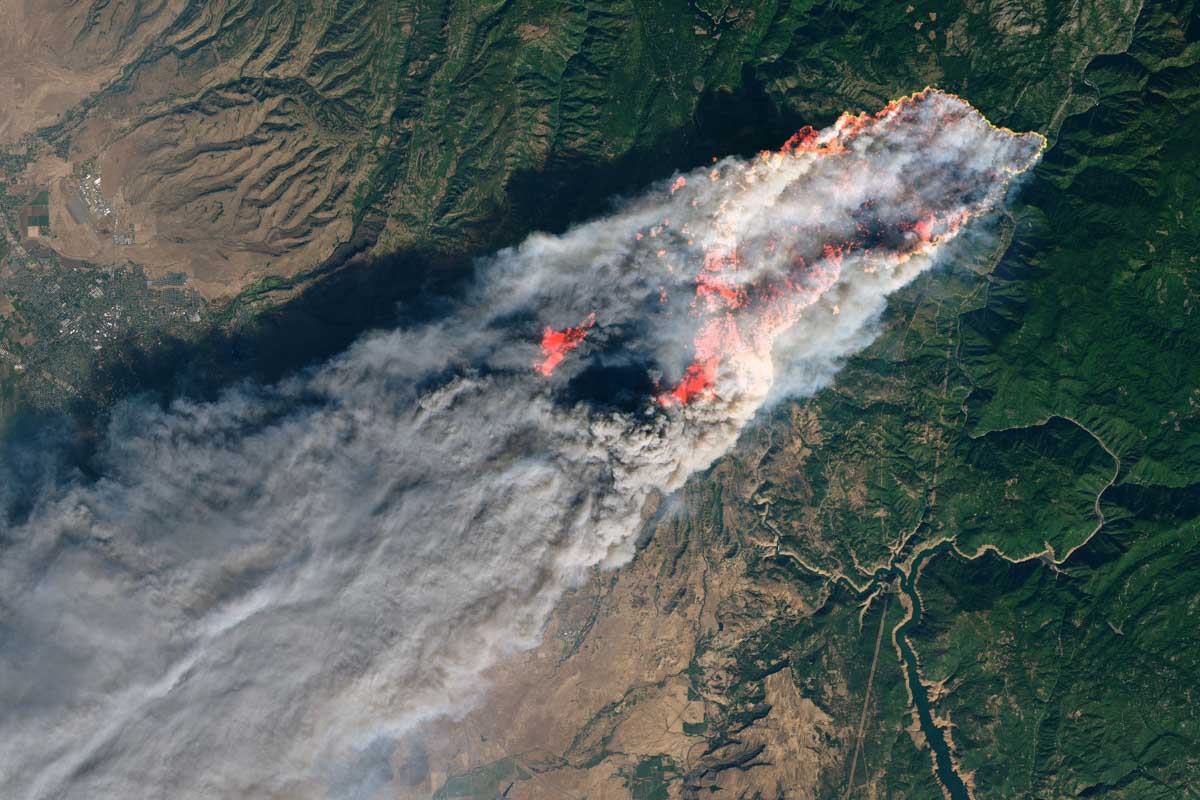
 The Camp Fire, November 8, 2018. NASA (Joshua Stevens) – NASA Landsat 8.
When most people think of the Federal Emergency Management Agency (FEMA) what comes to mind is the assistance the agency provides before and after hurricanes, tornadoes, and floods. Part of their mission and the ways in which the assistance is supplied has been specified by the 1988 Stafford Act and before that, the Disaster Relief Act of 1974.
FEMA’s current procedures and requirements don’t always work for post-wildfire recovery needs, and a bill passed unanimously by the Senate Wednesday will help close some of those gaps. The FEMA Improvement, Reform, and Efficiency (FIRE) Act, S.3092, would help ensure that FEMA’s disaster preparedness and response efforts fully address the unique nature of wildfires and their impacts on communities.
If the bill is passed by the House of Representatives and signed by the President, FEMA would be able to pre-deploy resources during red flag warnings – periods of high fire danger, when catastrophic wildfires are most likely to start – just like they already do in advance of hurricane warnings.
The bill would also help ensure relocation assistance is accessible for public infrastructure in fire prone areas. It would improve FEMA’s response to wildfire-specific damage, such as repairing and mitigating contamination from damaged infrastructure.
If passed, it would have FEMA provide culturally-competent crisis counselors and case managers to ensure that underserved and disadvantaged communities receive equitable treatment when accessing federal disaster assistance. Tribal governments would be able to access financial assistance to upgrade their emergency operation centers, putting them on an equal standing with state and local governments.







