


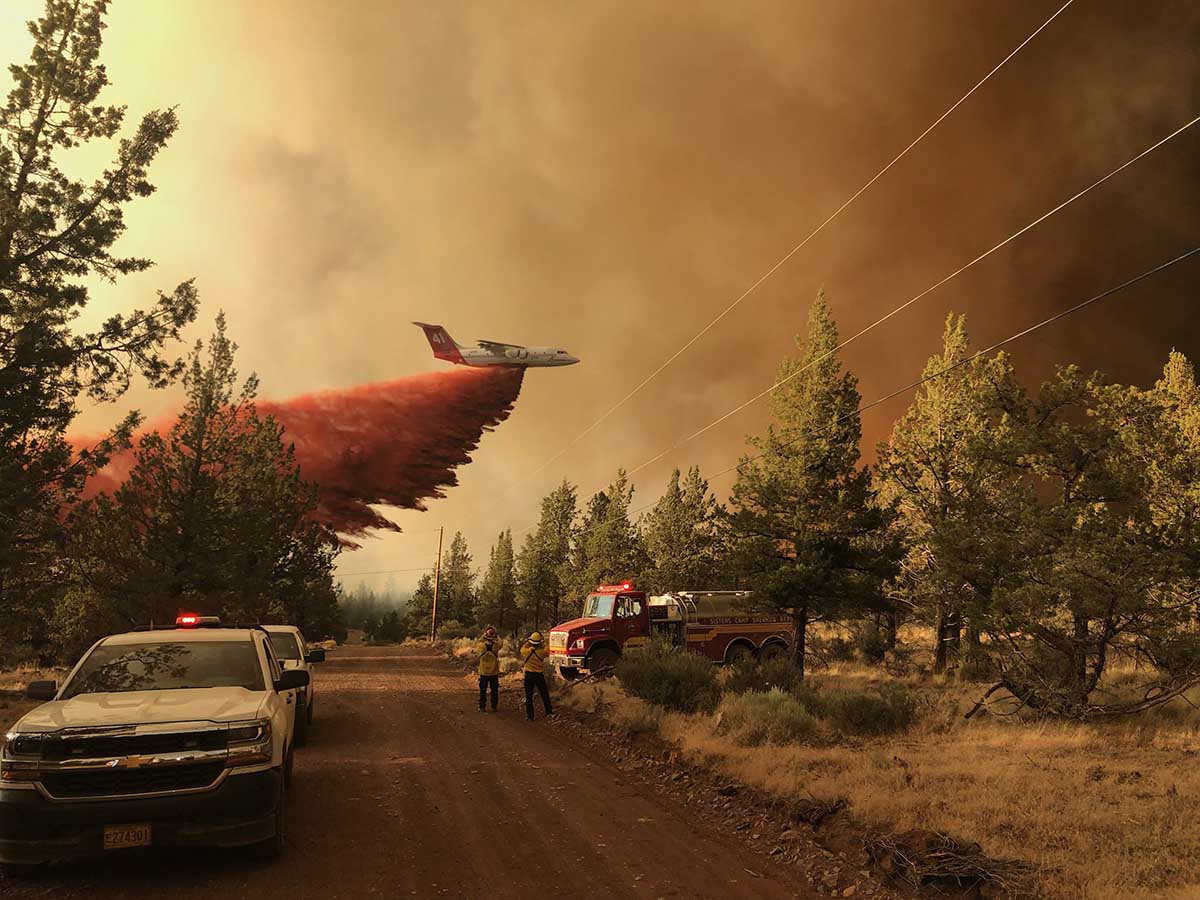
 Air Tanker 41, a BAe-146, drops retardant. BLM photo.
An environmental group filed a lawsuit in a Montana federal court Tuesday alleging that the US Forest Service has polluted waterways by inadvertently dropping fire retardant in or near waterways. The retardant was dropped by aircraft under contract with the Forest Service while assisting wildland firefighters on the ground.
The suit says government data released earlier this year showed more than 760,000 gallons of fire retardant was dropped into waterways between 2012 and 2019. The lawsuit alleges the continued use of retardant from aircraft violates the Clean Water Act and requests a judge to declare the pollution illegal.
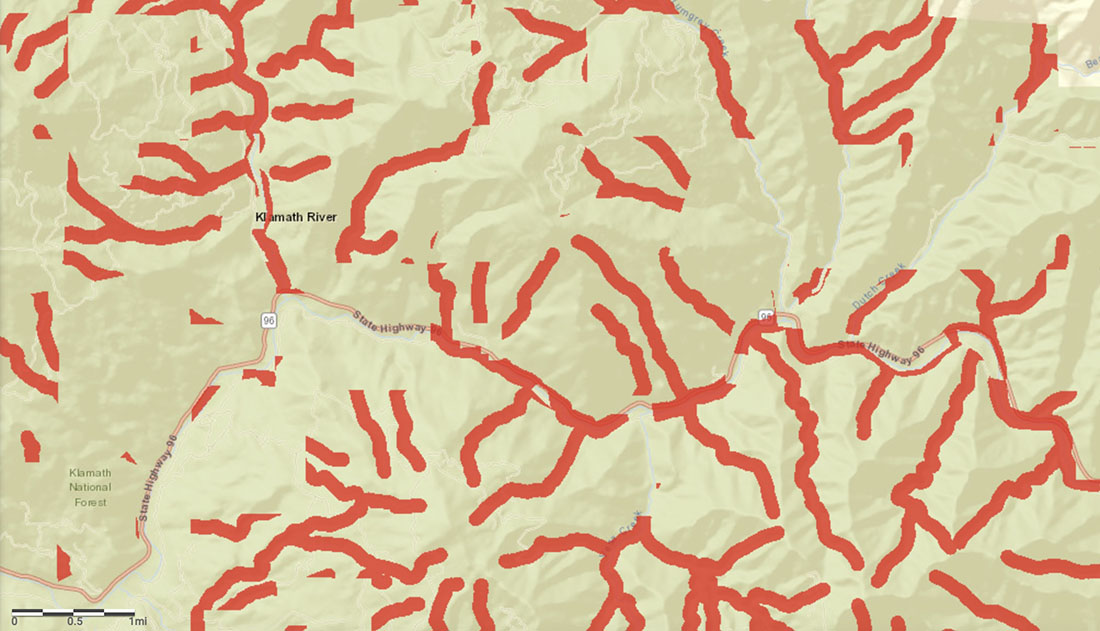 Example of retardant avoidance areas (red) in Northern California along Hwy. 96 near Klamath River.
The Forest Service has established retardant avoidance areas along waterways where the liquid is not supposed to be applied. This puts buffer zones around waterways and habitat for some threatened, endangered, and sensitive species in order to avoid applying retardant in those areas. When they were first established in 2011 it resulted in approximately 30 percent of USFS lands being off limits for retardant while fighting fire. There is an exception if human life or public safety is threatened. The policy was the result of an Environmental Impact Statement (EIS) that studied the use of retardant and how it affects water resources and certain plant and wildlife species. The EIS was written in response to a July, 2010 decision by U. S. District Court Judge Donald Molloy in a lawsuit filed in 2008 by the Forest Service Employees for Environmental Ethics.
The same organization, FSEEE, filed the new case yesterday. An attorney in Missoula, MT who specializes in environmental law, Tim Bechtold, will be representing FSEEE. Presiding over the case will be District Court Judge Dana Christensen. He joined the court in 2011 after a nomination from President Barack Obama. Before, he was a partner in the firm of Christensen, Moore, Cockrell, Cummings, and Axelberg, in Kalispell, Montana. One of the 15 practice areas the firm deals with today is environment and natural resources.
In 2012 FSEEE issued a statement criticizing the use of air tankers on fires, claiming it is “immoral”. The group argued that aerial firefighting is too dangerous and ineffective and that “retardant doesn’t save homes; proper construction and landscaping save homes.”







