Air tanker 44, a P2V-5 Neptune operated by Neptune Aviation in Missoula, MT, experienced a hydraulic failure upon landing, had no brakes, and went off the runway at Rocky Mountain Metropolitan Airport (JeffCo) in Colorado at 12:30 p.m. today (map). Both pilots self-evacuated and were walking around when fire apparatus arrived to put out a fire in one of the engines.
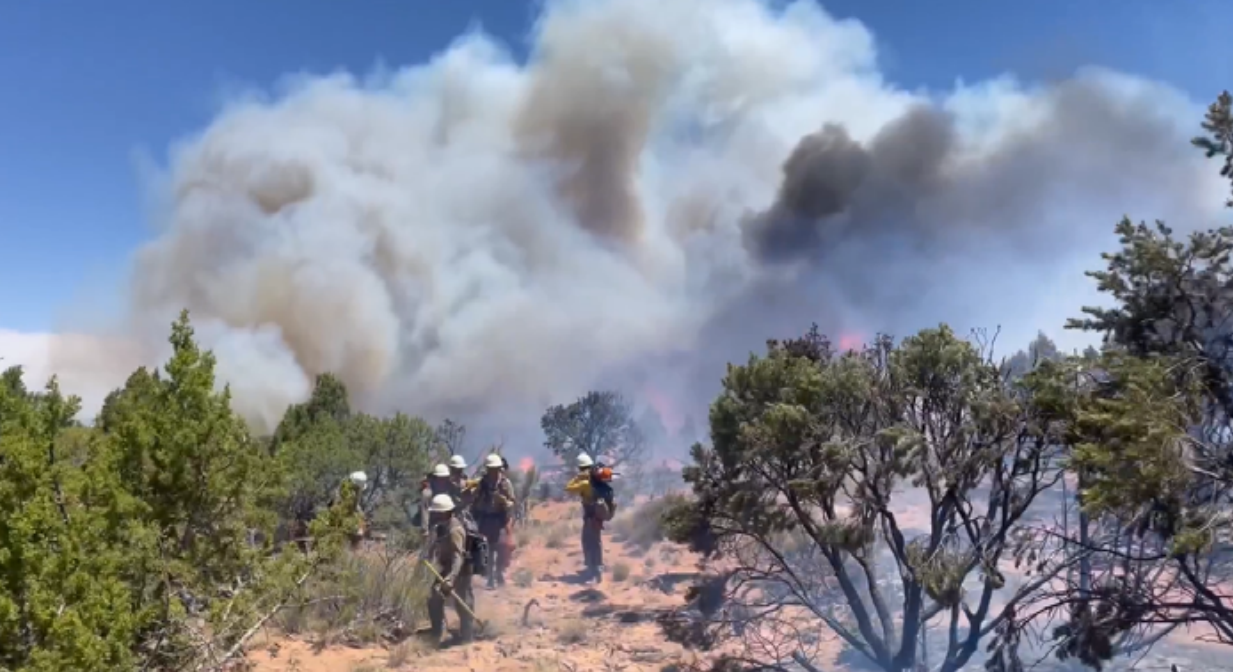
The retardant base at the airport, which had been supporting the Cow Creek fire in Rocky Mountain National Park (photo) and the Round Mountain fire, shut down for the rest of the day.
The air tanker was built in 1954 and had just completed a drop on the Cow Creek fire.
This is the third accident involving Neptune’s P2 air tankers within the last two years, with the other two being fatal for the three-person crews. On September 1, 2008 Tanker 09 crashed while attempting to take off from the Reno airport when an auxiliary jet-assist engine disintegrated. On April 25, 2009 Tanker 42 flew into a mountain near Toole, Utah while ferrying from Missoula to Alamogordo, New Mexico for a fire assignment.
If my math is correct, this reduces the number of large air tankers on exclusive use contracts in the United States from 19 to 18.
These three crashes of aircraft from one company in less than 2-years brings to mind the two crashes of air tankers operated by Hawkins and Powers in 2002 which resulted in all large air tankers being grounded for an extended period of time. Those two crashes were different from the latest P2V-5 crashes, in that they were caused by the wings literally falling off the aircraft.
From Wikipedia:
Almost two years after the Summer 2002 crashes and as a direct result of the ensuing investigations, on May 10, 2004, the Forest Service abruptly terminated the contracts for the entire large tanker fleet. USFS Chief Dale Bosworth stated, “Safety is a core value of the firefighting community, and it is non-negotiable. To continue to use these contract large airtankers when no mechanism exists to guarantee their airworthiness presents an unacceptable level of risk to the aviators, the firefighters on the ground and the communities we serve.” [14] The decision affected tanker contracts issued by both the USFS and BLM.
We are very thankful that THIS TIME there were no fatalities, but how many crashes of 50 to 60-year old air tankers, usually resulting in fatalities, do we have to endure before the five federal agencies shit or get off the pot and bring on a new generation of air tankers that are less likely to crash?
We wrote about this topic on August 8, 2009:
According to a September 2, 1987 story in the New York Times, during the huge lightning bust in northern California when firefighters were battling hundreds of fires that year, they were assisted by 48 air tankers. In 2002 there were 44.
…
The U. S. Forest Service has said that by 2012 the existing 19 large air tankers currently approved for use by the federal agencies will be either too expensive to maintain or no longer airworthy. The average age of the large air tankers is 50 years old.
Discussions about this have been going on since at least 2005 when Congress directed the USFS to come up with a strategic plan for procuring and managing aircraft for fighting wildfires. But that plan has never seen the light of day.
The new Agriculture Deputy Undersecretary Jay Jensen said the agency is working on the plan and it might be released by the end of the year. Senator Lisa Murkowski (R-Alaska) suggests that the plan should be released by September 30 so that it can be considered when preparing the next fiscal year’s budget.
While the U. S. Forest Service and the Department of Interior do nothing, we continue to award lowest bid contracts for 50 to 60 year old aircraft which far too often crash, usually killing the crews. We need a modern, safe, fleet of large air tankers, that are no more than 20 to 25 years old. Preferably new, purpose-built air tankers, like the CL-415, or even the Russian-built Be-200 if it is tested and determined to be suitable for use in the United States.
Apathy about this serious safety issue by the USFS and DOI is not acceptable.
Going back to Chief Bosworth’s statement in 2004 about the air tanker fleet — was it true then, or is it true today?
Safety is a core value of the firefighting community, and it is non-negotiable.
Words are easy. Actions…not so much.
UPDATE: On June 29 we explored in more detail the future of the air tanker fleet, and offered some suggestions on an upgrade path.