


Above: Air Tanker 162, an RJ85, at Chattanooga, Tennessee November 27, 2016. Photo by Antonio More’. Other photos he took that day are at SmugMug.
Earlier at Wildfire Today we examined the information that the National Park Service released about the Chimney Tops 2 Fire that burned into Gatlinburg, and analyzed the day to day conditions at the fire. Today we will look further into the wind, the Energy Release Component, and the air tankers that were staged in the area but not used on the fire.
Air Tankers at Chattanooga
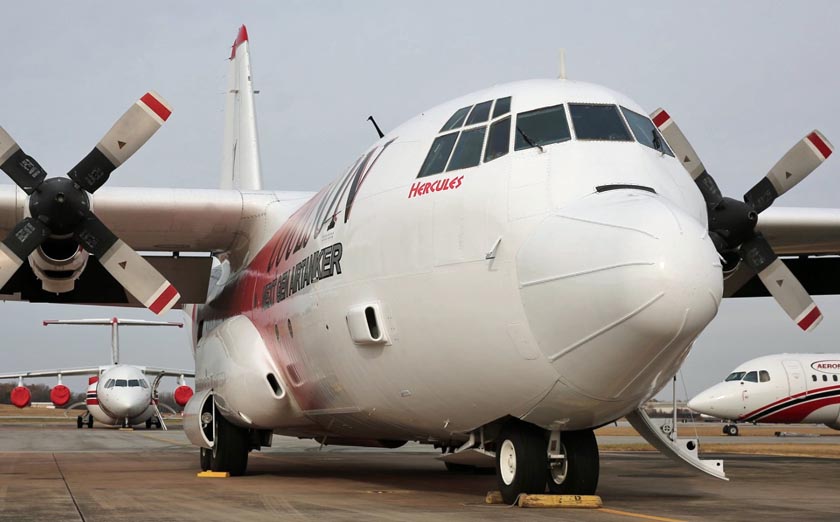
The fire started on November 23, 2016. On November 27, two days before the fire burned into Gatlinburg killing 14 people, destroying 2,013 homes and 53 commercial structures, and causing more than $500 million in damage, there were three large air tankers parked at Chattanooga, Tennessee, 105 miles southwest of the fire; two RJ85’s and one C-130Q. But the air tankers were not used on the fire.
Normally aviation resources do not put out a fire, but they can sometimes slow down the spread until ground resources can move in to construct direct fireline around the perimeter, removing the vegetation, or fuel, and preventing it from growing. But if firefighters are not allowed to directly access the fire’s edge due to a perceived safety issue, very large amounts of water or fire retardant can be applied from the air that in some cases can virtually put out a small fire. Or, pause the spread until rains arrive — like it did late in the day on November 28.
Another alternative to directly attacking a fire is to construct firelines some distance away, or use natural barriers, and intentionally burn out the vegetation between that line and the fire, stopping the spread. This was not done during the five days before the fire burned into Gatlinburg as the fire grew from 5 to 35 acres during that period.
Wind speeds
Strong winds can not only cause a fire to grow quickly, but they can also make the use of air tankers and helicopters impossible. Any retardant or water dropped can be blown far off target, making it ineffective. And, strong gusty winds can make it unsafe for aircraft flying low and slow over rough terrain.
There were times between November 23 and 28 when the wind speeds were too high to allow the use of aircraft.

Energy Release Component (ERC)
The ERC is calculated daily at Fire Weather Stations around the United States. It is a number related to the available energy (BTU) per unit area (square foot) within the flaming front at the head of a vegetation fire. Daily variations in ERC are due to changes in moisture content of the various fuels present, both live and dead.

When the ERC is above average, and especially when it is higher than the 90th or 97th percentile, fires spread more quickly, burn deeper into the duff and organic material on the forest floor, and exhibit more resistance to control.
The ERC, along with other indicators, is often used as a planning tool to preposition firefighting resources, increasing their numbers in areas where large fires are expected. Days off for firefighters can be cancelled and prescribed fires postponed.
On December 5 we wrote about the Keetch-Byram Drought Index (KBDI), an indicator of drought and its effect on how wildfires burn. On November 23 when the fire was discovered the KBDI was very high, 599, Molly Schroer, a spokesperson for the fire’s Incident Management Team told us. For reference, 600 or above would indicate severe drought and increased wildfire occurrence. Intense, deep burning fires with significant downwind spotting should be expected under those conditions.
Many fire managers, when informed about a new fire under those KBDI and ERC conditions, would have attacked it immediately and aggressively with overwhelming force, from both the air and the ground.
For the most current information about the Chimney Tops 2 Fire at Gatlinburg, see our articles tagged “Chimney 2 Fire”.
Typos or errors, report them HERE.


