Will the Osprey ever fight fires?

Osprey. USAF photo
Osprey. USAF photo

The Osprey, a tilt-rotor, vertical take-off and landing aircraft, is replacing some of the Vietnam era CH-46E Sea Knight and CH-53 Super Stallion helicopters used by the Marine Corps. Since the disastrous wildfires in southern California in 2007, the U.S. Navy and the Marine Corps have had an agreement with Cal Fire making it possible to use their military helicopters on fires if Cal Fire is unable to handle the fires with their own aerial assets.

In July of 2008, CH-46E and CH-53E military helicopters made at least 574 drops on fires in California, delivering 217,000 gallons of water.

At first glance, the Osprey might seem like an excellent firefighting tool. It is fast (cruises at 277 mph), could haul 24-32 firefighters, and could carry 1,800 gallons of water externally. But it has never dropped a gallon of water on a fire and it is possible that it never will due to at least two potential problem areas.

Rotor Wash

As you can see in the photo above, the rotor wash or downdraft from an Osprey is extremely strong–far stronger than a conventional helicopter. Rotor wash from a helicopter can cause, and has caused, serious problems when the wind from the rotors spreads the fire in unexpected directions, sometimes doing more harm than good. Marines even worry that Osprey rotor wash may damage or destroy unrecorded archaeological sites in training areas.

According to a report from the Government Accountability Office, the rotor wash creates enough force to knock sailors and aircraft off a flight deck on a ship.

May CAUSE fires

The Osprey’s engines run extremely hot, so hot that the Navy is taking special precautions to prevent the engine exhaust from melting or buckling the aluminum decks of warships. A report from DARPA states:

The deployment of the MV-22 Osprey has resulted in ship flight deck buckling that has been attributed to the excessive heat impact from engine exhaust plumes… Navy studies have indicated that repeated deck buckling will likely cause deck failure before planned ship life.

DARPA has designed a “flight deck thermal management system” which would liquid-cool the deck from below or above while the aircraft are idling or launching. The military has put out a request for proposals for other permanent deck-cooling systems that could be retro-fitted or designed into new ships still on the drawing board.

Wildfire Today reported on May 30, 2009, that an Osprey made an unscheduled precautionary landing in North Carolina and started a 5-acre fire in a wet marsh. We wrote then:

Marines refueled the Osprey but according to WECT.com, upon taking off it “smashed into swamp mud, nose first”. During that takeoff attempt, heat from the engine exhaust started a vegetation fire which did some damage to the exterior of the aircraft.

A news release from the Marine Corp claims:

The grass fire was quickly extinguished by the crew chief, but caused an undetermined amount of heat damage to the aircraft exterior.

But Emergency Management Director Eddie King said the local fire department had to work through the night to extinguish a 5-acre fire, in an area infested with snakes and alligators, that was caused by the incident.

Osprey hauling a Humvee. U.S. Navy photo.

Happy New Year!

WelcomeToAnotherYearOfWildfireTodayWe hope you had a good holiday season and are enjoying the first few hours of a new decade. Thanks for visiting the site, and if you are among those who also participate by leaving comments, thanks for that as well.
Our wish for you is that this decade will be better than the last one. And, as always, Let’s Be Careful Out There.

Bill

NTSB releases factual report on crash of Tanker 09

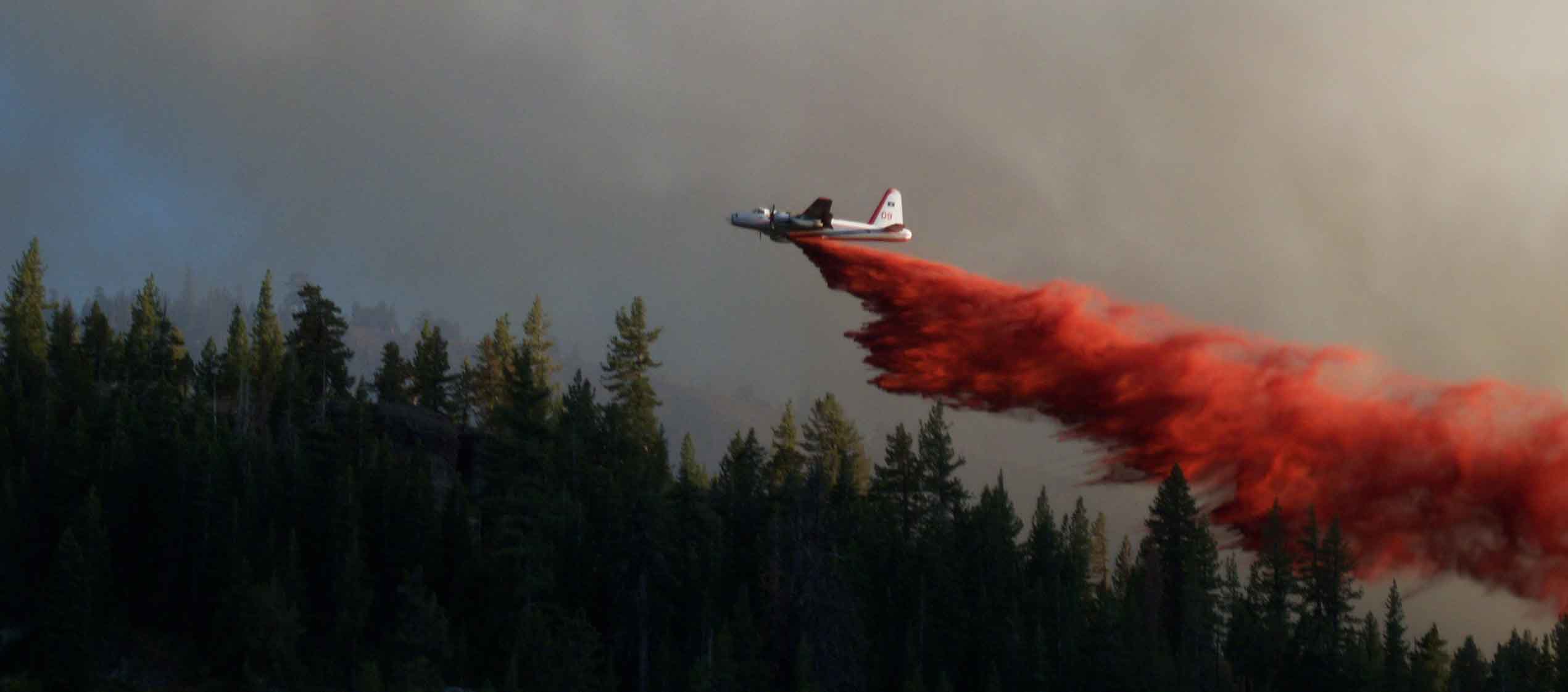
Tanker 09 last drop
Air tanker 09 making their last drop, September 1, 2008 before it crashed at Reno later that day.

UPDATE July 4, 2012: HERE is a link to the NTSB’s final report. Below is an excerpt from the summary:

NTSB summary crash p2v 9-1-2008


===================

The factual report that the National Transportation Safety Board (NTSB) released on December 28 about the crash of Tanker 09 on September 1, 2008 does not have any surprises. Witnesses had reported that the left turbojet engine on the P2V was on fire during takeoff from Reno. The report confirms there was a compressor disc failure in that engine.

Here are some excerpts from the report:

The airplane is powered by two radial, 18 cylinder, aircooled, Curtiss Wright R3350-32WA engines, rated at 2,800 horsepower, driving Hamilton Standard hydromatic propellers, and two auxiliary Westinghouse J34-WE-36 turbojet engines, each rated at 1,500 pounds of thrust. The turbojet engines were installed to improve takeoff characteristics at increased gross weights and to furnish additional power when required.

[…]

The airplane’s left outboard engine (position #1) was a Westinghouse J34-WE-36 turbojet engine, serial number 211235. Total time on the engine was 703.4 hours, 384.4 hours since overhaul, and 64 hours since its last inspection.

[…]

The engine originally had been in service with the United States Navy, and at the time of its initial civilian installation on a Black Hills Aviation P2V on May 16, 1986, it had accrued 458.7 hours since new, and 128.4 hours since overhaul.

[…]

After in-depth inspection and analysis, it was determined that the 11th stage compressor disc had failed near the transition radius between the disc web and the bolting ring. This engine was manufactured by Westinghouse, identified as model J34-WE-36, serial number 211235.

[…]

The airplane’s left outboard engine, serial number 211235, was located about 580 feet from the IIP on a measured magnetic heading of 239 degrees. A visual examination at the wreckage site revealed that the engine’s compressor section had separated prior to impact.

Three aerial firefighters were killed in the crash: Pilots Gene Wahlstrom and Greg Gonsioroski, and mechanic Zachary Vander Griend. Mr. Wahlstrom was the chief pilot for Neptune Aviation, and it was Mr. Vander Griend’s first flight in a P2V.

The NTSB has not released a factual report on the other crash of a Neptune Aviation P2V, Tanker 42, which occurred on April 25, 2009 near Toole, Utah killing three crew members. Their final report can be found HERE.

Yosemite National Park fire videos

The National Park Service has produced two excellent videos about fire management in Yosemite National Park in California. They are professional quality and rival any of the slick productions you see on broadcast television.

One is titled Best Intentions and gives an overall view of prescribed fire in the park. It is supposed to be 26 minutes long, but while watching it on the park’s web site it abruptly stopped at the 15 minute mark, in the middle of Fuels Specialist Mike Beasley’s interview, which is a shame because Mike is a former co-worker and I was looking forward to seeing his presentation. It is possible to download the entire 48 MB Quicktime video and watch it on your own computer, which would be a work-around for the 15-minute cutoff.

Frame from Best Intentions, NPS video

The other video is called Restoring a Meadow and is 7 minutes long. It is about removing non-native blackberry and the use of prescribed fire as one of the tools to accomplish that objective.  The most interesting part of the video is how they ignite the prescribed fire without using any matches, fusees, accelerants, or drip torches.

Frame from Restoring a Meadow, NPS video

Translate Wildfire Today

Some of our site visitors from across the big blue fuel breaks will appreciate that we have re-installed the translation capability on Wildfire Today. Look for the widget at the bottom of the right-side column, that says appropriately, we think, TRANSLATE THIS PAGE.

Keep in mind that the translation is done by a computer, so occasionally you will see some unusual or unfamiliar verbiage. Of course the original English prose here is perfect, so it will be the fault of the translation program if something does not make sense in another language.  (He said, with tongue firmly planted in cheek!)

Patent application for a disposable air tanker

Patent application disposable air tanker
Patent application

John A. Hoffman, who appears to be associated with Fire Termination Equipment, Inc., has applied for a U. S. Patent for a very different type of air tanker. This air tanker would be an unmanned aerial vehicle (UAV) that would be transported by a mother ship and released near the fire. It would then be piloted remotely from either the mother ship or from the ground, and after dropping retardant on the fire, would land to reload, or might be a single use aircraft and would be “destroyed in the release step”. In the latter case the UAV would be “possibly constructed of frangible material so as to crash into the fire area”.

The patent application includes two options for transporting one or more UAVs to the fire area.

  1. Externally mounted to the aircraft to the “underbelly, side of the transport aircraft, or the like”.
  2. “The present invention also contemplates that one or more UAVs can be placed within the transport aircraft, and either released from a rear exit, such as a B-727 having a rear opening door, or ejected from a side interface wherein the transport aircraft includes side-access doors fitted with a mechanism including rails or the like to move in position the UAV from inside of the transport aircraft to outside of the transport aircraft for launch or jettison.”

If this invention ever sees the light of day, which is EXTREMELY DOUBTFUL, firefighters will see air tankers crashing into the ground around them as the aircraft are “destroyed in the release step”. And this would be a benefit to firefighters, the public, and the environment how, exactly? I can’t even imagine what the cost per drop would be of a system like this. And then there are the indirect costs of removing the wreckage, repairing the environmental damage, and payment of the death benefits to the families of any firefighters that might be killed by the crashing aircraft.

As we said earlier, the inventor, Mr. Hoffman, appears to be associated with Fire Termination Equipment, Inc., according to the patent application. The company has an unusual and very vague idea to develop a Rapid Aerial Inferno Neutralization System (RAIN) that, according to the web site:

…delivers massive payloads (of artificial rain) to fires with surgical precision, and it can be deployed 24/7 and in any weather, including winds and smoke.

This RAIN system may be the same one that is described in the patent application, but the web site offers no details about how it would work. The site does have a some information about experiments conducted with small UAVs.

We put these concepts into our “lame-ass ideas” category.

South Dakota firefighters cut firewood for Reservation residents

From the Hot Springs (South Dakota) Star:

===========================

With snow falling all around, a sawyer with the Bear Mountain Hand Crew of the South Dakota Division of Wildland Fire Suppression cuts firewood from a large slash pile located on private property, owned by Rex and Millie Piper, along Argyle Road, north of Hot Springs. Photo by Brett Nachtigall/Hot Springs Star

By Brett Nachtigall, Tuesday, December 29, 2009

HOT SPRINGS – Following Gov. Rounds’ emergency declaration last week due to a holiday winter storm, several personnel with the South Dakota Division of Wildland Fire Suppression were put into immediate action and worked for several days to cut and load firewood for the Pine Ridge Reservation, and other reservations around the state.

Les Madsen, Fire Management Officer in the Hot Springs field office, said he was made aware of the need for firewood last Tuesday night, Dec. 22, which prompted him to immediately begin organizing crews to begin work the following morning.

Since the primary need for firewood was in Pine Ridge, Madsen found a suitable location for the wood in the nearby Southern Hills on a ranch along Argyle Road, just north of Hot Springs, owned by Rex and Millie Piper.

Located on the property were two large slash piles of two-year-old dried wood that were scheduled to be burned later this winter. Madsen said he contacted the Pipers, who were more than willing to help the cause.

“It was a win-win for everyone,” Madsen said.

Nearly 30 state workers were on the scene last Wednesday, including 23 members from the Bear Mountain and Black Hat Hand Crews. Workers pulled apart the large slash piles and cut the dried wood into logs. They then piled the firewood in anticipation of National Guard crews coming later to load and haul the logs to reservations around the state.

As of yesterday (Monday, Dec. 28), crews had cut and loaded six 20-ton truck loads of firewood to the Pine Ridge and Rosebud Indian Reservations, according to Madsen.

More details emerge about the loss of 2 firefighters and Camp 16

A television station in Los Angeles, KTLA, has put together more details about the Station fire and the events that led to the deaths of two Los Angeles County Fire Department firefighters and the burn over of Camp 16 on August 30, a facility housing inmate firefighters. KTLA obtained, through federal and state disclosure laws, U. S. Forest Service and county dispatch logs, the “daily summaries” (ICS-209, Incident Status Summary?), e-mails, and volumes of other records. The Station fire started on August 26 near Los Angeles, burned 160,000 acres, and killed two county firefighters, Capt. Tedmund Hall and Spc. Arnaldo Quinones.

Camp 16, Station Fire
Camp 16

A key focus of KTLA’s inquiry was what led to the burn over of Camp 16, the destruction all of the facilities there, and the deaths of the two firefighters who were killed while trying to find an escape route for the others at the camp.

The burn over of Camp 16 occurred on day 4 of the fire, a period of time in the life of a fire by which most of the essential pieces of the fire suppression puzzle are in place and the typical chaos has been converted to an appearance of order.

Since the camp was never evacuated, it appears that the incident management team running the Station fire either forgot about Camp 16, assumed it was not occupied, hoped it was fire-safe, or thought they would take care of themselves, since the personnel at the camp were all firefighters. You have to wonder, also, what the thought process was on days 1, 2, 3, and 4 in the Los Angeles County Fire Department which managed the fire personnel at the facility, and if there was anything that could have been done before the fire to reduce the chances of the facility being totally destroyed when the inevitable fire visited the area.

Below is an excerpt from the article by KTLA.

========================

…County Fire Chief Deputy John Tripp, the No. 2 executive in the department, said he did not believe that the camp had been an afterthought to the commanders. He also said that his agency had “some communications” with the crews during the firefight. A county review of the response to the Station blaze termed those communications “sporadic.”

Asked if it had been too risky for firefighters to stay at the camp, Tripp said, “That I can’t talk about yet.” He deferred to an inquiry into the deaths by the county and the state Department of Forestry and Fire Protection, whose findings are due to be released in the coming days.

Don Feser, former fire chief of the Angeles National Forest, said it was senseless to have kept crews at the camp, especially because they were waiting for the blaze to reach them rather than actively confronting it.

“It wasn’t like there was any engagement going on,” he said. “It was an oversight, I’m guessing, in the county command system. . . . They either forgot about them, or the people who were calling shots for the county were oblivious about what could happen to them.”

Feser, who retired in 2007 after seven years as chief, said it was a mistake not to include the camp in the wider Station fire fight: “The incident command teams should have been double-checking to make sure that they didn’t have anybody out there, that everybody’s been evacuated.”

A preliminary county report and interviews show the crews had abandoned any hope of taking a stand against the fast-moving fire on that fateful Sunday morning, Aug. 30, and instead scrambled for cover in a dining hall and their vehicles.

“It got to the point where there was no oxygen to breathe,” said the firefighter who was at the camp.

At 4:15 p.m., “fire conditions around the camp began to deteriorate very rapidly,” the report states. At 5:15, it says, “an accounting of all personnel began, and it was determined that two personnel were missing.” At 5:41, this chilling entry appears in Forest Service dispatch logs: “Camp 16 has been burned over.”

As the flames roared up through the camp, exploding through the treetops, the crew members sought refuge in the dining hall, then were marshaled outside as the fire surrounded the building; they huddled in trucks and engines, and some unfolded hand-held shelters, according to witnesses and records. “We thought we were going to die,” said the firefighter who was on Mt. Gleason.

40 homes burned near Toodyay, Australia

A fire near the Western Australian town of Toodyay, 85km north of Perth, has burned 3,000 hectares (7,400 acres) and about 40 homes. The fire is contained but is not controlled.

Western Australia electricity provider Western Power has conceded its power line may have started the fire. In a display of accountability and candor that would be unusual when a southern California electricity provider such as San Diego Gas and Electric starts a fire, a spokesman for the company said:

If it’s determined that it’s caused by our negligence we will be paying compensation as appropriately determined as we always do.

However, investigators from the Fire and Emergency Services Authority said that while the fire started near power lines, it is too soon to say exactly what the cause of the fire was.

Another fire near Badgingarra, 300km north of Perth, forced residents from their homes as it burned through 5,000 hectares (12,300 acres) of bushland.

For the last several days the fire danger rating has been at “catastrophic” for some areas in Western Australia, which is the highest level.

HERE is a link to another video report about the fires, featuring news “presenters” with charming Australian accents.

(VIDEOS NO LONGER AVAILABLE)

Bushfires burn homes in Western Australia

There are reports that eight homes have been destroyed.

Two large bushfires in Western Australia have caused many residents to evacuate their homes. There are reports that eight residences have been lost to the fires and at least five air tankers are assisting firefighters.

One of the fires is about 85km northeast of Perth and has burned 1,500 hectares (3,700 acres). On Tuesday evening residents were told by the Fire and Emergency Services Authority (FESA) to abandon their homes as the flames advanced toward the Lloyds Hill subdivision. The FESA advised them:

This emergency warning means that if you are in this area your best option for survival is away from the fire. Relocating at the last minute is deadly.

A second fire in Dandaragan shire has burned 4,700 hectares (11,600 acres) and is also threatening homes.

The incident controller for the fire, Stephen McDonald said:

We’ve still got temperatures around 34 degrees (93 F), we’ve got westerly winds gusting up to 35 kilometres an hour (21 mph) and we’ve got… [humidity] that’s sitting at about 25 per cent.