New federal support for Australian bushfire preparation

North Australia and Rangelands Fire Information - NAFI, current fires at 10 November 2026.

A long-awaited funding support for a vital bushfire information service across northern and remote Australia has been included in an Australian Government $12 million package to boost bushfire preparations ahead of a predicted active fire season across the southern states.

Prime Minister Anthony Albanese has announced a series of measures before the El-Nino charged summer fully kicks in and follows his earlier boost to the National Aerial Firefighting Fleet.

None of these initiatives are new, but provide continued support for their development and use: 

    • Dedicated mental health and wellbeing support for emergency first responders – $3 million.

NAFI was created by a community of fire researchers and managers in 2002 and is managed by Charles Darwin University. It has long survived on piecemeal support and grant funding from various government sources. NAFI tracks current fire ‘hotspots’ from a number of different satellites including NOAA and NASA. It is the only service that provides critical fire information over the 80% (remote/regional) of Australia where 99.3% of fires occur. It is free for users to access.

The main fire season in the north of Australia typically begins around April/May and ends around now in the buildup to the Wet Season, so it’s inclusion in this pre-season package is unexpected, but welcomed.

NAFI Service Manager Kerry Crosbie said she was delighted to get to continued federal support that will run to end of June 2028.

“This investment will help ensure land managers, Indigenous ranger groups, emergency services and government agencies can continue to access the information they rely on for effective fire management and informed decision-making.”

Last week, the Australian Government also announced an extra five aircraft for the National Aerial Firefighting Fleet, bringing the total shared fleet to more than 170.

New to the national fleet in 2026-27 are:

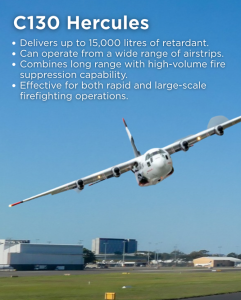
    • National Large Air Tanker Lockheed C-130Q (New South Wales)

    • Birddog Cessna Citation 550 (New South Wales)

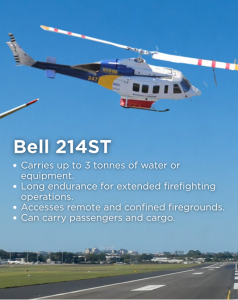
    • Bell 214ST helicopter (Queensland)

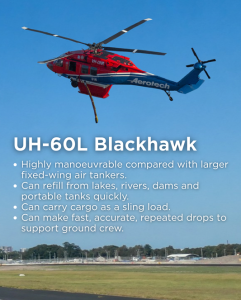
    • UH-60L Black Hawk helicopter (Victoria)

    • UH-60L Black Hawk helicopter (South Australia) 

See the full national fleet with operator and base location here. The fleet is supplemented by Call When Needed contracts from state and private sources.

The fleet also supports international firefighting efforts, including currently in Indonesia.

PREVIOUS COVERAGE: Fire mapping funds uncertain as northern Australia fire season begins.

Two helicopter crashes kill 4, injure 2, as wildfires rage

Two separate firefighting helicopter crashes in four days have left four dead and two injured as Indonesia’s wildfires continue to burn across the nation.

The latest crash happened on Sunday during a firefighting operation in the Barito River waters of Tabatan Village, in the Kuripan District of South Kalimantan, according to Indonesia’s National Disaster Management Agency. Emergency officials initially claimed that all of the helicopter’s crew members were safe, but later said initial reports were incorrect, and instead only two crew members, one Australian and one New Zealander, were found injured and have since been hospitalized.

Emergency crews have since confirmed that Helicopter Landing Officer Yayan Supyansuri died in the crash.

[UPDATE: This article originally reported information that both injured crew were Australian.]

That crash happened four days after another water-bombing helicopter crashed in the Seruyan Regency of Central Kalimantan during a firefighting operation, killing three Indonesian crew members and injuring several others, the Agency said. Those killed in that crash included:

  • Lieutenant Colonel Dudi Firmansyah
  • Captain Nurhafiz Akbar
  • First Sergeant Heri Prasetyo

“The dedication, service, and spirit shown by the deceased in carrying out humanitarian duties will always remain a part of our collective endeavor to protect the public from the threat of disasters,” the Agency said in a social media post.

The pilots injured in the first crash were part of a broader mission by the Australian Government to offer support to Indonesian crews fighting the fires, smoke from which has lowered air quality in Australia. The Government deployed 20 specialist aviation personnel from the New South Wales Rural Fire Service, along with a C-130 Hercules Large Air Tanker and a Cessna Citation, which acted as a scout aircraft, according to the Agency. The deployment was scheduled to last from Nov. 6 to Nov. 12.

Air pollution from Indonesia’s wildfire smoke has killed an estimated 3,500 people in the country, and continues to worsen air quality in neighboring nations to “unhealthy” and even “hazardous” levels, according to a recent analysis from the Centre for Research on Energy and Clean Air.

READ MORE: Over 3,500 killed from Indonesia wildfires’ air pollution

New ‘firewave’ term narrowly misses Word of the Year recognition

A term invented to describe the growing threat of simultaneous urban wildfires narrowly missed recognition as “Word of the Year.”

“Firewave” describes a series of urban wildfires within a short period of time, usually due to extended periods of hot and dry weather. The definition is listed in the international Collins Dictionary, which listed the term as a runner-up for its “Word of the Year” for 2026.

The term was coined by researchers at Imperial College London in 2025 and speaks to the growing impact of climate change, representatives of the dictionary said in a blog post.

“Think heatwave, but with added peril, and scientists warned this year that cities are increasingly at risk,” the post said.

The researchers coined the term after a series of extreme heatwaves across the United Kingdom, which severely affected London in particular and caused the London Fire Brigade’s busiest day since World War II. They identified vapour pressure deficit, the atmosphere’s ability to extract moisture from the land surface, as a much more accurate indicator and driver of wildfires than either humidity or temperature.

They also created the concept of “firewaves” to help forecast and predict times when similar urban wildfire outbreaks may occur and prepare officials accordingly.

“It is hoped that the results will be of operational value to the LFB, and lay the foundation for further work investigating the role of heatwaves and VPD in increasing wildfire hazards in cities and other urban environments worldwide,” researchers said in the paper they published in the Springer Nature Link academic journal of Fire Technology.

Click here to read the full study.

Over 3,500 killed from Indonesia wildfires’ air pollution

Indonesia’s hazardous air quality killed thousands in September, according to data analysis from the Centre for Research on Energy and Clean Air.

The country’s worsening air quality emergency killed 5,310 in September alone; 3,560 were attributed directly to emissions from a surge in forest and land fires over the past months, the center’s analysis found. The data were estimated using research on mortality rates and air pollution, broken down by region.

“The number of citizens exposed to “unhealthy” to “hazardous” air quality hit a monthly record peak of 58 million in September — a 40% jump from August’s peak,” representatives said in the analysis. “Citizens inhaling hazardous-level air in Kalimantan alone nearly tripled from 2.8 million to 6.4 million during the worst days of the month.”

Forest and land fires (karhutla) burning throughout the country surpassed records previously set during 2015, when numerous states of emergency were declared due to “Southeast Asian haze” caused by slash-and-burn practices in Indonesia. Despite that, the country’s National Disaster Management Agency has been constrained due to a 75% budget cut this year, according to the researchers.

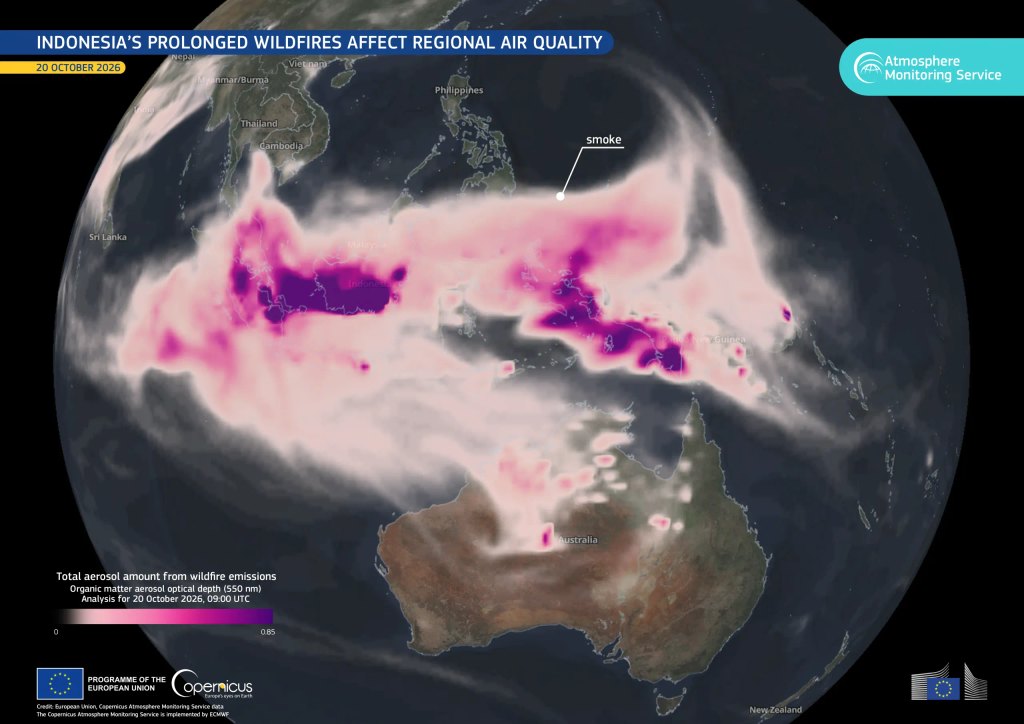
Wildfires burning in Indonesia’s peatlands, forests, and agricultural land since July caused the country to produce the world’s highest levels of emissions in September. The European Union’s Copernicus Atmosphere Monitoring Service says the smoke is also deteriorating air quality in countries much further away, including southern Sumatra, southern Kalimantan, southern Papua New Guinea, the Indian Ocean, mainland South-East Asia, the western Pacific and as far as north-west Australia.

“The government is facing heavy criticism for prioritising political and economic interests that benefit from a laissez-faire approach to land use, logging, and plantation expansion over public health and safety,” the Centre said in a press release. “On 20 October, the two-year mark of Prabowo-Gibran administration, student protestors took to the streets to demand that the government declare karhutla a national disaster and stop leaving underfunded provinces to handle the crisis alone.”

View the interactive map.

The Centre for Research on Energy and Clean Air is registered as a nonprofit in Finland, with staff across Asia and Europe.

PREVIOUS COVERAGE: Indonesia’s wildfires impact air quality for much of region

UK wildfire season 2026 underscores importance of new framework

By Meg Dolman

US-UK collaboration produces UK Community Wildfire Resilience Framework

The UK’s 2026 wildfire season brought unprecedented attention to the growing challenge of wildfire risk and resilience. Record-breaking summer temperatures and extended periods of hot, dry weather contributed to a high number of wildfires recorded in England. By the end of August, fire and rescue services had responded to more than 1,354 wildfires, placing significant strain on emergency response resources, second only to the 1,592 fires in 2022.

The severity of the season prompted the UK Government’s largest use of the emergency mobile phone alert system to warn the public of very high wildfire risk and discourage activities that could ignite fires, including barbeques, campfires, and fireworks. Wildfire is no longer an isolated or infrequent hazard in the UK, but an increasingly significant national resilience challenge requiring coordinated and proactive action to reduce wildfire risk and protect communities.

Growing up in southeast England, flooding was a familiar hazard, but wildfire was not. That changed when, at 25, I encountered wildfire for the first time while hiking the Appalachian Trail in the United States.

This experience led me to relocate to Idaho and pursue a PhD focused on community wildfire resilience and human-wildfire interactions across the western US. Through the International Association of Wildland Fire and the National Cohesive Wildland Fire Management Strategy, I met Victoria Amato in 2022, a community wildfire planning specialist working with SWCA Environmental Consultants. Excited to meet a fellow Brit working in the US wildfire community, we began discussing how decades of wildfire preparedness and resilience efforts in North America could help communities in the UK prepare for a future of increasing wildfire risk.

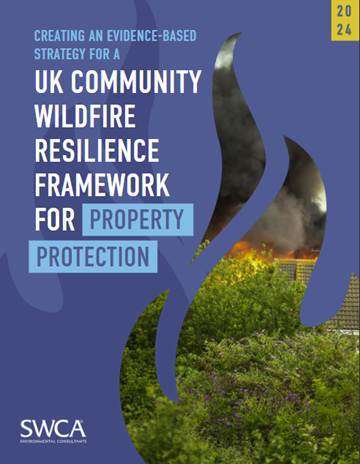
Following the 2022 UK Wildfire Conference in Belfast, a group of individuals representing wildfire mitigation and management entities from the UK and US formed a knowledge-sharing partnership focused on community resilience and property protection, spearheaded by Amato. The collaboration resulted in the 2024 UK Community Wildfire Resilience Framework for Property Protection.

PREVIOUS COVERAGE: UK unprepared for increasingly frequent wildfires, framework warns

Drawing on successful programs, best practices, and lessons learned from North America and other regions, the paper outlines practical actions and opportunities that can help UK decision-makers build and strengthen community resilience and reduce wildfire risk to life and property.

The framework comes at a critical time. As higher temperatures, prolonged drought, and changing climate conditions contribute to weather conditions more conducive to wildfire activity, the UK is likely to experience more frequent and damaging wildfire events. Despite this growing risk, wildfire management remains devolved. In England, there is no single agency responsible for wildfire or active national wildfire preparedness program, leaving no clear governance structure for coordinated risk reduction and mitigation efforts.

With public awareness and concern increasing following the 2026 wildfire season, there is growing momentum for a more coordinated approach to wildfire preparedness, mitigation, and community engagement. The framework draws on proven approaches from other nations, identifying successful programs and strategies that could be adapted and scaled for the UK, including Community Wildfire Protection Plans, Fire Safe Councils, and WUI building codes. It also highlights opportunities to expand and strengthen existing initiatives such as Firewise UK through a more coordinated national approach. This framework could be used as a road map in response to the UK Parliament’s wildfire management.

By promoting collaboration, knowledge-sharing, and the adaption of proven international models, the framework provides a practical roadmap for building long-term wildfire resilience in the UK. The framework aligns directly with and could help implement the recommendations of the recently published UK Parliament in its wildfire management report by establishing partnerships, governance structures, and shared learning needed to treat wildfire as a national resilience challenge. Through coordinated action across governments, industry, academia, emergency services, and land managers, the framework demonstrates how collective effort can accelerate process, strengthen preparedness, and better protect communities, property, and landscapes from wildfire risk.

First presented at the 2024 UK Wildfire Conference in Aberdeen, this framework will be featured again at Wildfire2026: UK Wildfire Conference in Leeds on 10-11th November, where it exemplifies the theme “New Perspectives – Shared Solutions” by showcasing how international collaboration and shared expertise can come together to support a more resilient future for UK communities.

Click here to read the full framework.

Dr Meg Dolman is a Wildfire Mitigation Specialist with Idaho Power Company, Boise Idaho, and a Director on the Board of the International Association of Wildland Fire

Speakers at Wildfire 2026 – UK Wildfire Conference


PREVIOUS COVERAGE: UK unveils future wildfire plan: military aircraft, specialist fire teams and landscape transformation

Who guards the guardians? Autonomy without accountability is a risk wildland fire cannot afford

By Michael Hill

For most of my career in the US federal government, I worked within a wildland fire organization that valued centralized leadership, standardized policy, and institutional accountability. Particularly within the US Forest Service’s aviation program, our operating procedures were not simply administrative requirements – they were the accumulated lessons of decades of experience, many written in response to accidents, fatalities, and investigations. Every policy represented someone else’s hard lesson so that others would not have to learn it again.

This viewpoint article is first published in Wildfire Magazine – read the full edition.

It was not a perfect system. No organization is. But it was a robust one. It provided consistency across forests, regions, and agencies while establishing checks and balances that protected both the mission and the people carrying it out.

Lately, however, I have begun to see a different philosophy emerging.

Recently, I sat quietly through a meeting involving the newly organized US Wildland Fire Service and a tribal partner. While the discussion covered organizational relationships, what I heard beneath the surface was something larger. Agencies are trying to define themselves in an increasingly complex fire environment while simultaneously seeking greater organizational independence: each wants more freedom to make its own decisions, establish its own priorities, and operate with less outside influence.

That conversation reminded me of one I’d had several months earlier with a US Forest Service Forest assistant fire management officer; he described an effort within the Southern Region where some Forest fire management officers want to free themselves from the administrative oversight of their forests.

The forest fire management officers’ reasoning is straightforward: they believe that only fire professionals truly understand the complexities of managing a local fire program. Therefore, they argue, fire managers – not line officers or administrative leaders – should have greater authority over fire operations and program management.

At first glance, the argument is compelling. Wildland fire has become extraordinarily complex.

Fire managers possess specialized knowledge that few outside the profession fully understand. Fire managers often make critical decisions under extraordinary pressure, and many of them understandably become frustrated when administrative structures appear disconnected from operational realities.

Greater autonomy can encourage innovation, accelerate decision making, and allow local leaders to tailor programs to local conditions rather than forcing every situation into a national template. But there is another side to the discussion that deserves equal attention.

The question is not whether fire managers are capable of exercising greater authority. Many unquestionably are. The question is who ensures accountability once that authority exists.

The question is not whether fire managers are capable of exercising greater authority. Many unquestionably are. The question is who ensures accountability once that authority exists.

One lesson I have learned over a career in public service is that organizations should never rely solely on the character of individuals, no matter how competent or well-intentioned they may be. Some leaders enter management because they genuinely want to improve their organizations. Yet history – both inside and outside government – shows repeatedly that concentrated authority, when left without effective oversight, eventually produces uneven outcomes.

Sometimes those outcomes are relatively minor. Other times they affect careers, organizational culture, operational safety, or public trust.

Checks and balances exist for precisely this reason.

For decades, centralized administrative oversight served as a counterweight to individual authority.

Policies, independent reviews, financial controls, aviation standards, safety boards, and multiple layers of supervision were not obstacles to good leadership. They were safeguards against human nature. They protected employees from favoritism, taxpayers from waste, and agencies from becoming collections of independent fiefdoms.

Many of those traditional structures are changing.

As fire organizations become increasingly decentralized – whether intentionally or through organizational evolution – we risk creating administrative vacuums. Nature abhors a vacuum, and so do organizations. Authority rarely disappears; it simply shifts. Without carefully designed systems of accountability, oversight can gradually be replaced by localized power structures where policies vary, standards drift, and decisions become increasingly dependent upon the personalities of individual leaders rather than institutional principles.

History offers no shortage of examples. Whenever centralized institutions weaken without replacing their oversight functions, authority tends to fragment. The result is often not greater freedom but the emergence of independent power centers, each operating according to its own priorities. In political history, these have been called warlords. In organizations, they become isolated kingdoms with little external accountability.

That comparison may sound dramatic, but the underlying organizational principle is universal.

Wildland fire is entering an era that demands flexibility. Fire seasons are longer. Interagency coordination is more complicated than ever. Partnerships with tribes or First Nations, states, local governments, and nongovernmental organizations continue to expand. Local leaders need room to adapt. But flexibility without accountability is not resilience: it is vulnerability.

The debate should never be framed as centralization versus decentralization. Both have strengths. Instead, we should ask a more important question: How do we preserve the institutional safeguards that generations before us built while giving today’s leaders the flexibility they genuinely need?

Every generation of firefighters inherits more than aircraft, engines, and equipment; we inherit organizational structures that were shaped by the successes, and often the tragedies, of those who came before us.

If we dismantle those structures in pursuit of autonomy, we have an obligation to replace them with equally effective systems of oversight. Otherwise, we risk losing not only consistency but also the institutional integrity that has allowed federal wildland fire organizations to serve the public for generations.

The issue is not whether local leaders deserve greater authority. Many do. The issue is who guards the guardians.

That question has challenged governments, militaries, and public institutions for thousands of years. It remains just as relevant to wildland fire management today.

Michael Hill has worked as a hotshot, helicopter rappeller, smokejumper and fire aviation specialist within the United States fire management agencies. He is an Australian firefighter with a background in military aviation.

Nearly $20M awarded to rural Texas fire departments to prepare for wildfire

When a wildfire ignites in Texas, the first people on the scene are most likely from one of the state’s hundreds of volunteer fire departments, most of which have less than adequate resources to contain the flames.

Officials with the Texas A&M Forest Service say they are aware of this disparity and are attempting to address it with new funding through its Rural Volunteer Fire Department Assistance Program, specifically for firefighting equipment, training and other emergency needs. The program’s most recent $20 million award is its first round of funding for the 2027 fiscal year.

“Demand for assistance through the program routinely exceeds available funding as volunteer fire departments work to maintain and replace vehicles, protective gear and other essential resources,” the Service said in a press release on Friday. “To address longstanding funding needs, the 89th Texas Legislature appropriated $192 million in one-time additional funding to support outstanding requests.”

Click here for a full list of how much money was given to each of the state’s 518 rural departments.

The funding was announced after a very active fire season in the state. Texas recorded its largest summer wildfire in history in September when the Ross Fire burned over 90,000 acres in Palo Pinto County. The fire destroyed 167 structures, including 18 occupied residences, and damaged 95 structures.

Multiple wildfires that burned in the Texas Panhandle in February triggered an “Agriculture Emergency” due to alleged devastating losses they caused to the region’s farmers. Three wildfires in the Panhandle, including the Lavender Fire, 8 Ball Fire, and Canadian Bridge Fire, burned more than 21,350 acres, many of which were farmland.

PREVIOUS COVERAGE: Wildfires trigger ‘Agriculture Emergency’ in Texas

UK unveils future wildfire plan: military aircraft, specialist fire teams and landscape transformation

Two historic wildfire seasons and a sense of falling “decades” behind in wildfire preparedness have forced the United Kingdom into a game of catch-up. Officials unveiled what they hope to be their first steps forward at England’s first-ever wildfire summit on Friday.

Prime Minister Andy Burnham announced at the summit in Liverpool that some of the country’s military aircraft would be equipped for firefighting for the first time. The Royal Air Force’s Chinook helicopters and A400M planes will be ready whenever any of the country’s civilian fire services request them for help fighting fires in often inaccessible areas like remote moorland or steep hillsides.

Fireline crews will also get more specialist wildfire teams and lightweight PPE specifically designed for wildfire suppression under the plan, according to Burnham. Up to £45million will go toward fire crew resources, while £25 million more will go toward landscape transformation, specifically to restoring dried-out peatlands and fireproofing farmland.

Burnham said his first-hand experience watching the devastating fire destroy numerous homes in Stourbridge in August drove his desire to increase the nation’s preparedness.

“I will never forget it. Our firefighters were heroes that day, but heroes shouldn’t have to fight with one hand tied behind their backs,” Burnham said at the Summit. “Crews will now have the kit they need to stay safe and military aircraft will stand ready to help tackle wildfires from the sky. We cannot put people through another summer like this one.”

The UK Parliament’s wildfire management report published right before Friday’s Summit painted a dire picture of the country’s fire future. The report looked into the 2026 fire season, the second-worst in the nation’s history only behind the 2025 season when nearly 48,000 hectares (118,610 acres) burned, found numerous weaknesses in the nation’s fire-focused preparedness, resilience and policymaking.

“We found gaps in specialist capability, uncertainty and competition over access to aerial firefighting resources, challenges in securing reliable water supplies during major incidents, and a heavy reliance on local arrangements for resources that are increasingly needed at a national scale,” officials said in the report. “The UK requires stronger national arrangements that allow expertise, equipment and resources to be shared quickly and effectively wherever they are needed.”

In addition to needed aerial and on-the-ground resources, the report called for a unified, clear and publicly available national wildfire strategy. Officials also noted that the country’s coming fire-driven issues will extend beyond the government to local authorities and individual landowners, while initiatives like Burnham’s landscape transformation may worsen public trust.

“We heard repeated concerns from land managers that their knowledge and experience are not always reflected in policy decisions that directly affect their ability to manage wildfire risk,” the officials said. “At a time when the government is asking more of land managers in responding to climate-driven wildfire risk, it cannot afford a situation where those same land managers feel that policy is being done to them rather than developed with them.”

That sentiment was echoed by the National Fire Chiefs Council, which represents the nation’s fire services. Its officials renewed calls for long-term and sustainable funding after the Summit on Friday, saying one-off investments Burnham won’t be enough to meaningfully strengthen the nation’s wildfire resilience.

“The summit has brought much-needed attention to the growing wildfire threat facing the UK, but the scale of the challenge demands a much stronger commitment to action,” Council Chair Phil Garrigan said. “We need the people, equipment, training and specialist capabilities required to meet the challenges ahead. That includes strengthening specialist wildfire teams, developing nationally coordinated aerial firefighting capabilities and ensuring reliable access to water.”

Canadian military wildfire that killed 4 started in ‘automatic grenade launcher’ range, officials confirm

Canadian military police are continuing to investigate a wildfire that killed four and injured 39 on the Canadian Forces Base in Wainwright, while a Board of Inquiry will later conduct a separate independent look into the incident.

Canadian Forces Provost Marshal Brig. Gen. Vanessa Hanrahan on Thursday confirmed the fire began inside an Automatic Grenade Launcher range and started during routine military training activities. The fire was inside a “permanent danger area,” which Hanrahan said restricted firefighters’ ability to suppress the fire and forced them to only observe it.

The fire’s “rapid” spread, characterized by Maj. Gen. Wade Rutland in officials’ first press conference on the tragedy, was caused by a “change in wind direction and velocity,” and wasn’t worsened by the base’s methane gas infrastructure, according to Hanrahan.

“Investigations of this nature are complex and require careful assessment of information and evidence from multiple sources,” Hanrahan said. “While there is significant interest in understanding what occurred, it is important that the investigative process be allowed to follow the evidence wherever it leads.”

Hanrahan said the Military Police were conducting an independent investigation to establish the facts and determine whether any criminal or service offence occurred. Comprehensive terms of reference are being developed for the Board of Inquiry to be formally convened.

The Canadian government previously confirmed the identities of those killed as:

  • Sergeant Morgan Wong, from the Loyal Edmonton Regiment based at Edmonton, Alberta, serving with 3rd Battalion, Princess Patricia’s Canadian Light Infantry
  • Private Shaun Farrell, from 3rd Battalion, Princess Patricia’s Canadian Light Infantry, based at Edmonton, Alberta
  • Private Aidan Goulding, from 3rd Battalion, Princess Patricia’s Canadian Light Infantry, based at Edmonton, Alberta
  • Private Hayden Lykkemark, from 3rd Battalion, Princess Patricia’s Canadian Light Infantry, based at Edmonton, Alberta

Officials previously said 19 of the military members who were injured were in critical condition, eight were stable, and 12 were receiving treatment for less serious injuries. Hanrahan did not share an update on the health status of those injured.

Indonesia’s wildfires impact air quality for much of region

Wildfires across Indonesia, October 2026. This image from the Visible Infrared Imaging Radiometer Suite (VIIRS) aboard the NOAA-21 platform shows thick smoke from fires in the Kalimantan region. Red dots indicate places where VIIRS detected heat signatures indicative of active fires or smoldering landscapes. Source: NASA Earth Data.

Wildfires burning in Indonesia’s peatlands, forests, and agricultural land since July caused the country to produce the world’s highest levels of emissions for September. Now a month later, the fires are still burning, and they continue to reduce the air quality for neighboring countries.

Vast plumes of smoke from the wildfires have been affecting air quality across neighbouring Malaysia and Singapore since the burning began, but recent satellite data from the European Union’s Copernicus Atmosphere Monitoring Service shows the smoke is also deteriorating air quality in countries much further away. The Service’s Fire Emissions Watch found the fires’ densest smoke over southern Sumatra, southern Kalimantan and southern Papua New Guinea, while thinner smoke extends over the Indian Ocean, mainland South-East Asia, the western Pacific and as far as north-west Australia.

“Emissions from wildfires in Indonesia from January to September 2026 were among the highest of the past 24 years,” the Service said on its website.

Severe drought across Indonesia’s peatlands caused the months-long outbreak of wildfires encroaching on the site of the country’s new capital city on the island of Borneo.

Over 36% of the world’s tropical peatlands are contained within Indonesia’s borders, and the country’s ongoing drought has made the normally wet landscapes dry enough to ignite, according to NASA’s Moderate Resolution Imaging Spectroradiometer, or MODIS. Droughts have repeatedly produced long-lasting fires that blanket large areas in smoke over the past three decades. The ongoing “super El Niño” has made conditions this year even worse.

“Wildfires occur in Indonesia every year, but some of the most destructive seasons in recent decades came during El Niño, particularly in 1997 and 2015,” NASA’s Earth Observatory said. “The strong El Niño is making the dry season drier over the fire-prone parts of the country and exacerbating burning – just as we anticipated it would.”

PREVIOUS COVERAGE: Underground wildfires in Indonesia trigger world’s highest emissions, spike in respiratory infections