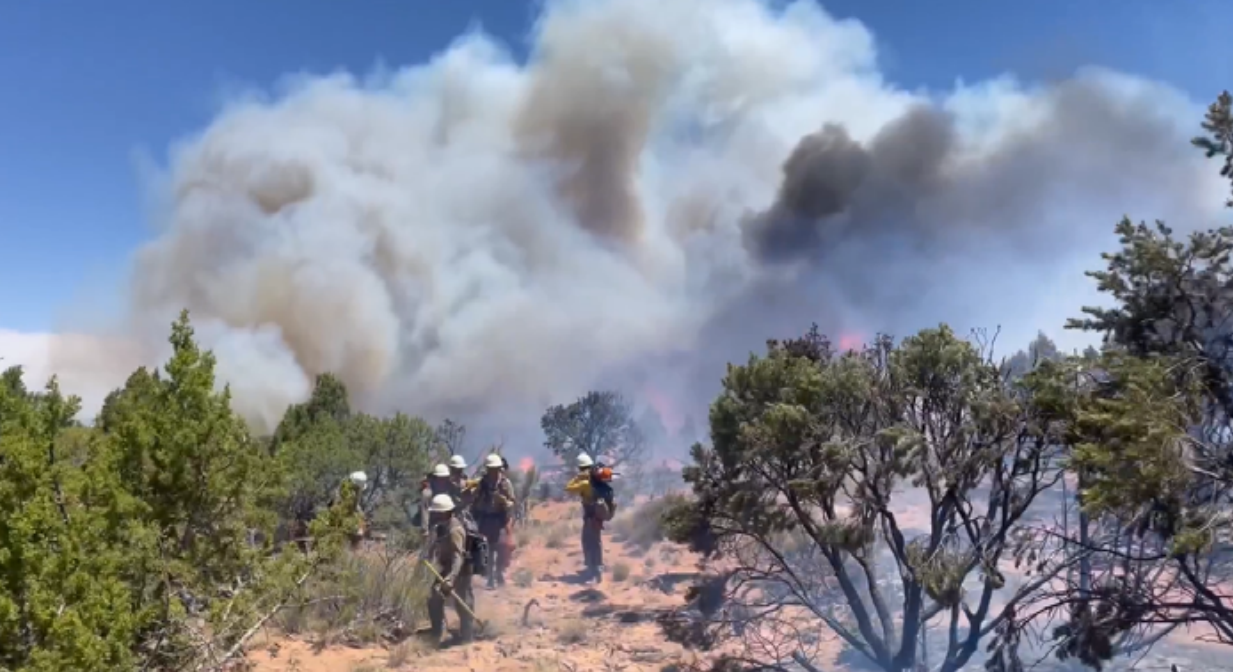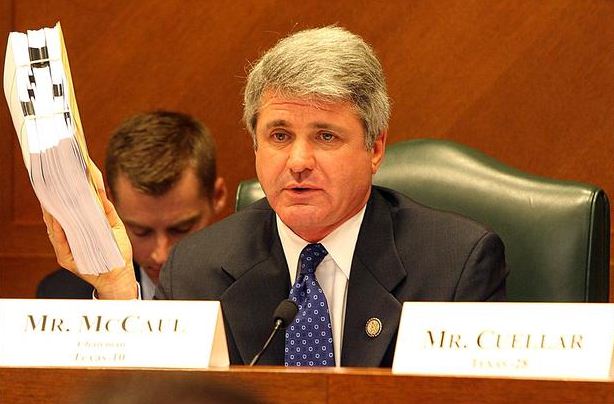
On Monday, October 17, 2011 a subcommittee of the House of Representatives’ Homeland Security committee held a field hearing in Austin entitled “Texas Wildfire Review: Did Bureaucracy Prevent a Timely Response?” The hearing was held in response to the loud complaints from Texas politicians that the federal government has not been providing enough support in dollars and firefighting resources to assist them in suppressing the numerous wildfires that have been occurring in the state since December, 2010.
The hearing was focused on speeding up the process of obtaining firefighting resources from the U. S. Forest Service and financial help from the Federal Emergency Management Administration. Texas Governor Rick Perry has slammed the federal government for deficit spending and has talked about Texas seceding from the United States, but he is seeking more than $200 million from the U.S. government to offset some of the $304 million the state has spent on wildfire suppression. Meanwhile Texas reduced the budget of the state’s wildland firefighting agency by 29 percent for the fiscal year that began in September.
Over the past several weeks there has been a lot of criticism that the USFS should have had more air tankers prepositioned in Texas, and the DC-10 Very Large Air Tanker has been a magnet for attention. When it was deployed to the state it had been working non-stop on fires in California and other states and the flight crew had bumped up against their mandatory days off. When it arrived, the aircraft had to sit for two days while the crew rested and a retardant plant was being assembled. There were complaints that the aircraft should have been able to begin working on fires immediately upon arrival.
But the DC-10, which delivered 280,000 gallons of retardant in 35 drops on fires in Texas, is just one air tanker and does not have any magical powers. Sure, it carries 11,600 gallons of retardant, four to five times more than conventional “large” air tankers that hold 2,200 to 3,000 gallons, but no single air tanker, no matter how big, could have prevented all of the damage from wildfires that Texas has been experiencing. As I’ve said many times before, aircraft do not put out fires. As long as the wind is not too strong, they can slow fires down enough to allow firefighters on the ground to put them out. It’s one tool in the tool box. Now that the U. S. Forest Service has allowed the number of large air tankers on exclusive use contracts to decline from 44 to 11, an air tanker that can carry as much retardant as four to five large air tankers, can be an extremely valuable tool in that box in the right conditions.
Texas Representative Michael McCaul, who organized the hearing, said “Despite all the warnings that Texas faced with it being the driest summer in more than 100 years, there was no prepositioned aircraft to help. We should have had more assets prepositioned. ” Tom Harbour, the Director of Fire and Aviation for the USFS, said the federal government had 3 large air tankers, 3 water-scooping air tankers, 15 single engine air tankers, and 12 helicopters in Texas on September 2 before the fires near Bastrop started.
Here is an excerpt from Harbour’s written testimony before the committee, and following that, commentary about a misleading statement he made:
While the Forest Service does have direct protection responsibility for 675,000 acres of National Forest System land and grasslands in Texas, we are a relatively small player in the State. Of the total acreage burned during this fire season, 174 fires have burned 3,651 acres of the National Forest System land in Texas; 165 fires have burned 13,823 acres of land managed by the Department of the Interior in Texas; however, 3,194 fires have burned 2,876,126 acres of State and private land. We are here because our friends in the Texas Forest Service (TFS) asked us to help. We are pleased to be able to do so.
We have a long and successful partnership with our friends in the TFS. We actively assisted TFS with wildfire and support for events in the past, most recently Hurricane Ike in 2008 and the wildfires in West Texas in 2008 and 2009. We have also taken many actions over the last few months of this year to assist TFS with fire suppression efforts on State and private lands. To date we have provided approximately 9,908 fire resources. Specifically, we sent 92 firefighting crews, as well as support staff and skilled members of interagency incident management teams; a variety of aircraft – 104 helicopters, 87 airtankers, 98 other aircraft; 387 firefighting engines; 71 dozers; and 140 water tenders.
Additionally, TFS has established cooperative forest management programs, which receive funding from Forest Service, primarily through authorities in the Cooperative Forestry Assistance Act of 1978 (Act).
Harbour makes a valid point that the U. S. Forest Service is responsible for fire suppression on just a small portion of land in Texas. Only 1 percent of the acres that have recently burned in the state were on USFS lands. Harbour diplomatically told the Committee, we are happy to help, but….
But, Harbour may have been thinking, Texas needs to take a good look internally and figure out how they are going to provide fire protection within their state. Relying on the federal government for the suppression of fires on state or local responsibility areas is not realistic.
Looking at Harbour’s testimony, one statement that leaps out is where he said “we sent… 104 helicopters, 87 airtankers, 90 other aircraft…” Of course, this is absolutely false, at least the part about the “87 airtankers”, and the other stats are very questionable as well. The USFS has 11 large air tankers on exclusive use contracts in the United States. Some of those were sent to Texas. In addition, six military MAFFS C-130 air tankers were dispatched to the state, plus the BAe-146 (which has “interim” approval), and another five to ten Call When Needed air tankers including Convair 580s (borrowed from Canada) and scooper air tankers. So “87 airtankers” is absurd. Maybe there were 87 orders filled for air tankers, and an air tanker making one drop on one specific fire could be one order. At best, the “87” number is misleading. At the worst, a lie. Harbour has a fire management background, and he knew this was a false statement. Did he swear to tell the truth before he testified in front of the committee?