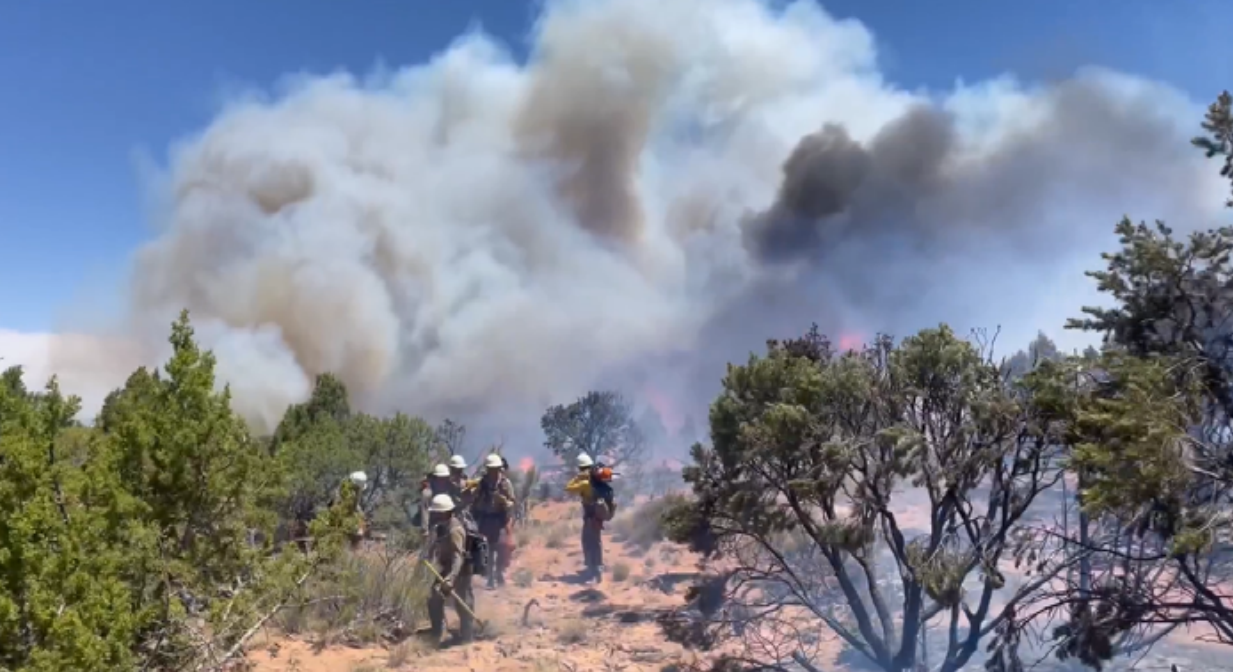
Firefighters observe a retardant drop by an RJ85 air tanker. DOI photo.
Last week the U.S. Department of Agriculture Forest Service outlined the changes the agency will implement in their fuels management program to reflect the large influx of funding in the Bipartisan Infrastructure Bill signed by the President November 15, 2021.
This week the Department of the Interior released information about how the funds will affect a range of Interior’s programs. Four agencies in the DOI have significant wildland fire responsibilities: National Park Service, Bureau of Land Management, Fish and Wildlife Service, and Bureau of Indian Affairs.
The article below was written by Erin McDuff, a public affairs specialist with the DOI’s Office of Wildland Fire.
The law includes $1.2 trillion to rebuild America’s roads, bridges, and railways; expand access to clean drinking water; ensure every American has access to high-speed internet; tackle the climate crisis; advance environmental justice; and invest in communities that have too often been left behind.
A Historic Investment in Wildland Fire Management
The law is a once-in-a-generation investment, but you might be wondering what it has to do with wildfires. As part of the nation’s efforts to address climate change and support resilient, climate-adapted communities, BIL provides a historic $4.5 billion for federal wildland fire management efforts over the next five years.
Within the federal government, the Interior and Agriculture departments both administer wildland fire programs. The U.S. Department of Agriculture (USDA) Forest Service will receive an additional $3 billion through BIL while the Interior Department will receive approximately $1.5 billion for wildland fire management over the next five years. Both departments will coordinate closely to maximize the benefits of these additional investments.
What It Means
The Interior Department will dramatically expand its efforts to reduce wildfire risk, prepare for and respond to harmful wildfires, and support post-fire recovery, including in communities that have traditionally been overlooked. In 2022 alone, the Interior Department will invest an additional $407 million in wildland fire management.
Over the next five years, the primary investments will include:
Reducing Risk
The Interior Department will improve ecosystem health and remove fuel for wildfires on additional acreage using an additional $878 million.
Wildfire Recovery
With an additional $325 million, the Interior Department will expand burned area restoration activities.
Workforce Improvements
An additional $164 million will enable the Interior Department to improve firefighter classification, compensation, benefits, mental health resources, and training.
Technology and Equipment
With an additional $72 million, the Interior Department will improve the use of technology and equipment to detect and respond to wildfires.
Supporting Science
The Interior Department will invest an additional $10 million in the Joint Fire Science Program to identify and fund high-priority fire science research.
What Happens Next
The Interior Department, in collaboration with the USDA Forest Service, is currently developing plans for the strategic implementation of this historic investment.
We are focused on implementing these significant investments in forest and rangeland restoration, hazardous fuel management, wildfire preparation, and post-wildfire recovery as quickly and efficiently as possible. BIL includes aggressive timelines, which we are prepared to meet, and we will share updates throughout the year as our work progresses.