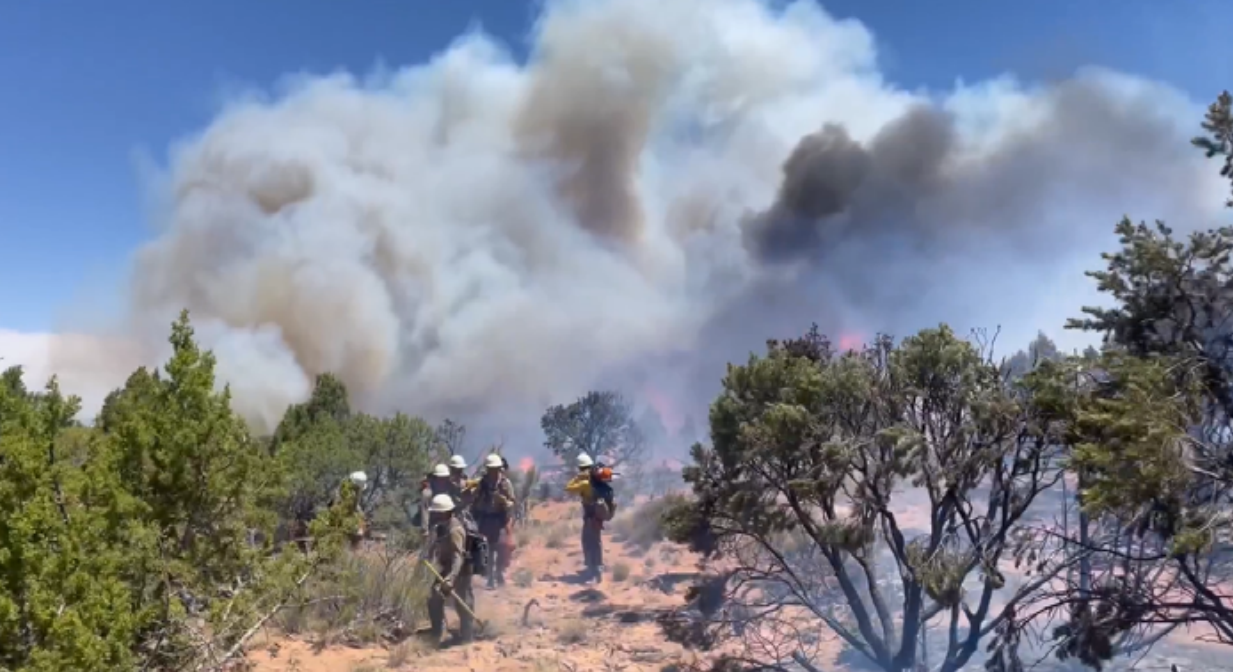
A new report from a collective of national science academies across Europe calls for collective action to face increasingly disastrous wildfires in the region.
The report was recently published by the European Academies’ Science Advisory Council, or EASAC, and estimates that nearly 20% of Southern Europe will experience extreme fire danger every two years by the end of the century. Researchers argue that a unified European integrated fire management system, emphasizing landscape wildland fire governance, is the region’s only way forward.
“Current EU wildfire policies and funding mechanisms primarily emphasise emergency responses to wildfire prevention, limiting their effectiveness in addressing the root causes of wildfire risk,” the report said. “EU wildfire risk management is hampered by the lack of a targeted, cohesive policy framework. Instead, wildfire risk is managed indirectly, disconnectedly, and fragmentarily through sectoral policies such as the EU Forest Strategy 2030, the Biodiversity Strategy, and the Climate Strategy. These strategies often mention wildfires as a secondary concern rather than addressing them directly.”
The European region’s wildfire risk is expected to double over the next 70 years, driven by climate change, urban sprawl, and land-use changes, according to the report. Because of this, researchers said policymakers have to act now.
Researchers delivered three urgent and key messages to wildfire managers and legislative leaders, including prioritizing the implementation of climate change mitigation and land-use policies, incorporating wildfire risk into biodiversity and tree planting initiatives, and enhancing public health and education on wildfire risk. The report culminated in eight policy options, including:
- Investing in integrated wildfire risk reduction
- Implementing nature-based solutions
- Embrace the role of fire
- Invest in education and communication for wildfire awareness
- Invest in landscape management to reduce vulnerability
- Harmonise sectoral policies
- Promote compact urban development
- Encourage sustainable private land management
“Resources have been disproportionately allocated to fire suppression over
prevention,” the report said. “Currently, most resources are funnelled into emergency responses, with only a small fraction dedicated to planning and prevention, creating a significant imbalance.”