


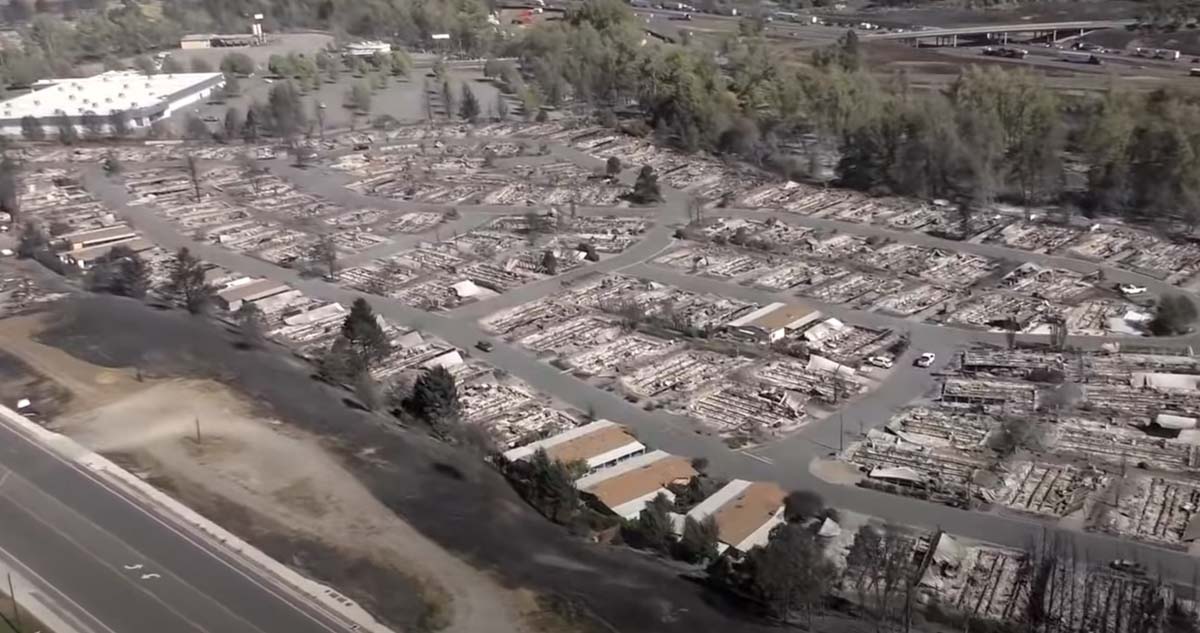
Jefferson Public Radio has an article by April Ehrlich who reported that after the disastrous wildfires in Oregon in 2020 the Federal Emergency Management Agency denied about 57 percent of the 27,000 applications for federal assistance.
As an example, a woman who had lived in her home since 2012 was denied help because, as the letter from FEMA said, “You are not eligible for housing assistance because you did not prove you lived in the damaged home at the time of the disaster.” The homeowner, Maria Meunier, is one of the 14,000 Oregonians whose applications were not approved, but she is one of only 290 people who appealed the denials. Only 40 of the appeals were approved, but Ms. Meunier’s was not one of them.
Below is an excerpt from the article at Jefferson Public Radio:
Left out
Oregon’s high rates of denial are on par with previous natural disasters. FEMA denied about 60% of Puerto Rican disaster assistance applicants after Hurricane Maria. A study by Texas Hausers, a housing nonprofit, found that FEMA denied a quarter of disaster applicants after Hurricane Harvey hit there.
Many of the people who have been denied assistance are low-income. Among Hurricane Harvey applicants, people whose annual incomes were below $15,000 had a 46% denial rate. People with annual incomes exceeding $70,000 had a 10% denial rate.
JPR has a pending data request with FEMA to obtain income and demographic information about Oregon applicants who were impacted by wildfires in 2020.
Following Oregon’s wildfires, FEMA issued press releases encouraging people to appeal. They said the appeals process could be as simple as correcting a typo or providing a missing document.
Disaster victim advocates and legal aid attorneys say appealing FEMA’s denials is anything but simple; and that by denying so many people the first time, the agency is using a complex bureaucratic process to weed out people who likely need the most help.
“People who’ve been affected by a disaster are dealing with trauma,” said attorney Tracy Figueroa with Texas RioGrande Legal Aid. “They’re trying to pull the documents together, and just hearing “no” from one entity or another can shut things down. They don’t know how to navigate the bureaucracy. They’re just done.”
Figueroa and other legal aid attorneys say applicants almost always need an attorney to help them find and deliver documents, provide context for their living situations, and continually follow up with FEMA representatives.
People with limited resources are less likely to have access to a lawyer. Disaster-prone states like Texas, where Figueroa has worked through 18 federal disasters, have teams of legal aid attorneys that help low-income disaster victims. But in states like Oregon, which rarely sees a disaster as destructive as the Almeda Fire, there are few private or nonprofit attorneys who are experienced in FEMA disaster assistance.
FEMA’s denial letters aren’t always clear about how applicants can amend their applications. For example, several Oregon applicants told JPR that they were denied assistance because they have homeowner’s insurance; a common misunderstanding, since FEMA often lists homeowners insurance as a reason for denial. Rather, FEMA can help people with homeowners insurance, but those applicants need to follow a few other steps first. They need to see what their insurance will cover and provide that documentation to FEMA, then they need to apply for a loan through the Small Business Administration, even if they don’t intend to take out a loan. At that point, they could go back to FEMA with an appeal.
Challenges with mobile homes
Jackson County officials say two-thirds of the homes destroyed by the Almeda Fire were manufactured homes. Like Meunier, mobile homeowners face a number of challenges in applying for disaster assistance. They need to provide months-long proof that they paid space rent, a copy of their lease agreement and a title to their home, which isn’t always available because of the generally informal process of buying a mobile home.
“For people who are living in mobile homes, they may not have those title documents,” said Sarah Saadian of the Low Income Housing Coalition. “Even if your state may require you to register it, it just doesn’t happen like that. Sometimes the park owner might have it. Sometimes it’s never delivered when the home is delivered.”
Saadian and the Low Income Housing Coalition are encouraging FEMA and Congress to enact legislation that allows mobile homeowners to self-certify homeownership in lieu of title documents, a process that had been allowed after Hurricane Maria hit Puerto Rico. FEMA only allows self-attestation in U.S. territories, not in the states.
Mobile home parks have historically been located in areas that are susceptible to natural disasters, including wildfires and hurricanes.
“They’re in areas where wildfires occur and where flooding can occur because they’re tucked away,” said attorney Ilene Jacobs with the California Rural Legal Assistance. “Some of them are quite substandard and are in areas adjacent to a highway.”
The Almeda Fire burned through the Bear Creek Greenway, a riparian area and bike path running along the Interstate 5 freeway. Several manufactured home parks abutted the greenway and freeway before the fire raged through those properties.
Thanks and a tip of the hat go out to Kelly.


