US Capitol. Photo by Bill Gabbert.
Forest Service Chief Randy Moore is scheduled to testify Thursday June 9 at 10 a.m. EDT before the full Senate Committee on Energy and Natural Resources. It will be live streamed, and a link will likely appear on the Committee’s website.
The primary purpose of the hearing is to examine the President’s budget request for the U.S. Forest Service for Fiscal Year 2023 which begins in October.
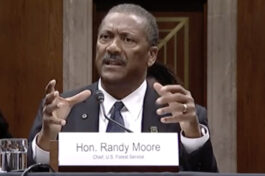 Forest Service Chief Randy Moore testified before the Senate Appropriations Committee, May 5, 2022.
There is no doubt that some of the Senators will use the opportunity to question Chief Moore about the progress, or lack thereof, to implement the firefighter pay raises signed into law by President Biden eight months ago as part of the Infrastructure Investment and Jobs Act.
Senators on the committee who usually appear to be engaged on these topics, often asking pointed questions of Forest Service personnel, include Ron Wyden (OR), Maria Cantwell (WA), Angus King (ME), and Lisa Murkowski (AK). I watch many hearings about fire management issues. I don’t take attendance, but have no memory of ever seeing some of the committee members show up, such as Bernard Sanders (VT), Mark Kelly (AZ), or Cindy Hyde-Smith (MS). I may have just missed them on days when they made important contributions.
The Chief’s written testimony for Thursday’s hearing is already posted. Below is an excerpt in which he mentions fire funding.
- $321 million for hazardous fuels reduction, which will allow the agency to mitigate wildfire risk on 3.8 million acres in high priority and high-risk areas. This investment builds on the hazardous fuels funding the Forest Service will receive through the Infrastructure Investment and Jobs Act in 2023 and supports the objectives of the agency’s 10-year wildfire crisis strategy.
- $1.15 billion for Wildland Fire Management Salaries and Expenses to fund additional firefighters and firefighting support personnel and support this Administration’s direction that all firefighters receive a minimum wage of $15 per hour. This increased workforce capacity will enhance year-round fire response and hazardous fuels reduction activity and allow the Forest Service to continue important investments that support the health, well-being, and resilience of the agency’s wildland firefighting force.
- $1.68 billion for National Forest System Salaries and Expenses. Funding will strengthen areas needed to support the Infrastructure Investment and Jobs Act, the agency’s 10-year wildfire crisis strategy, and the Great American Outdoors Act. This funding will also help the agency bolster capacity in critical non-fire programs, which have lost staffing in recent years, and thereby enhance social and economic benefits to the American public.
The Forest Service’s 223-page Budget Justification for FY 2023 goes into more detail.
Chief Moore already went through this exercise before the House Committee on Appropriations on April 27, 2022 and the Senate Committee on Appropriations May 4, 2022.