


We often hear about an area “recovering” from a wildfire. This implies that fire is unfortunate and unwelcome, a sentiment probably based on an instinctive fear. And it should go without saying — fires that burn structures or humans fit that description.
But vegetation fires in remote areas should be evaluated with different criteria. Yes, a fire can drastically change the appearance of a landscape. Most people visiting national parks, for example, would prefer to take pictures of a mature green forest than a recently burned hillside that is beginning a new fire return cycle. But those two ends of the cycle and everything in between are natural.
In 1988 fires in Yellowstone National Park caused mostly by lightning burned 793,880 acres, 36 percent of the park, during windy weather following a dry spring and summer. Today I saw an article that was focused on to what degree the vegetation had “recovered” from those fires 30 years ago. The emphasis was how much the landscape looked like it did before the fires of 1988. One might say that a lodgepole forest that burned at the end of its 50 to 300 year fire return interval had recovered the day after the embers cooled.
The photo below taken in 2003 in Yellowstone National Park in an area that burned in 1988 shows the regrowth of the forest in just 15 years.

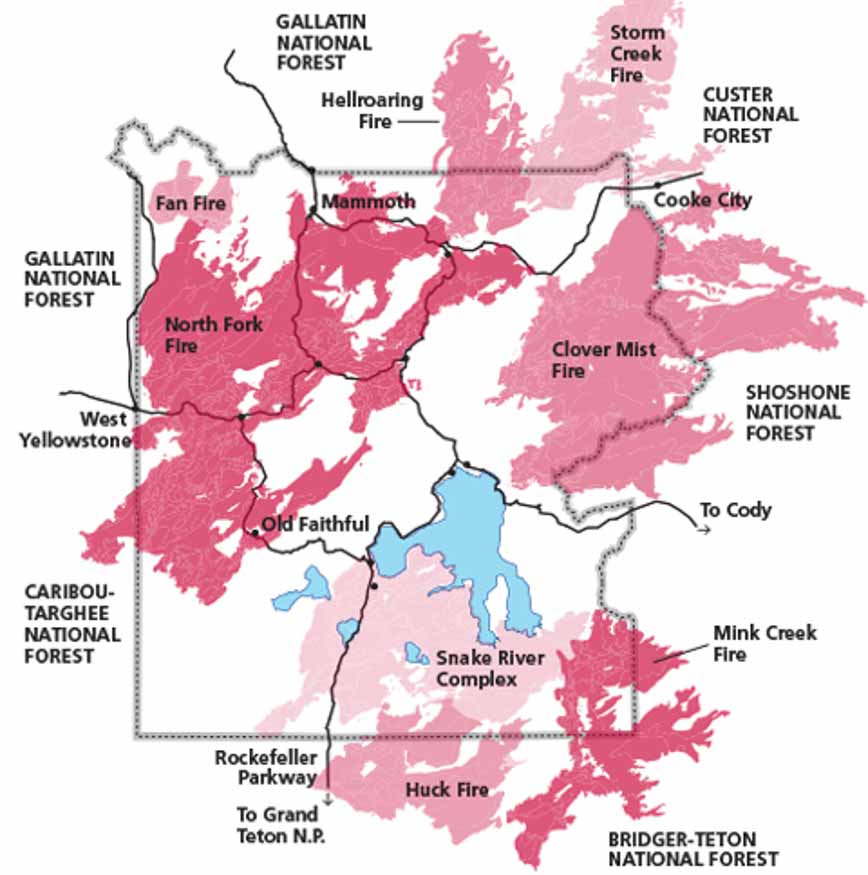
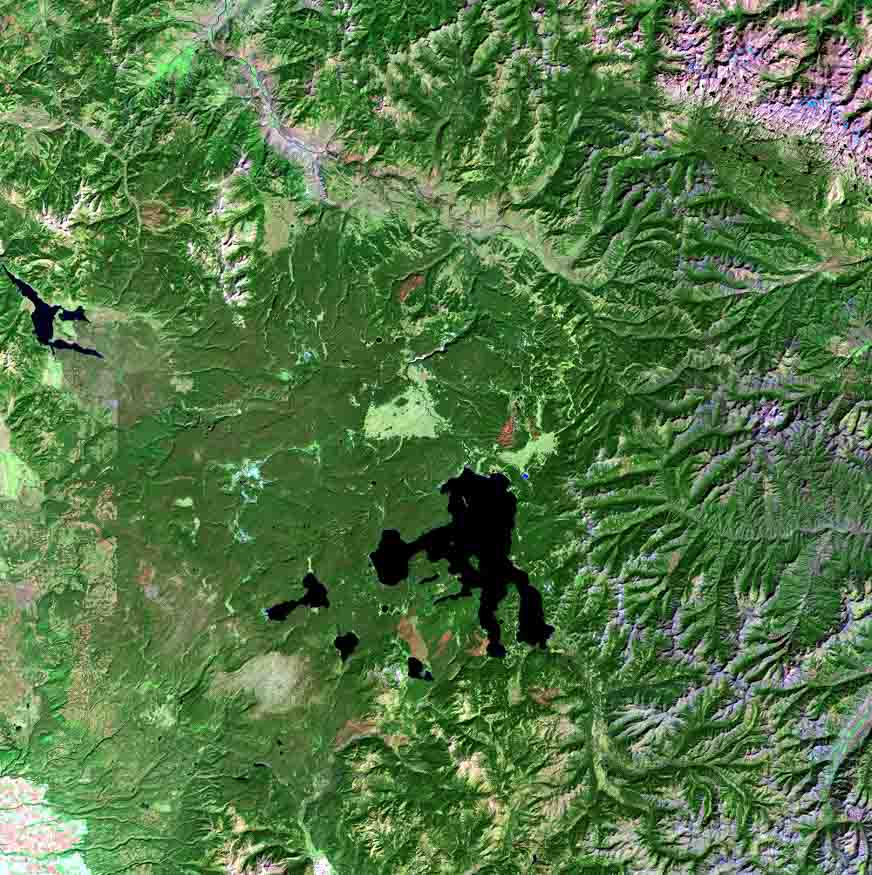
Below are satellite photos provided by the US Geological Survey of the Yellowstone area taken a year before, just after, and 30 years after the 1988 fires. The red areas are not the actual color of the vegetation, but represent the areas where the fires burned, as detected by shortwave infrared, near-infrared, and visible green sensors on a satellite. As the vegetation changes, light green areas start replacing the red and pink from the burn scar.


Wildfires are natural events that have been occurring for millennia. Many species are dependent on periodic fire for their long term survival. If the historic fire return interval is disrupted, shortened by a warming climate or lengthened by fire suppression, there can be extensive changes in vegetation type, hydrology, microclimate, and animal habitat. Fire promotes habitat diversity by removing the forest overstory, allowing different plant communities to become established, and preventing trees from spreading into grassland. For example, after the 1988 fires in Yellowstone aspen appeared in areas of the park where, to everyone’s knowledge, it had not previously existed.
In addition to vegetation, fauna is also affected by fires. Below is an excerpt from Yellowstone in the Afterglow: Lessons from the Fires, written in 2000 about the 1988 fires, by Mary Ann Franke of Yellowstone National Park.
Extensive fires cause habitat alterations and may displace animals from their customary ranges, but they do not kill significant numbers of wildlife. Except under the most extreme conditions of fast-moving fire fronts, most appeared indifferent to the flames and, like human grazers at a 1950s cocktail party, many continued their foraging activities even in thick smoke. Yet although Yellowstone’s wildlife has had thousands of years to adapt to fire, helicopters are still an alien presence. When a noisy chopper came near ferrying a water bucket or fire crew, elk visibly tensed and sometimes bolted.
One radio-collared grizzly bear ushered her two cubs around the edge of an approaching fire storm and left the area, traveling more than 20 km during the next 12 hours. But some animals appeared curious, approaching a fire and watching trees burn; a black bear was seen sticking his paw into the flames of a burning log. Another female grizzly remained in the path of the fire storm and foraged in the burned area for several days.
As soon as the fires began to subside, extensive surveys by foot, horseback, and helicopter located 261 carcasses: 246 elk, 9 bison, 4 mule deer, and 2 moose. Although this count probably included all of the large groups of carcasses, which were conspicuous because of the scavengers they attracted, isolated carcasses may have been missed. Even assuming a large undercount, the number of mortalities would be insignificant relative to the size of these animal populations and the thousands that die during a typical winter.
All of the carcasses were found in sites where the fire fronts were estimated to have exceeded 2 km in width and 4 km/hr in rate of advance. Most of the elk fatalities occurred on the Blacktail Plateau when part of the herd was trapped by a flank of the North Fork fire. Based on the presence of soot below the vocal cords, the cause of death in 26 of the 31 examined carcasses was assumed to be smoke inhalation. Only two of these animals, one elk and one bison, showed clear evidence of having died as a result of burns. Examinations of the other three carcasses were inconclusive because the tracheal lining was completely burned, which could have happened after the animal had died from some other cause. One elk was euthanized because it had been severely burned and was unlikely to survive.
Most ungulate species in Yellowstone were more affected by the drought and the relatively severe winter that followed than by the fires. Although none of their winter range burned, mule deer counts declined 19% and pronghorn antelope 29% during the winter of 1988– 89.3 Park ornithologist Terry McEneaney recorded an unprecedented 80 bald eagle sightings that winter in Yellowstone, as they took advantage of the scavenging opportunities.


