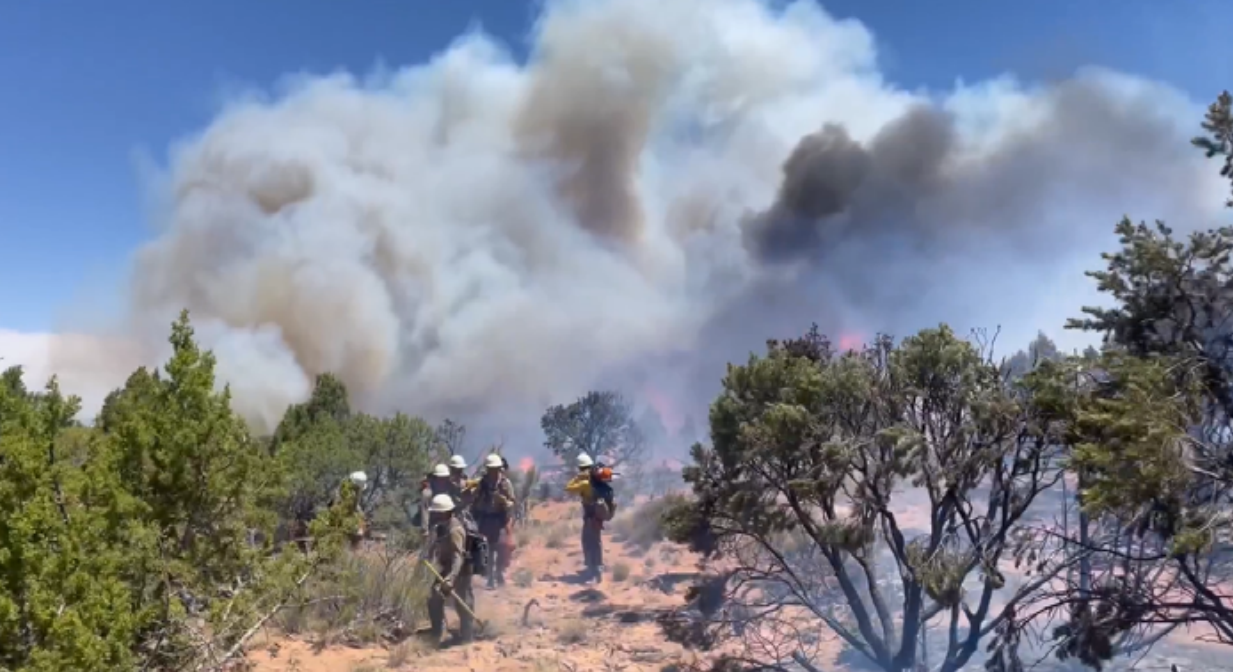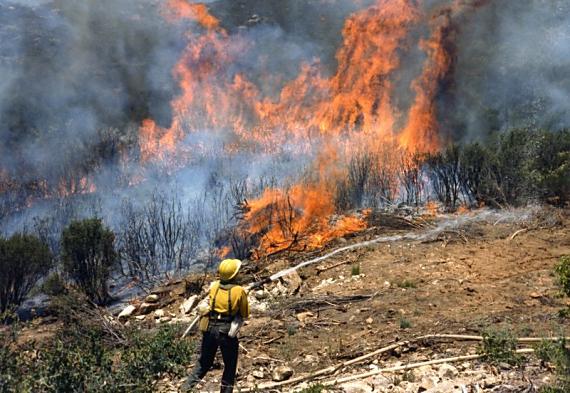
Some of the opinions of Jon Keeley, a fire ecologist with the U.S Geological Survey (USGS) at Sequoia-Kings Canyon National Park, are again in the news. A web site called OurAmazingPlanet has quoted him in a lengthy article about prescribed fire, titled “Fighting Fires: You’re Doing It Wrong”. While admitting that prescribed fire in Sequoia-Kings Canyon National Park “is extremely necessary”, he goes on to say:
In most of Southern California, [prescribed fire] is completely irrelevant. There is overwhelming evidence we’ve never come anywhere close to excluding fire on this landscape [through prescribed fire].
Mr. Keeley believes that manipulating the vegetation in chaparral-covered areas by masticating and prescribed fire, replaces the native vegetation with invasive species like cheatgrass. He thinks that instead, we should concentrate on planning and reduce the number of people that are put at risk.
This is not the first time Wildfire Today has written about Mr. Keeley’s opinions. In 2009 we covered his research that indicates it is unlikely that changing the age class of chaparral can prevent large fires. The details are in his papers HERE and HERE, and in a brief article by John McKinney HERE.
Conventional wisdom was that younger chaparral, less than 20 years old, had fewer tons-per-acre of vegetation than older stands, and also had a much different live/dead ratio, with fewer dead stems and plants. Less flammable fuels (higher green content with higher fuel moistures) meant fires would spread more slowly and should be easier to suppress.
Totally preventing or excluding fires in chaparral will never be feasible, but… it is hard for me to give up the idea that creating a mosaic of chaparral age classes does not have a significant effect on fire size and resistance to control.