A lead plane is a small, twin-engine fixed wing aircraft the assists and directs the much larger air tankers that drop retardant on wildfires. They have a one-person crew, the pilot, who is very experienced in flying over fires in mountainous terrain with turbulent wind conditions. Their purpose is to determine a safe and effective flight path for the air tankers and to identify the exact location for the retardant drops. They will often make several passes over the target, sometimes from different directions, before they settle on the best approach for the much larger air tankers.
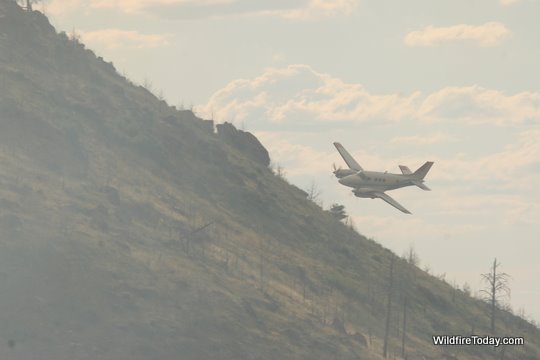
These photos are of the lead plane working in Ferguson Canyon on the Whoopup fire southeast of Newcastle, Wyoming, on June 18, 2011. This aircraft is a Beechcraft King Air 90 twin-turboprop that was dispatched out of Albuquerque Silver City, NM at 11:40 a.m. and spent the afternoon working with air tankers 45 and 07. All three aircraft were refueling and reloading retardant at the tanker base at Rapid City Regional Airport. Some lead planes have the capability of producing a puff of smoke to mark drop locations, but I didn’t see this lead plane doing that.
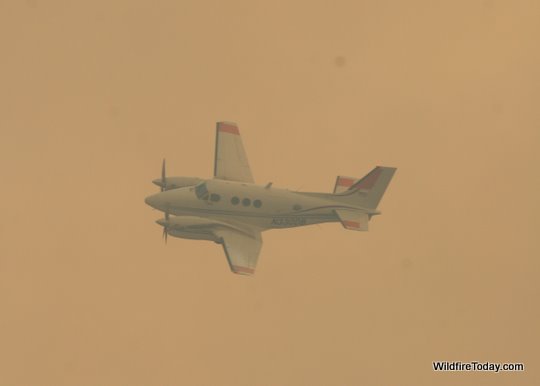
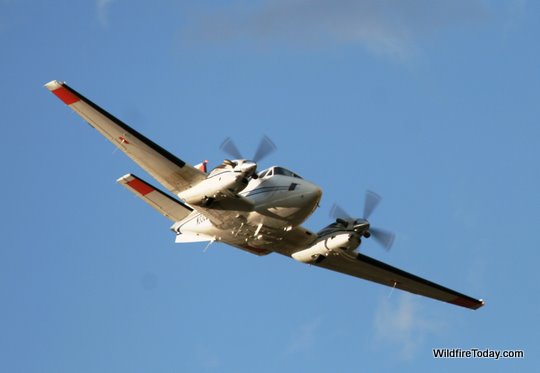
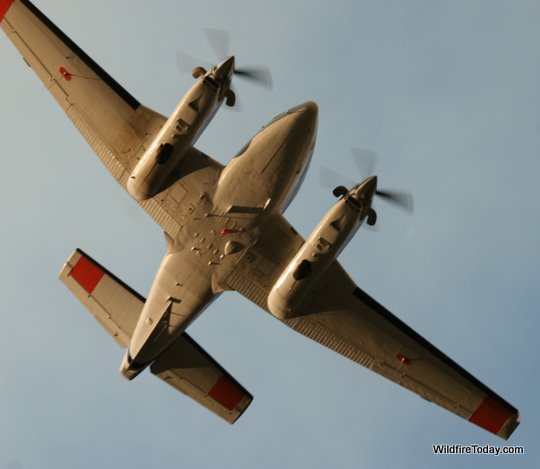
One interesting fact about lead planes is that some of their radio antennas are installed on the bottom of the aircraft, rather than the top. This makes it easier to communicate with firefighters below them on the ground. This King Air has at least three on the bottom — two on the wings and one or more on the fuselage.
======================
Update 7-26-2011: we put together a slide show of more photos.
Help us out by telling Google you like this article by clicking the Google +1 button below. Thanks!