

 On August 31 the National Park Service released the long anticipated report (12 Mb file) about the wildfire that burned from Great Smoky Mountains National Park into the city of Gatlinburg, Tennessee. Five days after it started on November 23, 2016, the Chimney Tops 2 Fire spread into the eastern Tennessee city killing 14 people, forcing 14,000 to evacuate, destroying or damaging 2,400 structures, and blackening 17,000 acres.
The strategy used to manage the fire was controversial because very little direct action was taken to suppress the fire during those first five days until a predicted wind event caused it to spread very rapidly out of the park and into the city.
The report was presented to the public during a live Facebook feed which you can see below.
One of the first speakers was Secretary of the Interior Ryan Zinke who reminded the audience that he served in combat and then mentioned some recommendations:
- The National Park Service should be more proactive about removing “dead and dying timber”;
- The dozer lines built during the suppression of the fire could be put to good use, possibly as bike paths;
- The interoperability of communications systems needs to be improved so that firefighters from different divisions within the NPS and also between other agencies can more easily communicate during an emergency.
Joe Stutler, qualified as a Type 1 Incident Commander and Area Commander, positions at the pinnacle of the incident management structure, read a lengthy statement that included what he and his team of investigators deemed to be the pertinent facts of the fire and the investigation.
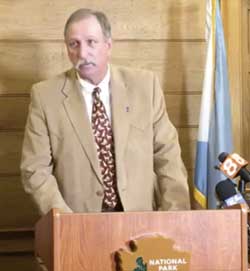
Describing the actions taken or not taken on the fire, he said, “the review team found no evidence of negligence of anyone at the park. They did the very best they could when it came to their duty. They did the very best they could based on what was loaded in their hard drive”, he said as he pointed to his head.
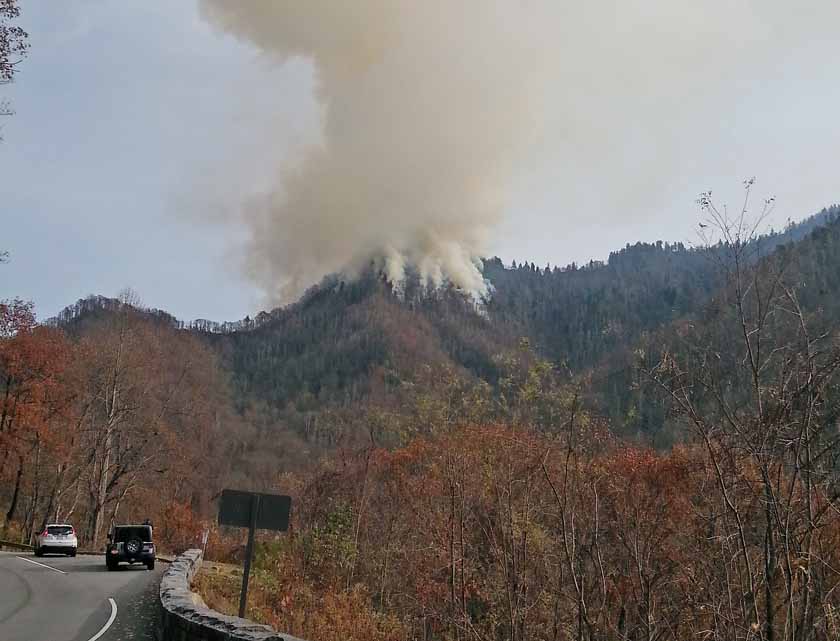
Combined with a wildland/urban interface, it was the “perfect storm”, he explained. The review team concluded that the fire management officials did not see the potential for the low-frequency, high-risk event.
The report made recommendations, including:
- Revise the park’s fire management plan to reflect more aggressive strategies and tactics during extreme fire weather conditions.
- Expand communications capacity to allow interoperability with responders outside the federal system.
- The Fire Management Officer should be supervised by a single individual, not two.
- Since no Red Flag Warnings were issued around the time of the fire, evaluate current Red Flag Warning and advisory criteria to reflect conditions experienced during the 2016 fire season.
- The National Park Service leadership should embrace and institute change to create wildland fire management organizations that have the capacity and resilience to meet the realities of this “new normal” fire behavior.
- Institute formal fire management officer and agency administrator mentoring and/or development programs.


