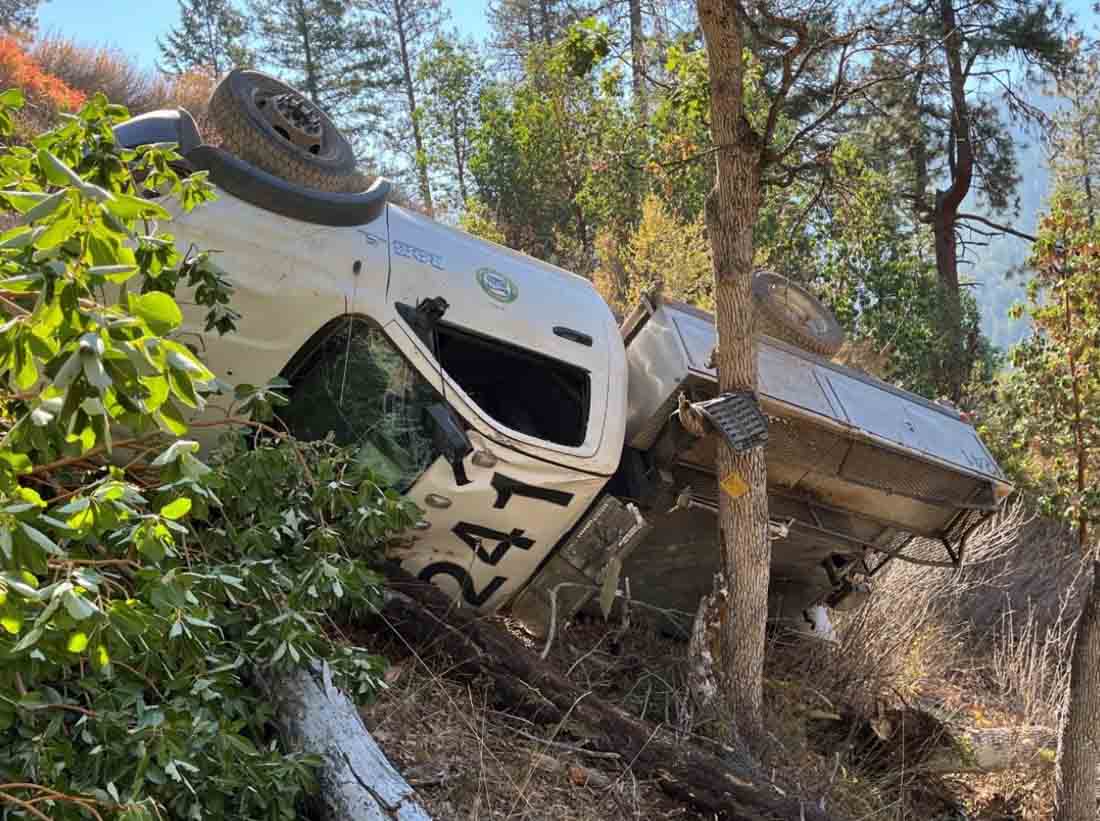
 Engine rollover on Anderson Butte Fire. Photo from the Wildland Fire Lessons Learned Center report.
On October 2 one of three responding Type 6 engines rolled over while responding to the Anderson Butte Fire in Oregon. On the gravel road much dust was being kicked up compromising the visibility of the drivers. They were heading into the sun and the driver of the rollover engine said he was relying on the emergency lightbars of the engines ahead of him to find his way.
As he rounded a shaded corner, the sun hit the engine windshield and severely impacted his vision. He did not notice the curve in the road. Soon after, the Engine 241 driver—who was the vehicle’s sole occupant—noticed that the passenger side front tire was no longer contacting the ground. He attempted to steer back toward the road, but momentum caused the engine to tip. The engine then rolled more than two times before being stopped by a small grove of oak trees, finally coming to rest on the driver’s side, approximately 100 feet below the road.
The driver was able to climb out through the passenger window, walk up to the road, and radio for help.
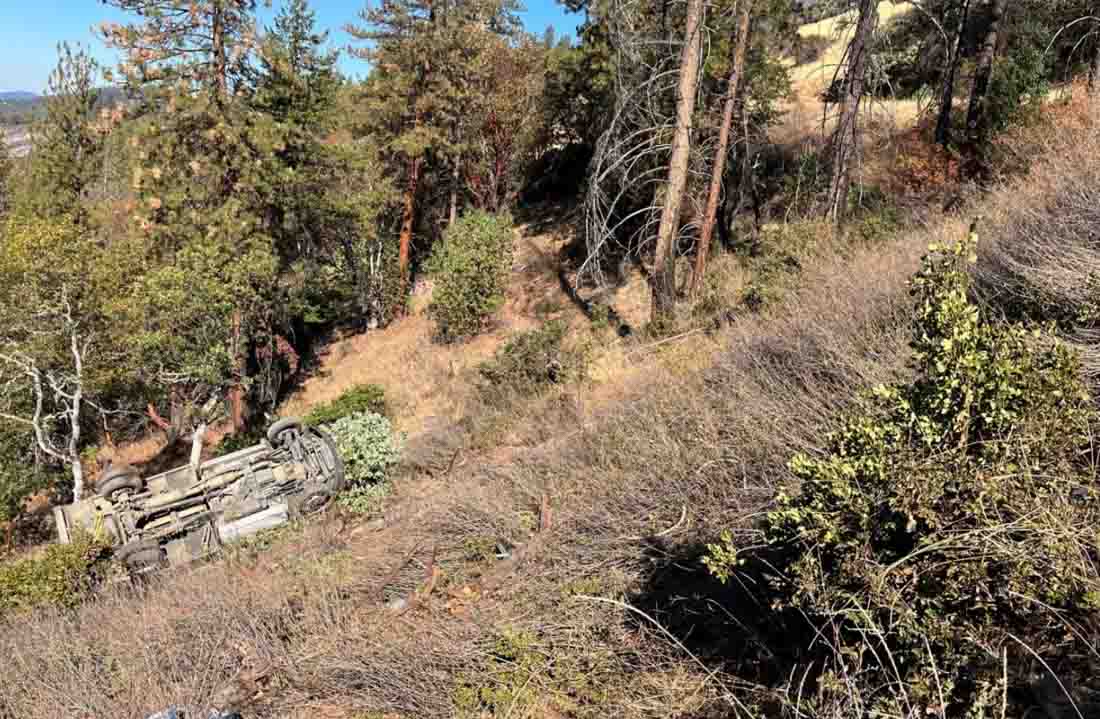 Engine rollover on Anderson Butte Fire. Photo from the Wildland Fire Lessons Learned Center report.
The driver indicated that he basically just had a laceration on his leg. He initially requested to continue to the fire, but was held back for further evaluation. A local ambulance crew arrived around 30 minutes later. The driver was evaluated for head trauma and his lacerated leg was treated. The ambulance was released, the driver was instructed to return to his home unit, and was driven there by his supervisor.
The engine, which was totaled beyond repair, was retrieved by a wrecker the following day.
Two of the lessons pointed out in the report were:
- Continuously evaluate conditions, as dust and sun angle make for less visibility, travel at slower speeds, and allow for more space in between yourself and the vehicle in front of you.
- If you can’t clearly see the road: STOP.