


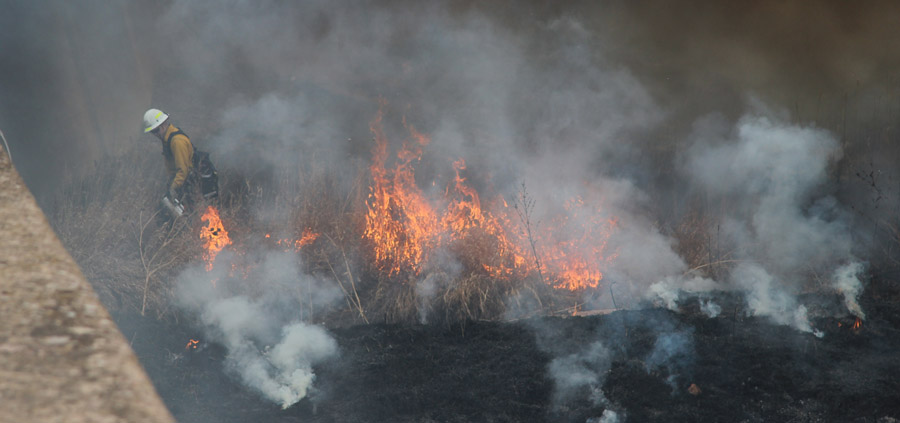
Researchers in Australia have found a link between smoke from bushfires and cardiac arrest in men over 35 in the population of metropolitan Melbourne. We would like to see a study done of wildland firefighters who breathe far more smoke than the residents of Melbourne.
Below is an excerpt from Medicalxpress.com:
Men over 35 have an increased risk of cardiac arrest if exposed to poor quality air from bushfires, a new study has found.
Monash University research using data from Ambulance Victoria’s Victorian Ambulance Cardiac Arrest Registry (VACAR) investigated the links between out-of-hospital cardiac arrests and bushfire smoke exposure in metropolitan Melbourne during the 2006-07 bushfire season.
The study, published in the latest edition of Environmental Health Perspectives, found an association between exposure to forest fire smoke and an increase in the rate of out-of-hospital cardiac arrests.
Monash University researchers led by Dr Martine Dennekamp, Department of Epidemiology and Preventive Medicine, saw greater increases in the number of men over 35 years old experiencing cardiac arrests but did not see a significant association in women over 35.
Dr Dennekamp said exposure to smoke from forest fires was a significant health issue in many countries, and it was important to raise community awareness.
“The problem is likely to get worse in the future, as we can expect fires to become both more frequent and more severe,” Dr Dennekamp said.
The state and federal governments not only employ the most wildland firefighters in the United States, but they would also be the ones to fund research like this. One would think they would have a disincentive to discover environmental conditions on the job that adversely affect the health of their employees. Don’t ask the question if you don’t want to know the answer, right? Mitigating the hazard of smoke for firefighters on a wildfire would be extremely difficult. But the least these employers should do is determine exactly the nature and scope of the hazard, and support their employees, and former employees, who suffer from life threatening diseases caused by their jobs.
There have been some papers written and some research has been completed on wildfire smoke, but what is needed is a thorough long term study on wildland firefighters conducted by epidemiologists. Something we first called for in 2010.
A very well known and respected Hotshot Superintendent advised me to frequently complete a CA-1 accident form after breathing lots of smoke on a fire. If you don’t, perhaps 10, 20, or 30 years later it might be hard to convince your employer that one or more of the following conditions were caused by your job: leukemia, testicular cancer, lung cancer, brain cancer, bladder cancer, ureter cancer, colorectal cancer, and non-Hodgkins’s lymphoma. All of those are recognized by the British Columbia government as an occupational hazard for firefighters; they are called presumptive cancers. But the United States government does not.
Other articles on Wildfire Today tagged cancer and firefighter health.







