A mother’s reaction to the criminal charges against the former Carson Helicopters employees

The mother of one of the firefighters killed in the crash of the Carson-owned helicopter has been following very closely the NTSB and criminal investigations into the crash that killed her son, Scott Charlson, six other firefighters, and two air crew members. Both investigations agreed that Carson Helicopters intentionally falsified documents about the performance of their helicopters which led the U.S. Forest Service and the flight crew to erroneously believe the Sikorsky S-61N could carry the load of firefighters when it attempted to lift off from a helispot on the Iron 44 Fire in northern California in 2008. The helicopter crashed and burned as it struggled to become airborne, killing nine people.

Last week a federal grand jury in Medford, Oregon indicted Steven Metheny, 42, former Vice President of Carson Helicopters, and Levi Phillips, 45, the former maintenance chief of the company, for charges which could earn them 20 or more years in federal prison if convicted.

Below is the reaction of Scott’s mother, Nina Charlson, to the indictments:

****

“I am very thankful the criminal investigation was pursued. While it does not bring our loved ones back or change the heartache and emotional torture surviving firefighters and families have had to endure the past 4 ½ years it does confirm some of the things we have been told since the crash.

Besides the sentences the Federal Government will hand out I would like for these two men, Steve Methany and Levi Phillips to sit before the family and friends (one family at a time) of Shawn Blazer, Scott Charlson, Matt Hammer, David Steele, Caleb Renno, Edrick Gomez, Bryan Rich, Roark Schwanenberg and Jim Ramage and hear how their lives have changed since 7:45 p.m. August 5, 2008. I would like for them to sit before Bill Coultas, Mike Brown, Jon Frohreich and Rick Schroeder and their families and hear how their lives changed that night. I would like them to sit before the firefighters that were on the mountain at the time of the crash and listen how their lives changed that night. I would like for them to sit before Grayback Forestry, US Forest Service, Cal-Fire and the entire firefighter brotherhood and hear what they have to say about that fateful night.

We were told this crash was preventable and predictable on many levels and sadly we have found that to be true. Initially when I was told about the crash – foul play was not what came to my mind. Accidents happen. But this was no accident and it complicates the grief we are experiencing.

Nothing that takes place in the future can bring our loved ones back to us or stop the emotional torment that is present in so many minds at this very moment because of the criminal acts these two men committed over and over again – even after the crash. No remorse – it was all about them, their greed and their life.

Several families of the fallen firefighters have determined to take as many steps as necessary to send a message to anyone in the future who may be driven by greed or glory. We will remind them of the bottom line – Our sons, fathers and husbands lives. We will do whatever it takes to help protect lives and families in the future. In Dec. of 2011 several families of the fallen traveled back to Washington DC to attend a Public Aircraft Forum hosted by the NTSB. There were very powerful worldwide leaders in the Public Aircraft world that were present. We were thanked by many of them for being there because we gave them a visual of what their good or poor decisions can do. It is not easy for us to make these trips financially or emotionally but if we can influence decisions to save future lives we will continue in the honor of our loved ones who paid the ultimate price.”
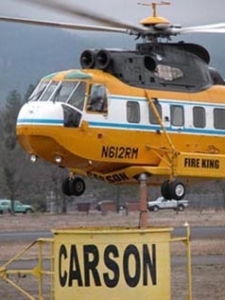
Former employees of Carson Helicopters indicted over fatal Iron 44 Fire crash

Sikorsky S-61N helicopter operated by Carson

Two former employees of Carson Helicopters are facing 20 years or more in prison for charges related to the crash of a helicopter August 5, 2008 that killed nine people (seven firefighters and two crew members) as it attempted to take off from a remote helispot on the Iron Complex or Iron 44 Fire in northern California.

Last week a federal grand jury in Medford, Oregon indicted Steven Metheny, 42, former Vice President of Carson, and Levi Phillips, 45, the former maintenance chief of the company, for charges of conspiracy to defraud the United States which could earn them up to 20 years in prison if convicted.

Metheny was also indicted in 22 other counts of mail fraud, wire fraud, making false statements to the Forest Service, endangering the safety of aircraft in flight, and theft from an interstate shipment. In addition to the 20 years for conspiracy to defraud charges, he could get a maximum sentence of 20 years for every mail and wire fraud count, 20 years for each endangering the safety of aircraft in flight count, 10 years for the interstate theft count, and up to five years for each false statement count.

According to the findings of  the National Transportation Safety Board in 2010, there was “intentional wrong-doing” by Carson Helicopters that under-stated the weight of the Sikorsky S-61N helicopter and over-stated its performance in the documents they provided to the USFS when bidding on $20 million in firefighting contracts for seven helicopters. As a result, when the helicopter attempted to take off from the helispot on the Iron 44 Fire with firefighters and a flight crew of three, it was over the allowable weight even before the firefighters boarded the ship. The helicopter crashed into some trees and caught fire, just after lifting off.

Killed in the crash were pilot Roark Schwanenberg, 54; USFS check pilot Jim Ramage, 63; and firefighters Shawn Blazer, 30; Scott Charlson, 25; Matthew Hammer, 23; Edrik Gomez, 19; Bryan Rich, 29; David Steele, 19; and Steven “Caleb” Renno, 21. The copilot and three other firefighters were seriously injured.

In March of 2012, a jury ordered the manufacturer of the helicopter’s engines, General Electric, to pay $69.7 million to William Coultas (the surviving pilot), his wife, and the estate of Roark Schwanenberg (the pilot who was killed).

After the crash, between September 26 and October 3, 2008, the USFS suspended the contract for some of Carson’s helicopters. On February 18, 2009, the USFS canceled their contract (copy of the contract) with Carson (copy of the termination letter) based on inaccurate claimed weights of the helicopters. The company then surrendered their FAA Certificate which is equivalent to an operating license. After that they received a contract for seven S-61s to fly for the military in Afghanistan as a subcontractor for the company formerly known as Blackwater Worldwide, which was renamed “Xe”. In February 2010, Sikorsky announced a joint venture with Carson to supply up to 110 modernized S-61T helicopters to the U.S. government, primarily for the State Department.

The U.S. Attorney’s office in Oregon is working with the Offices of Inspector General for both the Department of Agriculture and the Department of Transportation in Portland, Oregon and Seattle, Washington, and the FBI and the IRS in Medford, Oregon in the investigation and prosecution of this case.

Thanks go out to Joseph and Kelly.

Jury awards $70 million for helicopter crash on Iron Complex fire

After deliberating for over a week a jury in Oregon decided on Tuesday that the manufacturer of the engines was at fault for the crash of a helicopter that was transporting wildland firefighters on the Iron Complex (or Iron 44 fire) in 2008. Nine people died in the crash as it attempted to take off from a remote helispot in northern California. Seven of those killed were firefighters. One was a U.S. Forest Service check pilot, observing the operation of the helicopter’s crew, and another was one of the two pilots working for the owner of the ship, Carson Helicopters.

The surviving pilot, William Coultas, his wife, and the estate of the pilot who was killed, Roark Schwanenberg, brought a $177 million lawsuit against General Electric, the manufacturer of the engines.

The jury, after deliberating for six days, made the following awards, totaling $69.7 million:

  • $37 million to William Coultas
  • $4.3 million to Coultas’ wife
  • $28.4 million to the estate of Roark Schwanenberg

Their case revolved around the plaintiffs’ belief that there were problems with a fuel control valve and that the specifications on the fuel filters were inadequate to remove contaminants. They claimed that GE had been aware of the problem for six years.

GE’s defense was along the same lines as the findings of a National Transportation Safety Board investigation of the crash, which determined that the owner and operator of the Sikorsky S-61N helicopter, Carson Helicopters, under-stated the weight of the helicopter and over-stated its performance in the documents they provided to the U.S. Forest Service when bidding on their firefighting contract. The NTSB estimated that the actual empty weight of the helicopter was 13,845 pounds, while Carson Helicopters stated in their contract proposal that the weight was 12,013 pounds. For the purpose of load calculations on the day of the crash, the pilot assumed the weight to be 12,408 pounds, which was 1,437 pounds less than the actual weight estimated by the NTSB. According to their findings, for the mission of flying the firefighters off the helispot, the helicopter was already over the allowable weight even without the firefighters on board.

The families of eight men who were killed and three who were injured, previously reached out-of-court settlements with Carson Helicopters and the manufacturer of the helicopter, Sikorsky.

Some of the details of the monetary award still have to be worked out. Here is an excerpt from Oregonlive, which says the jury…

…found GE 57 percent at fault — and attorneys will argue in the next 10 days whether that means GE must pay all $70.455 million that the jurors awarded, or whether GE must pay only 57 percent, which amounts to about $40 million.

Jurors found Carson Helicopters 23 percent at fault, but the company won’t be liable for paying its share of the verdict because a judge dismissed them from the case. The jury also found Sikorsky 20 percent at fault, but the company settled with the plaintiffs for an undisclosed amount shortly after trial started. That means Sikorsky isn’t responsible for paying any of the verdict, said Anderson, the plaintiffs’ attorney.

After the crash the U.S. Forest Service canceled their contract with Carson Helicopters. The company then surrendered their FAA Certificate which is equivalent to an operating license. However, they may still be flying for the military in Afghanistan as a subcontractor for the company formerly known as Blackwater Worldwide, which was renamed “Xe”.

Killed in the crash were pilot Roark Schwanenberg, 54; USFS check pilot Jim Ramage, 63; and firefighters Shawn Blazer, 30; Scott Charlson, 25; Matthew Hammer, 23; Edrik Gomez, 19; Bryan Rich, 29; David Steele, 19; and Steven “Caleb” Renno, 21.

Jury deliberating on $17 million suit related to fatal helicopter crash on Iron Complex fire

A jury in Oregon is deliberating, after a week-long trial, a case related to the crash of a helicopter on the Iron Complex (or Iron 44) fire in northern California in 2008 that killed nine firefighters and crew personnel. The lawsuit was initiated by the surviving co-pilot, William Coultas, and the estate of the pilot who died, Roark Schwanenberg. They are suing the maker of the helicopter’s engines, General Electric, for $177 million, claiming there were problems with a fuel control valve and that the specifications on the fuel filters were inadequate to remove contaminants.

GE’s position agrees with the findings of the NTSB which determined that the owner and operator of the Sikorsky S-61N helicopter, Carson Helicopters, under-stated the weight of the helicopter and over-stated its performance in the documents they provided to the U.S. Forest Service when bidding on their firefighting contract. The NTSB estimated that the actual empty weight of the helicopter was 13,845 pounds, while Carson Helicopters stated in their contract proposal that the weight was 12,013 pounds. For the purpose of load calculations on the day of the crash, the pilot assumed the weight to be 12,408 pounds, which was 1,437 pounds less than the actual weight estimated by the NTSB. According to their findings, for the mission of flying the firefighters off the helispot, the helicopter was already over the allowable weight even without the firefighters on board.

Mr. Coultas has long claimed that Carson Helicopters and the two pilots were not at fault for the accident and that the engines did not provide full power as they lifted off the helispot that day with a load of wildland firefighters. The NTSB disagreed, saying that the engines were operating at full power when the rotors clipped trees as it tried but failed to gain adequate altitude.

Killed in the crash were pilot Roark Schwanenberg, 54; pilot Jim Ramage, 63; Shawn Blazer, 30; Scott Charlson, 25; Matthew Hammer, 23; Edrik Gomez, 19; Bryan Rich, 29; David Steele, 19; and Steven “Caleb” Renno, 21.

The jury began their deliberations on Thursday, March 15. We will update this article when they return a verdict.

Thanks go out to Christian and Dick

Co-pilot of crashed Iron fire helicopter disputes NTSB findings

William “Bill” Coultas of Cave Junction, Oregon says the National Transportation Safety Board ignored his testimony and came to the wrong conclusion about the cause of the helicopter crash on the Iron Complex fire in 2008 near Weaverville, California in which 9 firefighters and helicopter crew members died.

The NTSB concluded in their public meeting on December 7 that Carson Helicopters intentionally under-stated the weight of the helicopter and over-stated its performance in the documents they provided to the U.S. Forest Service when bidding on their firefighting contract. This led to the helicopter being overloaded, making it impossible for it to gain altitude when it attempted to take off from the Iron 44 helispot at 6,000 feet in the Trinity Alps.

Here is an excerpt from an article in the Mercury News:

…”I was speechless—I could not believe what I was hearing,” [Coultas] said after the NTSB report was released Tuesday. “I was there. I had the best seat in the house. I knew what happened.”

Coultas, 46, is still recovering from severe burns suffered in the August 2008 crash in Northern California that also killed pilot Roark Schwanenberg of Lostine.

Carson helicopters

Both Coultas and the Schwanenberg family have sued engine manufacturer General Electric, as well as Sikorsky and a maintenance company, Columbia Helicopters, citing engine failure, among other things.

They say the NTSB investigators were responsible for losing engine fuel control parts that would have backed up the copilot’s testimony.

“We want the truth to come out about the loss of engine parts and actual cause of the accident,” said Gregory A. Anderson, an attorney from Ponte Vedra Beach, Fla., who represents both the Coultas and Schwanenberg families.

Lawyers for the three companies did not immediately respond to e-mails Friday from The Associated Press seeking comment on the litigation.

The NTSB concluded that aircraft owner Carson Helicopters Inc. of Merlin deliberately understated the weight of its Sikorsky S-61N helicopter.

The report also said both the U.S. Forest Service and the Federal Aviation Administration failed to notice the understatement.

Carson Helicopters said in a statement that a clogged fuel control unit and other issues were responsible for the crash. The company also laid the blame for underestimating the weight of the aircraft on the actions of an unnamed single manager.

In their public meeting on December 7 the NTSB said the fuel system parts played no role in the crash and that the engines were operating at full power as it attempted to take off.

It was announced last week that Carson Helicopters surrendered their FAA certificate, equivalent to a license to operate, but last year the company signed a contract with a subsidiary of Blackwater Worldwide (which recently changed their name to “Xe”) to use seven of their Sikorsky S-61 helicopters in Afghanistan.

Summary of the investigation into the Iron Complex fire, 9-fatality helicopter crash

Carson helicopters

Yesterday we provided live coverage of the National Transportation Safety Board’s all-day meeting about the 2008 crash of the Sikorsky S-61N helicopter on the Iron Complex fire near Weaverville, California in which nine firefighters died. The pilot-in-command, a U.S. Forest Service check pilot, and seven firefighters were fatally injured; the copilot and three firefighters were seriously injured. The helicopter was operated by Carson Helicopters, Inc. of Grants Pass, Oregon.

According to the NTSB, there was “intentional wrong-doing” by Carson Helicopters that under-stated the weight of the helicopter and over-stated the performance of the helicopter in the documents they provided to the USFS when bidding on their firefighting contract. The NTSB estimated that the actual empty weight of the helicopter was 13,845 pounds, while Carson Helicopters stated in their contract proposal that the weight was 12,013 pounds. For the purpose of load calculations on the day of the crash, the pilot assumed the weight to be 12,408 pounds, which was 1,437 pounds less than the actual weight estimated by the NTSB. According to the NTSB, for the mission of flying the firefighters off the helispot, the helicopter was already over the allowable weight even without the firefighters on board.

In addition, here is an excerpt from the NTSB report:

The altered takeoff (5-minute) power available chart that was provided by Carson Helicopters eliminated a safety margin of 1,200 pounds of emergency reserve power that had been provided for in the load calculations.

The pilot-in-command followed a Carson Helicopters procedure, which was not approved by the helicopter’s manufacturer or the U.S. Forest Service, and used above-minimum specification torque in the load calculations, which exacerbated the error already introduced by the incorrect empty weight and the altered takeoff power available chart, resulting in a further reduction of 800 pounds to the safety margin intended to be included in the load calculations.

The incorrect information—the empty weight and the power available chart—provided by Carson Helicopters and the company procedure of using above-minimum specification torque misled the pilots to believe that the helicopter had the performance capability to hover out of ground effect with the manifested payload when, in fact, it did not.

The NTSB has notified the Department of Transportation’s Inspector General that Carson’s actions may merit a criminal investigation.

The NTSB and the FAA seem to have a rocky relationship. Some of the recommendations that the NTSB makes to the FAA following accident investigations are ignored, which frustrates the NTSB. This was evident a couple of times in the meeting yesterday. The AP reports on an example of this tension that affected the NTSB’s ability to investigate the Iron 44 fire fatal accident:

Two months after the accident, the FAA office in charge of overseeing Carson received letters from two pilots with knowledge of Carson’s operations who expressed concern that the company was miscalculating helicopter weights, investigators said.

Investigators said that if FAA had provided NTSB with that information at the time, it would have helped them figure out sooner that the weight calculations were faulty. FAA was a party to the accident investigation and its inspectors were aware of the investigation, they said.

However, FAA dismissed the allegations and didn’t provide the letters to NTSB until about a year later after the investigators made a general request for documents related to the agency’s oversight of Carson after the crash, investigators said.

Carson surrenders FAA certificate, but may still be operating in Afghanistan

It was reported by the FAA after the NTSB meeting on Tuesday that Carson Helicopters has surrendered their FAA Certificate, which is equivalent to an operating license. However, they may still be flying for the military as a subcontractor. The Mail Tribune in Medford, Oregon reported in January, 2009 that Carson Helicopters signed a contract with a subsidiary of Blackwater Worldwide (which recently changed their name to “Xe”) to use seven of their Sikorsky S-61 helicopters in Afghanistan. The contract, worth $605 million through 2013, is for the helicopters to transport supplies; they will not be involved in combat.

Fuel Control Unit missing

Conspiracy theory enthusiasts will enjoy speculating about the fuel control unit that went missing after it was gathered as evidence. The NTSB says the part played no role in the accident and that both engines were operating at full power during the accident. However, Carson is saying the crash was caused when one engine experienced a loss of power caused by the part that later disappeared. If Carson can successfully deflect blame to the company that manufactured the part, or at least establish some doubt about the accident’s cause, it may reduce their financial liability.

Who regulates wildfire aviation?

The answer is: nobody. The FAA claims they have no authority to regulate the aviation activities of other federal agencies or state and local governments. This authority has to be granted by Congress, which has shown no interest in becoming involved in the aviation safety of firefighters. And the federal agencies, or at least the U.S. Forest Service as proven in this accident, generally do not have the aviation expertise to inspect and regulate their own agency-owned or contracted aircraft. Good luck in trying to not think about this the next time you’re climbing into a helicopter at a fire. (Let’s see – got hard hat, gloves, line gear, tool, life insurance.)

NTSB report

We have a copy of the NTSB’s Conclusions, Probable Causes, and Recommendations, released yesterday, on our Documents page. Some of the highlights are below.

Continue reading

Families of Iron 44 helicopter crash victims reportedly settle suits

The Oregonian newspaper reports that seven of the families of the firefighters that were killed and three that were injured in the crash of the helicopter on the Iron 44 fire in 2008 have reached a tentative settlement in various lawsuits.

On August 5, 2008, a Sikorsky S-61 helicopter crashed as it was taking off from a helispot on the fire in the Shasta-Trinity National Forest in northern California. Nine were killed, including a pilot, a check pilot, and seven contract firefighters with Grayback Forestry.

An attorney representing some of the families said a tentative agreement has been reached with Carson Helicopters, Columbia Helicopters, and the U.S. Forest Service, but the dollar amount is still being finalized. No agreement has yet been reached with Sikorsky, the manufacturer of the helicopter, or General Electric, which built the engines.

The Oregonian reports that the families of Roark Schwanenberg, the pilot who died, and Jim Ramage, a Forest Service check pilot, as well as surviving pilot William Coultas, did not reach settlements with any of the five defendants.

A contributing factor in the crash may have been the weight of the helicopter as it attempted to take off from the helispot with the ten firefighters, tools, two pilots, and one check pilot. In their report, the National Transportation Safety Board estimated that the actual empty weight of the helicopter was 13,845 pounds, while Carson Helicopters stated in their contract proposal that the weight was 12,013 pounds. For the purpose of load calculations on the day of the crash, the pilot assumed the weight to be 12,408 pounds, which was 1,437 pounds less than the actual weight estimated by the NTSB. In addition, the manifest for that fatal flight calculated that the payload was 2,355 pounds, while the NTSB report estimated that the actual payload was 3,005, a difference of 650 pounds. So the actual total weight of the loaded helicopter as it attempted to take off from the helispot may have been 2,087 pounds heavier than anyone at the fire realized, according to data in the report.

After the crash, the U.S. Forest Service weighed the 10 Carson helicopters that were under contract. They found that seven of them were heavier than Carson had stated in their contract proposals, by an average of 490 pounds. The USFS later canceled their contract with Carson.

In 2009 Carson obtained a contract to supply seven Sikorsky S-61 helicopters to haul supplies for the U. S. military in Afghanistan. The company is partnering with a subsidiary of Blackwater Worldwide, which recently changed their name to “Xe”.

Killed on the Iron 44 incident were pilot Roark Schwanenberg, check pilot Jim Ramage, Shawn Blazer, Scott Charlson, Matthew Hammer, Edrik Gomez, Bryan Rich, David Steele, and Steven “Caleb” Renno. Injured were William Coultas, Richard Schroeder Jr., Jonathan Frohreich, and Michael Brown.

The Wildland Firefighter Foundation has a tribute page online [HERE] and CALFIRE has one [HERE].

Missing engine part from Iron 44 helicopter crash

One “possibly crucial engine part” from the fatal helicopter crash on the Iron 44 fire last year in northern California that killed nine firefighters and pilots was missing when the crash debris was shipped from Columbia helicopters to the National Transportation Safety Board.

From Aero-News.net:

The wreckage from the aircraft involved in the so-called “Iron 44” incident had been sent to Columbia Helicopters, where NTSB and FAA officials observed while technicians tore down the aircraft’s engines. The NTSB subsequently asked that the engines be shipped to Washington, DC, but a footnote in the 500 page preliminary report indicates  “upon opening the shipping containers, an inventory of the hardware revealed that the following components from the FCU (Fuel Control Unit) Number 1 were not present: Metal position adjusting cover, snap retainer ring, spring retainer cap, spring and bellows.”

The FCU’s control the amount of fuel delivered to the engines.

A review of the video recording of Columbia employees packing the shipping containers shows the parts were not among the items shipped.

KDRV-TV reports that the general council for Columbia Helicopters said, while employees have searched “high and low” for the missing parts, they have been unable to locate them. The company says the FCU’s may not be a focus of the investigation, and therefore may not be important.
 
Greg Anderson, the attorney for William Coultas, the surviving pilot from the crash, as well as the family of one of those killed in the incident, told the station the omission of the parts from the shipment is “highly suspicious.”


Thanks Kelly

Iron 44 Crash Report

The Carson helicopter that crashed last year on the Iron 44 fire and killed nine firefighters was much heavier than U.S. Forest Service recommendations, according to National Transportation Safety Board reports. The NTSB said the weight was near maximum for vertical takeoff, requiring near-maximum engine power. So instead of climbing up on takeoff, the helicopter went forward, clipping trees before it crashed. Seven contract firefighters, the pilot, and a USFS inspector pilot were killed; four others survived.

On August 5, 2008, the Sikorsky S-61N crashed on takeoff from a remote site in the Shasta-Trinity National Forest near Weaverville, California. The NTSB is suggesting that Carson Helicopters understated the weight of its aircraft and kept spotty maintenance records; the company’s contract with the USFS was terminated last fall.

The NTSB estimated that the actual empty weight of the helicopter was 13,845 pounds, while Carson Helicopters stated in their contract proposal that the weight was 12,013 pounds. For the purpose of load calculations on the day of the crash, the pilot assumed the weight to be 12,408 pounds, which was 1,437 pounds less than the actual weight estimated by the NTSB.

The Oregonian reports that Carson, on the other hand, accuses investigators of neglecting critical facts in a rush to judgment. They say the NTSB used bad data in calculating the weather’s effect on helicopter performance, and that investigators extrapolated the temperature at 73ºF. at the site. Voice recordings from the co-pilot indicate the temperature was actually 68ºF.

Carson says the NTSB is trying to support a “preconceived conclusion” by using the higher temp in its calculations, and they also argue that the NTSB should have examined whether malfunctioning fuel control units caused the crash.

Killed on the incident were pilot Roark Schwanenberg, 54; pilot Jim Ramage, 63; Shawn Blazer, 30; Scott Charlson, 25; Matthew Hammer, 23; Edrik Gomez, 19; Bryan Rich, 29; David Steele, 19; and Steven “Caleb” Renno, 21.

Thanks, Dick

Memorial service in Medford; more information

A memorial service was held in Medford, Oregon yesterday for the 9 firefighters that died in the helicopter crash on August 5 while working on the Iron 44 fire.

HERE is a gallery of photos taken at the service. You need to see these photos.

Here is a link to a slide show/video of the service, put together by Shari and Ken Downhill of Northwest Timber Fallers.

The Mail Tribune has a video about the service.

An excerpt from a Mail Tribune article:

Friday’s tribute began with a procession of some 30 fire trucks representing firefighting companies and agencies from around the West. Leading the procession was seven black vehicles carrying family members.

Grayback firefighters lined each side of the road as the procession entered the fairgrounds under crossed fire ladders. The Grayback crews, all in gray company T-shirts, forest green Nomax pants and boots, then marched solemnly into the amphitheater for the memorial. Most were young men but there was also a sprinkling of young women.

With the families of the fallen sitting up front, the memorial opened with a police honor guard and a bagpipe-and-drum corps. Later, just as the Northwest Regional Fire Pipes and Drums was completing “Amazing Grace,” a spotter plane followed by an air tanker roared overhead to honor those killed in the crash. Another air tanker followed, symbolically dropping nine streamers traditionally used to determine wind direction over a fire.

Surviving members of the Grayback crew, including Schroeder, who is wearing a chin brace, presented the families of those who died with American flags, chromed Pulaskis — a combined ax and hoe that is the favored tool of wildland firefighters — and polished red hard hats for the firefighters. The families of the pilots received shiny white flight helmets.

Closing out the ceremony was a Grayback firefighter who rang the fire bell 15 times in a series of five rings each, a historical way of letting other firefighters know one of their own has fallen.

In addition to Catherine Renno, others speaking at the memorial included U.S. Forest Service Chief Abigail Kimbell, State Forester Marvin Brown, U.S. Rep. Greg Walden, R-Hood River, Grayback President Mike Wheelock, Carson Executive Vice President Steve Metheny and Tom Harbour, director of fire and aviation management for the U.S. Forest Service. Oregon Gov. Ted Kulongoski was in attendance.

“It is an unhappy truth that firefighters’ memorial services are always about the passing of the very best men and women our society can produce,” Metheny said. “And these men are proof of that truth.”

Many in the crowd began weeping when former smoke jumper Wheelock spoke.

“To the families, I am so sorry we did not bring your loved ones home,” he said, his voice breaking. “Families and firefighters, we will never, never forget the firefighters that were injured or lost their lives on Iron 44.”

During her presentation, Renno, whose husband, Bruce LeMay, offered a prayer for those killed or injured in the crash as well as others who have died in service to fellow citizens or the nation, said they have had some tough days since the crash.

“It was a comfort to my heart to learn, by talking to some of the guys that made it, that they weren’t tired and worn out as they got onto the helicopter,” she said. “They were pretty jazzed. They were pretty happy because they had held the line. That does our hearts good to know that, that our sons on their last day held the line.”

Photo courtesy of Mail Tribune