Above: Comet Fire, July 28, 2016. Photo by Bill Gabbert.
The heli-rappellers at the Salmon, Idaho airport saw the lightning strike on July 26 that caused the Comet fire 12 miles north of the town. So far it has burned 356 acres above the Salmon River near Highway 93.
Map showing the location of the Comet Fire 12 miles north of Salmon, Idaho, July 28 , 2016.
The fire is being fought by four helicopters, seven engines, one Type 2 initial attack 22 person crew, one Hotshot crew, four heli-rappellers, and four smokejumpers.
The Comet Fire north of Salmon, Idaho. Photo by Bill Gabbert. Click to enlarge. A K-MAX helicopter drops water on the Comet Fire north of Salmon, Idaho July 28, 2016. Photo by Bill Gabbert. Click to enlarge.
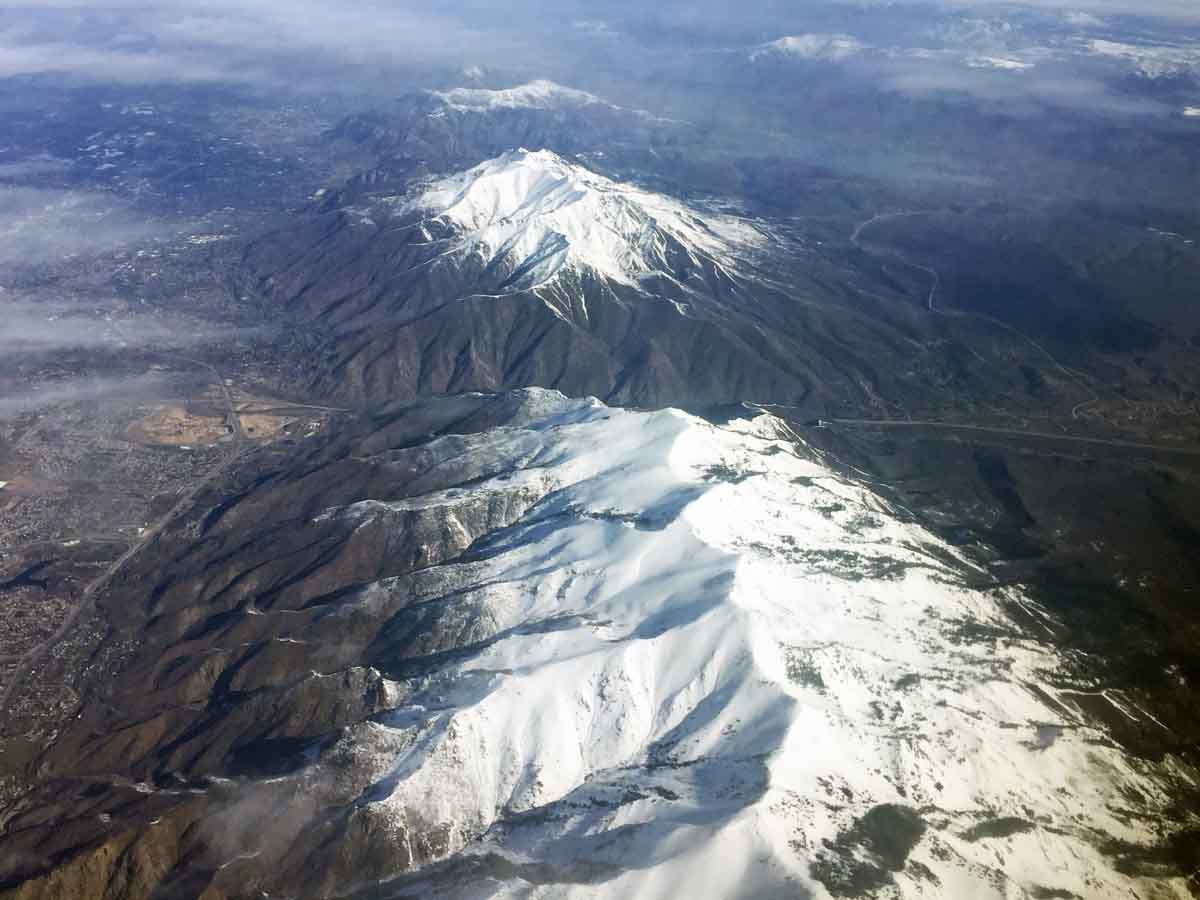
Yesterday on the east-bound flights returning from the Aerial Firefighting conference in Sacramento I had selected window seats on the left side of the aircraft so the sun would be at my back, so to speak, illuminating the landscape with less glare from the usually dirty windows. The leg from Sacramento to Salt Lake City was routine, but when I arrived there was snow on the mountains east of the airport.
As I was boarding the next flight there was no enclosed jet bridge; instead we were outdoors using portable stairs. Just before walking into the aircraft door I stopped and took a cell phone photo of the snow-covered peaks (at the top of this article). The second photo of the same mountains was also taken with a cell phone.
The aerial firefighting program in the California Department of Forestry and Fire Protection has grown over a couple of decades into a highly respected, professionally managed organization. After spending some time at their aviation headquarters at McClellan Air Field on Thursday in Sacramento, I developed as list of 16 facts that you may not know about the program:
1. CAL FIRE has 22 S-2T fixed wing air tankers that can carry up to 1,200 gallons of retardant. They are presently converting an aircraft to replace the one destroyed in the October 7, 2014 crash that killed Geoffrey “Craig” Hunt. That process should be complete in 18 to 24 months.
S-2T air tankers at McClellan Air Field, March 24, 2016. Photo by Bill Gabbert.2. They have 15 OV-10 Air Attack fixed wing aircraft.
A lineup of OV10 air attack ships at McClellan Air Field, March 24, 2016. Photo by Bill Gabbert.3. And 12 Super Huey helicopters.
Super Huey at McClellan Air Field, March 24, 2016. Photo by Bill Gabbert.4. All of the above aircraft were discarded by the military.
5. The S-2T air tankers were designed to be based on aircraft carriers, and therefore have wings that fold. They still retain this feature, which makes it possible to cram more aircraft into a hangar.
An S-2T with the wings folded. Photo by Bill Gabbert.Continue reading
Tanker 744 at McClellan Air Field, March 22, 2016. Photo by Bill Gabbert.
The 747 SuperTanker arrived at McClellan Air Field in Sacramento today after flying in from Marana, Arizona where it received a new paint job. It will be on static display for attendees the Aerial Firefighting conference until Wednesday, March 23.
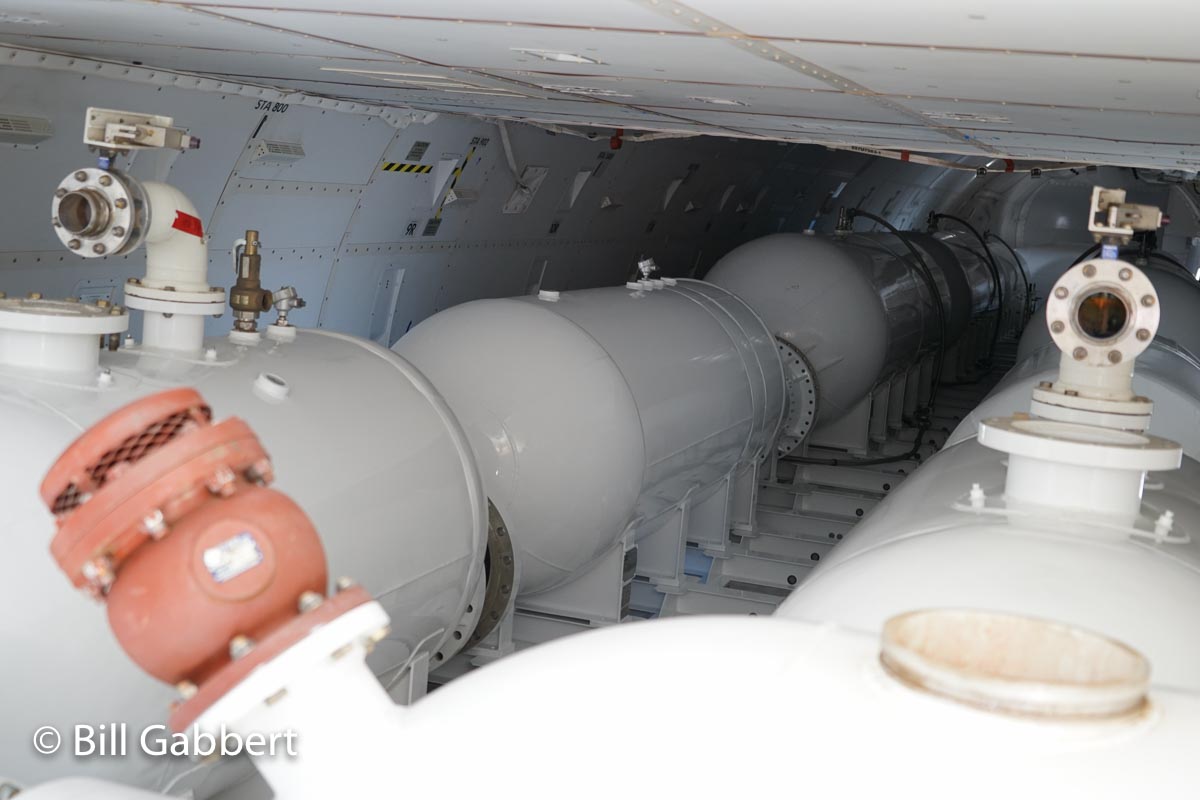
Bob Soelberg, Senior VP and Program Manager of Global Supertaker, said the retardant delivery system still needs a few tweaks before it can actually drop water or retardant, but they hope to have it ready to fight fire later this year.
Retardant delivery system on Tanker 744 at McClellan Air Field, March 22, 2016. Photo by Bill Gabbert. Tanker 744 at McClellan Air Field, March 22, 2016. Photo by Bill Gabbert. Retardant delivery system on Tanker 744 at McClellan Air Field, March 22, 2016. Photo by Bill Gabbert. Retardant nozzles on Tanker 744 at McClellan Air Field, March 22, 2016. Photo by Bill Gabbert. Tanker 744 at McClellan Air Field, March 22, 2016. Photo by Bill Gabbert.
(UPDATED at 1:20 p.m. MST March 4, 2016 with four more photos.)
Here are more photos from the Dudley Fire yesterday in Buffalo Gap, South Dakota taken by Bill Gabbert.
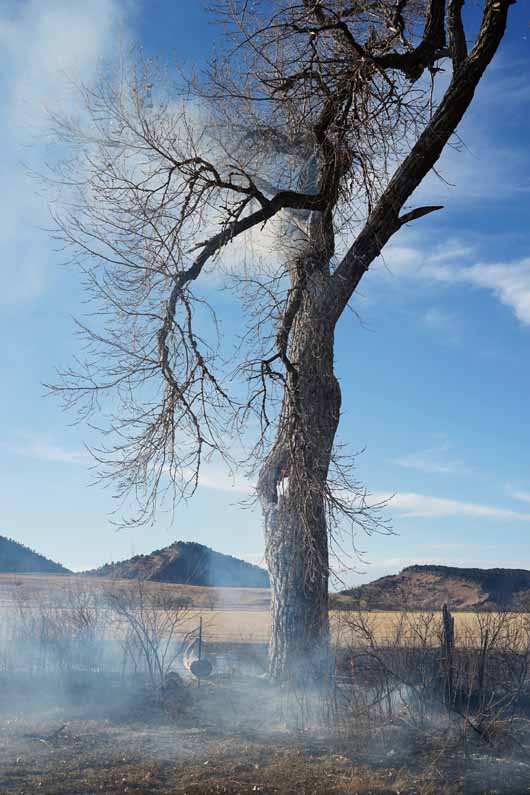
Two large cottonwood trees had fire established in the upper reaches of the branches and were threatening to fall.
x
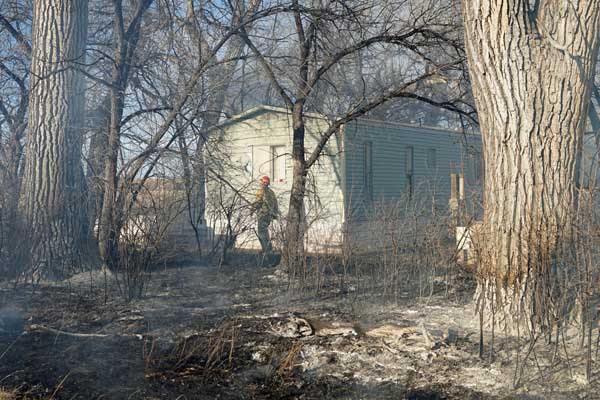
This mobile home was seriously damaged and the asthmatic older woman who lived there may not be able to occupy it again. Rod Converse left this information in a comment on the original thread about the fire:
Please consider joining us in helping Millie Sanford get back on her feet after this fire. Milie is a caring and benevolent lady that has spent her life helping others in need. She did not have insurance, has no place to live and has little resources. If you feel led to help, her address is below.
Thank you.
PO Box 14, Buffalo Gap, SD 57722
The glass windows in the photo above softened and warped but remained in place. The cloudy areas on the panes are bowed out like a wave in the ocean.
You can watch the tall tree nearest the camera being cut down in the live video we broadcast from Periscope. It will go away after 24 hours, so you’ll need to watch it before 10 a.m. MST on Saturday March 5, 2016. More about our experiment with Periscope here.
Above: Steven Esser applies water on the Dudley Fire in Buffalo Gap, South Dakota, March 3, 2016. Photo by Bill Gabbert.
A fire that started in Buffalo Gap burned very close to structures Thursday afternoon in the small town 24 miles south of Rapid City, South Dakota. A response by volunteer fire departments, South Dakota state engines, and personnel from the U.S. Forest Service stopped the fire at two acres. A large pile of old hay bales ignited and will require a significant effort by firefighters to completely suppress.
What started the fire is unknown. A cause and origin investigator was requested by the Incident Commander, but since he would not have arrived until after dark he will be on scene first thing Friday morning.
In addition to the photos you see here, we will post more of the fire on Friday and Saturday. All photos are by Bill Gabbert and are protected by copyright.
Above: the status of the large reservoirs in California as of February 16, 2016, showing the current water levels and the historic average for the date. California Department of Water Resources.
In spite of significant rain over parts of California over the last six months all but one of 12 large reservoirs in the state are still storing water at levels below the historic average for the date. Folsom Lake has 117 percent of average while the other 11 have from 30 to 80 percent.
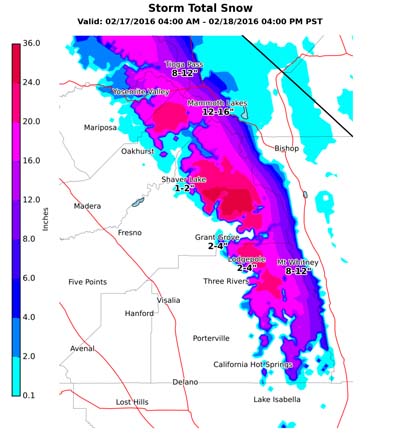
Precipitation predicted for Thursday in the Sierra Nevada Mountains should help a little, with some areas above 7,000 feet receiving a foot or more of snow.
Snow prediction Sierra Nevada Mountains, 0400 Feb. 17 through 1600 Feb. 18.
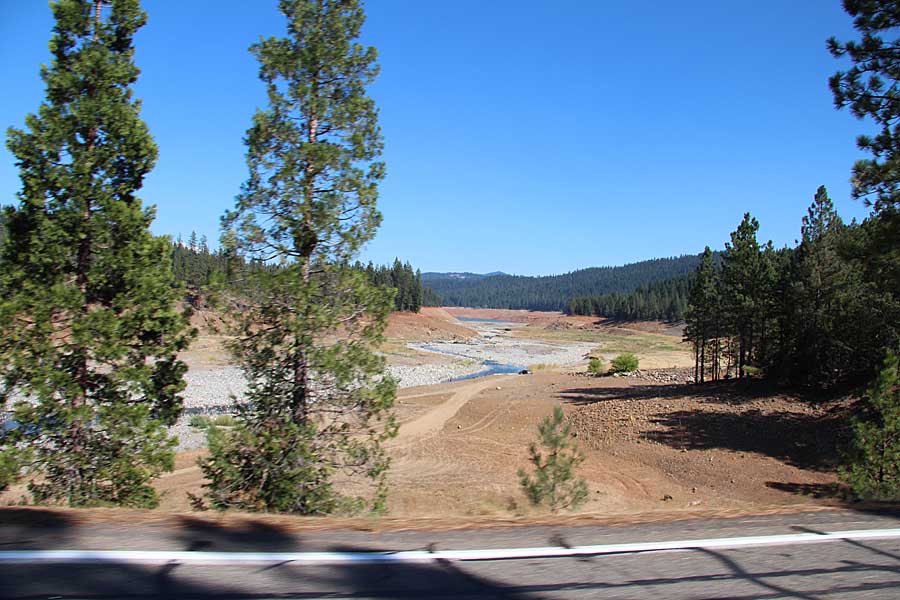
The photo below shows the extreme northern end of Trinity Lake on August 9, 2014 when it held about 40 percent of average. On February 16 of this year it was at 43 percent.
North end of Trinity Lake in northern California, August 9, 2014. Photo by Bill Gabbert.
It remains to be seen how the winter weather will affect the 2016 wildfire season. It is a factor of course, but more significant is the weather DURING the fire season. If it is hot, dry, and windy, there will be major fires.
This is a very interesting video about the only seaplane base operated by the U.S. Forest Service. It was uploaded to YouTube by David Quam and features USFS Pilot Dean Lee who does an excellent job of patiently describing the de Havilland Beaver DHC-2, three of which are seen at the base: N131Z, N132Z, and N133Z. Mr. Lee says in the video that the USFS purchased them new from de Havilland. FAA registration records shows that they were manufactured between 1956 and 1959.
Mr. Lee explained in the video that the Beavers can scoop water into a 125-gallon tank and drop it on fires. They are also used for wildlife radio tracking, search and rescue, recon, medivac, cargo, and “body hauling”.
While working on the Section 33 Fire in Voyageurs National Park north of Ely in August of 2004 we used one of the USFS Beavers for suppression and recon.
A U.S. Forest Service de Havilland Beaver preparing for a recon flight over the Section 33 Fire in Voyageurs National Park, August 11, 2004. The red object under the belly of the aircraft that looks like a bomb or torpedo is the 125-gallon water tank used to suppress wildfires. Photo by Bill Gabbert.
Float planes are very useful in the parts of Minnesota that have as much water as dry land.
A portion of the Section 33 Fire in Voyageurs National Park, August 11, 2004. Photo by Bill Gabbert.