


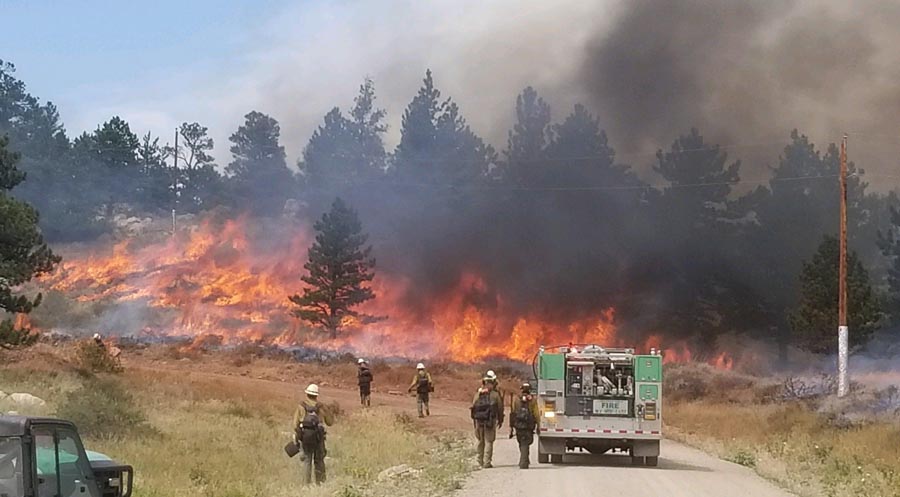
Wildland firefighters have formed a non-profit 501(c)(4) organization to advocate for better pay, benefits, a National Fire Service, and their own job series within the federal government.
The IRS rules for a 501(c)(4) allow a “social welfare” non-profit group to spend their donated funds to lobby government in order to affect legislation, but they are not allowed to participate in political campaigns on behalf of a candidate for public office.
The name of the all-volunteer group is Grassroots Wildland Firefighters (GRWFF). It was formed in 2019 by active and retired federal wildland firefighters (Forestry Technicians) and continued to grow after a series of articles were published beginning in August, 2020 that called attention to their plight on Wildfire Today, Vice News, and NBC.
Below are excerpts from a news release by the GRWFF.
Kelly Martin, the group’s President and former Fire and Aviation Chief for Yosemite National Park, describes the major issue at hand: “We are at a turning point in the climate change battle, and the demands on federal wildland firefighters at the frontline have become a year-round request. Firefighters are resigning their federal positions for jobs in state, municipal and private industry that provide pay and benefits commensurate with the risks”.
 In many places where the government asks firefighters to serve, both in cities and remote duty stations, pay falls woefully short of basic housing and cost of living requirements.
Government studies from the National Library of Medicine reveal that federal firefighters face a multitude of health risks, with an up to 30% increased risk of cardiovascular disease and a risk of lung cancer exceeding that of the general population by as much as 43%. The ever-increasing duration and intensity of fire seasons have also led to devastating mental health statistics, which show a 30 times higher suicide rate among firefighters in comparison to the general public.
GRWFF spokesperson Riva Duncan sums it up, “In short, the pay and benefits are not commensurate with the risk, and the risk has increased fire season after fire season. The 2021 fire season is here, and nothing has changed. Grassroots Wildland Firefighters aims to do what the boots on the ground have always done in the absence of a solution, we offer one. With the input of firefighters across the country, we’ve developed a legislative proposal that aims to stem the tide of federal firefighters leaving our ranks and to create pay and benefits parity with state, municipal and private firefighting organizations. We’re working with members of congress who prioritize environmental and first responder issues to fine-tune the language, and we hope to have a sponsor and introduction soon.”


