

The traditional way — and the easiest way — to compare wildfire seasons is the number of acres burned. That figure is fairly straightforward and reliable, at least for data within the last 35 years; before 1984 the data is questionable.
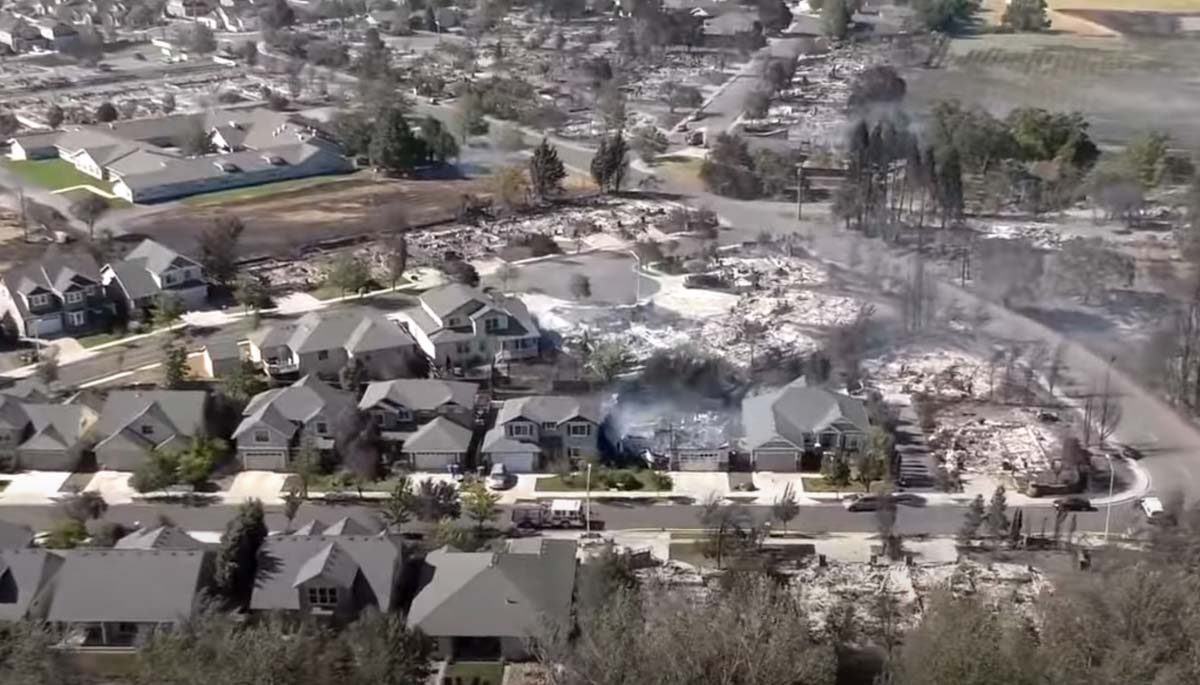
But blackened acres does not tell the whole story about the effects of fires on humans. A 50,000-acre fire in a northwestern California wilderness area has fewer direct impacts on the population than, for instance, the 3,200-acre Almeda Fire that destroyed 2,357 residences in Southern Oregon a few months ago.
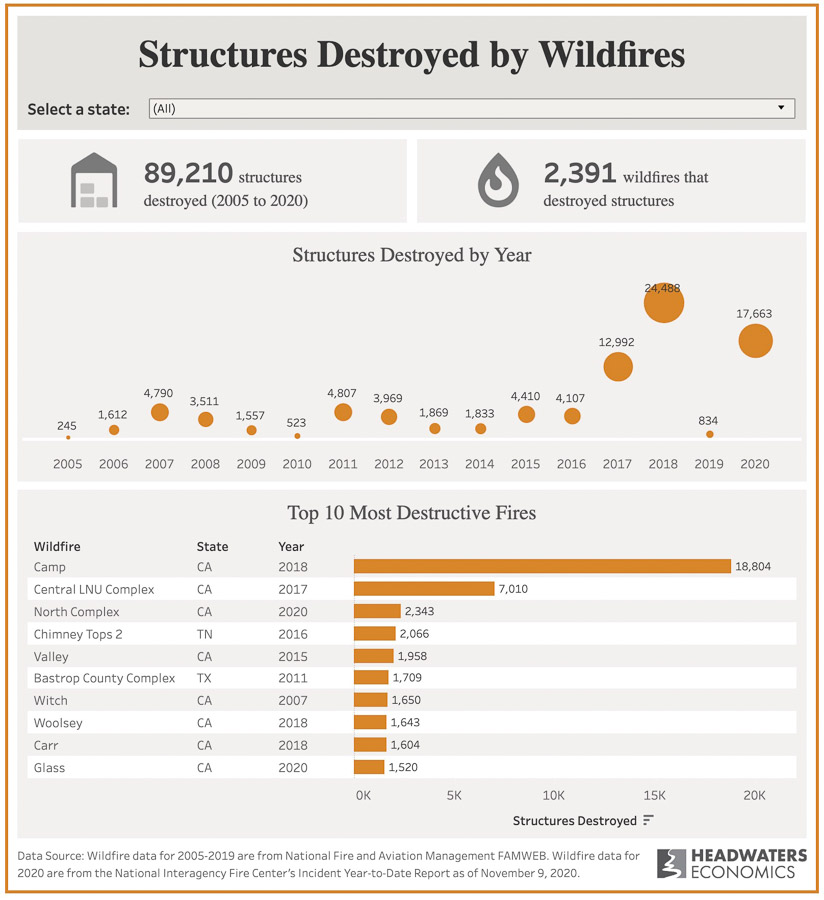
Headwaters Economics has built a user friendly interactive data base of the number of structures, by state, destroyed by wildfires from 2005 to 2020. It presumably includes all structures, including back yard sheds, other outbuildings, commercial buildings, and residences.
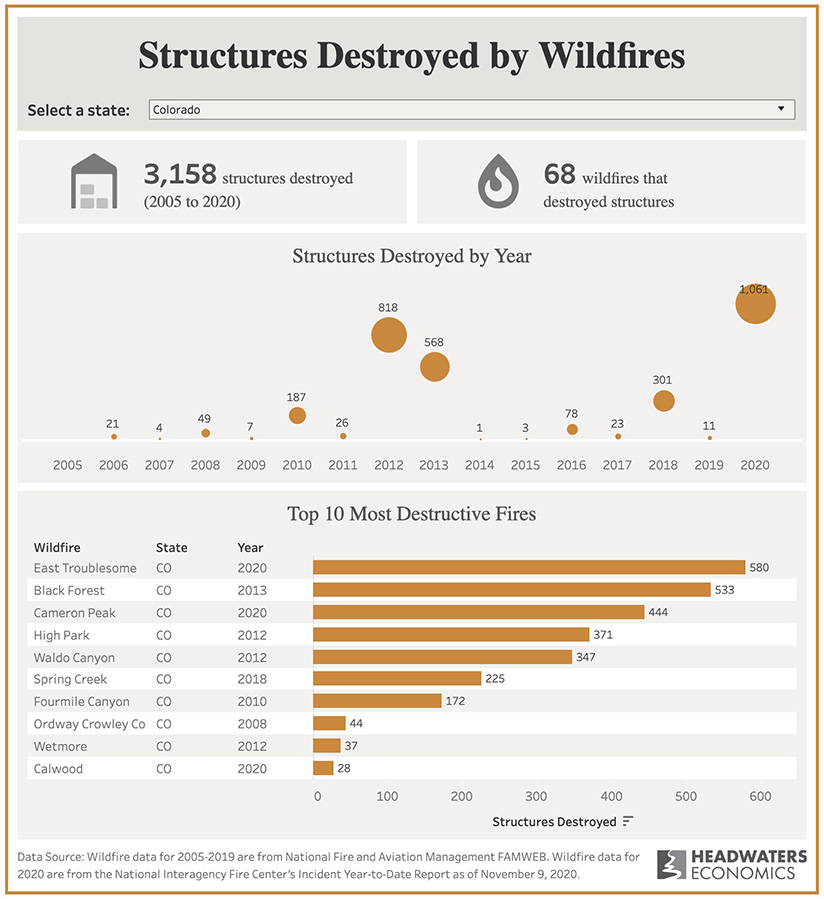
Here are three screenshots, examples for the entire U.S., Colorado, and Montana.

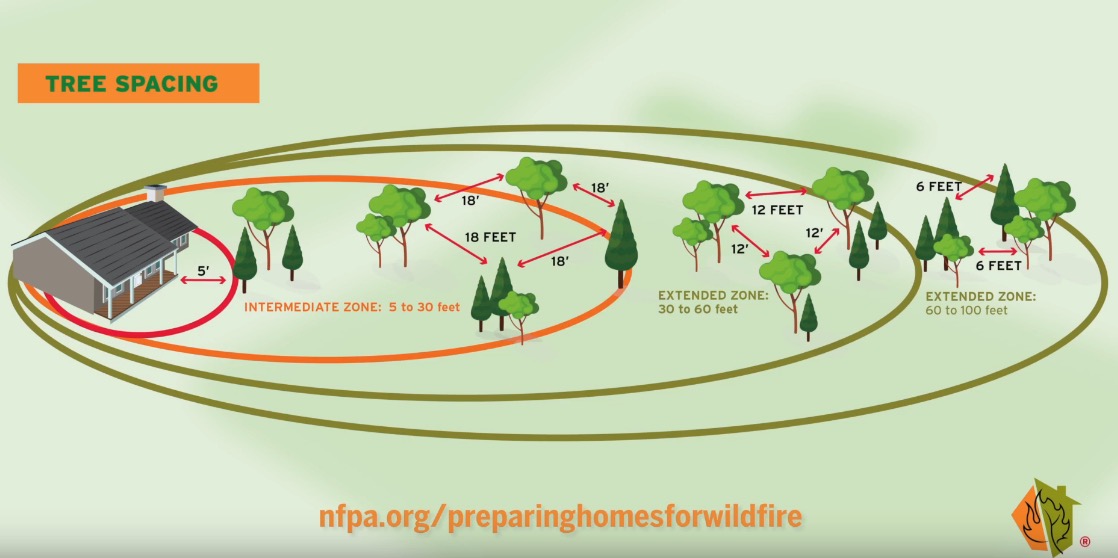
The best way to prevent homes from being destroyed in a wildfire is not clear cutting or prescribed burning a forest, it is the homeowner reducing flammable material in the Home Ignition Zone. This includes spacing the crowns of trees at least 18 feet apart that are within 30 feet of the home, 12 feet apart at 30 to 60 feet, and 6 feet apart at 60 to 100 feet. The envelope of the structure itself must be fire resistant, including the roof, vents, siding, doors, windows, foundation, fences, eaves, and decks. A FEMA publication (13 MB) has excellent detailed recommendations. Headwaters Economics found that the cost of building a fire-resistant home is about the same as a standard home. When implemented, Chapter 7A of the California Building Code, regulates these features.
For more information: Six things that need to be done to protect fire-prone communities.
And, Community destruction during extreme wildfires is a home ignition problem. Here is an excerpt from the article written by Jack Cohen and Dave Strohmaier:
Uncontrollable extreme wildfires are inevitable; however, by reducing home ignition potential within the Home Ignition Zone we can create ignition resistant homes and communities. Thus, community wildfire risk should be defined as a home ignition problem, not a wildfire control problem. Unfortunately, protecting communities from wildfire by reducing home ignition potential runs counter to established orthodoxy.


