


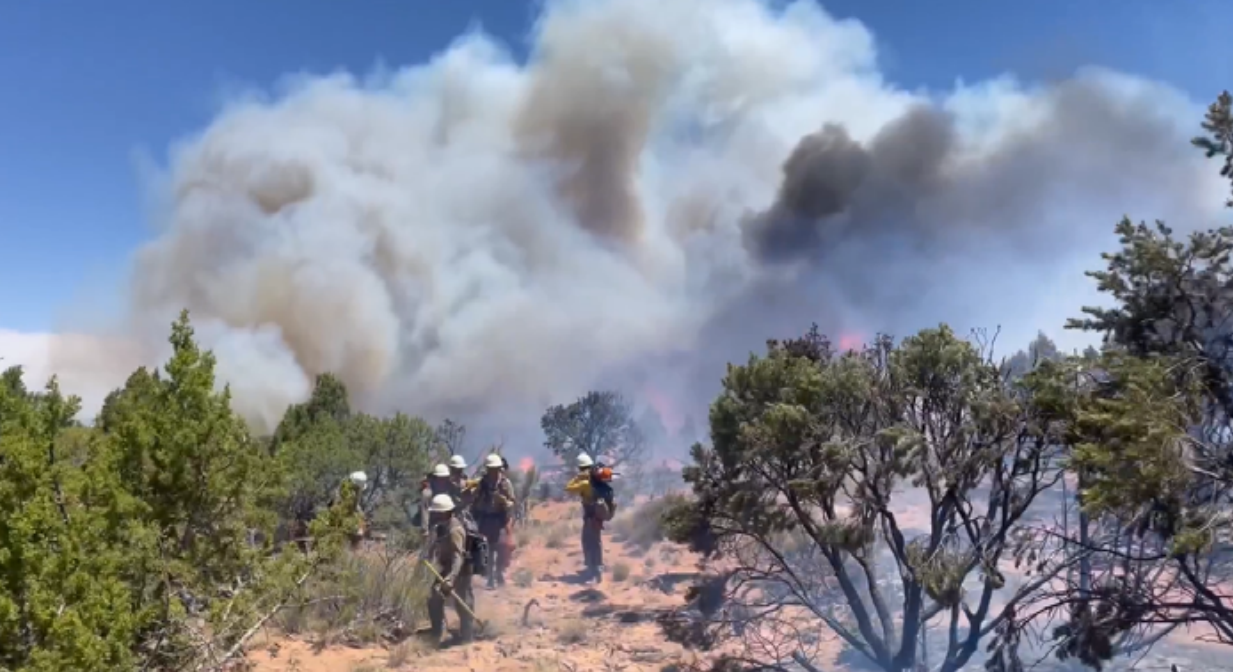
A multi-year drought and unusually warm temperatures helped drive the spread of 60 wildfires in Algeria over the weekend, prompting mass evacuations.
The sudden and large-scale wildfires were fueled by a heatwave, causing temperatures to reach 88°F (31°C) in Algiers, according to the Turkey-based Anadolu Agency. The Mediterranean coastal city historically sees much cooler temperatures and even snowfall in nearby mountains during this season.
Anadolu Ajansi reports that all fires have now been extinguished by the Algerian Civil Protection Agency, with hot spots still being monitored.
DZWatch – Algeria Insights reports the Civil Protection Agency has emphasized the rapid response and coordinated efforts that contributed to the successful containment of many fires, preventing further damage to forests and populated areas.
“Our teams have been deployed strategically across the affected areas, working around the clock to suppress these fires,” a spokesperson for the Civil Protection was quoted as saying. “We are committed to protecting our natural resources and ensuring the safety of our citizens.”
The country’s central and western regions have been gripped by a severe drought for over six years. Repeated droughts during the summers of 2021 and 2022 burned over 100,000 hectares of forest and killed dozens of people.
The events were some of the most severe environmental disasters in the country’s modern history and drove University of Bouira – Algeria researcher Hocine Bousalah to investigate how the events shaped the perception of wildfires in the country’s residents.
Despite a broad scientific consensus on climate change’s role in intensifying natural hazards like droughts, heatwaves, and wildfires, Bousalah said public discourse on wildfires in Algeria is centered on human and social causes like negligence, arson, or conspiracy. He aimed to gather quantitative data on what residents within Algeria’s most wildfire-prone areas considered to be the most significant causes of wildfires.
“The results demonstrate that the absence of specialized and sustained environmental messaging in Algerian media has weakened public understanding of climate-induced hazards,” Bousalah said. “The fact that many respondents did not identify climate change or poor forest management as primary causes of wildfires reveals structural deficiencies in environmental media education and limited integration of sustainability perspectives into national narratives.”





No comment yet, add your voice below!