


By Michael Scott-Hill
In mid-January I was sent on a military company assignment to recon the Los Angeles fires and use the experience to teach our leadership staff about wildfire. I was in Australia and was flown to California. As I packed, I turned on the TV and saw footage – big flames, heroes, victims and their stories, political blame slinging, shouts of incompetence, and lots of videos of fire aviation operations.
I arrived in Southern California and linked up with my small team of corporate leaders. I was their wildfire expert and the next day, after the red flag weather forecasts for Santa Ana winds lifted, we headed down the coast to visit the tragic wake of the Pacific Palisades fire.
[This is an edited extract of a longer article on the author’s observations from his assignment on these fires taken from Wildfire Magazine Special Edition: LA Fires.]
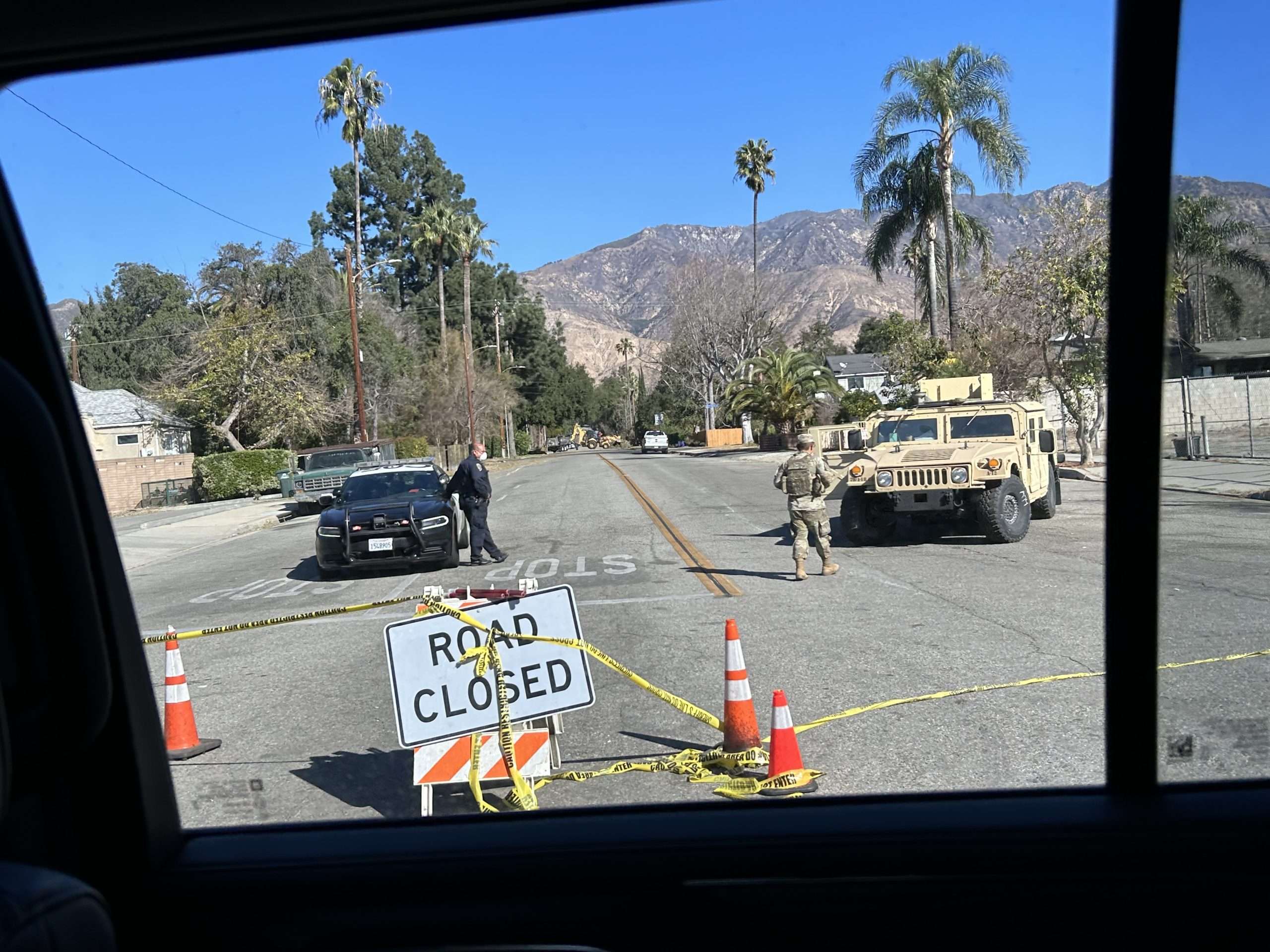
Having spent a career around the US Forest Service wildfire operations, the footprint of wildfire response was familiar: inbound structural city firefighting engines in short convoys; task forces; tents; trucks; trailers; staged fire equipment; and crews waiting at an oceanside incident command post. There were no federal fire response rigs, just CAL FIRE local fire response vehicles, and many law enforcement patrolling to deter arsonists and looters.
 The Pacific Coast Highway between the coastline and where the rolling hills – with their brush and dried grass – climb upward among homes. Photo Michael Scott-Hill
PERSPECTIVE FROM YEARS OF BURNING
Days later, flying back to Australia, I processed all I had experienced.
I’ve worked on countless wildfires with the US Forest Service, yet these LA fires were unique. No matter how each began, did the fires have to be as bad as they turned out to be?
Thirty-two years ago, I had been a wildland firefighter stationed in Southern California and earned my place on the Los Padres Hotshots. In 1993 we successfully fought several wildfires sometimes driven by Santa Ana winds.
I learned that the fire regime in California is ancient in its cyclic patterns. I was taught about weather patterns and fire fuels; we specialized in working the big fires along the urban fringe. Southern California is one of the world’s most wildfire prone areas, and its wildfire flames have the potential to mix with its people – and often do.
In Southern California many people craft comfortable lives, using technology to distance themselves from the realities of the natural world: air conditioners and beautiful shady yards insulate the people from the natural hot, often harsh, landscape.
What has changed in the Southern California wildfires since I was a young hotshot?
The tactics employed in fighting wildfires have shifted – at least in California – to promote situations for large fire growth using indirect attack strategies. Weather patterns worldwide have shifted, causing fire seasons to be altered in locations; and of course, there are financial realities that make wildland fire fighting no longer as attractive a profession as it once was.
There are factors in Southern California that won’t change. The hot sun will shine. The grass and brush will grow, and this vegetation will cure and die in its normal life cycles. The Santa Ana winds will always blow in strong from Nevada and race over the hills. Wildfires will always start naturally, by accident, or arson.
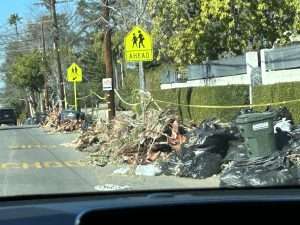 Piles of yard vegetation to be chipped had been cut by contracted crews awaited mobile chippers. The hazard-reduction operation continued into areas untouched by fire, to reduce future fuels. Photo Michael Scott-Hill
Which of these factors can be modified by humans? Fuels that fires consume can be managed to reduce accumulation (loading) that builds up over time. Wildfires need fuel to take hold and grow, just as they need ignition sources. The wildfire fuels typical of Southern California, such as dried grass, brush and timber, all have predictable cyclic points in their life cycles when they are ready, able to carry, and to be consumed by fire.
In Southern California when I was working there, urban interface zones and Santa Ana winds were always factors; they were dangerous, so we learned about them and used that knowledge to prepare for all that could happen. Could the LA Emergency Response Management apparatus have been better prepared? LA has seen urban development expand its boundaries more than its density; the interface is so much larger than it was when fire careers began. And the 30-year fire return interval in chaparral is longer than many careers. How do agencies prepare?
There are many valuable lessons in disaster management, and pre-disaster preparedness that can be pulled from the LA fires, if we take the time and effort to look carefully enough beneath the layers of smoke that might be blocking our vision.







1 Comment
I fear that one of the upshots of this is the message that indirect attack led to the outcomes of this year’s wildfires in LA and I’m curious if the author really thinks that direct attack on Santa Ana wind driven fire burning through drought exposed chaparral was going to be effective.. If so, the military needs to enlist a wildfire expert with more experience fighting fires in current conditions.
Comments are closed for this article!