


By Bob Roper
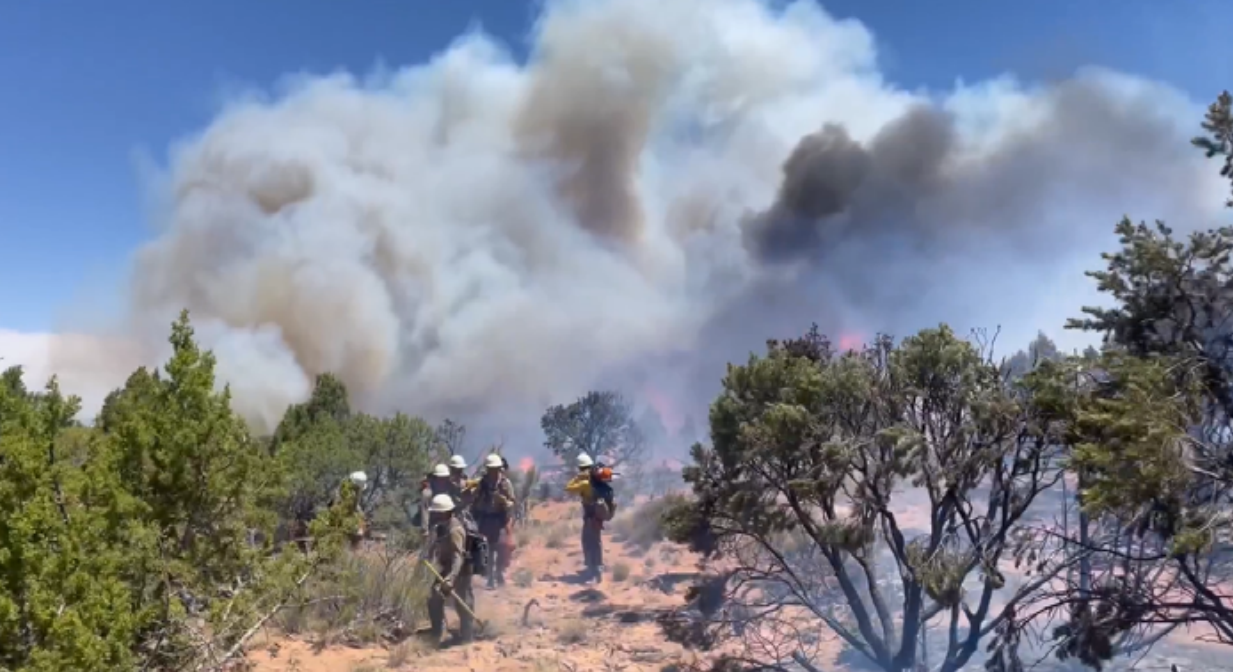
Wildland firefighters are facing a formidable battle, coping with labor shortages during one of the most intense fire seasons in recent years. As a California firefighter for over 45 years — including 15 years as Ventura County Fire Protection District chief and Nevada State Forester — I know firsthand that when it comes to stopping the spread of wildfires, there is no replacement for a well-trained and equipped firefighting force.
But it takes more than a quick and skilled response to prevent a wildfire catastrophe. We also need to prioritize wise management of federal lands.
As Californians in San Luis Obispo County are currently witnessing this summer, wildfires that start on state/federal lands can quickly spread to surrounding areas, threatening many lives, damaging health, destroying homes and businesses, and devastating communities. While wildfires on federal lands only make up approximately one-fifth of the total wildfires recorded across the country, they are typically responsible for nearly half the acres burned.
I applaud the lawmakers who are working to address the workforce gaps by ensuring adequate funding for hiring, training, and support. As they do so, I ask them to make it part of a holistic approach to wildfire prevention and response. This is paramount if we want to truly address the worsening wildfire crisis.
Why are wildfires burning so much of our federal land? One reason is that under current regulations, federal land management policies and environmental clearances make wildfire prevention arduous and sometimes impracticable. For example, formulating and conducting prescribed burns takes time, and needed labor resources are in short supply. Additionally, electric grid operators and electrical workers cannot easily gain access to powerlines and other infrastructure on federal lands. We need to reduce the unnecessary challenges to perform vegetation management and other wildfire risk management activities. Without success, this means that our federal lands — and our people — are left more vulnerable.
These fires cause enormous human suffering. Clouds of harmful smoke can travel thousands of miles to neighboring states and linger in the air for weeks. This contaminated air can be dangerous for Americans with pre-existing health issues and can even trigger cardiovascular and lung health issues. It also impacts the health of our first responders who are battling these wildfires. As policymakers look to improve our wildfire preparedness and response, protecting firefighters from the adverse health risks of wildfire smoke needs to be a part of effective policy solutions.
Along with the health impacts, we are all too familiar with the financial cost. Wildfires already cost the United States between $394 and $893 billion annually due to property and capital losses along with insurance and liability costs. A new report from Gallagher estimated that the two wildfires that impacted much of Los Angeles County in January will cost $65 billion in economic losses. During my years as a firefighter, I’ve seen businesses crumble from wildfires and struggle to get back on their feet and cope with the combined property and wage losses.
With more than 4,000 wildfires already recorded and 3.7 million acres burned this year alone, we need Congress and federal agencies to take action and help address this crisis. For starters, the President’s June Executive Order aims to create a more effective wildfire response through the U.S. Wildland Fire Service (USWFS). It is encouraging to see the Administration take actions to increase collaboration and efficiency, but sufficient resources for first responders will be crucial to the success of USWFS.
Additionally, the House and Senate should pass the bipartisan Fix Our Forests Act. This much-needed step from Congress will help improve federal land management and coordination across federal, state, and local authorities. But this legislation is just one piece of a much larger, national wildfire strategy. We also need to address labor shortages among wildland firefighters and ensure that state and local partners have the resources needed to train and recruit skilled individuals.
As a country, we cannot continue to approach wildfires with the same patchwork of solutions that have been in place for decades. Let’s take decisive and comprehensive actions to keep our families and our communities safe from the growing wildfire threat.

Bob Roper is the Senior Wildfire Policy Advisor for the Western Fire Chiefs Association. He has been in the fire service for over 45 years, starting as a volunteer firefighter and then rising to executive positions. He served in the Ventura County Fire District for 34 years, the last 15 as Fire Chief and as the Nevada State Forester.





5 Comments
Any vegetative treatments to reduce fuel loads are going to cost taxpayers a lot of money, whether prescribed fire or mechanical treatments. Old school foresters such as my former self will opine going back to the “get the cut out” checker board clearcuts seen from space. We should remember that those western timber sales were not practicing silviculture, but simply high grading the premium old growth, which tend withstand fire, to make the sales worth bidding on. In addition to destroying wildlife habitat, fisheries, forest hydrology. At one time I too believed that clearcutting reduced fire spread and intensity. Until I did 21 days on the Tiller Fire in Oregon in 2002. The fire went very big and ripped through the clearcuts like they weren’t there. My point is that going back to logging like the days of yore thinking you will reduce fire sizes and intensity in times of an ever hotter climate is fantasy. Certainly, crank up prescribed fire programs, as well as mechanical treatments of chapparal, and decadent dog-hair especially near communities. But don’t be surprised at the cost to taxpayers.
Mr.Roper
You need to watch the video below regarding the FOFA which is not going to do anything to help fire fighters or prevent wildfires. It will make special interest groups the National Home Builders Association and Lumber Industry who paid millions to the politicians who wrote the bill so they can make 100s of millions cutting down millions of acres of forestland.
See http://www.wildfiresafehomes.org and see video titled:
RM Huffman Calls Out Republican Ploy to Gut Environmental Protections in “Fix Our Forests” Act
Sir,
You make excellent points. But when you write that:
“One reason is that under current regulations, federal land management policies and environmental clearances make wildfire prevention arduous and sometimes impracticable”
I dont buy it. I worked 32 years for the USFS, twenty of it working fire management. The main thing making ‘prevention arduous’ is republican budget cuts. It is just a fact that the republicans dont want to maintain our birthright as citizens; the National Forests, which are ‘…..established for the use and enjoyment of the people of the United States.’ They are too busy chasing another tax cut for the billionaires to notice if a few peasant hovels burn down. To keep talking about de-regulation in the face of this malicious DOGE downsizing is a real disservice to the public lands and the people who manage them.
As a former federal firefighter and Retired Captain of a Humboldt-Toiyabe National Forest I have noticed a major migration away from federal agencies because of a lack of support on the ground from Supervisors at the Forest and Regional Levels. They tell us they have our backs, but their words don’t match their actions. The Forest Service and especially the Humboldt-Toiyabe National Forest treats its firefighters terribly
Mr.Roper makes some good points. One way to address “labor shortages among wildland firefighters” is to acknowledge that they are valuable enough for our society’s well being to ensure a stable funding source, while considering the costs that these people regularly endure to survive in the places where they are most needed. It will also be important for municipalities to better manage vegetation both within the urban interface and adjacent to it. Until the landscape is managed in a wholistic manner with regard to fuels continuity, urban conflagrations will continue to haunt us.
Comments are closed for this article!