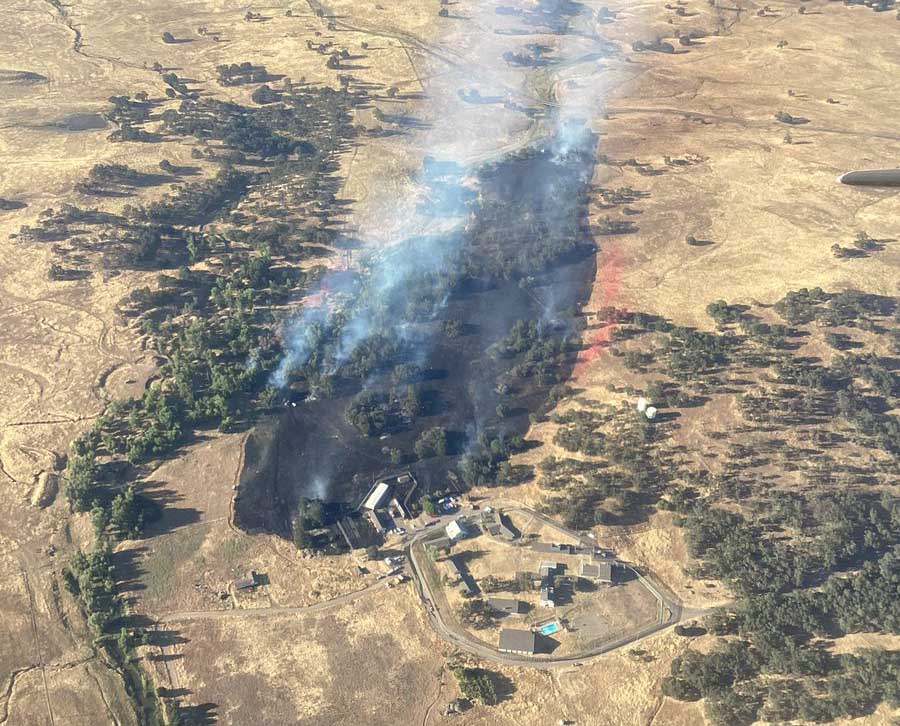
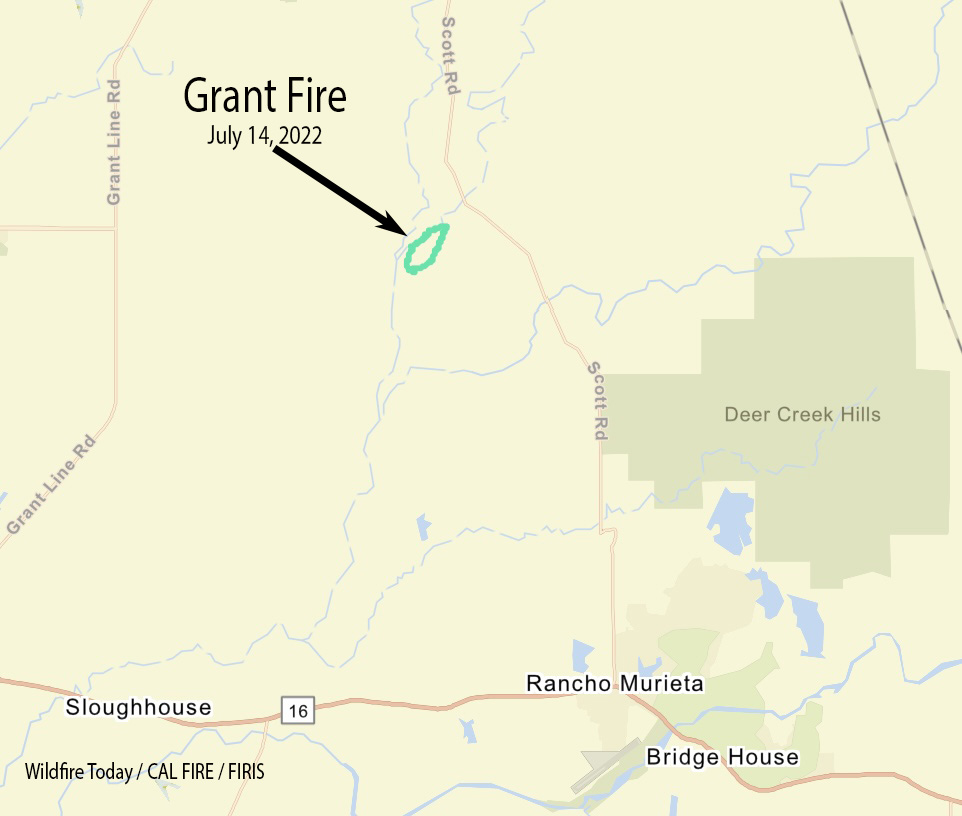
Thursday afternoon firefighters stopped the spread of the Grant Fire after it burned 74 acres about 15 miles southeast of Sacramento, California. The blaze was reported at 5:44 p.m. 4 miles northwest of Rancho Murieta just west of Scott Road. CAL FIRE reports that one outbuilding was destroyed.
Firefighters worked throughout Thursday night patrolling and building containment lines. On Friday they will continue mopping up hot spots and smoldering areas within oak groves and strengthening containment lines.
CAL FIRE reported at 9 p.m. that the Peter Fire at Anderson, CA has destroyed 12 structures and has burned 304 acres. They did not specify how many of the structures were residences.
Firefighting resources assigned include 51 engines, 18 water tenders, 15 hand crews, 6 helicopters, and 7 dozers for a total of 497 personnel.
UPDATE. All residents in homes east of the intersection of Third Street and Missouri Lane to Highway 273 can return to their homes. All roads connected to Spring Gulch Road west of Missouri Lane remain under evacuation order. Residences on Diamond Street west of Franklin remain under an evacuation order. The evacuation warning for all streets off Parallel Road and Jacqueline Street remain in effect.
Updated at 6:01 p.m. PDT July 14, 2022
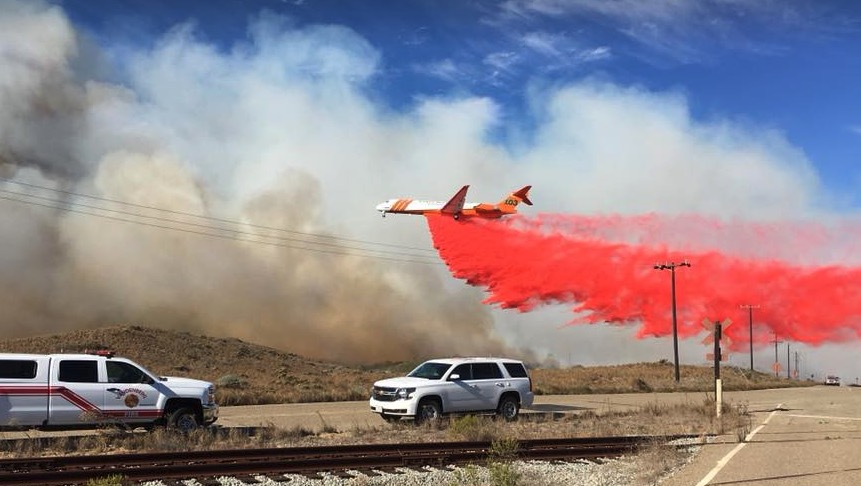
Air Attack reports that the Peter Fire at Anderson, California is looking good, and they have a retardant line around most of the perimeter. They are keeping two air tankers to be able to pick up spot fires as they occur. The other tankers have been released, including a Very Large Air Tanker.
The fire is believed to have started from a structure fire that spread into the vegetation. At 6 p.m. there were no engines available to work on a burning structure, so helicopters were dropping water on it.
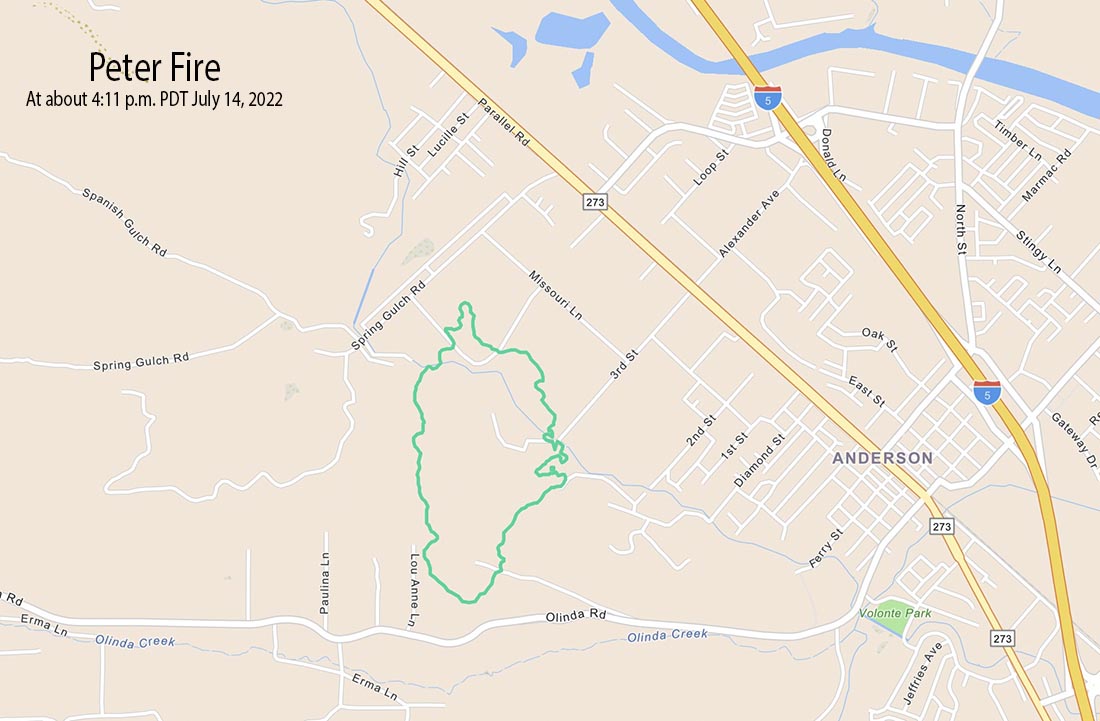
Peter Fire mapped by FIRIS at approximately 4:11 p.m. PDT July 14, 2022.
FIRIS mapped the Peter Fire at 248 acres at approximately 4:11 p.m. PDT Thursday. At 5:25 p.m. it was mapped again at 303 acres.
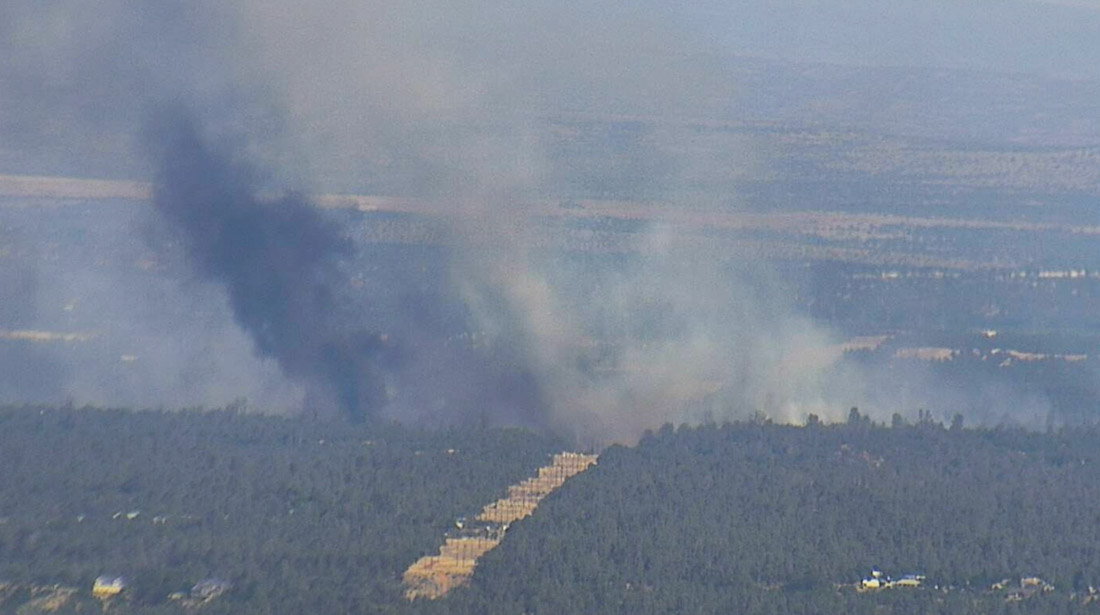
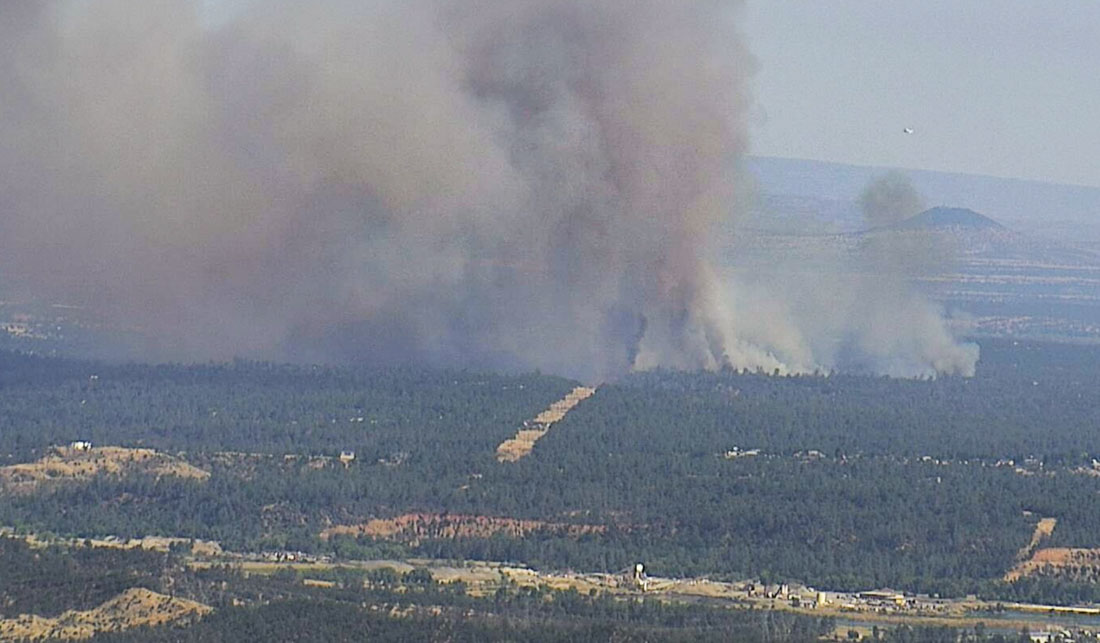
Peter Fire, looking southeast from the Falcon camera at 5:11 p.m. PDT July 14, 2022. AlertWildfire.
4:58 p.m. PDT July 14, 2022
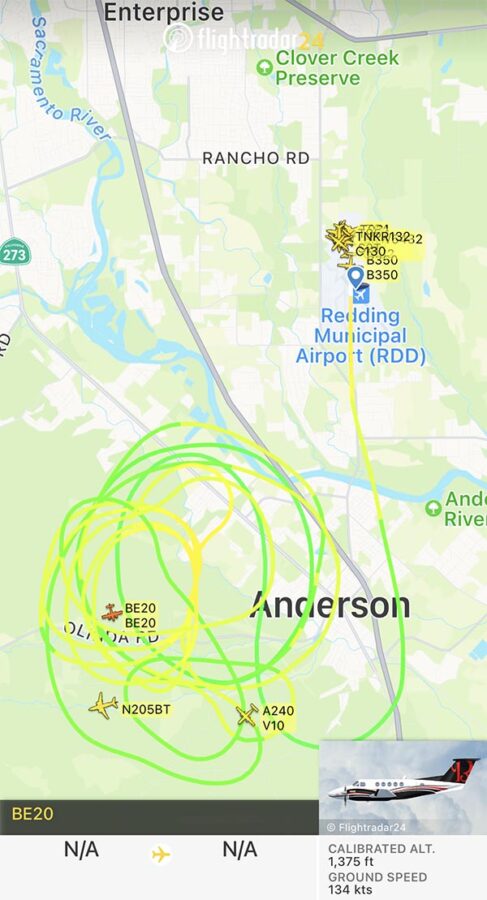
Aircraft near the Peter Fire at 4:16 p.m. July 14, 2022. FlightRadar24
A new fire south of Redding, California is prompting evacuations west of Anderson. The Peter Fire was reported at around 3 p.m. PDT and at last report had burned at least 50 acres. It is four miles south-southwest of the Redding Air Attack base which results in quick turnarounds for air tankers reloading with retardant.
Firefighters on scene have reported 30 structures that are threatened and several times have requested additional engines and aircraft. There are reports that the fire has reached some structures and air tankers are making retardant drops near them attempting to lessen the damage. At least half a dozen air tankers are on scene or en route.
The evacuation center is at West Valley High School, 3805 Happy V Road, Cottonwood, CA.
Peter Fire, looking southeast from the Falcon camera at 4:23 p.m. PDT July 14, 2022. AlertWildfire.
Weather
Since the fire started the Howard Street weather station in Anderson has recorded 88 degrees, 13 percent relative humidity, and 10 to 12 mph winds out of the south and south-southeast gusting to 12 mph. The forecast for the rest of the afternoon calls for winds increasing to 14 mph out of the south, then slowing after sunset to 3 mph for the rest of the night. The nighttime humidity should rise to 52 percent then on Friday drop to 10 percent in the afternoon with 6 mph winds out of the south.
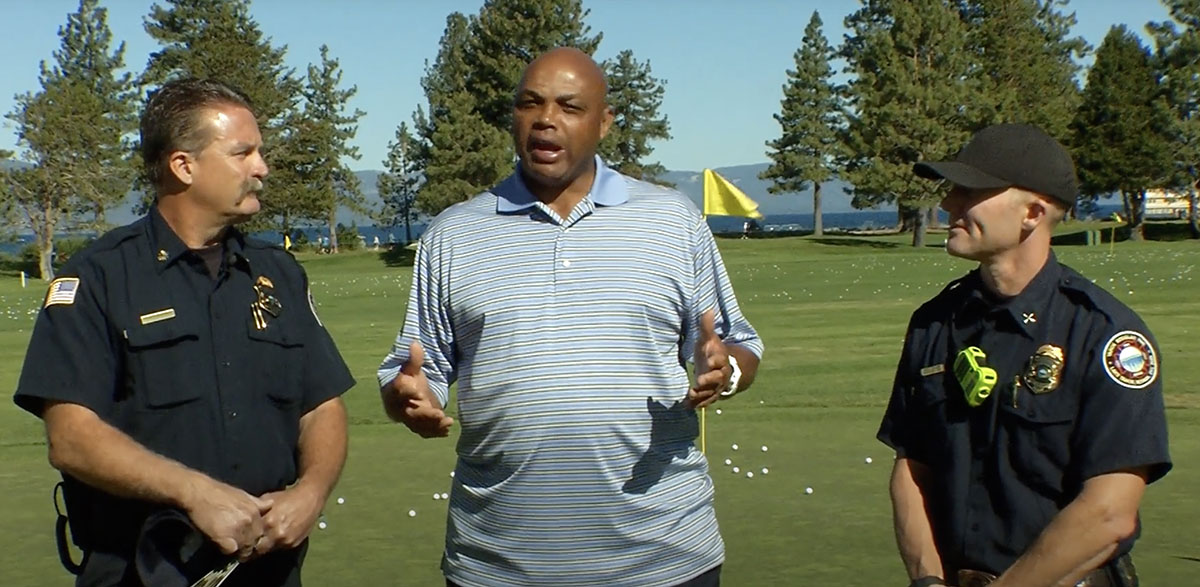
Charles Barkley and Tahoe Douglas Fire Chief Scott Lindgren are helping to spread the word about a campaign to acquire two firefighting helicopters for the Lake Tahoe area. Still image from South Lake Tahoe Now video.
NBA legend Charles Barkley is helping the Tahoe Douglas Fire Department spread the word about a campaign to acquire two firefighting helicopters for the Lake Tahoe area in Northern California, which according to the Fire Chief is devoid of permanent helicopter coverage.
From the description and amount of funds being sought, it appears their hope is to purchase two Sikorsky S-70i Firehawk helicopters capable of carrying up to 1,000 gallons of water and also capable of responding to medical incidents with a paramedic and full advanced life support equipment. In order to have continuous coverage with a helicopter, you need at least two in a fleet to account for scheduled and unexpected maintenance.
The article below by Paula Peterson was first published on SouthTahoeNow.com.
STATELINE, Nev. – Charles Barkley remembers the American Century Championship in July 2007 very well. He and the other celebrities had arrived at Lake Tahoe to golf in the annual tournament at Edgewood Tahoe, but that year it was different.
The devastating Angora Fire started off of North Upper Truckee Road on June 24, and before it was done on July 2 it had burned through 3,100 acres, destroyed 242 residences and 67 commercial structures, damaged 35 other homes, and engaged 2,180 firefighters.
Barkley said they couldn’t “yuck” it up at celebrity golf across the lake and have fun while nearby residents were dealing with such a catastrophe. He asked NBC if he could take a camera crew into the fire-damaged area.
“I came up here 15 years ago and saw catastrophic damage. It broke my heart. I’d actually never seen fire damage before,” said Barkley.
He donated $190,000 to recovery efforts for residents over the following two years and treated firefighters and their spouses to dinner at Harrahs Tahoe.
At Edgewood Tahoe Saturday, during the 33rd annual American Century Championship, Tahoe Douglas Fire Chief Scott Lindgren held a press conference with Barkley to highlight his agency’s Operation Save Lake Tahoe.
Lindgren has said there is a giant hole in the middle of the Sierra without firefighting helicopter coverage, and that is the Lake Tahoe Basin and surrounding mountains. He wants to change that with a $60 million plan that would bring two helicopters, a station, and training to not only Douglas County, but to the whole Lake Tahoe Basin and surrounding Sierra.
Fundraising efforts have been underway for months, but much more needs to be raised.
“So anything you can do to help, please help these guys get their helicopter, please, because, hey, we can’t let nothing happen to this place,” said Barkley.
“We can’t let it happen again,” Barkley said of the Angora Fire.
Charles Barkley and Tahoe Douglas Fire Chief Scott Lindgren are helping to spread the word about a campaign to acquire two firefighting helicopters for the Lake Tahoe area. Still image from South Lake Tahoe Now video.
NBA legend Charles Barkley is helping the Tahoe Douglas Fire Department spread the word about a campaign to acquire two firefighting helicopters for the Lake Tahoe area in Northern California, which according to the Fire Chief is devoid of permanent helicopter coverage.
From the description and amount of funds being sought, it appears their hope is to purchase two Sikorsky S-70i Firehawk helicopters capable of carrying up to 1,000 gallons of water and also capable of responding to medical incidents with a paramedic and full advanced life support equipment.
The article below by Paula Peterson was first published on SouthTahoeNow.com.
STATELINE, Nev. – Charles Barkley remembers the American Century Championship in July 2007 very well. He and the other celebrities had arrived at Lake Tahoe to golf in the annual tournament at Edgewood Tahoe, but that year it was different.
The devastating Angora Fire started off of North Upper Truckee Road on June 24, and before it was done on July 2 it had burned through 3,100 acres, destroyed 242 residences and 67 commercial structures, damaged 35 other homes, and engaged 2,180 firefighters.
Barkley said they couldn’t “yuck” it up at celebrity golf across the lake and have fun while nearby residents were dealing with such a catastrophe. He asked NBC if he could take a camera crew into the fire-damaged area.
“I came up here 15 years ago and saw catastrophic damage. It broke my heart. I’d actually never seen fire damage before,” said Barkley.
He donated $190,000 to recovery efforts for residents over the following two years and treated firefighters and their spouses to dinner at Harrahs Tahoe.
At Edgewood Tahoe Saturday, during the 33rd annual American Century Championship, Tahoe Douglas Fire Chief Scott Lindgren held a press conference with Barkley to highlight his agency’s Operation Save Lake Tahoe.
Lindgren has said there is a giant hole in the middle of the Sierra without firefighting helicopter coverage, and that is the Lake Tahoe Basin and surrounding mountains. He wants to change that with a $60 million plan that would bring two helicopters, a station, and training to not only Douglas County, but to the whole Lake Tahoe Basin and surrounding Sierra.
Fundraising efforts have been underway for months, but much more needs to be raised.
“So anything you can do to help, please help these guys get their helicopter, please, because, hey, we can’t let nothing happen to this place,” said Barkley.
“We can’t let it happen again,” Barkley said of the Angora Fire.
Result of a BAe-146 air tanker being hit by falling debris over the Washburn Fire, July 8, 2022. SAEFCOM photo.
The day before a lead plane and a large air tanker had a close call with falling debris while on a retardant dropping sortie on the Washburn Fire in Yosemite National Park, another air tanker, a BAe-146, was actually hit while working the same fire by an object large enough to leave a dent and a large mark on top of the cockpit.
As we wrote in an earlier article, previously on July 9 a lead plane was leading Tanker 103, an MD-87, over a target when they saw a falling tree branch above the lead plane. It fell between the two aircraft, in front of the tanker. No harm done — that time.
Here is the text from a SAFECOM about an incident the previous day, July 8, 2022.
“Tanker XX was on day two of extended fire attack for the Washburn Fire. During the eighth trip to the fire we were cleared into the incident by Bravo X-X. We joined the orbit with two other DC10s. Tanker XX joined up with B X-X to drop in the area of the right shoulder with a start point on top of a ridge and then carry the load downslope. Seconds after the drop was completed both flight crew members heard an extremely loud noise that sounded like something struck the top of the aircraft. I informed B X-X of what occurred and he offered his assistance. I said we had no abnormalities but will need an inspection up return to Fresno and maybe delayed returning to the Fire.
“Upon arriving Fresno Air Attack base I informed the base that we would be delayed for an inspection of the Aircraft and was directed to the maintenance pit. Crew Chief for Tanker XX was informed of the events and obtained a lift to inspect the top portion of the Aircraft. Evidence of fire debris was observed on top of the cockpit with dent. The dent was observed and documented. The dent was within allowable limits and documented for future inspections. The maintenance crew spent extensive time inspecting the entire aircraft including the horizontal stabilizer. Fire debris was observed on top of the left horizontal stabilizer but no resulting dents were observed. After detailed visual inspections and documentation the aircraft was returned to service. Aviation Safety Comments: While Foreign Object Debris (FOD) coming from above airtankers is rare this same situation occurred the next day as well. In this subsequent event the Lead Plane prudently made note that if this condition persisted that air ops in that area would have to be halted. This is a good example of constant reassessing of risk/reward, and use of previous close-calls in making safe fireground decisions.”
This information clarifies a few words that were unintelligible in the radio conversation about the other incident on July 9 when they were referring to something that happened the day before. Here is a transcript from that conversation:
LEAD PLANE: Hey I just want to let you know that a branch went right over the top of us, pretty good size, probably 50 feet above us coming down and fell right in between Tanker 103 and myself.
AIR ATTACK: OK. Copy. So it’s repeat of yesterday’s (unintelligible)
LEAD PLANE: That’s exactly what I’m getting at. So if we keep seeing that we might have to knock it off. I don’t want to take a chance on busting a window in an airplane or hurting an aircraft for this.
AIR ATTACK: Absolutely. Keep me updated on this.
As I wrote in the other article, firefighting aircraft striking debris over fires is not unheard of. Here’s part of an article I wrote for Wildfire Today in 2018:
During the large vegetation fires in southern California in 2003 some of the convection columns were so powerful that the windshields on six air tankers were cracked by chunks of debris that were being hurled into the air (page D-6 in 2003 California Governor’s Blue Ribbon Report; huge 20 Mb file). One pilot saw a four by eight sheet of plywood sail past at 1,500 feet.
New livery on T-01, a BAe-146, December 18, 2020. Neptune photo.
The Washburn Fire in California’s Yosemite National Park has burned more than 3,500 acres.
The Federal Bureau of Investigation is using a new system to help wildland firefighters by detecting, identifying, and neutralizing drones that are illegally interfering with firefighting activities.
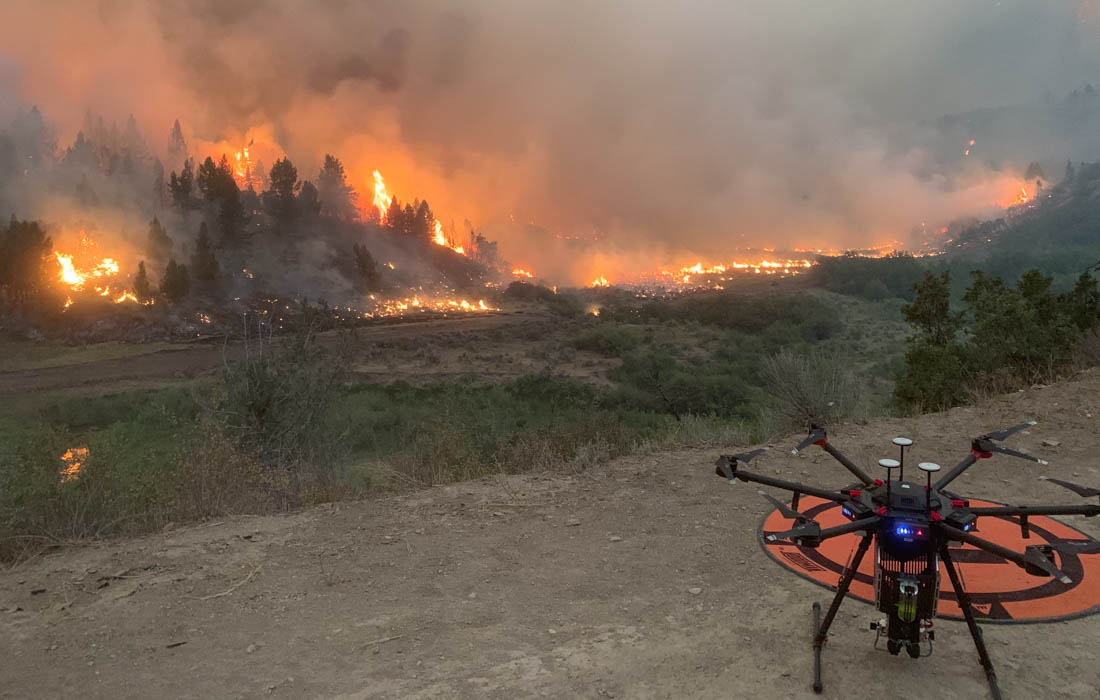
It is very dangerous to fly a drone near a fire at which helicopters or fixed wing aircraft are operating. A collision could impact the windscreen or damage the engine, props, rotors, or flight control surfaces, causing a crash. If a drone is seen near a fire the standard operating procedure is to remove all aircraft from the fire area until it is confirmed that the drone has left the scene. In other words, it interferes with firefighting efforts.
The FBI is working with the Los Angeles County Fire Department to use a system that can detect a drone flying over a fire within 30 seconds of it being launched.
From CNN:
“When the detection equipment finds the drone and identifies the operator’s location, we can very rapidly get that information to a ground intercept team who can then go make contact with that drone operator and essentially get them to stop flying that drone,” said James Peaco III, the weapons of mass destruction coordinator for the FBI’s Los Angeles field office.
With a special sensor, the team can set up a boundary as large or as small as desired and get notified if a drone flies into that area, instantly obtaining precise details such as elevation, direction, speed as well as where the drone took off from and where the controller is currently standing.
“The first thing we do is order them to bring the drone back, explain to him that there’s a wildfire and flying that drone during a wildland fire is actually a federal felony,” Peaco said.
It’s a federal crime punishable by up to 12 months in prison to interfere with firefighting efforts on public lands. Additionally, Congress has authorized the FAA to impose a civil penalty of up to $20,000 against any drone pilot who interferes with wildfire suppression, law enforcement, or emergency response operations. The FAA treats these violations seriously, and will immediately consider swift enforcement action for these offenses.
According to the US Forest Service, in 2019 at least 20 documented instances of unauthorized drone flights over or near wildfires in seven states (Arizona, California, Colorado, Nevada, New Mexico, Utah, Washington and Minnesota) resulted in aerial firefighting operations being temporarily shut down nine times. There is no centralized national mechanism to report unauthorized UAS flights over wildfires, so these are only the incidents that wildfire management agencies have become aware of, there are likely more that are not known about.
Suspending air operations could decrease the effectiveness of wildfire suppression operations, allowing wildfires to grow larger, and in some cases, unduly threaten lives, property, and valuable natural and cultural resources. The effects of lost aircraft time could be compounded by flames moving into untreated terrain.
Thanks and a tip of the hat go out to Tom and Gerald.
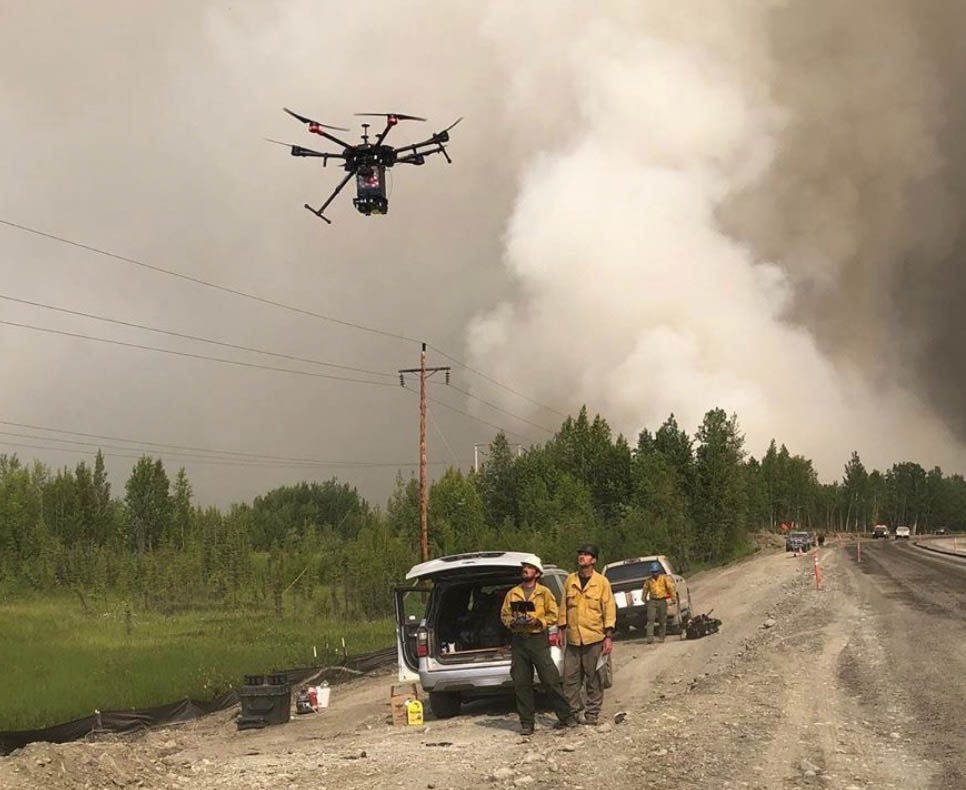
Drone being used to assist wildland firefighters. Drone Amplified photo.
The Federal Bureau of Investigation is using a new system to help wildland firefighters by detecting, identifying, and neutralizing drones that are illegally interfering with firefighting activities.
It is very dangerous to fly a drone near a fire at which helicopters or fixed wing aircraft are operating. A collision could impact the windscreen or damage the engine, props, rotors, or flight control surfaces, causing a crash. If a drone is seen near a fire the standard operating procedure is to remove all aircraft from the fire area until it is confirmed that the drone has left the scene. In other words, it interferes with firefighting efforts.
The FBI is working with the Los Angeles County Fire Department to use a system that can detect a drone flying over a fire within 30 seconds of it being launched.
From CNN:
“When the detection equipment finds the drone and identifies the operator’s location, we can very rapidly get that information to a ground intercept team who can then go make contact with that drone operator and essentially get them to stop flying that drone,” said James Peaco III, the weapons of mass destruction coordinator for the FBI’s Los Angeles field office.
With a special sensor, the team can set up a boundary as large or as small as desired and get notified if a drone flies into that area, instantly obtaining precise details such as elevation, direction, speed as well as where the drone took off from and where the controller is currently standing.
“The first thing we do is order them to bring the drone back, explain to him that there’s a wildfire and flying that drone during a wildland fire is actually a federal felony,” Peaco said.
It’s a federal crime punishable by up to 12 months in prison to interfere with firefighting efforts on public lands. Additionally, Congress has authorized the FAA to impose a civil penalty of up to $20,000 against any drone pilot who interferes with wildfire suppression, law enforcement, or emergency response operations. The FAA treats these violations seriously, and will immediately consider swift enforcement action for these offenses.
According to the US Forest Service, in 2019 at least 20 documented instances of unauthorized drone flights over or near wildfires in seven states (Arizona, California, Colorado, Nevada, New Mexico, Utah, Washington and Minnesota) resulted in aerial firefighting operations being temporarily shut down nine times. There is no centralized national mechanism to report unauthorized UAS flights over wildfires, so these are only the incidents that wildfire management agencies have become aware of, there are likely more that are not known about.
Suspending air operations could decrease the effectiveness of wildfire suppression operations, allowing wildfires to grow larger, and in some cases, unduly threaten lives, property, and valuable natural and cultural resources. The effects of lost aircraft time could be compounded by flames moving into untreated terrain.
Thanks and a tip of the hat go out to Tom and Gerald.
Yesterday July 9 a lead plane and a large air tanker had a close call while on a retardant dropping sortie on the Washburn Fire in Yosemite National Park.
There was virtually no wind over the fire most of the day and the area was smoked in causing very poor visibility making it impossible for air tankers to drop on the fire. But by 6 p.m. conditions had improved and at about 6:10 p.m. a lead plane was leading Tanker 103, an MD-87, over a target when they saw a falling tree branch above the lead plane. It fell between the two aircraft, in front of the tanker.
Twitter user Robert, @Rob_on_sisukas, captured an audio recording of the radio conversation. We’re not sure who the lead plane pilot was talking to, but we’ll call it “dispatcher” for now:
LEAD PLANE: Hey I just want to let you know that a branch went right over the top of us, pretty good size, probably 50 feet above us coming down and fell right in between Tanker 103 and myself.
DISPATCHER: OK. Copy. So it’s repeat of yesterday’s (unintelligible)
LEAD PLANE: That’s exactly what I’m getting at. So if we keep seeing that we might have to knock it off. I don’t want to take a chance on busting a window in an airplane or hurting an aircraft for this.
DISPATCHER: Absolutely. Keep me updated on this.
#WashburnFire interesting little chat. Near miss with a tree branch and Air Attack and Tanker 103. As civilians, we just see planes dropping loads. But listen to this choreography that goes on behind the scenes of fire. pic.twitter.com/Dn2CcTZ7qV
When a fire is burning intensely in an unstable atmosphere the convection in the rising smoke column can be powered by a tremendous amount of energy. As air at ground level rushes in to take the place of the rising column, the developing horizontal wind and the fresh oxygen feed the fire, causing an even higher level of intensity. The horizontal and then vertical movement of air can sometimes transport unexpectedly large objects up into the sky. Large columns may rotate as they rise and in extreme cases can actually become a fire tornado. You don’t want to be nearby when that happens. Fire tornados are not to be confused with small dust devils or fire whirls.
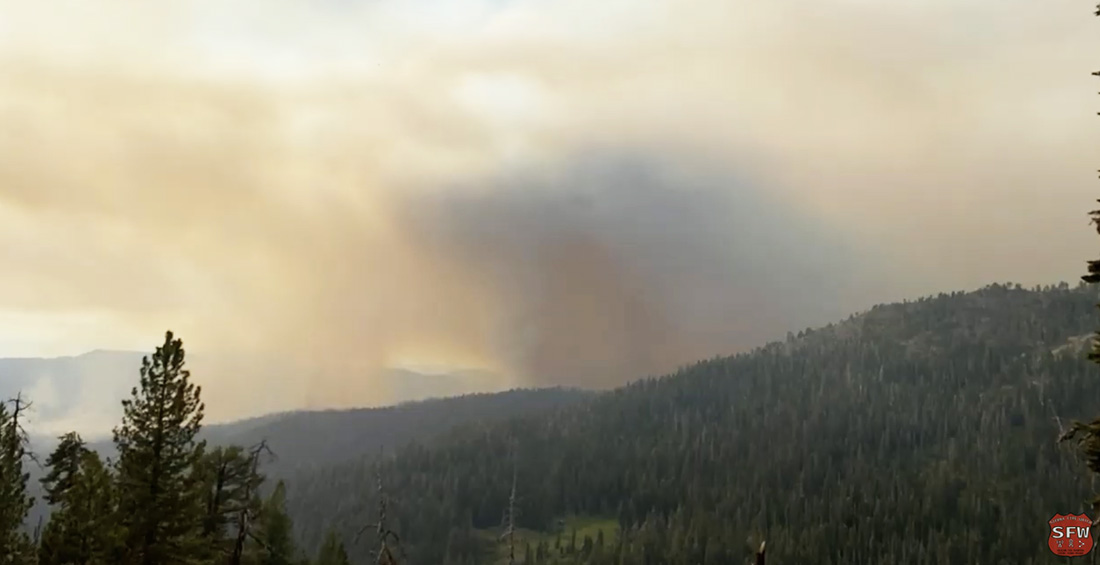
What is surprising about the incident yesterday is that the fire was smoked in most of the day, and tankers could not fly until about 6 p.m. I looked at various AlertWildfire cameras a few times and did not see any smoke columns. Maybe the cameras I saw were not able to see all of the fire, but I remember that late in the afternoon fire activity increased at the Sierra Fire Watch camera below, and columns may have developed.
Washburn Fire at 5:24 p.m. July 9, 2022. Sierra Fire Watch image.
Firefighting aircraft being damaged by debris being lofted into the air over a fire is not unheard of. Here’s part of an article I wrote for Wildfire Today in 2018:
During the large vegetation fires in southern California in 2003 some of the convection columns were so powerful that the windshields on six air tankers were cracked by chunks of debris that were being hurled into the air (page D-6 in 2003 California Governor’s Blue Ribbon Report; huge 20 Mb file). One pilot saw a four by eight sheet of plywood sail past at 1,500 feet.
As of late morning today, July 10, the Washburn Fire has burned about 1,800 acres in Yosemite National Park. About 300 of those acres are in the Mariposa Grove of giant sequoia trees, some of them 3,000 years old.