
Started in a US Army training area in July
Continue readingHelicopter crashes in Hawaii, killing four
An S-61N operated by Croman was transporting an external load for the military
Continue readingAircraft formerly known as the SuperTanker spotted in Hawaii
And, photos of a wildfire in Hawaii
Continue readingWildfire north of Honolulu threatened structures
And, the aircraft formerly known as the SuperTanker was spotted in Hawaii
Continue readingBrush fire burns 40,000 acres on Hawaii’s Big Island

A vegetation fire burned for about four days on Hawaii’s Big Island, blackening 40,000 acres according to estimates from fire officials. It is the largest brush fire on record for Hawaii County.
Evacuations were ordered for residents of three communities but have since been lifted.

The fire was reported Friday morning near Mana Road in Waimea and quickly prompted the evacuation of Pu’u Kapu Hawaiian Homestead and Waiki’i Ranch. Two homes in the Department of Hawaiian Homelands Puukapu Subdivision were destroyed.
When the fire was spreading rapidly it was pushed by 18 to 20 mph winds gusting to 40 mph.
“There are no longer threats to life and property and all roadways are open in both directions,” wrote Hawaii County Mayor Roth on Facebook Tuesday. The incident has been downgraded from an emergency situation to a normal fire operation he said.
The Drought Monitor reports that more than half of the island is in moderate to severe drought.

Hawaii Volcanoes National Park closed Hilina Pali and Mauna Loa roads to vehicle traffic due to the heightened fire danger.
“Staying safe while protecting the natural and cultural resources of the park is our top priority,” said park fire management officer Greg Funderburk. “Fire danger indexes in both areas are above the 90th percentile and any ignitions that occur would be difficult to suppress and likely to result in a large fire.”
The video below recorded heat detected by a satellite on the Big Island over a four day period. Hawaii is 10 hours behind UTC seen at upper left.
4 days of the mountain burning seen with #GOES17. Heart wrenching just to watch – but far less so than for Hawaiian homestead residents on the front lines of this beast pic.twitter.com/1HCWsbrbh1
— Clay Trauernicht (@claytrau) August 3, 2021
Remembering the firefighters injured or killed at Pearl Harbor 79 years ago today
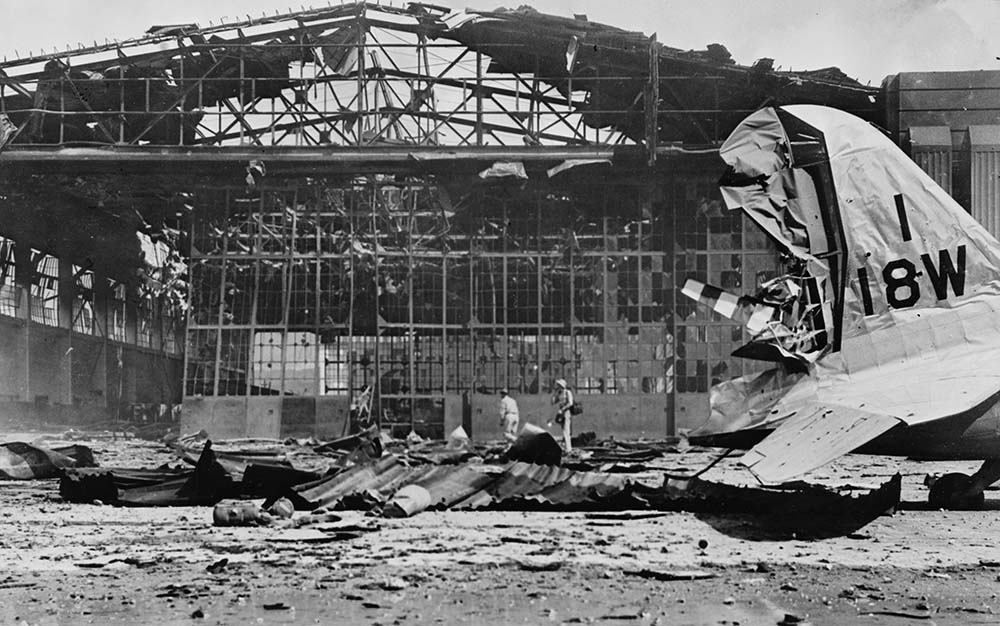
Billy G. of FirefighterCloseCalls.com, “Home of the Secret List,” reminded his followers of the significance of December 7 — Pearl Harbor Day:
For those younger readers of The Secret List, today, “Pearl Harbor Day” remembers the attack on Pearl Harbor, which was a surprise military strike conducted by the Imperial Japanese Navy against the United States at our naval base at Pearl Harbor, Hawaii on the morning of December 7, 1941.
That day 188 U.S. aircraft were destroyed, 2,402 personnel were killed, and 1,282 were wounded. We remember them all from “The Greatest Generation” who served along with all those who continue to serve today including the Honolulu FD and Hawaii’s Federal FD Firefighters.
REMEMBERING THE FIREFIGHTERS KILLED & INJURED IN THE LINE OF DUTY AT PEARL HARBOR:
As the Hickam Field firefighting apparatus was knocked out, Honolulu Fire companies responded to assist with the fires. At 0826 a Japanese aerial bomb was dropped on crews from HFD Engine Companies 1, 4, and 6. Three firefighters, Captain John Carreira, Captain Thomas S. Macy, and Hoseman Harry T.L. Pang were killed in the Line of Duty.
An additional six were wounded from shrapnel. They were Honolulu Fire Lieutenant Fred Kealoha, Hoseman Moses Kalilikane, Hoseman John A. Gilman, Hoseman Solomon H. Naauao, Hoseman Patrick J. McCabe, and Hoseman George Correa.
In 1944 they all were awarded the Order of the Purple Heart. They are the only civilian Firefighters to have ever received this award.
MORE on Pearl Harbor as we remember all those lost on December 7, 1941:
VIDEO:
Original Pearl Harbor News Footage
VIDEO:
Brush fire has burned about 20% of Kahoʻolawe
The island is southwest of Maui in Hawaii
Continue readingWildfire burns thousands of acres on Hawaii island
Unexploded ordnances make it unsafe for firefighters or aircraft to battle the blaze
Continue readingWildfire on Maui causes evacuations, burns 10,000 acres
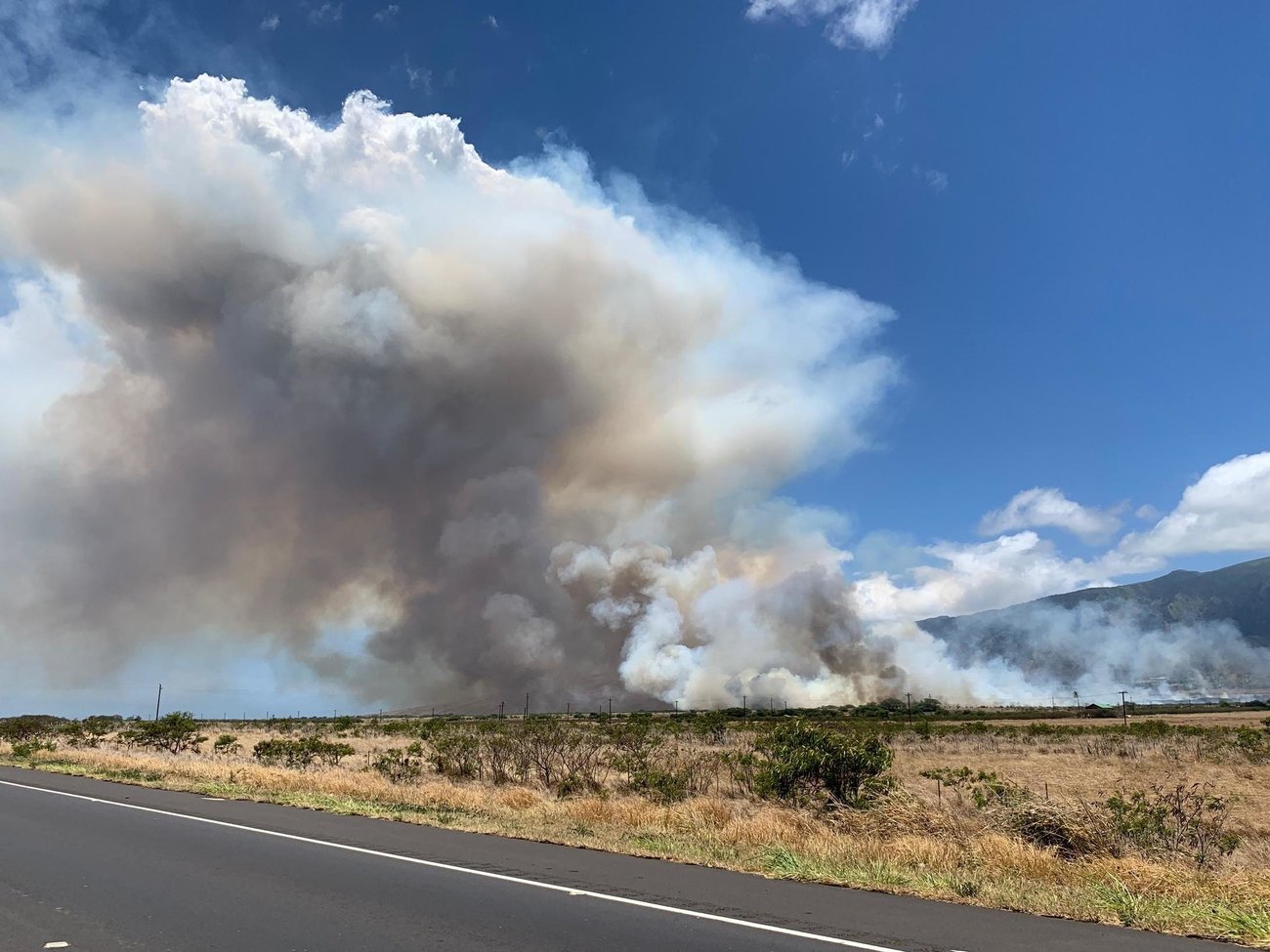
A wildfire that erupted Thursday morning on the Hawaii island of Maui burned 10,000 acres and forced thousands to evacuate. Most of the residents returned to their homes Thursday night but the fire is still active in places.
Reported at 10:42 a.m. near the intersection of Waiko Road and Kuihelani Highway, the blaze quickly jumped the Kuihelani Highway, while pushed by 15 to 20 mph winds.
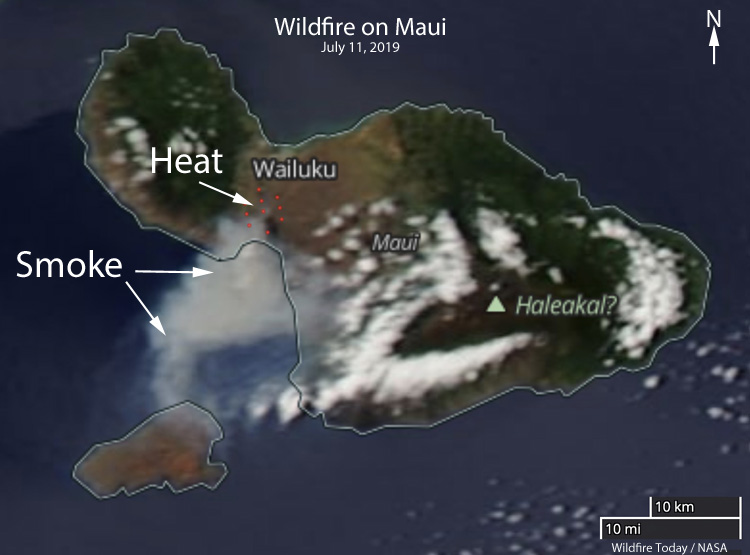
The Fire Department’s two helicopters, Air One and Air Two, dropped water, and private companies and the County Department of Public Works made their dozers available.
The Maui Humane Society evacuated about 200 animals.
So… Maui is on fire. pic.twitter.com/hUlD0GHNfY
— Jason Nerad (@OurFearlessHero) July 12, 2019
For a while Thursday The Kahului Airport lost commercial power and was running on generators. Incoming flights were diverted and 11 motor coaches and school busses were standing by at the airport in case visitors had to be evacuated to shelters.
Roads that had been closed, North Kihei Road, Kuihelani Highway, and Maui Veterans Highway reopened Thursday night.
Opra Winfrey, who owns a home on Maui, allowed County officials access to her private road.
Hi there Jack, Access to the road was given to county officials immediately. This was many hours ago. Hoping for the safety of all. ?? https://t.co/BxsPNUkkJC
— Oprah Winfrey (@Oprah) July 12, 2019
People and animals evacuated as raging fire burns 3,000 acres in Maui https://t.co/Xxm4ixzp6E pic.twitter.com/sRoYcpBTI7
— FOX6 News (@fox6now) July 12, 2019
Thanks and a tip of the hat go out to Tom. Typos or errors, report them HERE.
Vegetation buried by lava produces methane burning with blue flame

Above: Blue flames can be visible when vegetation buried by hot lava produces methane which vents and is then ignited. Screenshot from USGS video.
What’s happening on Hawaii’s big island as the eruption of the Kilauea volcano enters its fourth week seems like it is from another world — huge mounds of red-hot lava rumbling in slow motion over homes and forests as it makes it to the sea. Where it enters the cold water it produces what is called “laze,” hydrochloric acid steam that pours into the air along with fine particles of glass. Laze can cause lung, eye, and skin irritation and caused the deaths of two people in 2000.
Since it is the wet season in Hawaii brush fires caused by the eruption are not a big concern, but the lava finds a way to burn the vegetation regardless. The USGS explains:
When hot lava buries plants and shrubs, methane gas is produced as a byproduct of burning vegetation. Methane gas can seep into subsurface voids and explode when heated, or as shown in this video, emerge from cracks in the ground several feet away from the lava. When ignited, the methane produces a blue flame. Intermittent short bursts of methane are visible in the center area of the video. Lava fountaining is visible to the right and left sides of the video.