Air tankers and Type 1 crews dispatched to Oregon Lakes Fire in Alaska

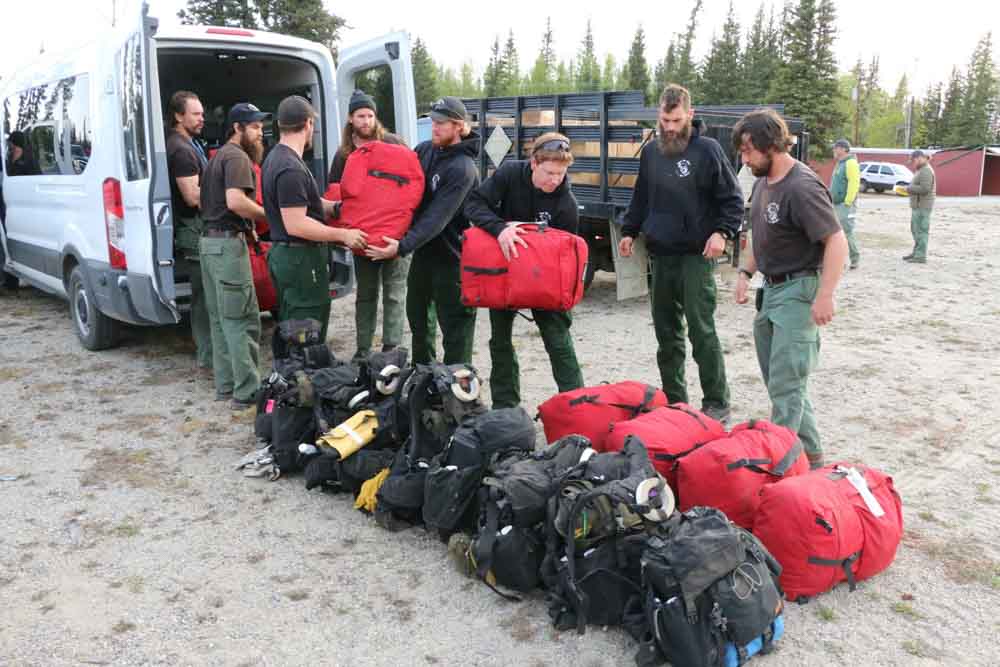
Chena Hotshots Oregon Lakes Fire
Chena Hotshots unload their gear at the Oregon Lakes Fire, May 1,2 2019.

Sunday afternoon a burnout operation being conducted by a Type 2 hand crew on the Oregon Lakes Fire 11 miles south of Delta Junction, Alaska slopped over a fireline and burned 240 unplanned acres. Firefighters, aided by heavy equipment and a helicopter, were burning grass along a fuel break about two miles north of a military training impact area.

Two helicopters and both of the state air tankers that were on contract were used on the slopover, including Tanker 42, a Convair 580, that was on the first day of its contract.

It is very rare for retardant to be needed on a fire in Alaska this early in the year. The water-scooping Fire Bosses are not yet on contract, but would have been well suited for the job with the nearby Delta River serving as a water source.

In addition, two Type 1 Hotshot crews were mobilized Sunday, Chena and Midnight Sun.

Oregon Lakes Fire burnout slopover
This small photo provided by the Incident Management Team shows the burning operation in progress. At some point it spotted across the line, burning an unplanned 240 additional acres.

A Temporary Flight Restriction (TFR) is in place over the fire to prevent outside aircraft, including military aircraft, from interfering with the suppression efforts. Part of the TFR is over restricted military airspace.

The fire was reported April 30 and so far has been burning in an area that is off-limits to firefighters and low-flying fire suppression aircraft due to the likelihood of unexploded ordnance on the ground. It is burning mostly in tall, dry grass and downed trees from the 2013 Mississippi Fire west of the braided Delta River.

The Incident Management Team reports that the fire has burned 5,732 acres.
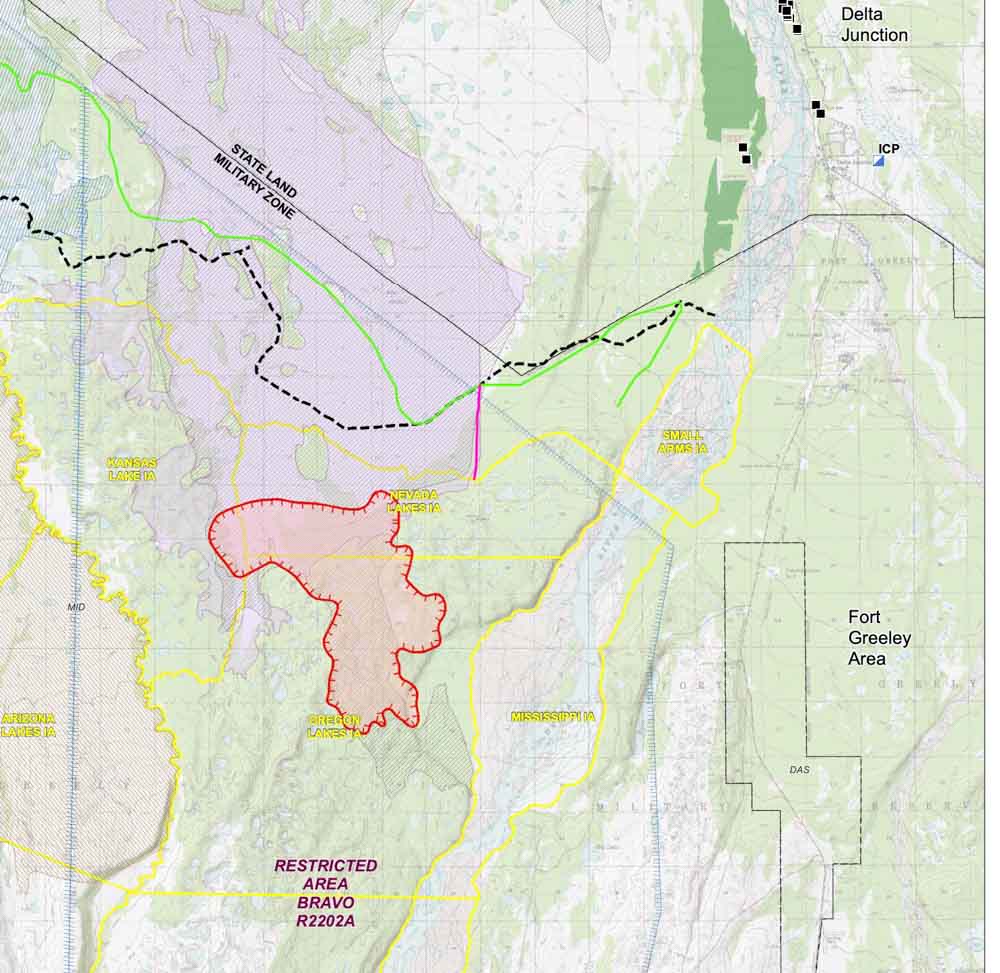
map Oregon Lakes Fire
This is the most current map of the Oregon Lakes Fire provided by the Incident Management Team. The perimeter was updated May 8, 2019.

Oregon Lakes fire spreads during Red Flag Warning

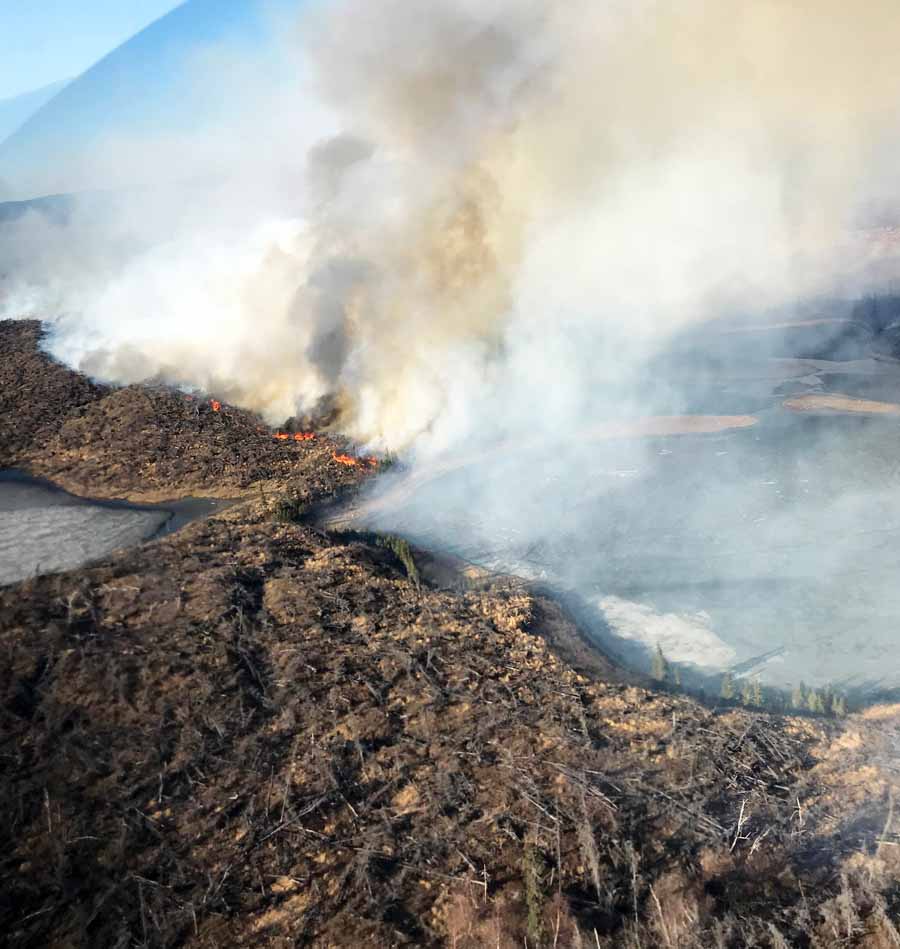
Oregon Lakes Fire
Oregon Lakes Fire, May 6, 2019. BLM Alaska Fire Service photo.

After being virtually dormant for a couple of days a Red Flag Warning, sunshine, and strong wind brought the Oregon Lakes Fire back to life Tuesday. As of Monday night the fire had burned 6,670 acres 10 miles southwest of Delta Junction, Alaska but judging from smoke seen in Tuesday’s satellite photo that number has likely increased.

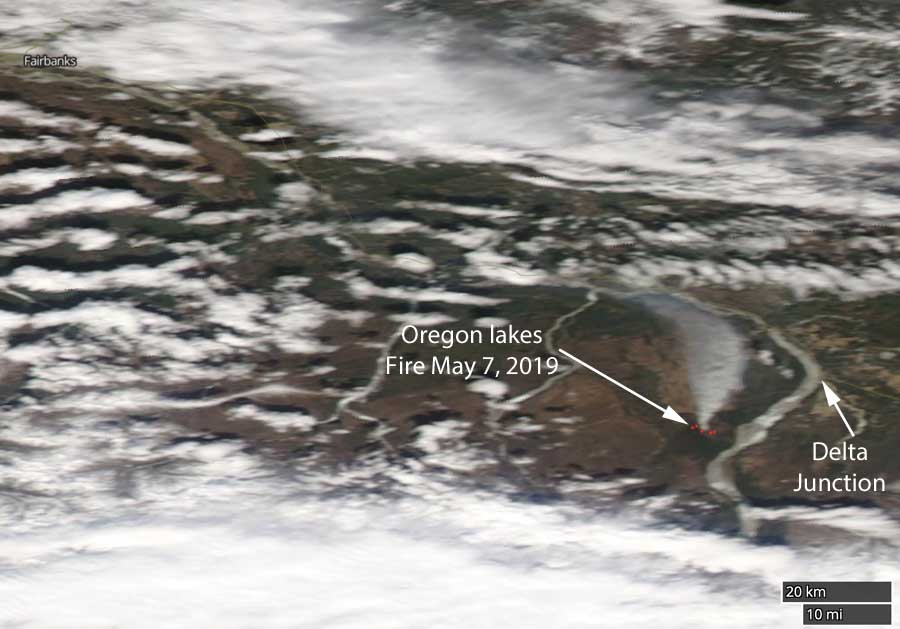
A hole in the clouds allowed the sun to warm and dry the fuels that got exposed to some rain earlier, and also a satellite took advantage to get an image for the first time since May 1.

Satellite photo Oregon Lakes Fire
Smoke can be seen in a satellite photo from May 7, 2019 showing the Oregon Lakes Fire 10 miles southwest of Delta Junction Alaska. The red dots indicate heat.

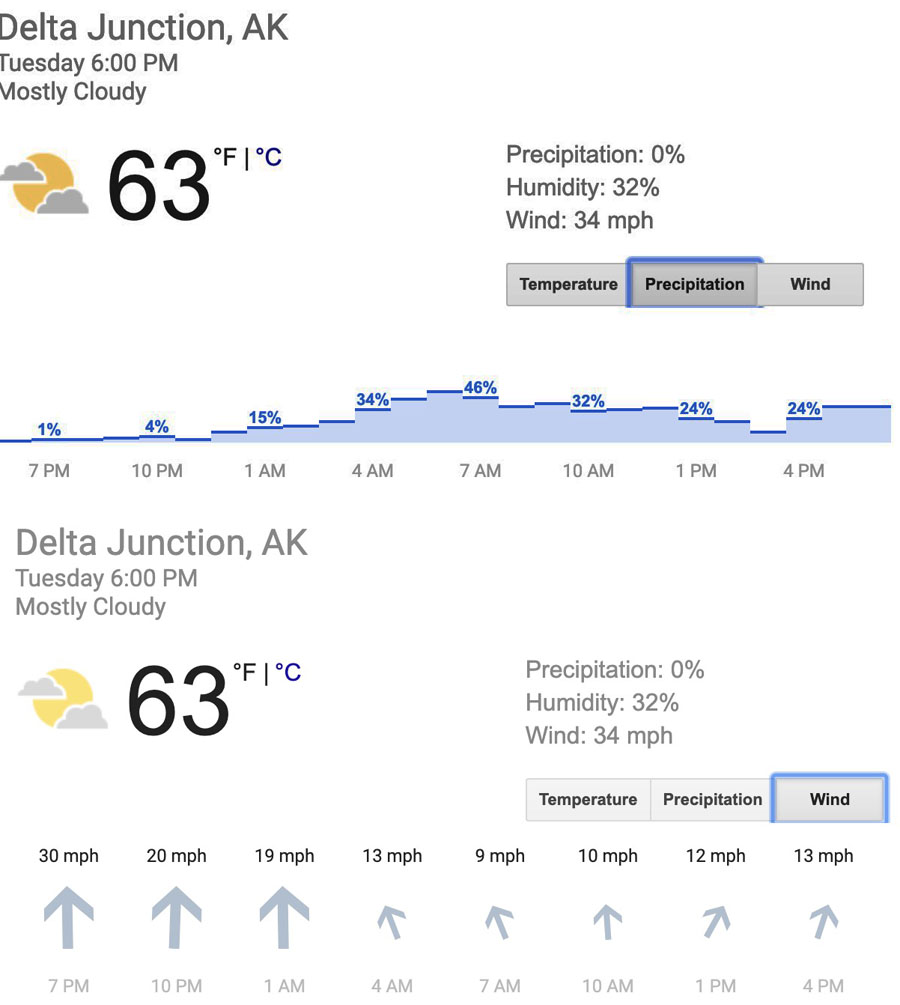
The weather forecast below for Delta Junction shows 30 mph south winds tapering off Tuesday night and a 46 percent chance of precipitation early Wednesday morning.

Delta Junction weather forecast
Weather forecast for Delta Junction from Tuesday afternoon through Wednesday afternoon, precipitation and wind.

The remote fire was reported at about 1 p.m. on April 30 and so far has been burning in an area that is off-limits to firefighters and low-flying fire suppression aircraft due to the likelihood of unexploded ordnance on the ground. It is burning mostly in tall, dry grass and downed trees from the 2013 Mississippi Fire on the west side of the braided Delta River.

Below is an excerpt from a Tuesday night update from the Incident Management Team:

The IMT will work with the BLM AFS Military Fire Management Zone, the U.S. Army Alaska Garrison, BLM Eastern Interior Field Office and the Alaska Division of Forestry (DOF) to determine the best course of action, especially with the forecasted increase in temperatures and wind. It is in a limited protection area and is not immediately threatening any structures, military targets or valuable resources. However, because it is burning in the Delta River drainage with known challenging weather patterns that could cause the fire to persist throughout the summer, the team is being activated to plan for an opportunity to launch suppression tactics once the fire moves out of the military impact areas. There will be an increase of people in the area as the IMT sets up a command post and stages firefighting resources in Delta Junction.