


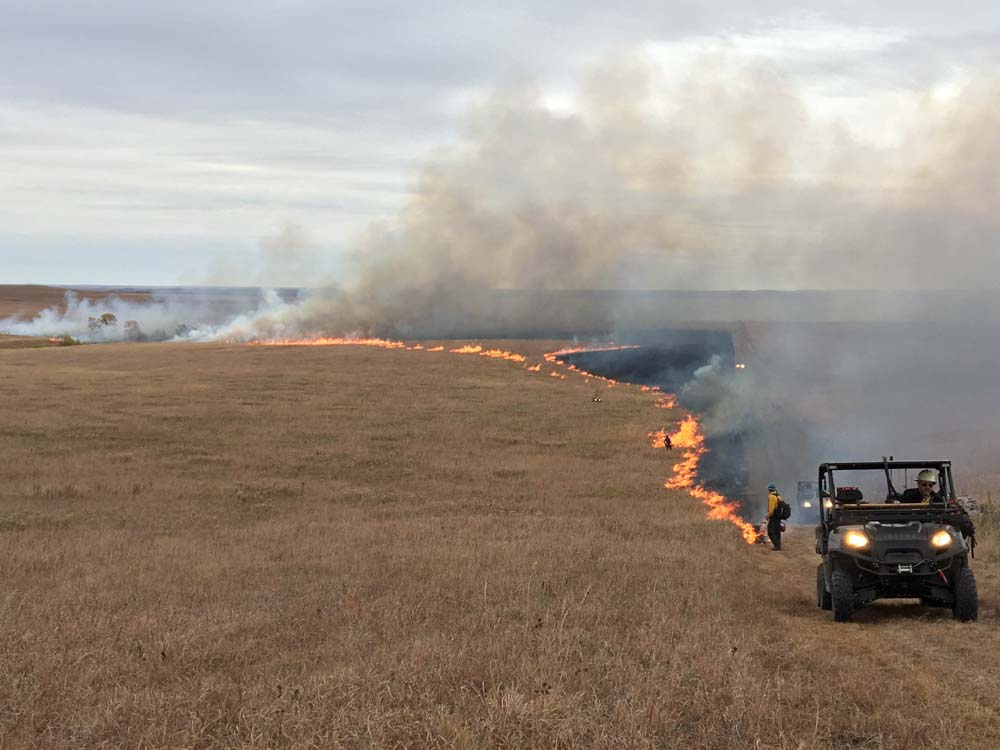
A joint research paper from researchers in California and New South Wales examined the similarities and differences between prescribed fire management in the United States and Australia, and found that Australia is much more efficient in the practice compared to the U.S.
The conclusion stemmed from Australia’s comparatively quick burn implementation process, the paper published in the Fire Ecology journal said. While setting up a prescribed burn on federal lands can take years in the U.S., Australian officials can often plan and set a burn in the same year with specialist feedback.
“The idea that you could plan and implement a burn in the same year, including incorporating specialist feedback and comply with various laws/statutes aimed at environmental protection, is rare in US federal and state agencies,” the paper said. “Australia has streamlined the process to facilitate implementation. Additionally, the responsibility to manage public lands in Australia is primarily the responsibility of states and territories, with the few exceptions of a small number of parks and other lands utilized by the Australian Government agencies and the Department of Defence.”
The U.S., however, has numerous sources of institutional education that Australia lacks, according to the researchers. The U.S. has numerous prescribed fire courses, training centers, and a collection of fuel moisture history, many of which land managers in Australia have learned from and implemented in their nation’s burn programs. Australia, in contrast, mainly relies on a dwindling volunteer workforce supplemented by land managers without dedicated courses that teach ignition patterns or techniques.
“Practitioners across Australia implementing complex burns could benefit from the US learnings, prescribed fire training centers, and firing boss taskbooks which include ignition patterns and techniques,” the paper said. “Prescribed burns are implemented with good success in Australia; however, there can be a lack of efficiency (not maximizing the burn window) or higher severity burns can occur when ignition patterns are not adjusted for the conditions.”
The paper, “Australia and the United States have many similarities and differences in prescribed fire management: learning from each other” is by Brian Levine, NSW National Parks and Wildlife Service, and Scott Stephens, University of California.
Wildfire Today reached out to paper co-author Stephens for further comment on the research. He deferred to the published paper.




3 Comments
Please for a multitude of reasons do not burn. Masticate if fuels reduction is needed.
Mastication is NOT fuel reduction- it is fuel redistribution. Addresses a different problem.
Have USA grass fires been compared with Australian grass fires. I have watched a USA grass wildfire and know there is no comparison to a much more common USA timber wildfire.
Comments are closed for this article!