Global wildfires, interoperability and integrated fire management

Romanian and French firefighters posing for a group photo in front of their fire trucks Romanian firefighters that have been strategically pre-positioned in the south of France, in Perpignan, within a wider wildfire preparedness initiative coordinated via the EU Civil Protection Mechanism. Photo European Union

By Trevor Howard

With increasing frequency and severity, we are seeing large-scale wildfires and cascading consequences across the globe. In the 2026 summer fire season in Europe, major conflagrations occurred in Mediterranean and southern regions with lives and properties lost across Portugal, Spain, France, Italy, Greece, Belgium, and Turkey. Albania, Germany and other countries have been affected, and the potential remains for more widespread conflagrations. Further north, Ireland and the United Kingdom had wildfires of a scale and complexity well beyond the historic norm.

These wildfires were preceded by periods of rainfall and growth in vegetation in some areas while prolonged drought occurred in others, followed by significant and widespread heatwaves disrupting European economies and lifestyles and baking landscapes and vegetation.

This From the IAWF President column is first published in Wildfire Magazine – read the full edition.

Across the Atlantic, Canada again experienced extensive wildfires in several provinces, impacting populated areas, remote and Indigenous communities, and vulnerable boreal forests. Over the border, the United States experienced a similar situation of escalating wildfire commitments and impacts, with many parts of the country in a state of high risk even if ignitions have not occurred. As with Europe, properties and lives have been lost including fire crews and aviators. Indonesia, along with other parts of Asia, is dealing with major wildfire threats and impacts. Across all fire affected countries and continents, smoke accumulations and greenhouse gas emissions are disrupting more distant places as well as atmospheric dynamics. This situation is unsustainable.

Formal instruments for cross-border and international assistance have been activated, including mutual response and coordination agreements within the European Union, and longstanding resource sharing arrangements among Australia, New Zealand, the United States and Canada for firefighters and incident management teams. Such agreements require many issues to be addressed including training, experience and qualifications, fitness standards, deployment conditions, fatigue and safety management, national polices and cost recovery. Even for well-established relationships – e.g. between Australia and the United States – cross-walking processes to align roles, skills, competencies and training continue to be reviewed and refined each year so the expectations of resource providers and recipients are met when firefighters and incident management personnel are deployed.

The United Nations Global Fire Management Hub (UN Fire Hub), formed under the Food and Agriculture Organisation headquartered in Rome, established an Interoperability Working Group in 2025 that is tackling many current and emerging issues and making good progress. However, these challenges will be with us for a very long time and at different scales in different places. While some countries have relatively mature wildfire response and management arrangements, others are yet to develop, especially where large wildfires are a relatively recent phenomenon and fire services are localised rather than national.

Many of the interoperability issues go well beyond high-level agreements, intelligence and data sharing, and the like. Metropolitan fire services are generally organised, trained and equipped for structural fires, while forestry and park services have different cultures, equipment and skillsets for dealing with fires in vegetation. In some countries the military is involved, while the aerial firefighting sector also involves many corporations and private-public partnerships. The ability for different agencies and organisations to work together in planning and preparedness, and to establish command and control, develop operational strategies and tactics, deploy resources including aircraft for effectiveness and efficiency, and ensure the safety and wellbeing of their personnel, can be a significant challenge. This coordination requires mutual respect, communication at all levels, a common operating picture, training and exercising together, the ability to recognize and use specialist skills regardless of service or rank, and often long-term cultural change within each organisation.

Fundamentally, wildfires occur in vegetation. The point of origin may be remote and in difficult terrain. Directly applying water to burning materials from hoses and trucks, as in metropolitan contexts with reticulated water supplies and hydrants, will only ever be practical at small scales, in accessible areas, and for the protection of built assets. Hose lays and sprinkler systems can be effective for protecting landscape features of significant value, especially in difficult terrain where water sources such as collar tanks (or flexitanks) can be inserted by helicopter, and water remains useful for mopping up smouldering materials. Aerial firefighting, whether dropping water and suppressants on the fire edge, or retardants on unburnt vegetation, will always be limited by scale, cost, aircraft availability and proximity to refilling points. Even dry fire fighting, involving managing fuels using hand tools and earthmoving machinery to cut mineral breaks, separate areas of flammable vegetation, and create access for vehicles, has many constraints. While rapid fire detection and multi-agency emergency response are essential, as well as international and continental mutual-aid agreements, there will never be enough firefighters, water, trucks, aircraft and earthmoving equipment. Modern building standards and materials are also essential but do very little for historic towns, older suburbs, remote communities and disadvantaged populations.

As global fire regimes change and conflagrations have bigger impacts, the lessons to be learned and the strategies needed are old, not new. The use of fire for strategic and tactical backburns, and to burn out fuels between constructed or natural breaks and the wildfire edge, remains a powerful tool for fire fighting in the right hands, but can be a significant risk without expert judgment and skills. Beyond fire fighting, the use of fire in the landscape for prescribed burning is essential for managing vegetation and fuels at a range of scales, as well as for learning and development so that firefighters and managers acquire a practical understanding of fire behaviour. After successive unsustainable wildfire seasons in Canada, there is now a national prescribed fire training program that is expanding its focus and program delivery nationwide. The UN Fire Hub is also actively promoting Integrated Fire Management so that all aspects of living with and managing fire in the landscape are given prominence, including prescribed burning and land management. To protect life, property and the environment from wildfires, we need to better manage the environment before wildfires start.

Trevor Howard is the President of the IAWF and national manager, prescribed burning strategy, with the Australasian Fire and Emergency Service Authorities Council (AFAC).

Wildfire Canada 2026 photo contest winners

Wildland Canada Conference 2026 photo contest winners Michela and Renee Carriere with all the winning photos.

Fire and water, ice and snow. The Wildland Canada Conference 2026 photo contest produced a spectacular range of still life snapshots of wildfire on the land.

The 600 delegates in Saskatoon, Saskatchewan for the conference last week voted for a first and second place in three divisions – Cultural Fire, Wildland Fire and Prescribed Fire.

Cultural Fire

The Carriere family from northern Saskatchewan took out both first and second prize for their photos in their We Are Fire program.

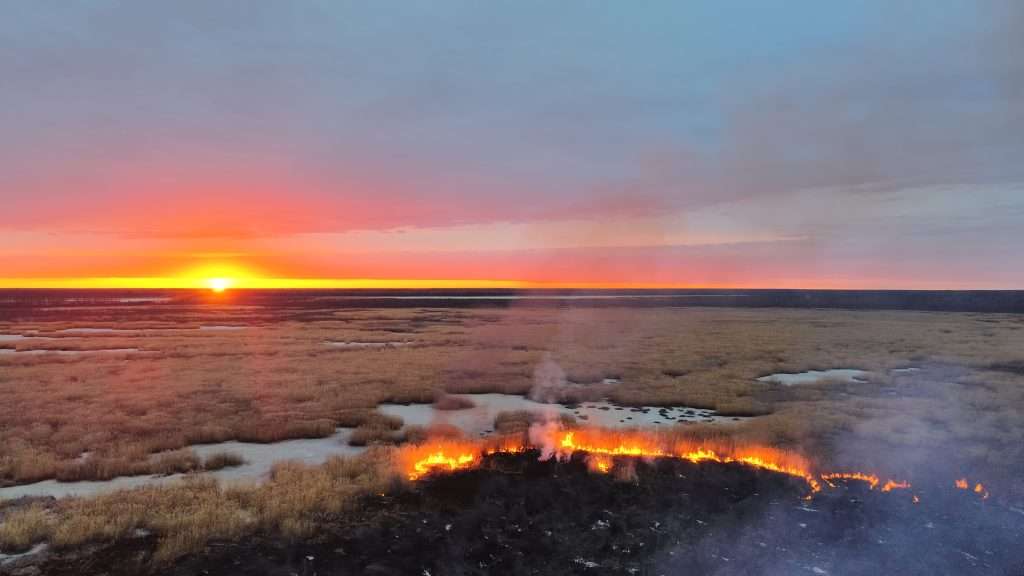
Michela’s photo of a cultural burn on the Saskatchewan River Delta was taken on her DJI Air3s drone. Her caption read: “Beautiful image captured as the sun was setting, the conditions were perfect for the burn. Part of the We Are Fire movement and Muskrats to Moose collective.”

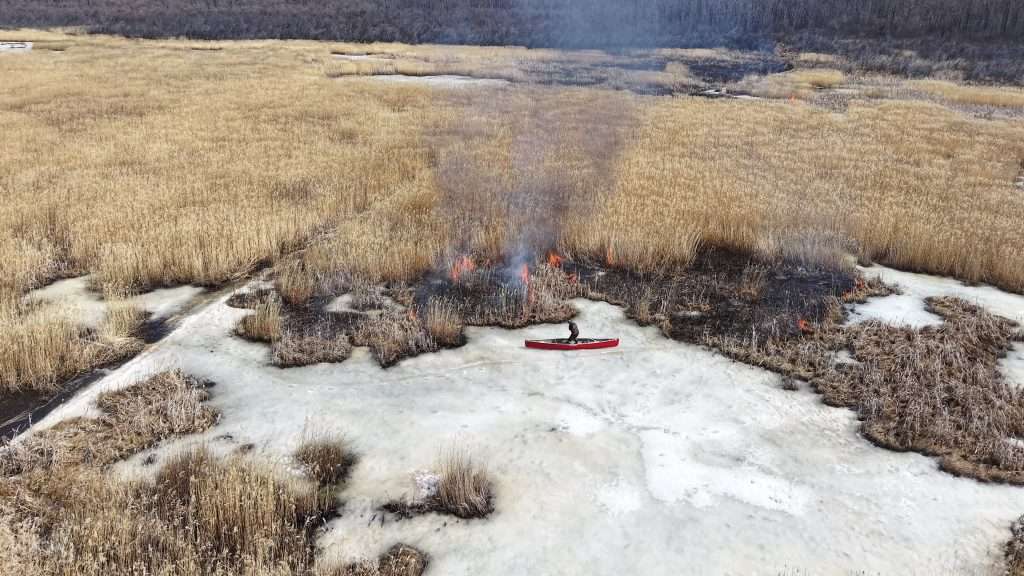
Renee Carriere’s photo was titled Where Fire Meets Water. “An Elder Fire Land Guardian moves through the frozen channels of the Saskatchewan River Delta as fire travels through the golden marsh grasses. From above, the contrast between flame, ice, and the vast northern landscape reveals both the power of fire and the beauty of this living ecosystem. Cultural burning is more than the act of lighting a fire — it is a relationship with the land, guided by knowledge, observation, and respect. In this moment, fire and water meet in a landscape shaped by generations of connection to the land.”

Wildland Fire

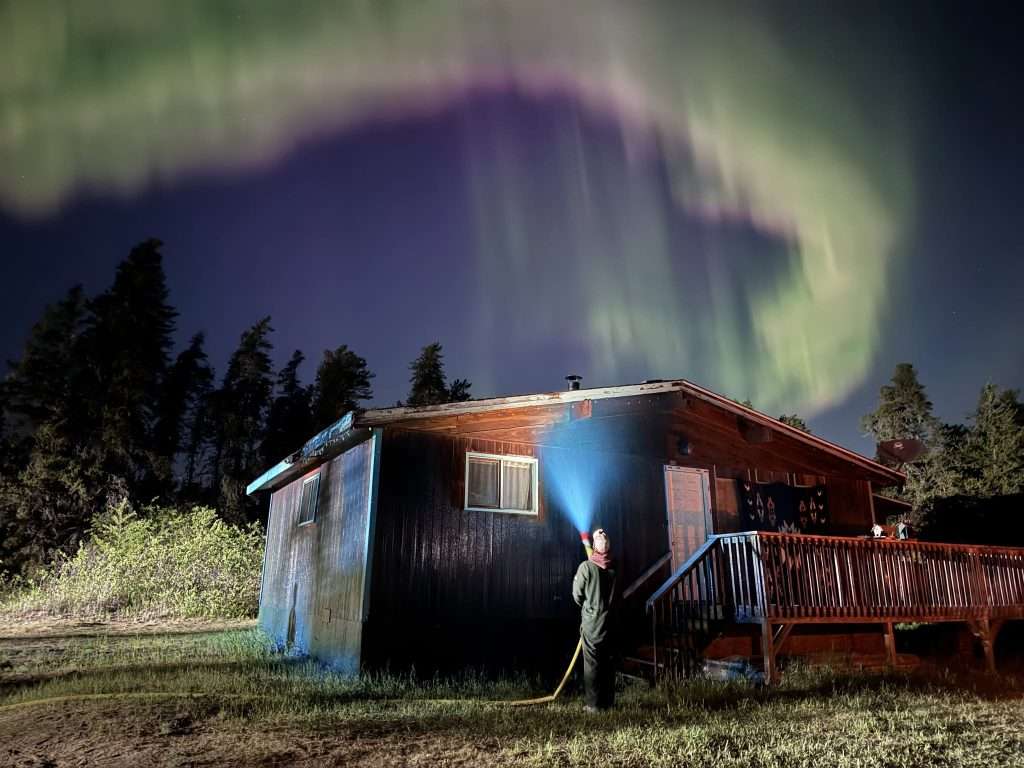
Sarah Pratchler from Gel Systems Canada won the category with the capture of the spectacular colours during the application of her organisation’s FG-2 Ready-To-Use Gel on a house at Molanosa (Montreal Lake Cree Nation) during the 2025 DITCH fire.

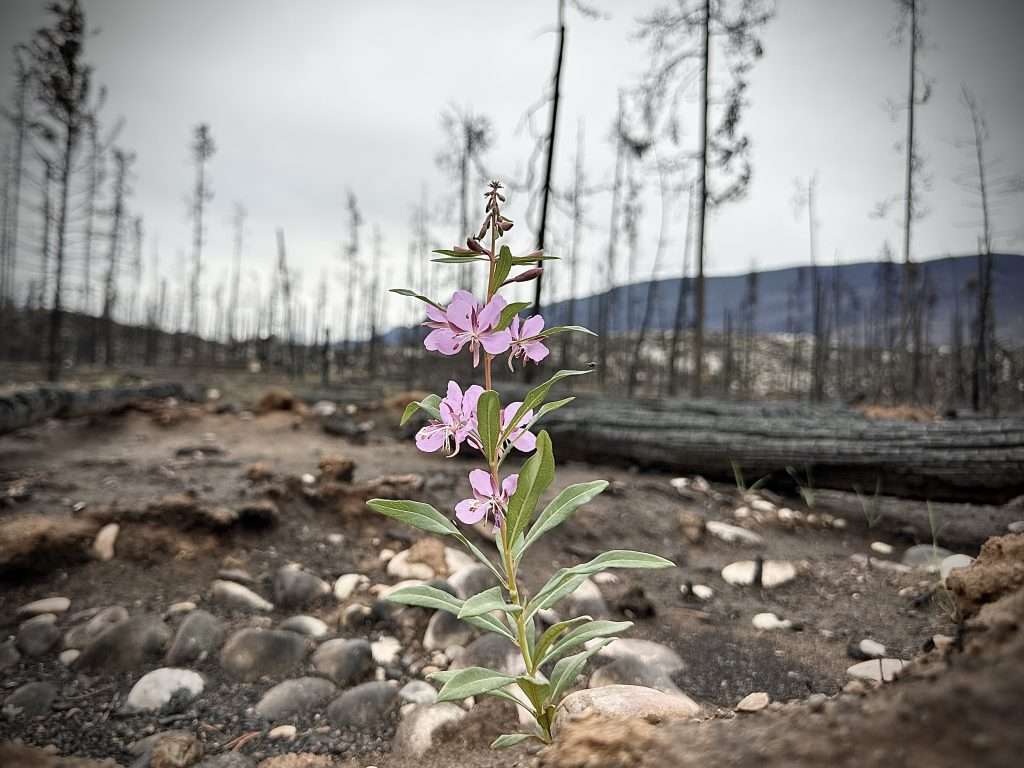
Runner up Natalie Krizan from the University of Lethbridge caught the regrowth after the severe Jasper wildfires of 2024. “Regrowth begins again a mere few months after, as bright purple fireweed contrasts against the charred landscape.”

Prescribed Fire

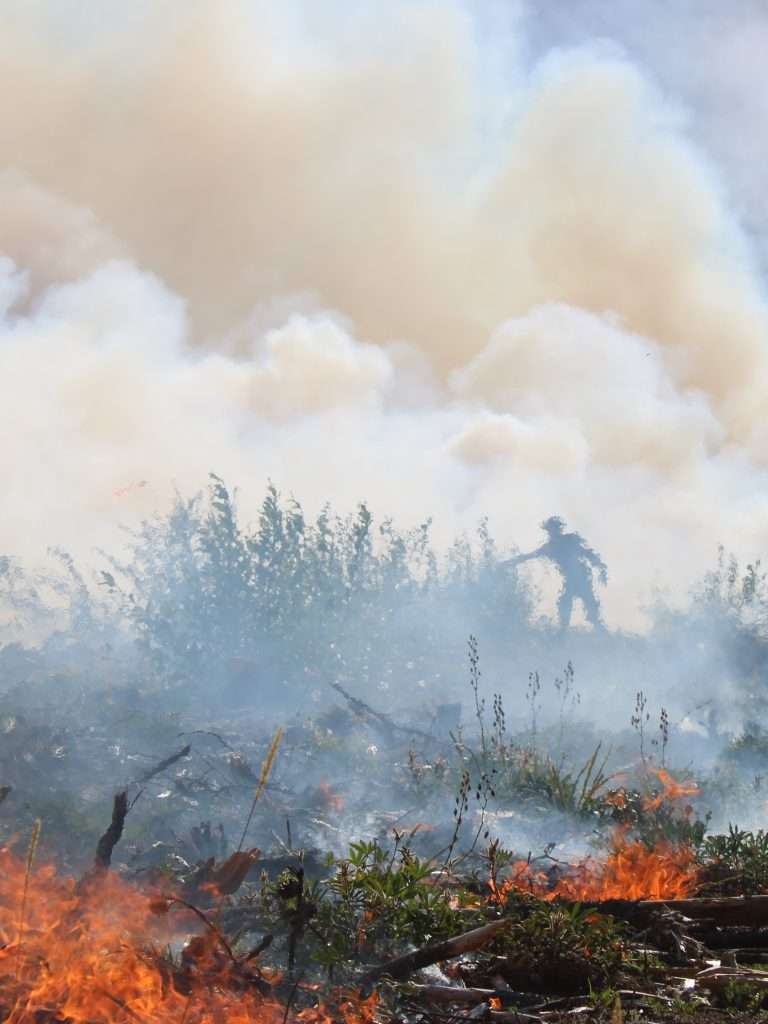
Natalie Krizan, University of Lethbridge, won this category with an intriguing image taken during a prescribed fire within the Whitehorse South fuel break. “The heat of the burn blurs the figure of a firefighter as he uses a drip torch to ignite the next row of protective flame.”

Sheldon Brewer’s photo was a riot of red as a firefighter worked on a firebreak around a community.

Who guards the guardians? Autonomy without accountability is a risk wildland fire cannot afford

By Michael Hill

For most of my career in the US federal government, I worked within a wildland fire organization that valued centralized leadership, standardized policy, and institutional accountability. Particularly within the US Forest Service’s aviation program, our operating procedures were not simply administrative requirements – they were the accumulated lessons of decades of experience, many written in response to accidents, fatalities, and investigations. Every policy represented someone else’s hard lesson so that others would not have to learn it again.

This viewpoint article is first published in Wildfire Magazine – read the full edition.

It was not a perfect system. No organization is. But it was a robust one. It provided consistency across forests, regions, and agencies while establishing checks and balances that protected both the mission and the people carrying it out.

Lately, however, I have begun to see a different philosophy emerging.

Recently, I sat quietly through a meeting involving the newly organized US Wildland Fire Service and a tribal partner. While the discussion covered organizational relationships, what I heard beneath the surface was something larger. Agencies are trying to define themselves in an increasingly complex fire environment while simultaneously seeking greater organizational independence: each wants more freedom to make its own decisions, establish its own priorities, and operate with less outside influence.

That conversation reminded me of one I’d had several months earlier with a US Forest Service Forest assistant fire management officer; he described an effort within the Southern Region where some Forest fire management officers want to free themselves from the administrative oversight of their forests.

The forest fire management officers’ reasoning is straightforward: they believe that only fire professionals truly understand the complexities of managing a local fire program. Therefore, they argue, fire managers – not line officers or administrative leaders – should have greater authority over fire operations and program management.

At first glance, the argument is compelling. Wildland fire has become extraordinarily complex.

Fire managers possess specialized knowledge that few outside the profession fully understand. Fire managers often make critical decisions under extraordinary pressure, and many of them understandably become frustrated when administrative structures appear disconnected from operational realities.

Greater autonomy can encourage innovation, accelerate decision making, and allow local leaders to tailor programs to local conditions rather than forcing every situation into a national template. But there is another side to the discussion that deserves equal attention.

The question is not whether fire managers are capable of exercising greater authority. Many unquestionably are. The question is who ensures accountability once that authority exists.

The question is not whether fire managers are capable of exercising greater authority. Many unquestionably are. The question is who ensures accountability once that authority exists.

One lesson I have learned over a career in public service is that organizations should never rely solely on the character of individuals, no matter how competent or well-intentioned they may be. Some leaders enter management because they genuinely want to improve their organizations. Yet history – both inside and outside government – shows repeatedly that concentrated authority, when left without effective oversight, eventually produces uneven outcomes.

Sometimes those outcomes are relatively minor. Other times they affect careers, organizational culture, operational safety, or public trust.

Checks and balances exist for precisely this reason.

For decades, centralized administrative oversight served as a counterweight to individual authority.

Policies, independent reviews, financial controls, aviation standards, safety boards, and multiple layers of supervision were not obstacles to good leadership. They were safeguards against human nature. They protected employees from favoritism, taxpayers from waste, and agencies from becoming collections of independent fiefdoms.

Many of those traditional structures are changing.

As fire organizations become increasingly decentralized – whether intentionally or through organizational evolution – we risk creating administrative vacuums. Nature abhors a vacuum, and so do organizations. Authority rarely disappears; it simply shifts. Without carefully designed systems of accountability, oversight can gradually be replaced by localized power structures where policies vary, standards drift, and decisions become increasingly dependent upon the personalities of individual leaders rather than institutional principles.

History offers no shortage of examples. Whenever centralized institutions weaken without replacing their oversight functions, authority tends to fragment. The result is often not greater freedom but the emergence of independent power centers, each operating according to its own priorities. In political history, these have been called warlords. In organizations, they become isolated kingdoms with little external accountability.

That comparison may sound dramatic, but the underlying organizational principle is universal.

Wildland fire is entering an era that demands flexibility. Fire seasons are longer. Interagency coordination is more complicated than ever. Partnerships with tribes or First Nations, states, local governments, and nongovernmental organizations continue to expand. Local leaders need room to adapt. But flexibility without accountability is not resilience: it is vulnerability.

The debate should never be framed as centralization versus decentralization. Both have strengths. Instead, we should ask a more important question: How do we preserve the institutional safeguards that generations before us built while giving today’s leaders the flexibility they genuinely need?

Every generation of firefighters inherits more than aircraft, engines, and equipment; we inherit organizational structures that were shaped by the successes, and often the tragedies, of those who came before us.

If we dismantle those structures in pursuit of autonomy, we have an obligation to replace them with equally effective systems of oversight. Otherwise, we risk losing not only consistency but also the institutional integrity that has allowed federal wildland fire organizations to serve the public for generations.

The issue is not whether local leaders deserve greater authority. Many do. The issue is who guards the guardians.

That question has challenged governments, militaries, and public institutions for thousands of years. It remains just as relevant to wildland fire management today.

Michael Hill has worked as a hotshot, helicopter rappeller, smokejumper and fire aviation specialist within the United States fire management agencies. He is an Australian firefighter with a background in military aviation.

Nearly $20M awarded to rural Texas fire departments to prepare for wildfire

When a wildfire ignites in Texas, the first people on the scene are most likely from one of the state’s hundreds of volunteer fire departments, most of which have less than adequate resources to contain the flames.

Officials with the Texas A&M Forest Service say they are aware of this disparity and are attempting to address it with new funding through its Rural Volunteer Fire Department Assistance Program, specifically for firefighting equipment, training and other emergency needs. The program’s most recent $20 million award is its first round of funding for the 2027 fiscal year.

“Demand for assistance through the program routinely exceeds available funding as volunteer fire departments work to maintain and replace vehicles, protective gear and other essential resources,” the Service said in a press release on Friday. “To address longstanding funding needs, the 89th Texas Legislature appropriated $192 million in one-time additional funding to support outstanding requests.”

Click here for a full list of how much money was given to each of the state’s 518 rural departments.

The funding was announced after a very active fire season in the state. Texas recorded its largest summer wildfire in history in September when the Ross Fire burned over 90,000 acres in Palo Pinto County. The fire destroyed 167 structures, including 18 occupied residences, and damaged 95 structures.

Multiple wildfires that burned in the Texas Panhandle in February triggered an “Agriculture Emergency” due to alleged devastating losses they caused to the region’s farmers. Three wildfires in the Panhandle, including the Lavender Fire, 8 Ball Fire, and Canadian Bridge Fire, burned more than 21,350 acres, many of which were farmland.

PREVIOUS COVERAGE: Wildfires trigger ‘Agriculture Emergency’ in Texas

UK unveils future wildfire plan: military aircraft, specialist fire teams and landscape transformation

Two historic wildfire seasons and a sense of falling “decades” behind in wildfire preparedness have forced the United Kingdom into a game of catch-up. Officials unveiled what they hope to be their first steps forward at England’s first-ever wildfire summit on Friday.

Prime Minister Andy Burnham announced at the summit in Liverpool that some of the country’s military aircraft would be equipped for firefighting for the first time. The Royal Air Force’s Chinook helicopters and A400M planes will be ready whenever any of the country’s civilian fire services request them for help fighting fires in often inaccessible areas like remote moorland or steep hillsides.

Fireline crews will also get more specialist wildfire teams and lightweight PPE specifically designed for wildfire suppression under the plan, according to Burnham. Up to £45million will go toward fire crew resources, while £25 million more will go toward landscape transformation, specifically to restoring dried-out peatlands and fireproofing farmland.

Burnham said his first-hand experience watching the devastating fire destroy numerous homes in Stourbridge in August drove his desire to increase the nation’s preparedness.

“I will never forget it. Our firefighters were heroes that day, but heroes shouldn’t have to fight with one hand tied behind their backs,” Burnham said at the Summit. “Crews will now have the kit they need to stay safe and military aircraft will stand ready to help tackle wildfires from the sky. We cannot put people through another summer like this one.”

The UK Parliament’s wildfire management report published right before Friday’s Summit painted a dire picture of the country’s fire future. The report looked into the 2026 fire season, the second-worst in the nation’s history only behind the 2025 season when nearly 48,000 hectares (118,610 acres) burned, found numerous weaknesses in the nation’s fire-focused preparedness, resilience and policymaking.

“We found gaps in specialist capability, uncertainty and competition over access to aerial firefighting resources, challenges in securing reliable water supplies during major incidents, and a heavy reliance on local arrangements for resources that are increasingly needed at a national scale,” officials said in the report. “The UK requires stronger national arrangements that allow expertise, equipment and resources to be shared quickly and effectively wherever they are needed.”

In addition to needed aerial and on-the-ground resources, the report called for a unified, clear and publicly available national wildfire strategy. Officials also noted that the country’s coming fire-driven issues will extend beyond the government to local authorities and individual landowners, while initiatives like Burnham’s landscape transformation may worsen public trust.

“We heard repeated concerns from land managers that their knowledge and experience are not always reflected in policy decisions that directly affect their ability to manage wildfire risk,” the officials said. “At a time when the government is asking more of land managers in responding to climate-driven wildfire risk, it cannot afford a situation where those same land managers feel that policy is being done to them rather than developed with them.”

That sentiment was echoed by the National Fire Chiefs Council, which represents the nation’s fire services. Its officials renewed calls for long-term and sustainable funding after the Summit on Friday, saying one-off investments Burnham won’t be enough to meaningfully strengthen the nation’s wildfire resilience.

“The summit has brought much-needed attention to the growing wildfire threat facing the UK, but the scale of the challenge demands a much stronger commitment to action,” Council Chair Phil Garrigan said. “We need the people, equipment, training and specialist capabilities required to meet the challenges ahead. That includes strengthening specialist wildfire teams, developing nationally coordinated aerial firefighting capabilities and ensuring reliable access to water.”

Canadian military wildfire that killed 4 started in ‘automatic grenade launcher’ range, officials confirm

Canadian military police are continuing to investigate a wildfire that killed four and injured 39 on the Canadian Forces Base in Wainwright, while a Board of Inquiry will later conduct a separate independent look into the incident.

Canadian Forces Provost Marshal Brig. Gen. Vanessa Hanrahan on Thursday confirmed the fire began inside an Automatic Grenade Launcher range and started during routine military training activities. The fire was inside a “permanent danger area,” which Hanrahan said restricted firefighters’ ability to suppress the fire and forced them to only observe it.

The fire’s “rapid” spread, characterized by Maj. Gen. Wade Rutland in officials’ first press conference on the tragedy, was caused by a “change in wind direction and velocity,” and wasn’t worsened by the base’s methane gas infrastructure, according to Hanrahan.

“Investigations of this nature are complex and require careful assessment of information and evidence from multiple sources,” Hanrahan said. “While there is significant interest in understanding what occurred, it is important that the investigative process be allowed to follow the evidence wherever it leads.”

Hanrahan said the Military Police were conducting an independent investigation to establish the facts and determine whether any criminal or service offence occurred. Comprehensive terms of reference are being developed for the Board of Inquiry to be formally convened.

The Canadian government previously confirmed the identities of those killed as:

  • Sergeant Morgan Wong, from the Loyal Edmonton Regiment based at Edmonton, Alberta, serving with 3rd Battalion, Princess Patricia’s Canadian Light Infantry
  • Private Shaun Farrell, from 3rd Battalion, Princess Patricia’s Canadian Light Infantry, based at Edmonton, Alberta
  • Private Aidan Goulding, from 3rd Battalion, Princess Patricia’s Canadian Light Infantry, based at Edmonton, Alberta
  • Private Hayden Lykkemark, from 3rd Battalion, Princess Patricia’s Canadian Light Infantry, based at Edmonton, Alberta

Officials previously said 19 of the military members who were injured were in critical condition, eight were stable, and 12 were receiving treatment for less serious injuries. Hanrahan did not share an update on the health status of those injured.

Indonesia’s wildfires impact air quality for much of region

Wildfires across Indonesia, October 2026. This image from the Visible Infrared Imaging Radiometer Suite (VIIRS) aboard the NOAA-21 platform shows thick smoke from fires in the Kalimantan region. Red dots indicate places where VIIRS detected heat signatures indicative of active fires or smoldering landscapes. Source: NASA Earth Data.

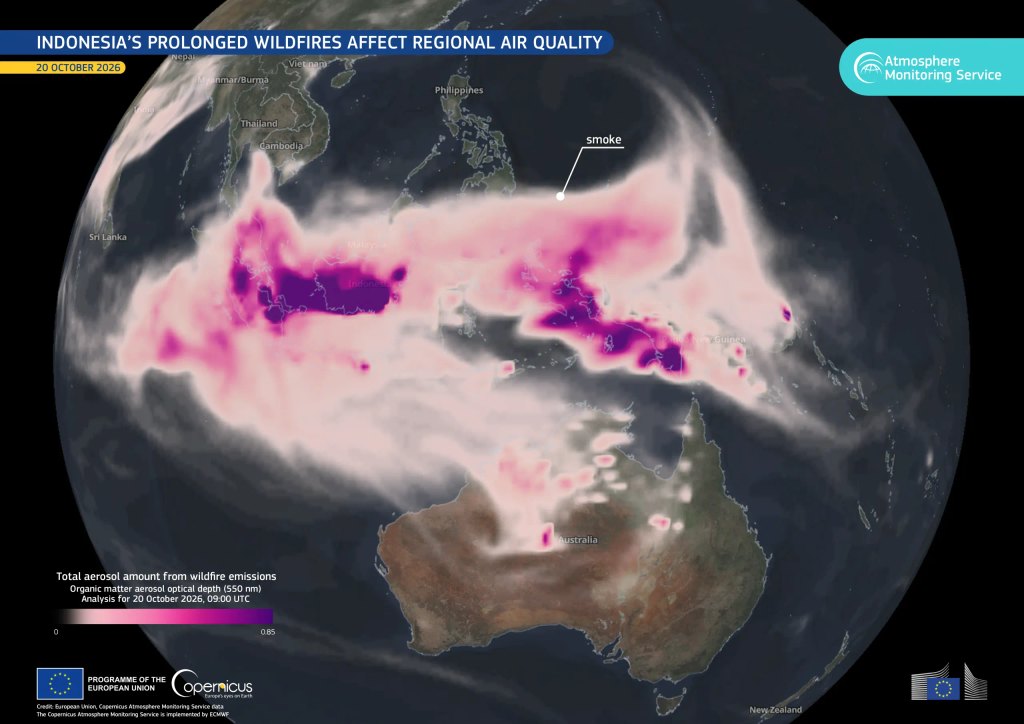
Wildfires burning in Indonesia’s peatlands, forests, and agricultural land since July caused the country to produce the world’s highest levels of emissions for September. Now a month later, the fires are still burning, and they continue to reduce the air quality for neighboring countries.

Vast plumes of smoke from the wildfires have been affecting air quality across neighbouring Malaysia and Singapore since the burning began, but recent satellite data from the European Union’s Copernicus Atmosphere Monitoring Service shows the smoke is also deteriorating air quality in countries much further away. The Service’s Fire Emissions Watch found the fires’ densest smoke over southern Sumatra, southern Kalimantan and southern Papua New Guinea, while thinner smoke extends over the Indian Ocean, mainland South-East Asia, the western Pacific and as far as north-west Australia.

“Emissions from wildfires in Indonesia from January to September 2026 were among the highest of the past 24 years,” the Service said on its website.

Severe drought across Indonesia’s peatlands caused the months-long outbreak of wildfires encroaching on the site of the country’s new capital city on the island of Borneo.

Over 36% of the world’s tropical peatlands are contained within Indonesia’s borders, and the country’s ongoing drought has made the normally wet landscapes dry enough to ignite, according to NASA’s Moderate Resolution Imaging Spectroradiometer, or MODIS. Droughts have repeatedly produced long-lasting fires that blanket large areas in smoke over the past three decades. The ongoing “super El Niño” has made conditions this year even worse.

“Wildfires occur in Indonesia every year, but some of the most destructive seasons in recent decades came during El Niño, particularly in 1997 and 2015,” NASA’s Earth Observatory said. “The strong El Niño is making the dry season drier over the fire-prone parts of the country and exacerbating burning – just as we anticipated it would.”

PREVIOUS COVERAGE: Underground wildfires in Indonesia trigger world’s highest emissions, spike in respiratory infections

‘Rapid’ wildfire kills 4 Canadian military members, injures 39 others

Four military members were killed and 39 others were injured at the Canadian Forces Base in Wainwright after a “rapidly spreading” wildfire on Saturday, government officials confirmed on Sunday.

Maj. Gen. Wade Rutland, who oversees the headquarters of the unit that was training at the base, said the fatalities occurred after military members responded to a fire on the base during a live-fire training exercise. “Uncommonly” strong winds then caused the fire to spread quickly and change direction toward the base’s administrative area.

“The fire was a kilometer away when the wind shifted,” Rutland said at a press conference on Sunday. “That is not normal for a fire to move a kilometer in 36 seconds.”

Officials did not share a confirmed or expected cause of the fire, saying details were under investigation. Care for injured military members was initially expected to strain local health care resources, but Sayeh Zielke, interim CEO of Acute Care Alberta, said there are 43 ICU spaces available across the province’s health system, along with additional capacity actively being created.

The Canadian government confirmed the identities of those killed as:

  • Sergeant Morgan Wong, from the Loyal Edmonton Regiment based at Edmonton, Alberta, serving with 3rd Battalion, Princess Patricia’s Canadian Light Infantry
  • Private Shaun Farrell, from 3rd Battalion, Princess Patricia’s Canadian Light Infantry, based at Edmonton, Alberta
  • Private Aidan Goulding, from 3rd Battalion, Princess Patricia’s Canadian Light Infantry, based at Edmonton, Alberta
  • Private Hayden Lykkemark, from 3rd Battalion, Princess Patricia’s Canadian Light Infantry, based at Edmonton, Alberta

Zielke said 19 of the military members who were injured were in critical condition, eight were stable, and 12 were receiving treatment for less serious injuries.

The enemy below – why there are peatland fires in new places

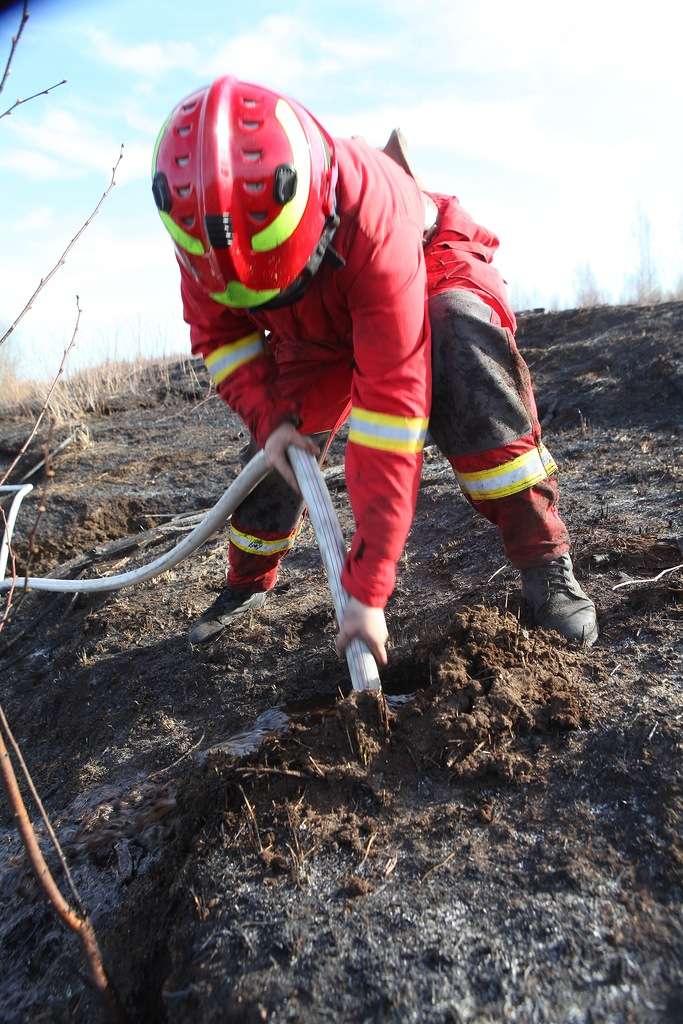
A Greenpeace Russia firefighter suppresses a reignition in a peatland in the Central Federal District in 2019. Photo: Greenpeace Russia.

By Anton Beneslavskiy

I fought my first peat fire in 2020 while working as a volunteer firefighter. We poured a lot of water onto it. Despite repeatedly spraying the blackened area, the peat continued to smoulder. That was my first encounter with the trickiest wildfire.

This article is first published in Wildfire Magazine – read the full edition.

Later, while working for Greenpeace Russia’s fire prevention programme, I fought peat fires in Siberia and the European part of Russia, from Buryatia in the east to the radioactive marshes of the Bryansk Oblast. In 2016, we launched a similar programme in Greenpeace Indonesia, where I tackled some of the most impressive peatlands I have ever seen.

What have I learned? Peat fires are tricky, hard to detect and suppress, and it’s difficult to be sure the work is done properly. Peat fires can pop up weeks after fire crews have left the scene, convinced that there is no burning in the soil.

Greenpeace Russia has now been banned, and I fled my country to settle in the United Kingdom. What I see now is so similar to what I saw previously.

Wildfires across Europe are breaking records. France, Spain, Greece, Germany, Austria, Belgium, the UK and Ireland are affected. Lives lost, nature destroyed, people evacuated, houses burned. The media is full of images of terrifying flames.

In the flood of fire information, we overlook a threat that is less spectacular but no less terrifying: many UK and Irish fires, including the biggest ever in Belgium, are burning in peatlands, creating a high risk of long-term smouldering peat fires.

The emissions

Peatlands are incredible wetland ecosystems that can accumulate up to 600 gigatons (Gt) of carbon in their soil, making them crucial for climate regulation; they can be found in the boreal zone and throughout the tropics. Peatlands are an integral part of Northern European natural landscapes and are critical to some of the world’s most important forest ecosystems. Peatlands are home to a wide variety of species. However, peatlands can present a significant challenge in the event of a wildfire.

Human activities are damaging peatlands through drainage, peat harvesting, and conversion into agricultural land and plantations; this leads to the emission of 1.3-1.9 Gt of carbon dioxide equivalent (CO₂e) each year. Peat fires also emit 0.2-1.5 Gt CO₂e annually. In the UK, peat fires have been responsible for 90 per cent of annual wildfire-related carbon emissions since 2001. Peat accumulation is a slow process, taking centuries, so even if burned peat could be restored, it would take far more than the time available for climate mitigation.

In addition to fuelling climate change, large-scale peat fires cause severe damage to public health by producing smoke haze. The peat fires in Indonesia in 2019 are estimated to have caused 87,000 excess deaths.

Today, more peatlands are at risk of burning, while the effectiveness of peat fire suppression is far beyond what is necessary.

After working on the issue of peat fires for more than 10 years, both as a firefighter and an environmentalist, I have concluded that a peat fire is the trickiest enemy a wildland firefighter can face: it is not the most terrifying or the most powerful, but it is undoubtedly the trickiest.

The fuel

What makes peat fires so special? The fuel. Peat is formed in specific conditions in peatlands from sphagnum moss and other species. Limited oxygen during formation slows decomposition, but its high carbon content makes it highly flammable.

Peat can smoulder underground without oxygen. Even with a 5:1 water-to-peat ratio, smouldering can continue. During smouldering, peat converts into a solid substance that prevents wetting. Suppression requires large amounts of water (at least one ton per 1 m2) and a high-pressure water jet to destroy smouldering peat conglomerates.

The relative flammability of peat depends on multiple factors. Long-term droughts, a lack of humidity and intensive surface fires altogether create ideal conditions for peat ignition. Therefore, we can expect an enormous number of smouldering peat spots in areas where the fire has passed through the peatland surface.

Once ignited, peat smoulders often without visible flames, and in the early stages of small-scale burning spots, it produces a very low amount of smoke, making it hard to detect without special technical devices such as portable thermal infra-red or special thermometers.

The challenge

Although peat fires spread slowly, they still present a serious challenge to firefighters because they’re difficult to detect, size up, control, and monitor post-fire. In addition, there are hot caves filled with smouldering peat and ash, toxic smoke, high carbon monoxide levels, and fires that can start again in random places. Fighting peat fires requires application of specific LACES protocols (lookouts, anchor points, communication, escape routes, safety zones).

Even a small particle that continues to smoulder can reignite a peat fire days or weeks after firefighters have left the scene. In the most basic terms, peatland firefighting is 90 per cent mop-up. It is dirty, hot and unglamourous work. While for most wildland firefighters mop up is only the last stage of battling flames and is definitely the least fancy one, the mop up is the main and sometimes the only way to put out a peat fire.

Climate change now ruins usual fire dynamics and assumptions, and this is true also for peat fires. For a long time, most peat fires occurred only in drier drained peatlands where the peat was exposed to surface vegetation fires; today even undrained peatlands in their natural state are catching fire.

When peat fires cease to be a rare, exotic phenomenon and become a regular occurrence – as has long been the case in Russia and Indonesia – they will become a real disaster for many countries in Northern Europe.

The situation

Ireland is an interesting study case in point: Peatlands in Ireland cover an area of around 1.66 million hectares (approximately 23 per cent of the country’s territory), and their depth varies considerably depending on the type of bog – raised bogs have an average depth of 7.5 metres (with maximum depths of up to 12 to 13 metres), while blanket bogs in mountainous and lowland areas have an average depth of between two and four to six metres.

By contrast, Peatlands in the United Kingdom cover around three million hectares (approximately 12 per cent of the country’s land area). The depth of the peat layer varies considerably: in mountainous blanket bogs it ranges from one to five metres, while in lowland raised bogs it reaches five to 10 metres or more.

Peatlands comprise an enormous amount of fuel that is potentially exposed for ignition due to climate change, and emissions from these fires become a climate change contributor in their own right. Again, Ireland becomes a useful study point – according to EFFIS (European Forest Fire Information System) between July 15 and Aug. 14, 2026, more than 2220 hectares of mainly peat-based wildfires produced almost 170,000 tonnes of carbon dioxide, that was previously sequestered within the peat fuels affected by these fires. This represents a significant increase on expected average annual levels of approximately 90,000 tonnes arising from wildfire activity.

Recent fires in Ireland also prove that the new reality has come: if fires of this scale are possible in the country with traditionally humid and cool weather, then what should we expect elsewhere? There are no large-scale wildfires in peatlands reported in Germany, Belgium, Netherlands and Scandinavian states, but we are still in the middle of the season, and drought conditions continue to climb daily.

So, we are dealing with fires that come to the new areas due to climate change, that are easy to start, hard to detect and size up, hard to suppress, and hard to control. At the same time these fires are out of the scope of many fire services. There is no significant experience of managing this type of wildfires outside of a very few countries, and even regions within these countries, and as a result there are no internationally standardised methods, no strategies, no guides and no special equipment.

We are a little more than halfway through the fire season, but the total area affected by wildfires on peatlands in Ireland in 2026 has already reached approximately 2950 hectares, of which 2200 hectares is the area affected by problematic peat fires – that is, fires that were thought to have been extinguished but have flared up again. A similar situation exists in Scotland.

The fire services carried out the operations in accordance with current standards. However, these standards do not consider the specific nature and suppression requirements of underground peat fires.

Reignition is caused by active and widespread underground peat burning. Small pockets of fire can survive initial extinguishing efforts, even when water is used, and cause the fire to reignite once the surface fire has been deemed extinguished. Detecting a peat fire at an early stage is difficult, but particularly so in recently burned areas while firefighting efforts are ongoing. Smouldering vegetation in the wake of the fire masks the peat fires, which emit relatively little smoke. However, even at an early stage, extinguishing a peat fire is difficult – it requires a large volume of water, delivered under pressure directly into the centre of the fire. Simply spraying the burning peat with a mist of water will certainly not be enough – after all, peat has evolved to absorb and hold water.

A special team of Greenpeace firefighters fights a peat fire in a radioactively contaminated marsh in Bryansk Oblast in 2019. Strategies used to fight peat fires in Russia and Indonesia could be implemented by firefighters in Northern Europe if and if a proper peatland firefighting culture can be developed and adapted.

The tools

My experience fighting peat fires in Russia and Indonesia shows we must adapt to deal with this threat. Greenpeace fire crews have developed technologies and skills for early detection, effective triage, proper use of resources and comprehensive post-fire control. This meant our small team could respond to and prevent multiple peat fires.

GIS systems and software allowed us to identify surface fires and prioritise potential fires. This enabled us to react quickly with small crews and provide on-ground reconnaissance with infrared-vision drones and portable infrared systems to identify all the burning spots. If this work was done in early spring, each burning spot required limited resources and time to be suppressed. Specialised thermometers and infrared devices allowed us to effectively control post-fire reignitions.

Our teams were small, mobile and properly equipped, and had relevant experience. This gave them serious advantages over regular fire units.

If the way we fought peat fires in Russia and Indonesia could be implemented by firefighters in Northern Europe, and if a proper peatland firefighting culture can be developed and adapted, we will be better prepared when peat fires became a regular occurrence in this part of the world.

Anton ‘Benny’ Beneslavskiy

Anton ‘Benny’ Beneslavskiy is a certified forest fire incident commander, author and educator.

LA faces ‘critical’ fire danger, electricity cutoffs ahead of forecast Santa Ana winds

The first fierce dry winds of California’s Santa Ana season are forecast to make landfall on Thursday and Friday, prompting officials to warn residents about the high potential for wildfire.

The National Weather Service issued multiple red flag warnings for communities throughout the state, while communities in Los Angeles’ northwest, including Santa Clarita, Thousand Oaks and Simi Valley, were put under “critical” fire danger. The warnings were issued from Thursday into Saturday due to the strong Santa Ana winds, which are dry winds funneled through canyons and mountains that can reach up to 100 mph and lower relative humidity throughout the Los Angeles region.

The warnings have triggered electric utility providers Southern California Edison and PG&E to warn hundreds of thousands of their customers about the potential for power shutoffs due to the elevated fire danger. On Wednesday evening, Southern California Edison said shutoffs were being considered for over 258,000 customers, while 28 counties were either under required shutoff warnings or watches with PG&E.

“Combined with warm and dry conditions, elevated fire weather conditions will be present across much of the territory later this week and may necessitate (Public Safety Power Shutoff) PSPS in the windiest locations,” PG&E officials said in a Wednesday update. “The fuel moisture content in brush is approaching annual minimum values, if not already there, with most species at critically flammable levels.”

California Office of Emergency Services announced on Wednesday it would be moving firefighters and equipment into Southern California before the dangerous Santa Ana winds arrive. The office also urged residents to prepare for dangerous fire weather and the possible utility power shutoffs.

“Review evacuation routes, develop a wildfire action plan, and pack a go-bag with essential supplies,” the office said in a recent statement. “Sign up for local emergency alerts and follow instructions from local emergency management and public safety officials.”