


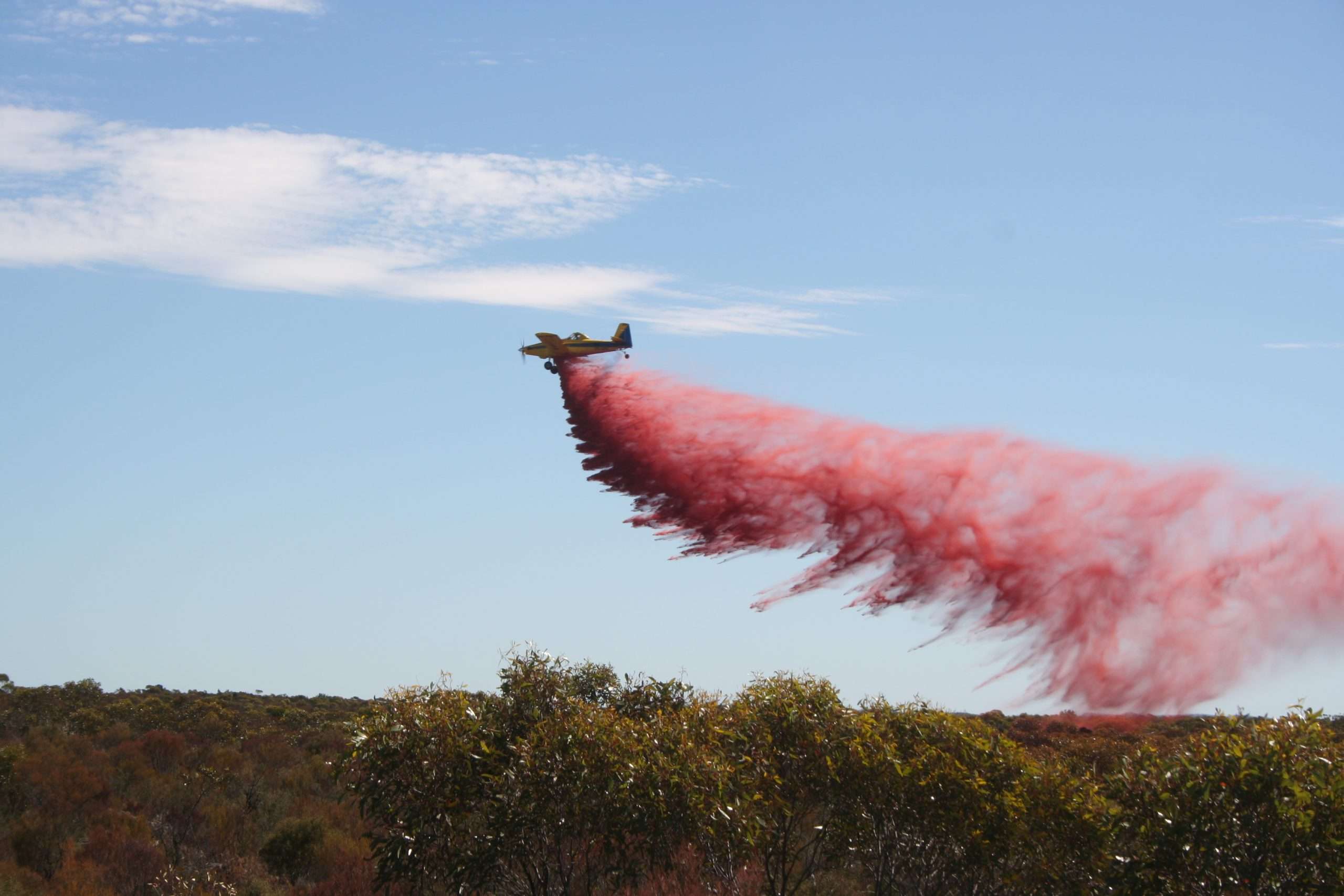
An Australian based research project is seeking to better understand how and why aircraft are used on wildfires and how effective that use is.
As part of the project, the Research Team of Matt Plucinski (CSIRO) and Owen Price (University of Wollongong) have developed a survey to help them understand strategic and tactical objectives involved in decision making with respect to the use of aerial firefighting assets.
The survey aims to capture expertise and opinion regarding objective setting, tactical response and resource selection for aerial firefighting. It is focused on aircraft use in firebombing roles (i.e. dropping suppressants and retardants).
If you are an Air Attack Supervisor, pilot, or Incident Management Team member, who has worked on Australian bushfires please consider undertaking this survey.
The survey is open until 18 April.

More information on the Natural Hazards Research Australia funded project is available at Why fly? How do we know that aerial firefighting operations are effective and efficient?
Note that the survey may take up to an hour to complete, as the research team is trying to cover a wide range of topics, so it may be best attempted when respondents have time available. It is possible to start the survey and come back to it. Responses are recorded as you go, so you can return later (within a week of starting) to complete if using the same computer. It is best undertaken on a computer, as many questions require text responses.
The team is also looking for case studies from recent Australian fires where they are able to match up fire progression data to the ARENA database and talk to air attack supervisors about objectives and tactics.
If you have any suggestions for fires that you think might make good examples, please reach out to Matt Plucinski at matt.plucinski@csiro.au.




1 Comment
Air Support save lives and money! Hit it early and save dollars. Question that needs to be asked is…
1. Why not implement more Preventative and Indirect Attack for 24 Hour support on LT Ground Applied Retardants?
2. Why not make Night Vision a standard on our Type 1 Helicopters for 24 Hour Air Support?
Comments are closed for this article!