Large fixed wing fleet set to expand with three C-160s

John McDermott (Founder & President of McDermott Aviation) & Jason Schellaars( CEO, Helitak Firefighting Equipment). Photo Credit, The Comms. People

Three Transall C-160 fixed-wing aircraft are on track to be ready and available for contracts to the 2025-2026 Australian bushfire season and elsewhere.

McDermott Aviation announced this week that the large heavy-lifting planes had been successfully fitted with a new tank system and were now awaiting final Civil Aviation Safety Authority approval to operate.

McDermott Aviation Founder and President John McDermott said the Transall C-160 was known for its high-wing configuration, long-range endurance, short take-off and landing capability and heavy-lift performance, making it well-suited to operate in rugged terrain and remote locations both in Australia and overseas.

The three aircraft are ex-German Air Force and have been used in Germany, France, South Africa and Turkey as carriers for military heavy cargo, parachute ops and wildfire operations. While specifically redeveloped for wildfire use, they can still be used for other natural disasters response, including dropping supplies from the rear cargo ramp.

McDermott Aviation supports firefighting and other natural disaster responses in Australia and the Pacific and has a presence in the United States and Canada. It recently supplied helicopters for firefighting in Greece.

“These aircraft are built for tough jobs in tough places,” said McDermott. “They’re part of our broader strategy to grow our fleet, scale our international footprint, and bring new technology to the frontline of firefighting both at home and overseas including Europe and North America.”

McDermott Aviation Transall C-160. Photo The Comms. People

Since arriving in Australia two years ago, and whilst McDermott worked through the approval process with CASA, the aircraft has been fitted with a tank system developed in partnership with Queensland-based Helitak Firefighting Equipment.

“We’ve worked closely with Helitak to develop a tank system that is lightweight, rugged, and high-performing and will allow these aircraft to deliver precision, power, and safety where it matters most – in the field, during fire season.

“We are undertaking the final certifications for the tank and will be seeking certification that will allow us to complete the testing of this aircraft which, once approved, will dramatically change the way we fight fires, especially in remote or rural areas that are not able to cope with other large, fixed wing aircraft.”

The Transall C-160’s design allows it to safely land on regional airstrips, whereas larger fixed-wing aircraft need to return to larger bases to refill. “We will carry retardant in powder form, and as long as there is a water source, we will be able to refill and be back in the air in approximately 10 minutes,” said McDermott.

According to the company, the Helitak FT Series tank, designed specifically for the C-160 platform, has a tank capacity of 16,00 litres, but the average payload will be around 14,000 taking three minutes to refill.

“As soon as we receive CASA certification, these aircraft will be fully operational. Our goal is to have all three aircraft mission-ready before the 2025/26 fire season in Australia.”


McDermott Aviation, established in 1982 and headquartered on Queensland’s Sunshine Coast, has a fleet of more than 50 helicopters, which it claims includes the world’s largest collection of Bell 214 series aircraft.

Watch the video for more:

McDermott Aviation – Australian Natural Disaster Responders McDermott Aviation Announce Plans to Bolster Regional Capabilities

Save the date for Fire Behaviour and Fuels in Hobart

Save the Date. 8th Fire Behaviour and Fuels Conference, Hobart Tasmania Australia, 28 April-1 May 2026


The IAWF with the Tasmania Fire Service will host the 8th International Fire Behaviour and Fuels conference in Hobart, Tasmania next year.
Following on from the success of the 2024 conference in three cities across three countries – Canberra/Australia, Tralee/Ireland and Boise/US – the 2026 conference will be held in Hobart alone.
More details on registration and the program coming soon.

Mark your calendars for this important event and stay tuned for more details regarding registration and program.

2026 Fire Behavior and Fuels Conference – Fuel, fire and smoke: evolving to meet our climate challenge

Wildfire awareness podcasts

Over three installments in May, the Wildfire Awareness Month podcast series from Bureau of Land Management officials discussed wildfire prevention education, the prevalence of human-caused wildfires, and the importance of public responsibility, such as preparing properly before recreating on public lands, checking fire danger levels, and reporting wildfires immediately. 

The series dives into the critical roles, challenges, and innovations shaping how BLM Fire prevents and responds to wildfires today.  Seasoned wildland firefighters discuss behind-the-scenes management strategies, and learn about the National Interagency Fire Center’s safety tips for the everyday public lands user.

Check out all three Episodes here. 


Add Your Heading Text Here

Add Your Heading Text Here

Add Your Heading Text Here

Wildfire in the Arctic

Wildfire in the Arctic regions of the planet.

Yes, this issue might seem strange – fire in places typically known for cold and ice.

But the impacts upon climate, emissions, culture and politics are reverberating well beyond this region.

A special issue of Wildfire magazine is now out from the International Association of Wildland Fire and the Arctic Council

In this issue scientists, policy experts, community and Indigenous leaders provide clear insights on what is occurring with wildland fire in the Arctic and how best to respond, locally, nationally and internationally.

As the editors say: “What happens in the Arctic does not stay in the Arctic.”

The Arctic Council is a body composed of Canada, The Kingdom of Denmark, Finland, Iceland, Norway, The Russian Federation, Sweden, The United States, and Permanent Participant organizations of Indigenous Peoples from around the circumpolar north including Aleut International Association, Arctic Athabaskan Council, Gwich’in Council International, Inuit Circumpolar Council, Russian Association of Indigenous Peoples of the North and the Saami Council.

Wildfire magazine has brought forward scientists, policy experts, leaders of Arctic Council Working Groups, Indigenous voices, and community voices to help highlight what’s occurring with wildland fire in the Arctic, the nature of the crisis, possible responses, how states are working together on the issue, Indigenous knowledges around wildland and cultural fire, and more.

“Through the articles compiled here, we hope you’ll find a new interest in wildland fires in the Arctic, in research regarding the issue, in governance and emergency response in the unique settings of the Arctic, and most of all, we hope you’ll find a new spirit kindling within you to help us address the circumpolar wildland fire crisis.”

The issue was led by the co-chairs of the Wildland Fire Initiative: the Chair of the Arctic Council Senior Arctic Officials, Morten Høglund, and Gwich’in Council International Head of Delegation, Edward Alexander.


Aerial fire drills in California – photos

County Wildland Fire Drill, San Marcos, May 2025. Photo Ryan Grothe
Fire Aviation reader Ryan Grothe recently photographed 2 Bell 412 EPX working a county wildland drill over a 2 day period in California.
County Wildland Fire Drill, San Marcos, May 2025. Photo Ryan Grothe
“May 6th through May 8th, numerous fire agencies in San Diego participated in the annual County Wildland drill. The drill was held in the city of San Marcos. There were three branches. Two of which focused on wildland hose lays and structure protection. The 3rd branch focused on communications and sandbox drills.
Two helicopters also participated in the drill. San Diego City Copter 2 and San Diego Sheriff’s Department Copter 11. Both of which are Bell 412EPX. This is the first year Copter 11 will be making water drops as it was purchased last year.”
County Wildland Fire Drill, San Marcos, May 2025. Photo Ryan Grothe

Thanks for sharing your photos Ryan.

County Wildland Fire Drill, San Marcos, May 2025. Photo Ryan Grothe

Wildfire Today – a new look, a renewed purpose

Dear readers of Wildfire Today and Fire Aviation – we are excited to announce a new platform for communicating on wildland fire issues and activities around the world.

Wildfire Today/ Fire Aviation is dedicated to news about wildland fire and aerial firefighting around the world.

These sites began in 2008 as a blog for Bill Gabbert, a long-serving and dedicated United States fire manager, who handed them to the International Association of Wildland Fire (IAWF) before his death in 2023 to continue them with a new future.

The IAWF has rebuilt and refreshed Wildfire Today and Fire Aviation into a single site to better suit our current and growing readership around the world.

This includes insights into major wildland fires, firefighter health and safety, community safety, prescribed fire, new science and technology advancements, Indigenous and cultural burning and land management, and the funding, resourcing and maintaining of wildland fire operations across the globe. And more.

The original blog sites served us well over many years but, like all forms of modern communication, we need to ensure they are stable and secure, and more flexible for a range of content types, including articles, videos, photos, social media and advertising.

Advertisements display better on the new site and are better integrated into the flow of editorial copy.

Importantly, all the original content is still here – articles, photos and comments. Two decades of content is a valuable resource to build upon for all of us with an interest in wildfire.

For Wildfire Today we will continue to draw from the breadth of knowledge and resources of the global wildfire community, including the IAWF membership and the expertise gained from publishing Wildfire magazine and the International Journal of Wildland Fire. The site is maintained by a team of experienced media professionals, including a former IAWF Director David Bruce, journalist Hunter Bassler, and editor of Wildifre magazine Laura King.

Your support is appreciated. Your contributions are needed. Please reach out to us via the Contact Us page for news tips, contributed articles and photos, comments on individual articles or for advertising options.

US boosts National Forest logging for ‘wildfire risk’ reduction

logging forest service

The United States Department of Agriculture recently announced $23 million in grants supporting timber production in President Donald Trump’s effort to “unleash domestic production” of the nation’s natural resources.

The aim of the USDA’s grants is reportedly to transport “hazardous fuels” from national forests to processing facilities, supporting timber production, according to the department. A department spokesperson told WildfireToday the effort would specifically be targeting “low-value” wood in the protected forests, like dead trees, fallen branches, and dense undergrowth.

“Eligible material considered hazardous fuels may include logs, roundwood, chips, biomass and other byproducts from authorized existing projects transported to facilities for use in manufacturing wood products and/or wood energy/services,” USDA said in an emailed statement.

Burning timber at the High Park fire

News of the grants was released a month after USDA Secretary Brooke Rollins announced her cooperation with Trump’s “Immediate Expansion of American Timber Production Executive Order, which cleared the way for millions of national forest acres to be logged.

Rollins, through a memo sent in April, listed over 112 million acres of National Forest Service land under an “Emergency Situation Determination,” over half of all Forest Service land. The designation allows the service to take immediate action in the designated acreage, including salvage of dead or dying trees, commercial harvesting of trees infected with insects or disease, and harvesting of trees deemed “hazardous” due to their closer proximity to roads or trails.

“The United States has an abundance of timber resources that are more than adequate to meet our domestic timber production needs, but heavy-handed federal policies have prevented full utilization of these resources and made us reliant on foreign producers,” Rollins said in a memo in April. “It is vital that we reverse these policies and increase domestic timber production to protect our national and economic security. We can manage our forests to better provide domestic timber supply, create jobs and prosperity, reduce wildfire disasters, improve fish and wildlife habitats, and decrease costs of construction and energy.”

The Forest Service is accepting applications for hazardous fuel removal through June 20. Information about upcoming webinars will reportedly be available soon on the Forest Service Timber Transportation website.

New Board members bring diverse experience

Three new Board members started their terms in 2025, further enriching the IAWF with a depth of experience and a diversity skills from across the globe.

Originally from England, Meg Dolman relocated to Boise, Idaho, to advance research on human and wildfire interactions.

Dolman’s PhD work with the Human-Environment Systems group at Boise State University focuses on reducing human exposure to wildfire hazards using both quantitative and qualitative approaches.

Dolman is a recipient of the Joint Fire Science Program Graduate Research Innovation (GRIN) award, which supports her work mapping built infrastructure using remote sensing.

Dolman serves as a trustee fellow on The Nature Conservancy Idaho Chapter board of trustees, contributing her expertise to conservation initiatives.

Collaboration is central to Dolman’s work, and she has actively engaged in partnerships to facilitate knowledge exchange between the United State and United Kingdom on community wildfire resilience and property protection.

Additionally, Dolman has worked with Leave No Trace to develop best practices for minimizing the spread of invasive plant species in recreational areas.

Beyond Dolman’s specific research interests, she is passionate about science communication and education.

Dolman holds an M.Sc. in biodiversity, conservation, and management from the University of Oxford and a B.Sc. in physical geography from Royal Holloway, University of London.

Kerryn Little is a postdoctoral researcher at the University of Birmingham.

Little started her fire career as a rural volunteer with Fire and Emergency New Zealand before moving to the United Kingdom to complete a PhD in geography as part of the European innovative training network PyroLife.

Little is interested in understanding the interacting controls on fuel moisture, fire weather and fire danger across spatiotemporal scales, including compounding and cascading hazards, fire-climate interactions and live fuel moisture content, toward improving the ability to predict extreme fire conditions.

Little has co-led the development of a fire behaviour prediction system for the United Kingdom as part of the Towards a UK Fire Danger Rating System project and is the current UK representative on the COST Action project NERO – European Network on Extreme fire behavior.

Little is passionate about bringing people together and increasing collaboration between historically fire prone and emerging fire prone regions (especially temperate environments experiencing increasing wildfire risk).

Alistair Smith is a professor of wildland fire science in the College of Science at the University of Idaho.

Smith has more than 20 years of research and teaching experience related to wildland fire science since completing his PhD at King’s College London.

Smith’s research primarily focuses on improving understanding of vegetation severity following fires by connecting fire behavior with plant physiology.

Smith has served as an associate editor on the International Journal of Wildland Fire since 2009 and previously served for multiple years on the International Association of Wildland Fire scholarship committee.

Smith has also previously served on the governing board of the National Coalition of Prescribed Fire Councils.

Recently, Smith helped create a fire risk management guide for the United Nations Educational, Scientific and Cultural Organization (UNESCO) that was developed to help protect World Heritage Sites and in 2024, he was appointed to serve on the United States Geological Survey advisory committee on science quality and integrity.

Smith serves as the post-fire working group co-lead on the National Aeronautics and Space Administration (NASA) FireSense implementation team.

IAWF 2025 BOARD

  • Trevor Howard, Australia, president
  • Ciaran Nugent, Ireland, vice president
  • Sarah Harris, Australia, secretary
  • Tamara Wall, United States, treasurer
  • Amy Cardinal Christiansen, Canada
  • Meg Dolman, United States
  • Scott Goodrick, United States
  • Kerryn Little, United Kingdom
  • Claire Lötter, South Africa
  • Tiago Oliveria, Portugal
  • Joaquin Ramirez Cisneros, United States
  • Amber Lynn Scott, United States
  • David Shew, United States
  • Alistair Smith, United State
  • Naomi Eva Stephens, Australia
  • Vivien Thomson, Australia

LA Fires – Burning Cities

Idaho Taskforce 4 experiencing southern California traffic en route to the Palisades fire on Saturday, Jan. 11. Photo Kelly Martin

Trucks heading to the Palisades fires 11 January 2025. Photo: Kelly Martin 

By Lindon Pronto

We have entered an operational gray zone: wildfires burning in cities. These fires are the jurisdiction of urban fire departments, but often they rely on wildland firefighters to get the job done, and wildland firefighters are increasingly being called to fight wildfires in urban environments.

During the breaking news frenzy around large wildland fires, I rarely say what I really want to say – it’s a game of responding to sensational and reactionary questions, just like how we approach fire itself. So, here’s what I’ll add to the discussion about the LA fires.

This is an edited version of an article in Wildfire Magazine Special Edition: LA Fires

There will be a lot to learn. And some officials and organizations are going to need to take some responsibility. And certainly, residents in fireprone landscapes need to contemplate their own responsibilities. But these are the two fundamental questions I see that we need to address:

  1. What will be collectively required of us to prevent such disasters in the future?
  2. How will we respond to similar disasters when they occur?

Since the January fires, news stories, op-eds and social media have been swirling with lots of great propositions to these questions: more prescribed fire, fire-hardened construction (hempcrete!) and landscaping, better urban planning, building codes, budget priorities, public utility SOPs, fire-tech, etc. I think the answers to how to address question 1 are relatively straightforward – experts have been sounding the alarm and offering solutions on these issues for decades. Answering question 2 is more challenging.

Looking at the long list of things to address to prevent such a disaster from happening again, it’s obvious the changes, motivation, behavioral shifts, policy response and funding needed mean we will likely have many more devastated communities long before these changes come to fruition. This brings us to question 2 –the burden on the conscience of the collective response community. At the end of the day, we all still expect firefighters to respond, as they have always done.

Fire fighting is siloed: there are many types of firefighters from municipal and state to industrial, airport, and maritime. To oversimplify in the California context, there are wildland firefighters and urban / structure firefighters, and some who do a bit of both, especially in California, known for its wildland-urban interface.

CAL FIRE is an example of an agency that evolved to do both. Los Angeles County Fire is another example. But fundamentally, wildland firefighters are trained and equipped differently and operate tactically and strategically different than urban fire departments.

I’m not knocking one group of firefighters; I’m just saying we don’t expect a smokejumper to run into a burning building. But we do expect urban fire departments to manage the most complex and extreme wildfires, ordering outside resources as needed.

But telling an urban firefighter not to extinguish a burning building goes against every instinct. This was apparent in the LA fires – urban firefighters pumping massive quantities of water through large-diameter fire hoses on fully involved structures. In other words, valiantly using the equipment they have, to do exactly what they were trained to do. Urban firefighters are a stationary firefighting force whose objective is to tap into the nearest fire hydrant; the fire truck serves as pumping platform and the firefighters are committed to this effort until the structure is fully extinguished. This is obviously an untenable approach if a sea of structures is on fire during a wind event. Houses and cars, businesses and schools – all on fire. Instead of trees and bushes, it’s a jungle of petroleum products and biomass – a devastatingly overwhelming situation.

Wildland firefighters are trained not to fight a house on fire but to stop it from spreading to the surrounding area. Wildland firefighters operate very differently; their initial objective is not to extinguish a fire but to rob it of available fuel to eventually contain its spread. This is why wildland firefighters are very mobile, and move with the progression of the fire, often doing so without relying on water, or at least very little water.

Looking ahead, I believe the response community does need to think outside the box when it comes to this new operational gray zone. Firefighters will be called into these scenarios in the future, and to answer that second question, adaptations in our strategies, tactics, and use of resources need to be addressed. Maybe we can learn a thing or two from the wildland fire community – after all, as the Washington Post reported, LA has long been over-dependent on wildland firefighting agencies like the U.S. Forest Service to handle fire in the city and county’s jurisdiction.

This is an edited version of an article in Wildfire Magazine Special Edition: LA Fires

Lindon Pronto (M.Sc. environmental governance) has more than 20 years of experience and expertise in wildfire management with employment, research, deployments, and remote support in more than 30 countries in the Americas, Europe, Asia, Africa, and the Middle East. Pronto has years of operational experience as a federal wildland firefighter in California.

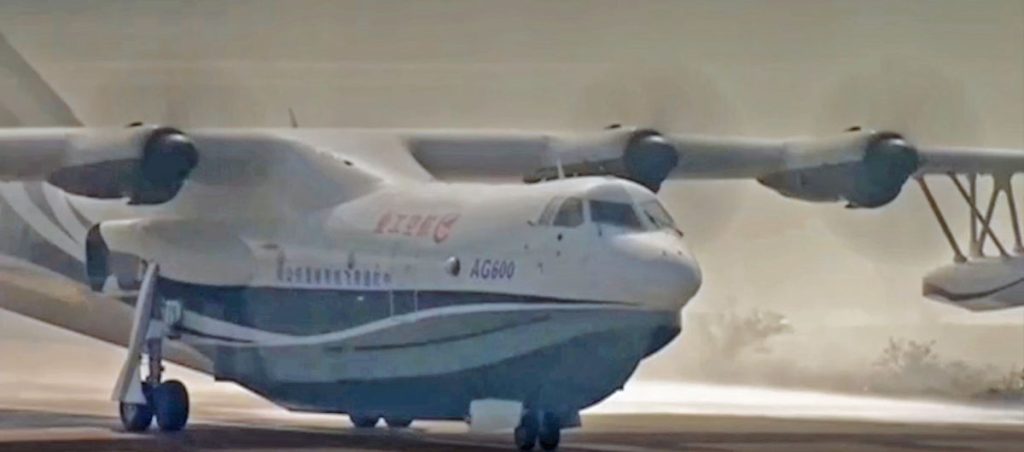
China’s huge AG600 ready for market

AG600

China’s media is reporting that a significant milestone for the AG600 large amphibious aircraft in having successfully completed all compliance flight tests in ground takeoff and landing in crosswind conditions.

Xinhau claims that the aircraft has now obtained its type certificate from the Civil Aviation Administration of China, marking its successful development and approval for market entry.

The aircraft has been developed specifically for fire and emergency rescue and response.

AG600. Photo: AVIC
AG600. Photo: AVIC

The AG600 is promoted as the world’s largest civil amphibious aircraft in terms of takeoff weight, with a maximum of 60 tonnes. It is capable of carrying 12 tonnes of water for firefighting operations, with a cruising speed of 220 kilometres per hour (136 mph) and an operational range of 4500 kilometres (2796 miles)

Two AG600 aircraft recently underwent crosswind compliance flight tests at Xilinhot, in China’s Inner Mongolia Autonomous Region. The results of these tests met requirements, verifying the safety and reliability of the AG600 in strong crosswind conditions, AVIC is reported to have said.

“Its obtaining of the type certificate issued by the CAAC manifests that China can independently develop the world’s latest generation of large civil amphibious aircraft,” AG600 series aircraft chief designer Huang Lingcai told Xinhua.

“AG600 is a plane that can swim and a ship that can fly,” said Huang.

Its configuration consists of an integrated aircraft-shaped upper body and a ship-bottom-shaped lower body. On each side of its wing, there is a float over four meters long to prevent the aircraft from overturning sideways during its taxiing on the water surface.

AG600 has a minimum level flight speed of 220 km per hour, a minimum operating flight altitude of 30 to 50 meters above the treetops, and a designed service ceiling of 7,600 meters above sea level, according to data from the developer, the Aviation Industry Corporation of China. It has a length of 38.9 meters, a height of 11.7 meters, and a wingspan of 38.8 meters.

For a quick look at the engineering behind this aircraft, the developer has produced this short video.

AG600 maiden flight
AG600 taxiing after its first flight December 24, 2017.