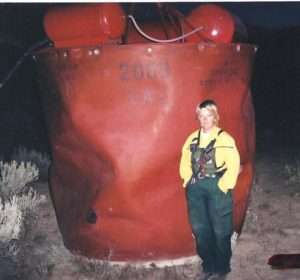
The Bambi Bucket™ is a large, collapsable bucket that attaches to helicopters, allowing them to scoop up gallons of water to drop on fires – it isn’t named after Bambi Morey, but she always told younger firefighters in the field that it was.
Morey died in 2024, aged 71, and left behind a legacy of dedication for fire management and cherished memories for those who were lucky enough to know her.
Morey’s career fighting wildfires began in 1986, when she took over the volunteer fire department in Gardner, Colorado, with her husband Craig; by 1989 they were both working with the US Forest Service.
As assistant chief and then chief of the Gardner Fire Department, Morey built the department into an impressive bastion of the community, with new trucks and equipment, plenty of volunteers, and a substation to help respond to fires.
From her very first fire, Morey was hooked on the work, and over the course of her career she fought blazes in nearly all states and even assisted in a space shuttle recovery operation in Texas.
Morey worked as a hand crew and engine crew member, engine boss, and in radio operations, developing a reputation as reliable member of every team she was a part of.
Morey loved working with fire engines, and her pride and joy was her crew’s second engine, a custom build known as 501 – the name was a mystery even to her family, and Morey would always excitedly point out when clocks showed 5:01.
Even after she retired in 2009, Bambi refused to let anyone else drive 501, which she also referred to as her baby.
Bambi Morey. Photo courtesy of Kely Morey.
Most of Morey’s fellow firefighters were men, but she was a strong believer that fire fighting had no gender roles – if you wanted to do the job, you just had to work as hard as everyone else.
Morey was recognized by her peers for her careful planning, compassion, and emotional support, and her grounding presence that helped calm the more nervous junior firefighters was valued by all; by the end of her career, Morey was known to many of the firefighters as Mom.
Morey had to make do with ill-fitting gear designed for men and an absence of any female-oriented resources in the beginning, but as her career went on and more women joined up, things began to improve and fire camps became more accommodating places for her.
There were even some perks to being one of the few women in the field – she rarely had to wait for a shower after a long day on the line.
Morey’s work meant that she had to spend a lot of time away from her family – summers were particularly hard, but her children understood that she was doing important work saving people’s lives and homes.
In honour of her incredible career, some of Morey’s ashes will be placed in a Bambi Bucket and dropped on a fire this coming northern spring – just as she had always joked about.
(The Bambi Bucket was developed by SEI Industries in 1982. The name is trademarked.)
When a firefighter dies in the line of duty, a small team of federal health workers is often called on to pinpoint what went wrong and identify how to avoid similar accidents in the future.
That’s what happened after two firefighters died in California in 2020 while searching for an elderly woman in a burning library. It happened in 2023 when a Navy firefighter died in Maryland after a floor collapsed in a burning home. And it happened last year in Georgia when a career battalion chief died after a semitrailer truck exploded.
But President Donald Trump’s administration has taken steps to fire nearly all of the Department of Health and Human Services employees responsible for conducting those reviews.
At least two-thirds of the employees at the National Institute for Occupational Safety and Health, an agency within HHS, were notified on April 1 that they had been laid off or will be in June. These cuts included seven of the eight members of the Fire Fighter Fatality Investigation and Prevention Program, the team that studies firefighter line-of-duty deaths, one of the laid-off investigators told ProPublica.
The fatality investigation team was examining deaths at 20 fire departments when the layoff notices arrived. Those probes are now unlikely to be completed, the investigator said.
“The whole intent of this program was that people would learn through tragedy — what happened to one person — so we can prevent it from happening to others,” the investigator said.
ProPublica spoke with five NIOSH employees who either led or contributed to firefighter health initiatives and received layoff notices. Most requested anonymity for fear of retribution from the administration.
“The existence of NIOSH is a hard-earned right by the people of America to have a healthy and safe working environment,” said Micah Niemeier-Walsh, vice president of the American Federation of Government Employees Local 3840, which represents agency employees. “This is an attack on NIOSH employees and federal employees, but it is also an attack on American workers generally.”
Neither the White House nor Elon Musk’s Department of Government Efficiency, which has called the shots on many of the administration’s cuts, responded to a request for comment. A NIOSH spokesperson referred questions to HHS.
HHS Secretary Robert F. Kennedy Jr. has made some public indications that aspects of the World Trade Center program could be spared, but details remain sparse. The department’s spokesperson said in a statement that programs required by law — such as some of those focused on firefighter health — will continue to operate.
They did not respond to a follow-up question about how those programs will continue after their staffs were terminated.
“It Breaks My Heart”
The investigations performed by the Fire Fighter Fatality Investigation and Prevention Program are initiated at the request of the fire department that suffered the casualty. The findings are shared with the firefighter’s family in hopes of providing some closure. And the reports are then published, so the broader firefighting community can strengthen its procedures to avoid similar losses.
The Trump administration had already hamstrung the program shortly after the inauguration, initially barring the investigative team from traveling to conduct research, communicating with other agencies and publishing reports, according to the investigator. While the department eventually allowed several of the casualty reports to be published, the rest remain unfinished.
“It breaks my heart that we’re going to just destroy these programs that have made so much progress in protecting the health and safety of our firefighting community,” the investigator said.
The layoff notice the investigator received from HHS said that termination of much of the agency’s staff was “because your duties have been identified as either unnecessary or virtually identical to duties being performed elsewhere in the agency.”
“Leadership at HHS are appreciative of your service,” the notice stated.
“At a time when we need to be bolstering these efforts and personnel, it’s pretty damn appalling that we’d be trying to diminish the health benefits for our firefighters and first responders,” a Forest Service firefighter said.
Dismantling the World’s Largest Firefighter Cancer Study
On April 1, the Trump administration also began laying off much of the staff working on the National Firefighter Registry for Cancer.
Its creation in 2018 was a landmark win in a yearslong fight to study why firefighters suffer from certain types of cancer at vastly higher rates than the general population. Both chambers of Congress unanimously passed the bill to create the registry. Trump signed it into law during his first term.
While HHS said in a statement that programs required by law would remain intact, it did not answer a question about whether it would bring back staff to keep the registry running.
Wildland firefighters don’t typically wear respirators while they’re exposed to high levels of smoke. And the protective clothing firefighters wear while battling active blazes contains high levels of PFAS, or “forever chemicals,” that have been linked to various types of cancer. But the exact causes of some cancers that occur at high rates among firefighters are not well understood. Female-specific cancers such as ovarian and cervical, for example, have only recently been linked to firefighting.
More than 23,000 firefighters have signed up to participate since the registry launched in April 2023, and the research team recently began an outreach campaign to get to 200,000 participants. With this trove of data, NIOSH researchers planned to dig into numerous under-studied questions, such as what workplace exposures led to cancers that specifically harmed female firefighters, a NIOSH scientist who worked on the program told ProPublica.
Among the thousands who signed up was a federal wildland firefighter who was concerned about spending a career breathing wildfire smoke without a respirator. The decision to throw away such research is disturbing, the firefighter told ProPublica. “I was hoping that something would happen with all that research, that they would protect wildland firefighters.”
With a hollowed-out IT department, the registry’s portal to enroll firefighters quickly went offline.
“It’s devastating,” said Judith Graber, an associate professor at the Rutgers School of Public Health and co-chair of the board that advises the registry research team. She said the study is “the largest effort ever taken anywhere to understand cancer in firefighters,” but it’s an effort that can’t simply be restarted after the researchers running it are laid off.
Diane Cotter became an activist when her husband, a career firefighter, developed prostate cancer, and she fought for funding of research such as the registry. While she’s a Kennedy supporter, Cotter said the administration went too far in cutting the program and other first responder health initiatives such as the World Trade Center program, which she called “sacred.”
“It’s very important we hold the line on these studies,” she said.
Many years ago, I taught supervision and management courses for a community college. It was night school and few of my students were seeking degrees. They showed up because they were motivated by a central idea –that I would help them craft a role model for their own effectiveness.
At the time, I was acting on my belief that people aspiring to effective leadership needed positive role models as well as my knowledge that many working adults had come up under people who had been excellent technical performers who may not have been fully prepared for organizational leadership.
These days, I can lean on some solid research around the power of positive role models. For example, a 2023 article in Forbes, by Tracy Bower, a PhD sociologist, cited a Gallup/ Amazon poll of 4,000 early to mid-career adults that found that people with positive role models were more likely to say their careers were fulfilling, that they felt established in their careers, and had careers that paid them enough. The poll also found that young people who had mentors were “more likely to have jobs with authority and autonomy and to experience more intrinsic rewards from their jobs.”
Role models are people we look up to so much that we consider them examples to be imitated. Finding people whose values and behavior inspire us to want to lead like them can accelerate a person’s development as a leader. However, leadership role models can be elusive. Leadership is complex. We want leaders to be credible, build trust, have vision, lead by example and with compassion, be authentic, act with transparency, value learning, communicate well, and inspire, motivate and direct us all while maintaining a positive environment. All those attributes can be hard to find in one person. If you have identified such a person, if you have said “I want to lead just like that,” by all means, please start emulating that person immediately, if you haven’t already.
“All leaders are incomplete leaders, works-in-progress. Stop looking for the flawless leader and build your own.”
But what if you do not have that role model, that person who meets all your leadership expectations? Build your own role model of leadership excellence. At some point in my career, I stopped looking for a single leader on whom to pattern my leadership. I’ve worked for a lot of people. Many had remarkable leadership strengths and were effective leaders but all were regular human beings with regular human-being shortcomings. None was that ideal leadership role model. I believe that is reality for most people. I have previously called attention to a classic Harvard Business Review article titled In Praise of the Incomplete Leader by Deborah Ancona, Thomas Malone, Wanda Orlikowski and Peter Senge in which the authors said “It’s time to end the myth of the complete leader: the flawless person at the top who’s got it all figured out. In fact, the sooner leaders stop trying to be all things to all people, the better off their organizations will be.”
I started noting who, in my experience, would be my benchmark for key leadership skills and attributes and building my concept of an ideal leader – a kind, compassionate human here, an excellent decision maker there, a person who had earned my trust and respect over here, an excellent communicator there. My experience inspired my college classes way back when, and later in training for fire personnel, and it has remained a big part of my leadership development philosophy.
Wildland fire is a great leadership crucible, and the sector has invested heavily in leadership development so, if we are paying attention, we can observe and draw from many good leaders, even if they are incomplete. I have also had to fill in gaps and I expect that anyone taking my approach would. I have pulled from my training and education when I had no role model for what I considered a leadership essential. There exists a mountain of academic research to draw from, against which we can benchmark our experiences. We can learn from historic figures. We can watch a good movie or TV show. Honestly, as a person who views darned near everything through a leadership lens, I consider the show Ted Lasso to be terrific leadership training. We can ask friends and trusted colleagues to tell us about their leadership role models.
I believe now, more than ever, that people aspiring to effective leadership need positive role models and having one will accelerate development as a leader at any level. But I suspect that few of us will find a single person who meets all our leadership expectations. I have embraced the idea that all leaders are incomplete leaders, worksin-progress if you will. I encourage anyone asking to stop looking for the flawless person at the top who’s got it all figured out. If you are not one of the lucky few who have found that single leadership role model, build your own; I believe you will be glad you did.
Mike DeGrosky is a student of leadership, lifelong learner, mentor and coach, sometimes writer, and recovering fire chief. He taught for the Department of Leadership Studies at Fort Hays State University for 10 years. Follow Mike via LinkedIn.
I love the phrase pivot and redirect; it applies perfectly to healing from traumatic stress and grief, especially after fire season.
As we all know, nothing ever stays the same, especially in wildland fire. Everything changes. The seasons change, the tides change, and wildland fire continues to change; yet we as humans, avoid change like the plague. Change can bring comfort but can also bring terror; change can bring good, but it can also bring chaos.
When dealing with traumatic stress and grief, especially once the fire season winds down, our thoughts and emotions tend to surface, partially due to our autonomic nervous system being overwhelmed from the stress of the fire season. We do everything we can to distract ourselves from this chaos by reverting to our comfort zones, which can include turning to maladaptive coping behaviors such as busyness, alcohol, substance abuse, or other addictions, because change becomes too hard.
When we pivot, we make sure one foot is planted in a stable safety zone while letting the other foot explore. As the traumatic stress and grief from this past fire season begins to unwind, it’s important to keep that one foot planted and grounded; this may include reaching out to your safe and trusted support systems – the people who help keep you grounded while providing safe space for you to talk about what’s on your mind. Finding healthy ways to engage in self-care of your choosing is also essential to grounding and helping to calm your nervous system after fire season. Wildland firefighters tend to live in a constant state of adrenaline addiction during the fire season and long after it’s over, the sympathetic nervous system on high alert 24/7 as stress hormones continue to circulate through the body. It takes time, patience, and intention to allow the nervous system time to calm down, unwind, and heal.
How do we focus on self-care, especially when we’re stuck in the remnants of the sympathetic survival mode of fight and / or flight? In this state we tend to be angry, impatient, judgmental, elusive, anxious, fearful, overworking, arguing, running away, and reverting to our addictions and distractions. Self-care modalities that are helpful in this state include breathwork, mindfulness, somatic movement (such as yoga or Tai Chi), and bodywork (such as massage, chiropractic, or cranio-sacral). Considering trauma-safe therapy with a professional you trust is helpful. Do whatever you can to go s-l-o-w down and find some stillness, even when it’s uncomfortable. You can then allow the other foot to move around, redirect, until it too finds stability and safety. As the saying goes in recovery and healing: One step forward and 20 steps back
What self-care techniques work best when you’re stuck in the parasympathetic dorsal vagal survival mode of shut down, freeze, and collapse? This is an especially hard place to be, because you have little or no motivation to do anything, especially pivot and redirect. This is where we tend to feel sad, depressed, lethargic, unworthy, unloved, unmotivated, hopeless, helpless and may experience suicidal ideations.
Self-care modalities to consider when stuck in this parasympathetic dorsal vagal mode include active movement such as walking, dancing or jumping jacks to get out of freeze mode, and splashing your face with cold water or holding cold soda cans can help jump-start your system back into a more sympathetic mode. Other helpful modalities include breathwork, somatic movement, and mindfulness if you’re able. Social engagement is also important when in this state, to activate the parasympathetic ventral vagal branch. Meeting with friends for coffee or a walk in the woods, participating in a support group, going to a safe event where you’ll be around other people, and especially participating in trauma-safe therapy can help re-engage the nervous system. It’s too easy to isolate ourselves when in this mode, which isn’t healthy.
This delicate dance to find calm is never linear, it’s all over the place, like a toddler scribbling with crayons. Yet, we must do our best to keep that one foot planted, grounded, and safe. If both feet are ungrounded, then we may have a hard time moving forward, leaving our nervous system in chaos.
As you learn to pivot and redirect this off-season, may you find strength and courage to prioritize your self-care needs. May you look back at the fire season, doing an after-action-review of yourself, your relationships, and your health. What worked well, and served you best? What didn’t work well, and didn’t serve you? And what can you do differently, to pivot and redirect, during this off-season, and make some changes to help you heal and prepare for wildfire season 2025?
Bequi Livingston was the first woman recruited by the New Mexico-based Smokey Bear Hotshots for its elite wildland firefighting crew. She was the Regional Fire Operations Health and Safety Specialty for the U.S. Forest Service in Albuquerque, New Mexico.
There has been a seismic shift in the goals of modern European fire fighting. The aim “is not to eliminate fire, because it is part of the natural dynamics of ecosystems, but to make fires less dangerous,” said Fernando Pulido, director of the Dehesa Research Institute at the University of Extremadura in Badajoz, Spain. “Even with many resources, you cannot do complete fire prevention.”
It’s a consensus many experts in fires and forestry have been trying to disseminate for decades with varying results. They are unified in their prescription for a problem that is growing worse with every increasingly hot year: the only way to avoid destructive mega fires is through thoughtful land management and the controlled reintegration of fires into ecosystems.
There is however no one golden bullet solution, rather the key to long-term mega fire prevention is the use of a mix of tools tailored to a territory’s needs. Across the Iberian Peninsula there are several international, national and local fire smart initiatives being implemented in public and private forests including the use of prescribed burns, extensive livestock grazing, agroforestry land mosaics and the extraction of trees and shrub litter for biomass energy resources. These solution projects break up continuous fuel loads acting as a barrier to stop or slow fire while reducing the flammability of landscapes surrounding vulnerable towns and, in many cases, boosting rural development.
FIGHTING FIRE WITH FIRE
Managing the land means allowing it to burn periodically to avoid untameable wildfires. This can be achieved in a controlled way, by prescribed fires, which reduce accumulated fuel loads, renew soils, increase water availability, create pastoral areas and importantly create firefighting pathways. In Portugal the tool has been used since the 1980s, being one of the first European countries to introduce a structured legal framework for the practice.
A group of sappers, guided by the Fire Technician from Viera do Minho City Council, Nelson Rodrigues, debriefing ahead of starting a prescribed burn in Serra da Cabreira, a mountain in Vieira do Minho district win northern Portugal, on January 24, 2024. Prescribed burning, also known as controlled burning, involves setting planned fires to maintain the health of a forest. These burns are scheduled for a time when the fire will not pose a threat to the public or to fire managers.
The Serra Cabreira mountain range, in the northern Portuguese region of Braga, is a shining example of authorities proactively using prescribed burning to keep vegetation undergrowth under control and extreme wildfires at bay. The aim is to avoid a disaster like the one that occurred in October 2017, near the municipality of Vieira do Minho, where 1600 hectares burned. At the time, the highly flammable carqueja shrub had grown to more than 1.5 meters high and enveloped much of the land. Because of the available fuel, fires raged from the valley to the mountaintop.
Prescribed fires can’t just be lit and left. Before any flame is sparked, fire technicians in Portugal must have a burn plan approved by the National Institute for Nature Conservation and Forests (ICNF). In Spain, prescribed burning is regulated according to the provisions of each autonomous community. After approval, technicians must wait for the ideal on-site weather conditions. The window for burning is typically open for 10 weeks a year between November and March and requires dry but not parched soil, substantial wind speeds, high relative humidity and low temperatures. The specially trained teams control the fire’s progression using drip torches, wind speed and direction, slope, vegetation density and hand-held mops to suppress spot fires.
Nelson Rodrigues, 49, is the Vieira do Minho municipal council’s head fire technician specializing in prescribed burns and fire analysis. In five-year cycles he and his team have been burning parcels of the Cabreira mountain range. He explains the difference between prescribed fires and wildfires is in the severity of the burn.
“A natural fire destroys the vegetation, destroys the soil and then in the next rains the [burned] soil is washed away and only the rocks remain. [With prescribed burns] we are now burning the top part of the vegetation, the plant doesn’t die, the roots don’t die, it remains fixed to the soil and in about a month it will start to grow again.”
Nelson is confident that due to the interventions a mega fire would not be able to develop in the area he controls; it’s a long-term achievement that fills him with pride. “Imagine that we [have] worked on a landscape for a few years and during the next few years there were never big fires. No habitat was destroyed, no type of forest or environment. And it was possible for us to all work together – shepherds, technicians, hunters and farmers.”
Nelson Rodrigues, a Fire Technician with Viera do Minho City Council, sets fire to gorse bushes during a prescribed burn in Serra da Cabreira, a mountain in Vieira do Minho district win northern Portugal, on January 24, 2024. Prescribed burning, also known as controlled burning, involves setting planned fires to maintain the health of a forest. These burns are scheduled for a time when the fire will not pose a threat to the public or to fire managers.
Lily Mayers is a cross-platform freelance journalist from Sydney, Australia, based in Madrid, Spain. Mayers’ career began in television and radio news for Australia’s national broadcaster, the ABC. Since moving to Spain in 2020, Mayers’ work has focused on the long-form coverage of world news and current affairs.
Paulo Nunes dos Santos is a freelance photojournalist and reporter covering armed conflict, humanitarian crises, political instability, and social issues worldwide. Nunes dos Santos is a frequent contributor to international publications including The New York Times and Jornal Expresso.
The days when men could be rallied from nearby towns to suppress wildfires for a few months during the year are long gone. Today, each of the five major U.S. federal land management agencies that have wildland fire suppression responsibilities – Bureau of Land Management, National Parks Service, U.S. Fish and Wildlife Service, Bureau of Indian Affairs, and the U.S. Forest Service – maintain a permanent wildland fire workforce complemented by a significant temporary workforce.
In recent years, professional education has been discussed as an answer to combat the change in severity and complexity of wildfires and the issues the agencies face in suppressing them.
In many career fields of U.S. federal employment, a professional education is highly regarded and often required, but not in wildland fire. Proponents of institutionalizing an education system in the agencies argue that fire personnel who manage large budgets, cultivate trust of the public and politicians, supervise and lead people in dangerous situations, and collaborate with multiple government organizations should have more than a high school education. Opponents to implementing a more formal education argue that there is a well-functioning system in place that includes a governing body that sets standards, a digital system to track and document completed training, and a learning management system to create and deliver the training and educational content. With the increasing complexity of wildfires impacting communities and rising demands on firefighters to do more over the last several decades, the federal wildland fire agencies should invest in workforce education to better prepare their employees’ decision making and instill stakeholder trust.
If professional education is institutionalized, alongside training, in the federal wildland fire agencies, personnel and managers could better meet the modern demands of the job that were not as prolific or even existed 40 to 50 years ago.
Higher education could be the solution for many issues the U.S. federal wildland fire agencies are facing by incentivizing with earnings and advancement, equipping firefighters with knowledge and skills for the next position and increasing public confidence.
While the current training system for the federal wildland fire agencies is valuable and should not be replaced, the climate of wildland fire has evolved and requires a more resilient and progressive approach to workforce development. Institutionalizing a professional education system will prepare firefighters for the unprecedented severity and complexity of modern wildfires, better equip them as they advance in their careers to meet current challenges and increase stakeholder and public trust in the agencies and the workforces they employ. If the federal wildland fire agencies do not adapt, they will fail. Professionalized education must be integrated into the wildland fire workforce to ensure the nation’s disasters are not national tragedies.
This article is not meant to be prescriptive or detailed on how to institutionalize education but to provoke thoughts about how the agencies can better prepare their employees to meet the ever-changing demands of wildland fire.
The views and opinions are those of the author and do not necessarily reflect the U.S. government. The author is writing in a personal capacity and does not represent any federal entity.
Jared Bandor works for the United States Forest Service, Region 6, at the Pacific Northwest Training Center, where he serves as training specialist. His main duties are serving as the training officer for regional employees, facilitating and instructing regional level courses, and supporting workforce development initiatives for Fire and Aviation Management (FAM) employees. Bandor has a diverse operational background on handcrews, engines, and helitak, as well as fuels, prevention, and training. He is completing a bachelor’s degree in organizational leadership, which he plans to use in future workforce development opportunities in the agency.
By Andrew Vanden Heuvel, Rigel Reynolds, Zachary Meyer, and Samuel Ntadom
Fortnite as a tool for wildfire education
In the summer of 2024, we launched an ambitious project to turn the popular video game Fortnite into an innovative tool for wildfire education.
Using a video game to tackle a serious issue like wildfire preparedness might seem unusual, but many game developers see great potential for building player agency and raising environmental awareness through video games.
Fortnite is a free online multiplayer game, best known for its last-player-standing Battle Royale mode. However, Fortnite also contains a creative mode, in which players can design original games using a vast library of pre-built structures, vehicles, and devices. These custom games can be published and shared with Fortnite’s 250 million-plus active monthly users. In fact, more than half of all gameplay hours in Fortnite are spent in these user-generated creative islands.
Notably, Fortnite features realistic fire that spreads dynamically between objects, destroys different materials at different rates, and can be extinguished using various liquid items. In many ways, Fortnite can act as a rudimentary fire simulator.
Fortnite Creative offers a powerful platform to create engaging wildfire education experiences and share them with a global audience.
We used Fortnite Creative to develop an interactive wildfire video game and a series of educational videos.
WILDFIRE GAME
Our first objective was to create a video game centered around wildfire prevention. In our game, Wild Fire, two teams compete to protect their side of the island from wildfires by using techniques such as clearing debris, hardening structures, and managing vegetation through prescribed burns. As fires randomly ignite across the island, players must find and extinguish hot spots to prevent damage. Teams earn points based on how well they protect their structures.
This fast-paced game teaches wildfire preparedness strategies while reinforcing the idea that everyone can help contribute to the safety of their community.
EDUCATIONAL VIDEOS
Our second approach was to create a series of educational videos in Fortnite based on CAL FIRE’s Ready, Set, Go! initiative. The goal was to demonstrate wildfire prevention and preparedness concepts such as creating defensible space, building emergency kits, and planning evacuations.
Fortnite has an integrated replay tool that allows users to capture everything that happens during a gameplay session. Afterward, players can navigate through the 3D environment using a virtual camera to view and record the action from any angle.
This feature turns Fortnite Creative into a virtual production studio, enabling players to act out scenes and then go back to film those scenes from any perspective they choose.
Video games offer a powerful way to deliver wildfire education by providing interactive, risk-free environments in which players can experiment with actions and see their consequences. While not hands-on in the traditional sense, these virtual experiences are immersive, which can build empathy, deepen understanding, and connect abstract concepts to the real world.
In Fortnite, players can experience the spread of fire, learn how to mitigate it, and understand how their actions reduce wildfire risk. These experiences bridge the gap between awareness and action, empowering players to believe they really can make a difference.
Educators and wildfire professionals can explore these resources and collaborate with us to enhance and expand their impact by visiting www.andrewvh.com/ wildfire-magazine to preview the resources.
Our thanks to Rushton Hurley at Next Vista for Learning, the authors of The Environmental Game Design Playbook and the Fortnite EDU & ArshtRock Climate Workshop facilitators for their inspiration and support.
[This article first appeared in Wildfire magazine]
Andrew Vanden Heuvel is a professor of physics and astronomy who experiments with innovative approaches to science education. This work was carried out with his three research students, Rigel Reynolds, Zachary Meyer, and Samuel Ntadom, physics students at Calvin University in Grand Rapids, MI, United States.
On Kalimantan – Indonesia’s part of the island of Borneo – Dayak traditional culture is deeply connected to its people’s endless cycle of fire and rice.
Dayak people in the mountainous village region of Loksado have retained their ability to use wildfire to clear their fields, but they fear politics and confusion over their highly controlled wildfires and the destructive wildfires in other areas of Kalimantan will soon lead to a ban on their practices.
If the Dayak people are prevented from continuing to use wildfire, as they have done for hundreds of years as part of their system of slash-and-burn field rotations, their culture and identity will collapse.
I was fortunate to be invited to South Kalimantan in 2024 to practice wildfire-use skills with some of Kalimantan’s last Dayak people who live a remote, traditional lifestyle using fire to prepare fields to plant rice. The Dayak people use wildfire as a tool to manage the land on which they plant, and on which they and their ancestors have always relied.
Wildfire is used by the Dayak people to clear small, field-sized, often steep pockets of mountain forest; the ash created by the wildfires fertilizes the rice fields.
A Dayak guide named Samuel, with a friend, near the village of Loksado, demonstrates the use of traditional Dayak fire line scraping tools. Photos by Michael Hill.
I witnessed the Dayak people’s control of wildfire as a tool, and it showed me they are global leaders in managing complex wildfire-use situations. Dayak fire knowledge has tremendous value for wildland firefighting agencies worldwide.
Borneo, where the Dayak live, is the third-largest island in the world. Kalimantan’s meaning in Indonesian refers to the whole island, while in English, the term describes only the 73 per cent of the land mass located in Indonesia, containing about 70 per cent of the island’s population. Kalimantan’s land mass covers 554,150 kilometers, divided into five provinces and the non-Indonesian territories of Borneo, Brunei and East Malaysia.
Kalimantan was originally Kalamanthana, or “burning weather Island,” meaning its climate is very hot and humid.
Kalimantan is home to many cultures and the Dayak, or people of the interior, are an Indigenous group of traditional people known for their complex spiritual beliefs, welcoming hospitality to strangers, and for being proud of their culture based on their mastery of fire.
Historically, Dayak people are tied to the use of wildfire in their agricultural practices to clean up land, or slash-and-burn farming. Using fire to clear farming plots in a rotating system allows for conservation. Preselected areas or fields are used for a predetermined number of years before they are allowed to go back to nature to recover their fertility, while other fields are cleared by cutting and burning to be ready for planting until the fertile cycle is complete. Then another field is cleared and so on.
The Dayak world is rich with nature and spirits and the rotating system of agriculture and wildfires to clear land is culturally important. Clearing is extremely well controlled with organized family groups using pre-constructed fire breaks, fire-control tactics, and planning to consider terrain factors, predicted winds, and fuel conditions.
Dayak people are no longer the only Indonesians who live in the interior of Kalimantan where the rainforests long acted as a moist blanket to keep out fires or retard fire growth. Now, cultural changes are happening as the Dayak people join the wave of progress brought by globalism.
Dayak people have maintained an incredible depth of fire-use knowledge, and if given the opportunity on a global scale, this knowledge could be part of the solution to manage wildfire in response to global climate change and potentially influence international fire management practices that are sometimes created for local political gains.
Over my 16 years as an Australian bushfire firefighter, with knowledge of North American and international Indigenous fire use practices, I have observed that Australia does not possess a national set standard course on advanced fire use skills for bush firefighters to the highly refined degree of knowledge that the Dayak people of Loksado possess. A relationship between the Dayak people and the Australian bush fire agencies would be a perfect marriage and would fulfill the needs of both cultures.
My journey with the Dayak people began more than 20 years ago when I was traveling the Indonesian islands as part of a trip across Southeast Asia. While in Borneo, chance led me to a riverboat to journey with a crew of Indonesian adventurers known as Bugies. We traveled upriver deep into the heart of the island of Borneo and back.
I saw many things on the river and occasionally on land, but I was most fascinated watching the traditional Dayak riverside villages during the burning season. I watched the pockets of smoke rise from the jungle, and in other places I saw blackened, fresh-burned fields among the otherwise jungled riverbank.
As a descendant of ancestors from the people of fire in America – the Cherokee Indian Nation – I was fascinated by the Dayak people’s slash-and-burn practice and developed a soft spot for the unique system. I wanted to know so much more.
Since my journey, outside forces have not been kind to the Dayak people. In the wake of recent bad fire seasons in Kalimantan Borneo, a storyline developed that all human-caused fires were a problem and, as a result, in the dry season, all fires were forbidden by law.
In my opinion, the traditional Dayak people were wronged by this blanket no-fire mandate and on discovering this and being invited to help the Dayak tell their story of fire, I agreed without hesitation. I was trained years ago as a US Forest Service fire fuels-management and prescribed-fire use specialist, so I enjoy staying abreast of fire use and management practices worldwide.
The Dayak people showed me they deeply understand their landscape, weather and wildfire behavior. The terrain is a combination of forest and steep mountainsides, and the areas to be burned are filled with heavy fuel loads of slashed, cured bamboo alongside light highly flammable fuels; fires could easily escape if not well managed.
Center firing along the top of a steep incline with a heavy fuel load; this is a step in Dayak people’s traditional ignition technique to create a convective pull and control later firing operations. Photo Michael Hill
Watching, then helping the Dayak people burn, I felt the magic of generations of Dayak people as they shared with me their knowledge, experience, and wisdom about what wildfire can do and how to respect its dangers.
Tactics used by the Dayak people to manage fires include months of preparation of a burn site by slashing fuels to pretreat and cure them, cutting, burning, and scraping fire line perimeters that are adjusted to control changing fuel conditions, slope, and locations where a fire could breach containment lines.
Fire tools are made on the spot for single use from bamboo, water is gathered to be on standby, allied families work as a team, and every factor is carefully planned.
The Dayak people’s traditional fire management is held to an extremely high professional standard because there is so much at stake. The target is to make no mistakes, because anyone hurt would be a family member, and if a fire should escape and burn another’s land, tribal law indicates the loser of the fire must pay the damage cost, which would lead to problems retaining the old ways of fire and rice with the Indonesian government.
I watched the Dayak adjust firing patterns on burn sites of medium-to-steep complexity, but I was especially interested in the challenging ignitions across steep ground, which demonstrated knowledge and fire skills.
During one burn on a steep slope, experienced men carried fire across the top of a mountain to slowly burn a portion of the site to build in an upper-level buffer for a future massive firing event down below, while being careful not to place too much hot fire at once that could run up and against the upper fire line.
An example of Dayak tactical use of a fire effects to reinforce fire control line in steep terrain. Photo Michael Hill.
The landowner always acts as the burn boss, staging participating families with their water containers and bamboo scraper tools held ready above the burners. The burners work together to hold the upslope fire line perimeters while the ignitions take place below to prevent any ember-driven spot fires above from escaping, or to stop any flaming fire line slopovers that could increase the size of a fire.
Once the top areas of the steep slope burn were more secure with the ever growing, reinforced burned out buffers, I watched the burners slowly carry more fire down along the extreme mountain inclines, expertly building in depth and safety.
I watched the burners climb halfway down the mountainsides across from the flames they had lit, where the firing would be halted; following steep slopes to the right, the ignition teams moved across the rugged mountainsides to start a new fresh fire, safely protected from its spreading higher and to the left by the previously burned buffer. Slowly and carefully the burners created larger safety zones across the upper portions of the steep mountainous sites.
The next firing was positioned to slowly eat down into the center of massive, potentially explosive, steep, thick, cured, cut and dried bamboo fields.
The ignitors returned after lighting the center fires to the burn’s right flank, with their center fuels strongly alight. On this flank, for more protection, the burners used their bamboo ignitions poles with tips alight to carry a strip of fire down steep slopes along the interior edge of preexisting fire trails. The burners touched their poles strategically here and there to the cut bamboo plants inside the fire line to create new ignitions and reinforce the perimeter control lines with a long strip of flames.
The effect of these tactics was a controlled lighting pattern that soon became a flaming mountainside that pulled in smaller, newly lit flank flames in a long line. Dried bamboo was consumed as the fire and its heat were pulled inward toward the much hotter center fires, quickly creating a massively reinforced fire line protecting the whole right flank of the field.
I witnessed other tactics, such as fire being used to reinforce control lines before a burn. I saw fire used in dot ignition applications, strategically placed along the bottom of steep and dangerous mountain slopes that were piled high with even more dried fuels that worked to drive flames across whole hillsides horizontally, in powerful walls of flames.
The Dayak people have rules about burning; men are the wildfire-use ignitors while women and children build fire lines around new fields, slashing the bamboo and other fuels to the ground to cure in the hot sun for months to be ready to be consumed by fire. Women and children hold the fire line defensive positions during the actual burns.
Dayak fires are first ignited by a landowner with a cigarette lighter (a very non-traditional tool), but after the fire takes hold, longer bamboo sticks are used to pick up and carry flames forward and out to pre-selected forest ignition locations.
Another recent addition along with cigarette lighters to the traditional Dayak firing kit is a hard-shell plastic backpack pesticide pump, temporarily repurposed and used as water-spraying firefighting pumps.
In my opinion, the Dayak people’s valuable but threatened traditional fire skills, and their wealth of knowledge and wisdom is a critically important resource. The Dayak people’s specialty knowledge of wildfire behavior and use is a treasure to humanity and is especially valuable considering extremes due to climate change.
Traditional cultures such as the Dayak people face unprecedented changes brought from powerful forces: the lure of money; technology, and globalization. One hundred years ago, the Dayak people could have escaped newcomers and government rules in their lands by retreating deeper into the forest, but this is no longer an option.
Around the mountainous Borneo community of Loksado, where the Dayak continue burning (for now), the traditional people are asking simply to be able to keep their burning and their rice cultivation; without this cycle, their treasured way of life cannot continue.
Preventing the Dayak people from burning, even for just a brief few seasons, will have a serious impact on their deep wildfire knowledge. If the Dayak people’s cultural treasure of knowledge is lost, some of their information might be able to be later collected and shared with others, but it will never be as complete as it is now.
The Dayak people told me they would be willing and interested in sharing their fire knowledge with the world. The Dayak need only to be approached to do so by wildfire researchers from international fire agencies, and not just academics who might wish to squirrel away their valuable information for the promotion of their own careers.
In return, the Dayak people told me, they wish only to be valued as a people and a culture uniquely empowered by their fire knowledge built across countless generations.
For the Dayak people’s valuable fire-use knowledge to remain, it must stay fresh and current. The Dayak people must be allowed to continue their cycle of fire and rice, even if only within their mountainous forest sanctuary setting of the Loksado region. Retaining fire knowledge comes with currency; as one traditional elder said, without this currency and historic fire knowledge, “the Dayak will be nothing.”
This Dayak elder explained that the people know well: “Fire can be dangerous. We must be careful with the fire.”
[This article first appeared in Wildfire magazine.]
Michael Hill began this journey in the 1980s as an American wildfire firefighter, and across his career worked as a hotshot and smokejumper. For many years Hill has been, and still is, deeply interested in Indonesia’s wildfires. He serves as an associate editor for Wildfire magazine and hosts a YouTube channel at https://www.youtube.com/@ TalkingWildfireWithMichaelHill.
The challenge of post-fire recovery is one faced by communities around the world. Terms like “build back better” and “managed retreat” are often heard, but what do they mean for people complex making decisions on the ground? Here is the emerging story of just one community. This story, written by Jake Bittle, was originally published by Grist. Sign up for Grist’s weekly newsletter here.”
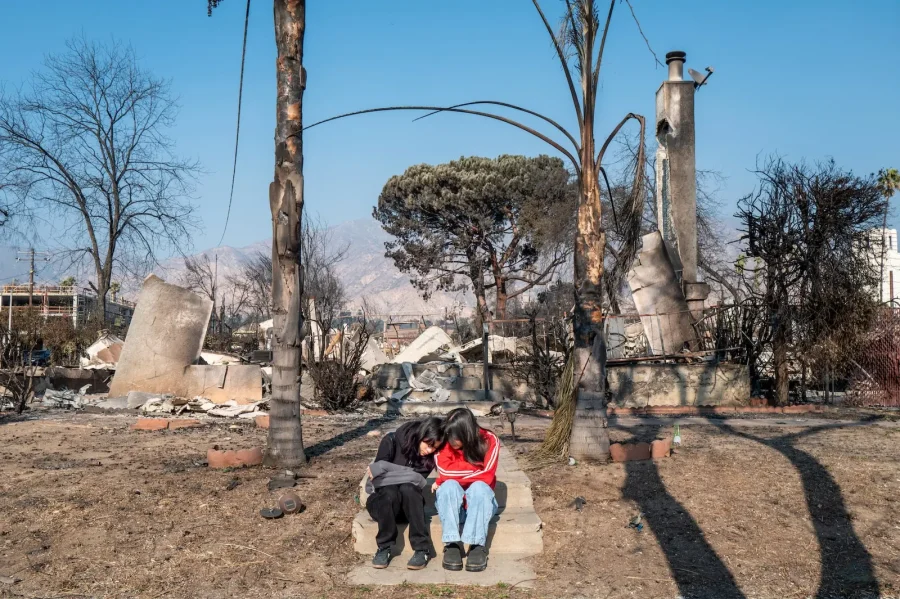
Less than a month before the Eaton Fire engulfed Altadena, longtime residents thought they’d finally resolved a bruising debate over the California suburb’s future.
For months they’d debated a Los Angeles County government plan poised to dramatically alter the character of the quiet community of just over 40,000 people, which sits at the edge of the Angeles National Forest. The plan limited construction in Altadena’s fire-prone foothills and simultaneously increased buildable density in its commercial corridors, allowing for hundreds of new housing units in the flat downtown area. It promised to both relieve the region’s critical housing shortage and also reduce wildfire risk accelerated by climate change.
In prickly public meetings and press statements, prominent residents staked out opposing positions. One side was represented by Michael Bicay, a retired NASA scientist who has for decades opposed construction in the Altadena hills on ecological grounds. When county officials arrived with their plan to add population density in Altadena, Bicay was in the middle of a campaign to stop a proposed prep school sports complex in the hills. He used the rezoning as an occasion to push for limits on future development on the community’s wildland edges.
Simultaneously, however, he recognized that Altadena had a role to play in mitigating L.A.’s sky-high housing prices — the county faces a shortage of about half a million affordable homes — which could be achieved by building more apartments along Altadena’s commercial corridors, many blocks away from the tinderbox in the hills.
On the other side of the debate was another longtime resident, Alan Zorthian, who owns a 50-acre artists’ colony in the foothills. Zorthian’s father Jirayr, a famous bohemian artist who hosted parties for luminaries like Bob Dylan and Andy Warhol, built the colony into a local curiosity and tourist attraction in the decades before his death in 2004, constructing idiosyncratic homes and sheds out of colored stone and scrap metal.
Faced with the prospect of a downzoning in the hills, the younger Zorthian and other nearby landowners fought back against what they called “regulatory taking” that could devalue their property by limiting possibilities for future development. At the same time, though, the landowners argued that new apartments in the commercial areas would mar Altadena’s historic character. The community was home to Queen Anne-style mansions like the famed Andrew McNally House as well as several exemplars of mid-century modernist architecture.
After months of debate, Bicay’s side won. In December, the county voted the plan forward, signaling a retreat from Altadena’s foothills and a commitment to development in its more urban core. But the timing could not have been worse: Just a few weeks later, the Eaton Fire tore through the foothills, incinerating more than 9,000 homes and ravaging not only the town’s recognized fire zones but its commercial flatlands as well. The blaze was one of the worst urban firestorms in United States history: Together with the Palisades Fire that struck the western part of Los Angeles County simultaneously, it has caused at least $95 billion in damages.
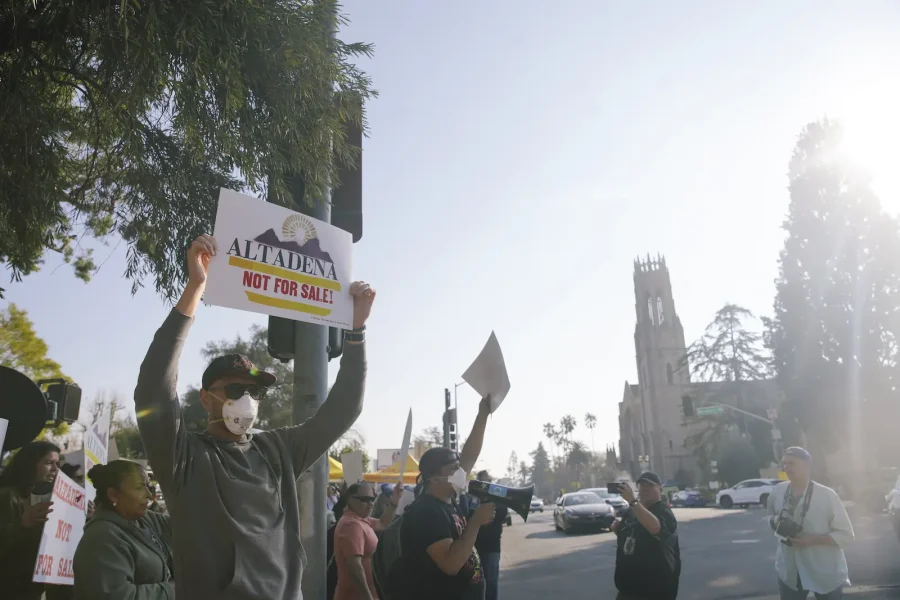
As Altadena begins to rebuild, residents and local officials are fearful that the once-affordable neighborhood will see rents spike and a hollowing out of its middle and working class. Real estate speculators have already descended on the area making lowball cash offers to fire victims, including Black families who lack the savings and insurance coverage to get back the homes they’ve had for generations. Some locals now worry that the county’s plan to open up Altadena for new construction, which was controversial even before the fire, could attract a rush of new development that will hasten this process of what some scholars call “climate gentrification.”
To thread this needle, local officials will have to look beyond the traditional housing debate in the United States. Most development debates in Los Angeles and other big cities pit NIMBY (“Not In My Backyard”) residents who oppose the disruption of new construction against YIMBY (“Yes In My Backyard”) advocates who want to bring down housing costs by allowing the construction of as many new housing units as possible. Altadena’s divide is not so simple: Both the Bicay and Zorthian factions are simultaneously for and against new development in the town — they just have opposite views on where and how it should happen.
Sudden disasters fueled by climate change only complicate matters further. Altadena must now balance a need to shift its population away from its wildland edges, state and county policies pushing it to add housing capacity overall, and the demands of residents who want to return to their homes — homes that have burned down once and may well burn again in the future.
“We’re talking out of both sides of our mouth right now,” said Bicay. “I think it’s OK to [say] that we’re going to have a lower density in Altadena in the future. But the county, driven by the state, is allowing people to build. So there are going to be some tough decisions.”
The county’s zoning revision in Altadena was part of a broader effort to promote new housing development and reduce hazard risk. (About 15 percent of the county’s land area is classified as vulnerable to wildfire.) Los Angeles County controls 2,600 square miles of land in the region — everything that isn’t part of an incorporated city like Pasadena, Burbank, or the city of L.A. itself. This patchwork unincorporated territory is home to around a million people and includes dense neighborhoods near the Pacific Ocean as well as huge swaths of undeveloped mountain range.
As county planners confront both a housing crisis and a climate crisis, they are facing a difficult paradox. California requires them to enable the construction of thousands of new homes under a decades-old planning law, but they can’t let people build in areas prone to fire or flooding, or in protected nature areas. The housing demand in the region is so great, and the risk of disaster so widespread, that the county has no choice but to loosen zoning rules in safe areas in order to comply with the law — a move that in the United States nearly always triggers protests and pushback from residents opposed to growth in their own neighborhoods.
In the summer of 2023, county officials announced that they would rework Altadena’s decades-old zoning restrictions, which only allowed for single-family homes and a handful of multi-story buildings, to further this housing mandate. After a series of meetings and hearings, none of which drew much attention, planners unveiled a two-pronged proposal. First, the plan would upzone to allow new housing in Altadena’s commercial corridors like Lincoln Avenue, a semi-blighted west end corridor home to little more than a few churches and Mexican restaurants. Second, the proposal would limit development in the fire-prone foothills, where subdivisions have crept up steep slopes alongside forest preserves and hiking trails.
The plan also included a light-touch version of what climate experts often call “managed retreat,” or the government-sponsored relocation away from areas vulnerable to disaster. Most places pursue managed retreat only once it’s too late, for example by buying out homes that flood repeatedly, but the county was hoping to reduce risk over the long run by nudging investment away from the hills and preserving undeveloped space.
At first, the community was warm to the idea of new housing on Altadena’s main streets, according to Amy Bodek, the planning director for Los Angeles County.
“Altadena is very accepting of density in appropriate locations, and is very accepting of new residential units,” she said, describing the community as more amenable to growth than other parts of Los Angeles where the county has worked. “That was a really big benefit to working with that community.”
But that may have only been true of the small subset of engaged residents who bothered to chime in on the zoning plan. A typical Altadena town council election draws a few hundred voters at most — hardly surprising in an unincorporated area that most people see as just another part of sprawling Los Angeles — and just a couple dozen people showed up to the county’s “visioning workshops” about rezoning in the summer of 2023. Bicay pushed other local preservation organizations to support the plan, and that was enough to get it to the final stages.
Only in the last months of 2024 did a few outspoken residents start to gin up opposition to the plan, saying the county was devaluing their property by depriving them of the right to build on it. Zorthian joined together with a few other large landowners who had contemplated new construction and a few business owners on commercial corridors who opposed new affordable housing, fearing it might worsen traffic and bring in low-income residents.
“We found out what the plan was doing to the handful of us left who still have larger property, and we don’t want people telling us what to do,” said Zorthian.
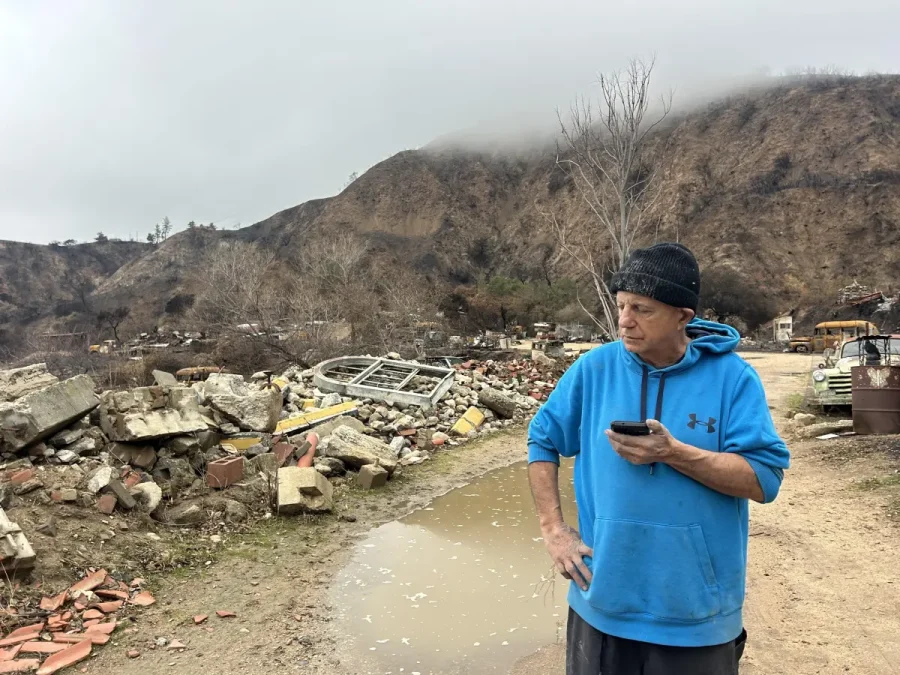
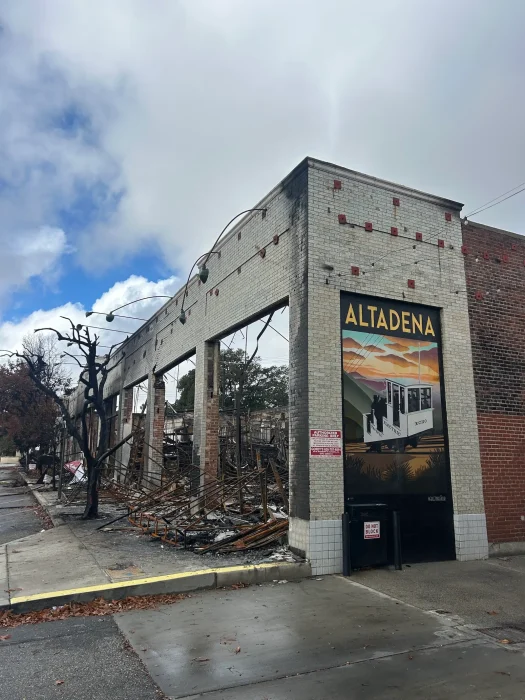
The Eaton Fire changed everything. Tearing west through the San Gabriel Mountains toward Altadena, it burned almost the entirety of the Zorthian ranch, including several homes in the artists’ colony and much of Jirayr Zorthian’s remaining artworks. Embers from the fire then spiraled down into the denser flatlands and burned thousands of homes, including all but a few on Bicay’s cul-de-sac block, which sits right at the base of the hills. (The zoning on his own block has not changed, but the surrounding areas have been downzoned.) The blaze then continued west and destroyed a patchwork of homes and businesses along Lincoln Avenue, turning the northern stretches of the corridor into a moonscape.
The question now, in light of the fire, is whether the county’s preexisting plan to bring fire-conscious growth to Altadena is the right path out of this devastation, or whether a surge of new development will hasten gentrification and displacement. The county plan proposed to build new apartments on commercial corridors and direct investment toward the city’s west side, but planners had assumed that these changes would happen over years or even decades. Now, as burned-out residents tangle with real estate speculators in every corner of the town, there’s a chance that this shift could happen in a matter of a year or two. Developers could take advantage of the new zoning to buy up fire victims’ damaged homes and develop large apartment complexes allowed under the new paradigm.
Some locals who supported the plan are now wary of the upzoning effort. The longtime manager of Mota’s Mexican Restaurant on Lincoln Avenue, Lupe, said she worried that a big developer could buy up multiple lots and build expensive new housing that the former residents of those lots couldn’t afford. (In an interview with Grist, Lupe only provided her first name.) Her own house suffered smoke damage in the fire, and she has been living there while waiting on a contractor to fix it.
“[The county plan] is a good idea, but only if they do it the right way,” she said. “But if people don’t have insurance, and they come and want to take your property to do whatever they want to do, I don’t like that way.”
“Gentrification had already started, and I would think fire would speed it up,” said Veronica Jones, president of the Altadena Historical Society and former president of the Altadena town council who represents a census tract on the more disinvested west side of the town, home to many. She pointed to the fact that wine bars and yoga studios had opened in recent years, a change that residents referred to as the “Pasadena-fication” of Altadena.
“I think it’s a good idea to put more housing, but now it’s going to have to be rethought,” she added.
Bodek, the county planner, said she understood the fear of gentrification and vowed that the county will work to prevent developers from snapping up victims’ homes or buying out longtime businesses.
But there’s also the matter of fire risk. The Altadena plan discouraged development in the foothills because the state of California classifies them as extremely vulnerable to wildfire, but the Eaton Fire burned almost the entirety of the town, reaching almost 2 miles south of the fire zone and destroying homes that had never been seen as risky.
That means it’s possible the county’s original plan didn’t go far enough. Bicay, who was a lead advocate for the plan, now says it might be necessary to reduce the density of Altadena’s flatlands by between 5 and 10 percent, which would require leaving many burned-out lots empty without rebuilding them. Nic Arnzen, another member of the town council, says the town might consider leaving vacant some lots that residents don’t want to rebuild, carving out a larger zone of open space near the hills. An analysis from the climate risks firm First Street Foundation, which home listers like Zillow use to inform prospective buyers of property hazards, shows a much broader area of fire danger than that shown on maps from Cal Fire, the state firefighting agency.
Zorthian, who opposed the plan, acknowledges that the fire risk in the hills was greater than he had assumed. But he now sees the county plan as hypocritical: If almost the whole town burned down, why should he and a few other large landowners be the only ones with new limits on what they can build?
“It’s going to change the character of Altadena,” he said. “You’re going to have behemoth apartments like you have all over Los Angeles.” For his part, he’s trying not to let the new plan affect him. Once he’s finished cleaning up the scarred ranch, he plans to forge ahead with his vision to erect a museum in honor of his father, and he’s hoping to reacquire some of his father’s works to replace the ones lost in the fire.
Except for supporters like Bicay and opponents like Zorthian, not many Altadena residents engaged in the debate around the county’s original plan. Now, though, a larger agglomeration of residents and community groups have emerged to help steer the town’s rebuild. There are nonprofit associations like Altadena Strong and Rebuild Altadena, existing preservation groups like Altadena Heritage, plus a new foundation run by real estate magnate Rick Caruso and an informal recovery council that Bicay serves on. The county will also convene its own commission.
Other fire-struck areas in the Golden State have dealt with similar questions in recent years, with mixed results. The northern California mountain town of Paradise, for instance, saw a furious debate over where and how to rebuild after the deadly 2018 Camp Fire. It ended up imposing a strict barrier of undeveloped land that now functions as a firebreak. In Santa Rosa, meanwhile, the neighborhood of Coffey Park built back on its original footprint after the 2017 Tubbs Fire, with almost all residents returning to single-family homes that are still vulnerable to wildfire.
Nicole Lambrou, an Altadena resident as well as an architect and urban planner at California State Polytechnic University, Pomona, said that local governments vary in their commitment to changing the built environment when they rebuild after a fire.
In many cases, she said, governments bow to political pressure from fire victims, scrap planned reforms and try to get everyone back in their homes as soon as possible. But such a rushed recovery is often bad for the long-term resilience of a community in the wildland-urban interface. Residents end up rebuilding the same flammable homes in the same vulnerable areas, ensuring future losses and more displacement.
“A lot of times the measure of success is, ‘is it a one-to-one rebuild?’ That emphasis on building back what was there as soon as possible makes bypassing existing plans much easier,” she said. On the other hand, she added, the scale of loss in a place like Altadena might force the community and its elected officials to reconsider the assumptions behind their previous commitment to more density — after all, the effort to build more homes is premised on the belief that Altadena is a safe place to live.
“The plan was put in place with a certain baseline of a built environment that is no longer there,” she said.
Bodek, the county planner, says she thinks that building more density in Altadena’s downtown core is still the right move. As she sees it, to declare Altadena too risky would be to write off huge sections of California’s exurban sprawl, much of which sits well within range of flying embers from mountain fires.
“I’m looking at this as a once in a lifetime, catastrophic event,” she said. “If this is going to be the new norm, then everyone, not just Altadena, but everyone in the entire state, is going to have to reassess their land use policies. That could mean the demise of, you know, 200 years of the way of life in California. And I’m not going to go there.”
We have all come to wildfire with a different story. Here is an unprompted contribution from a reader, with a rich history in fire and life. As part of an occasional Wildfire Today series, and when we could do with a change of pace or a weekend read, here is the story of Ron Guy Jr, currently a wildland fire training coordinator at Tall Timbers.
The first time I fought fire, the world felt alive in a way I’d never experienced before—crackling flames, smoke curling against the spring sky, and the raw smell of scorched earth. Colorado, 21 years old, fresh-faced and wide-eyed, I’d just joined a volunteer fire department, still trying to make sense of the tools in my hands and the heavy bunker gear on my back. The call had come in about an agricultural burn gone sideways—out-of-control flames racing through dry grass and brush, threatening to jump fences into neighboring fields.
When they handed me the pulaski, it didn’t feel awkward or oversized—it felt like destiny. The weight of it in my hands hummed with purpose, as if it had been forged for this very moment. It wasn’t just a tool; it was an extension of me, a weapon against chaos, the hammer of Thor in a rookie’s grip.
Our crew moved quickly, scattered across a smoldering landscape littered with blackened cow patties. My job? Mop up. The seasoned guys smirked as they pointed me toward the smoking remnants of manure, a rookie’s rite of passage, but I didn’t flinch. Every swing of the pulaski, every shove of the shovel, felt like I was answering some ancient call—taming the fire, reclaiming the land.
The work was gritty, humbling, and unrelenting. Every step kicked up ash and dust, the heat biting at my face despite the cool spring air. But somewhere in that chaos, I found clarity. The fire had a rhythm, and so did we, moving in sync as we cut lines, doused embers, and worked to bring order back to the land.
That first fire wasn’t heroic or glamorous—it was dirty, exhausting, and full of cow patties—but it sparked something in me. I didn’t know it then, but those long hours in the smoke were the start of a journey, one that would carve into my soul a lifelong addiction to the wild, unpredictable beauty of fire and the camaraderie forged in its wake. And that was just the beginning.
Discovering the mountains
I was born and raised in Ohio, where the forests were my playground and the seasons marked the rhythm of life. Growing up in the ’90s, my brothers and I spent every free moment outside, running wild through the woods behind our house. We climbed trees like squirrels, built forts out of fallen branches, and turned creeks into battlegrounds for stick-sword wars. When the leaves fell and the air turned crisp, we swapped games for hunting—following in the footsteps of our father, uncles, and grandfather.
Those woods were where I learned to shoot a gun, track a whitetail, and sit still long enough to let the forest come alive around me. We’d tromp through the underbrush in borrowed camo, carrying shotguns that felt too big for us, chasing deer in the fall and ducks in the winter. It wasn’t just about the hunt; it was about being part of something older than ourselves—a tradition, a rite of passage, a bond forged in cold mornings and quiet moments in tree stands.
I never wanted to be indoors. The hum of fluorescent lights and the artificial glow of TV screens couldn’t compete with the smell of wet leaves, the crack of a twig underfoot, or the thrill of spotting a set of antlers moving through the brush. The woods were my classroom, the wild my teacher, and every scrape and bruise a badge of honor. Those early days shaped me, carving into my soul a deep-rooted need for adventure and the outdoors—a spark that’s never gone out.
By my teenage years, the woods of Ohio started to feel small. My body had grown, but so had my hunger for something bigger. I started trekking into the Appalachians, flipping through the pages of a storybook written in stone and sky. Rock climbing became my new drug of choice—the exhilaration of dangling hundreds of feet off a cliff edge with nothing but calloused fingers and a thin rope to keep me alive. Backpacking was my therapy, days and nights spent wandering the Appalachian Trail, lost in my thoughts and the rhythmic crunch of boots on dirt. One winter, I climbed Mount Washington in a full-on whiteout, a white hell of wind and snow so fierce it could strip the sanity from your soul. And I loved every second of it.
But the Appalachians, wild as they were, couldn’t hold me forever. At 21, I left Ohio in search of something grander. The Rocky Mountains called to me, their jagged peaks slicing into the clouds like the spine of some ancient beast. Colorado became my new playground. I climbed 14ers, those mythical mountains towering over 14,000 feet. I shredded powder on snowboards and skis at resorts like Vail, where the snow was champagne-soft, and the air was as thin as a razor’s edge. Mountain biking through wildflower-laden trails and scaling vertical rock faces became my daily rituals. Life was raw, thrilling, and utterly intoxicating.
Fighting fire
I started out as a volunteer firefighter with a small-town Volunteer Fire Department, the kind of place where the firehouse doors were always open, and every call was answered by someone you knew. The pager on my hip became an extension of me, its shrill tone snapping me to attention at all hours. At first, it was a blur of training courses—swift water rescue, technical rope rescue, EMT-B. I learned to tie knots that could hold the weight of a truck and how to keep calm when someone’s life depended on it. We rappelled off bridges, waded chest-deep in icy rivers, and even practiced crevasse rescue, though I figured those skills were more suited to the Rockies than the Midwest. Every class felt like a new key unlocking a door to a world I’d barely begun to understand.
But for all the adrenaline and camaraderie, something was missing. Most of our calls were medical runs or the occasional car fire—not the roaring infernos I’d imagined when I first pulled on my turnout gear. One day, between drills, I sat down with my captain, a grizzled veteran who’d seen more fire than I could fathom. He’d spent years as a hotshot in California, battling blazes in places where the sky turned orange and the air itself felt combustible.
I asked him what it was like, and his eyes lit up as he described the rush of digging line, the roar of a crown fire racing uphill, and the unbreakable bonds forged on the fireline. “If you really want to fight fire,” he told me, “not just run medical calls, you’ve got to go west. You’ve got to be a wildland firefighter.”
Those words stuck with me. Fighting fire wasn’t just a job—it was a calling, a test of grit and endurance against something primal and unforgiving. I didn’t know it then, but that conversation was the spark. The next step was clear. If I wanted to trade medical bags for a pulaski and sirens for the roar of wildfire, I’d have to chase the flames to where they burned hottest.
When I decided to go west, I didn’t stop at the Pacific Coast—I went as far as I could go, all the way to Alaska. The land of endless summer daylight and fire seasons that stretched across millions of acres. I joined the Northstar Fire Crew, a feeder crew for the Midnight Suns and Chena Hotshots, the two elite Interagency Hotshot Crews in the state. The Northstars wasn’t just a fire crew—it was bootcamp and Survivor rolled into one. They weren’t just training firefighters; they were breeding hotshots, testing us in ways I never imagined, weeding out the weak and hardening the strong.
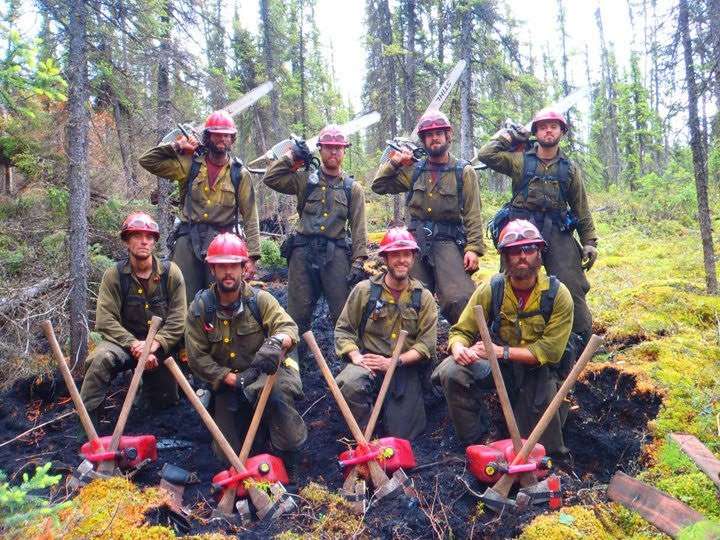
Ron Guy Jr, Tall Timbers, bottom right, with saw team Midnight Suns Interagency Hotshot Crew in 2011.
Every day was a grind. We worked long hours cutting line, hauling gear, and hiking through some of the most unforgiving terrain I’d ever seen. Alaska doesn’t care about your comfort—it’s a place that demands respect, where the fire is relentless, the mosquitoes are legendary, and the wilderness stretches farther than the eye can see. If the grueling pace wasn’t enough, we had weekly reviews out on the fireline. The leadership would call us together, go through each person’s performance, and then someone would be sent packing—flown out by helicopter from the middle of nowhere. It didn’t matter how remote we were or how hard they’d worked. If you didn’t meet hotshot standards, you were gone.
Those reviews kept us sharp. Every swing of the tool, every cut, every step—it all mattered. I pushed myself harder than I ever had, not just to stay, but to prove I belonged. By the end of that first wildfire season, I’d made it through. I wasn’t just surviving anymore; I was thriving. That fall, I earned my spot on the Midnight Suns, stepping into the ranks of some of the toughest firefighters in the nation.
That’s where I learned what it truly meant to be a hotshot, fighting fire in the most unforgiving conditions imaginable. Long hikes through tundra, carrying 50-pound packs across bogs that threatened to swallow you whole, and cutting line for hours under the midnight sun. Alaska wasn’t just a proving ground—it was a crucible, and it forged me into something stronger than I ever thought I could be.
I stayed on hand crews my entire career—ground pounder for life. After my time on the Midnight Suns, I shifted to a Wildland Fire Module, where we specialized in fire use and backcountry operations. It was a different pace, but the work still demanded grit and precision, lighting prescribed burns in remote areas or monitoring fires that were too rugged or dangerous for traditional suppression crews. From there, I moved to a prescribed fire crew, trading the chaos of wildfire for the controlled intensity of setting fires to restore landscapes. Every burn felt like a chess game against nature, balancing fire behavior, weather, and the land’s needs.
Eventually, I found myself on a Type 2 IA crew—back to the grind of initial attack, where you live and die by your speed, teamwork, and ability to adapt. Helicopter bucket drops or sawyers ahead of us, boots on the ground, digging line and holding fire in some of the toughest conditions imaginable. I loved it. Whether it was holding the torch, swinging a pulaski, or scouting the next line, I was exactly where I was meant to be—on the ground, in the thick of it, shoulder to shoulder with my crew. A frontline leader. A squad boss. That was the heartbeat of my career, and I wouldn’t have traded it for anything. For 15 years, I chased flames across the country, from the deserts of Arizona to the tundra of Alaska. The life on a handcrew is not for the faint of heart—long days, short nights, and the kind of bone-deep exhaustion that most people never experience. We slept under the stars more often than not, the ground our bed and the sky our blanket. But there’s something pure about that kind of life, something that strips away all the noise and leaves you with nothing but the essentials: grit, sweat, and a fierce love for the land you’re fighting to protect.
With a crew in California in 2015.
Eventually, I found my way to Tall Timbers Research Station in Florida, where I now serve as a training coordinator, sharing everything I’ve learned about fire with the next generation of practitioners. My focus has shifted from fighting fire to teaching about it—leading courses, mentoring future firefighters, and instructing practitioners on the art and science of prescribed burning.
Fire is a tool. When used with intention, it shapes ecosystems, restores balance, and breathes life into landscapes that depend on its renewal. It’s a delicate craft—a kind of alchemy that transforms destruction into growth—and it’s one I’ve come to respect deeply. Now, my role isn’t just to ignite the land but to ignite the minds of those who will carry this work forward, equipping them with the knowledge and skills to wield fire as a force for good.
Instructing in Alaska in 2019.
Finding balance
When I stand in front of a class of future fire practitioners, I tell them that there are so many ways into fire—it doesn’t have to be the federal route, and it doesn’t have to mean boots on the ground. If they do choose the federal path, I remind them that they don’t need to chase the hotshot dream if it’s not what drives them. Yes, hotshots see the most intense fire activity, and yes, they do things most people can’t even imagine, but that life isn’t for everyone. Hotshots are built different. Hand crew personnel are built different. Wildland firefighters, as a whole, are built different than structure firefighters. The key is to find what fuels your fire—whether it’s running saws on a crew, lighting drip torches, flying drones, or coordinating behind the scenes.
Students tell me it’s hard to find work-life balance, and I’m honest with them—it is. On a crew, fire becomes your life. You eat, sleep, and breathe it for months on end. That’s the reality of this work, and it’s not for everyone. If you want a life outside of fire, you need to pick a role that allows for balance. There are so many ways to fight fire while carving out a career that won’t burn you out. The future of fire doesn’t just need people who can dig line and carry heavy packs—it needs thinkers, planners, and leaders who can sustain the mission for decades.
Stepping away from being a primary firefighter wasn’t an easy decision, but it was the right one. My daughters mean more to me than chasing spot fires outside the line ever could. Fire season is relentless—long days, weeks away, missing birthdays and milestones. I didn’t want to miss any more. Being present for my family became my priority, and I knew I had to find a way to balance what I love with who I love.
Now, as a training coordinator, I can still contribute to the fire community that shaped me. I can pass on the knowledge and experience I’ve gained to those stepping into the field, helping them navigate their own journeys. I still feel the pulse of fire in my veins, but I’ve found a way to honor it while keeping my family at the center of my life. I’ve traded the frontlines for a role that lets me guide, teach, and support—and I wouldn’t have it any other way.It’s been a journey of grit, growth, and purpose, marked by moments of intensity, camaraderie, and transformation. Fire has taught me patience, resilience, and humility—qualities I now pass on to those stepping into this world for the first time.
As I look back, I see the threads that tie it all together: the lessons learned in the woods with my brothers, the early calls with the VFD, the relentless grind of hotshot life, and the quieter, deliberate craft of prescribed fire. Each step prepared me for this role, where my job isn’t just to teach but to inspire, to show students the many paths they can take and help them find the one that fits their fire.
The future of fire lies in their hands now, and I see the spark in their eyes. They are eager, determined, and ready to carry the weight of this responsibility. I tell them that fire is more than a job—it’s a calling, a lifelong commitment to something bigger than yourself. And while the work is hard and often unforgiving, it’s also deeply rewarding. If they can find their place in it, whether on the ground or in the air, behind the wheel or behind a desk, they’ll discover what I did: fire doesn’t just consume—it transforms.
This isn’t the end of my story—it’s just a new chapter. And as I step back to guide others, I know that the flame will burn brighter and stronger in their hands, carrying forward the work that began long before me and will continue long after I’m gone.