Forest Service to sign 35 air tankers on Call When Needed agreements

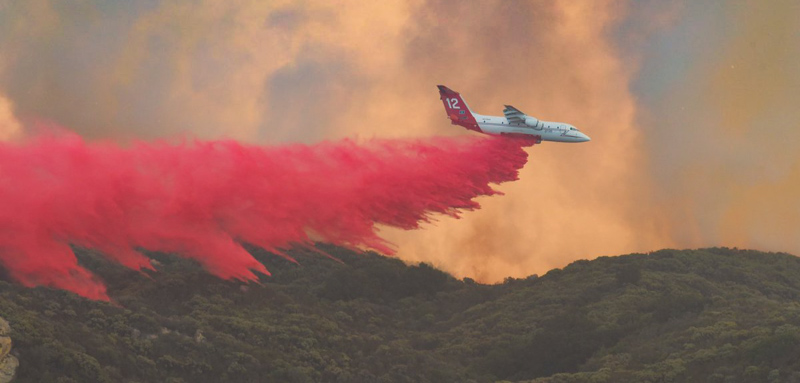
air tanker dropping Cave Fire Santa Barbara California
Tanker 12, a BAe-146, drops on the Cave Fire Nov. 26, 2019. Photo by Mike Eliason for Santa Barbara County FD.

The U.S. Forest Service will be signing Call When Needed (CWN) agreements for air tanker services with six companies for a total of 35 aircraft. The agency made it official on December 5, exactly 555 days after the process began May 30, 2018. If that sounds familiar, it took the same amount of time to award the Next-Generation air tanker contracts,  Version 1.0, in 2013. The number “35” is misleading because most if not all of the 13 large air tankers on exclusive use (EU) contracts also have CWN contracts.

The number of aircraft on this new CWN Basic Ordering Agreement can be deceiving, since it includes in some cases air tankers that already have Exclusive Use (EU) contracts, plus of course air tankers that have never been on a USFS contract. Vendors with aircraft currently on the EU contract would also want them on the CWN agreement in case there is a need for tankers outside the Mandatory Availability Period (MAP) specified in the EU contract.

This year there have been 13 air tankers on EU contracts and 8 on CWN agreements. One vendor told me that the USFS personnel said they could submit a tanker that is not built yet as long as it is fully certified by June, 2020. On the other hand, a person from a tanker company told me they were  required to fly their ships to Boise to be inspected, even the ones that were actively working on an EU contract, at a cost of tens of thousands of dollars.

Lessons  were learned after the first Next-Generation contracting process in 2013 gave EU contracts to some planes that never became reality. One of the earlier CWN agreements had many aircraft listed that only appeared in the dreams of the potential vendors.

We will post a list of the 35 individual aircraft on this new agreement when it is available, but we know they represent six companies:

  • 10 Tanker Air Carrier, Albuquerque, NM
  • Aero Air, Hillsboro, OR
  • Aero Flite, Spokane, WA
  • Coulson Aviation USA, Portland, OR
  • Global SuperTanker Services, Colorado Springs, CO
  • Neptune Aviation Services, Missoula, MT

This is the first CWN agreement that includes both large and very large air tankers (VLATs). When the process began in 2018 it was only for large, and excluded the DC-10 and 747 operated by 10 Tanker and Global SuperTanker. But after extensive negotiations between vendors and the government, and at least one protest, VLATs were finally allowed to participate. The original solicitation was amended at least 10 times. Some of the people presently running the USFS air tanker program think VLATs can only be effective on large fires, and not initial attack. Others might say if a section of a fire, say, 1,000 linear feet, is going to be knocked down or slowed by an air drop, from a scientific point of view what difference does it make if that 1,000-foot section of fire is on initial attack or a larger fire? And after that drop it can circle around and make another one. And another one after that, etc., without additional ferry and reload time between drops.

Quick, aggressive initial attack with overwhelming force on a fire from both the ground and the air can prevent a small fire from becoming a megafire.

Even though the final decision by the USFS of which aircraft would be part of the new CWN agreement was made December 5, the five companies that we were able to immediately contact today were not aware they were receiving the awards. One of them told me later that after we had talked he contacted the USFS who told him official letters would be sent out later this week.

The CWN Basic Ordering Agreement is different from the EU contracts. There is no guarantee that an aircraft on CWN will ever earn a dime. One of the vendors said that even though the application process requires the submission of pricing for daily and hourly rates, those are not etched in stone and may be renegotiated if and when it is activated. In contrast, an aircraft on one of the 13 coveted EU contracts will almost certainly work at least during the agreed upon MAP, earning the promised daily and hourly rates. However most federal contracts contain a clause allowing termination for convenience or default. Termination for convenience allows the federal government to terminate all or part of a contract for its convenience, while termination for default means the government doesn’t think you’re performing adequately.

Below is the list of large and very large air tankers that have been on EU contracts and CWN agreements in August.
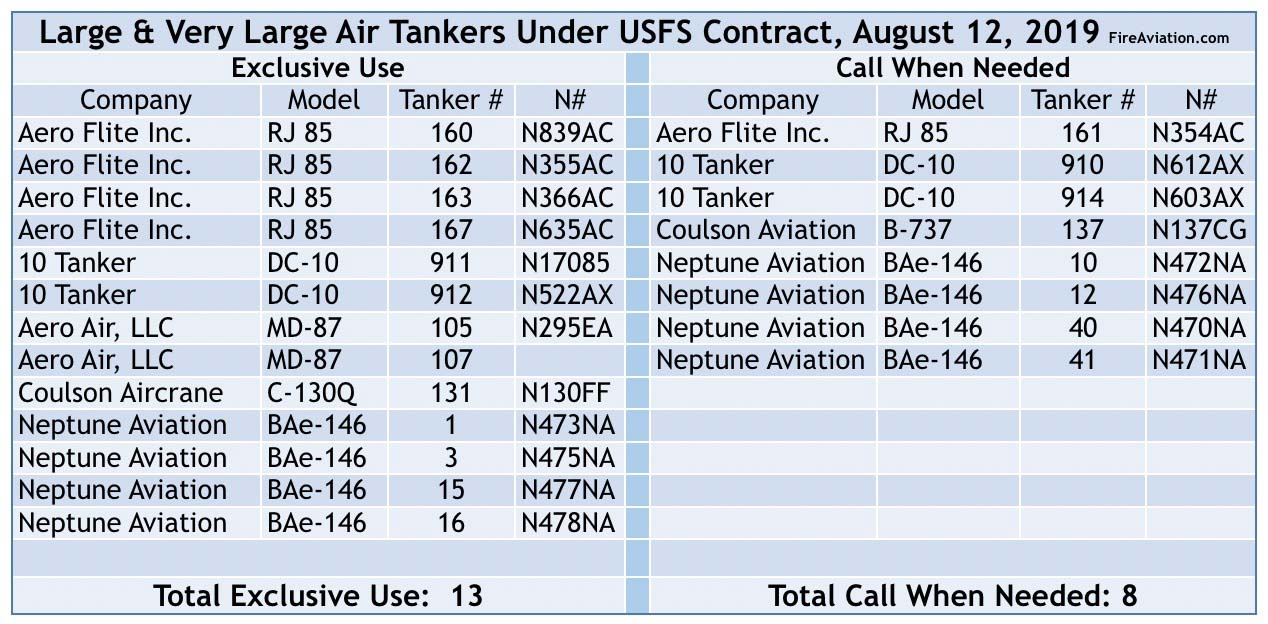
Air Tanker List
Air tankers under U.S. Forest Service Contract, August 12, 2019. Source: USFS.

Forest Service contracts for aircraft onboarding analysis

solicitation air tanker support

When we saw the solicitation above and read the detailed description, we thought the U.S. Forest Service was planning to add more air tankers to their fleet or resurrect the Coast Guard HC-130H program, but that turned out to not be the case.

The solicitation seeks to hire seven contract personnel, with most of them being required to work out of Elizabeth City, North Carolina. It closed April 10 after being open for only about two weeks.

Their tasks will include:

  • Program and project management support;
  • Development of operations and management strategy;
  • Acquisition program support for aviation support contracts;
  • Technology insertion for aviation assets and facilities;
  • Analysis and implementation of supportability services for airframe, engine, and avionics.
  • Economic analysis for technology insertion and transformation efforts;
  • Safety program support for aviation and ground operations.

In February the Administration announced their desire to abandon the acquisition and conversion of seven Coast Guard HC-130H’s into firefighting air tankers after spending tens of millions on the project. They intend to operate one this year that is partially complete, borrowing a slip-in MAFFS retardant system.

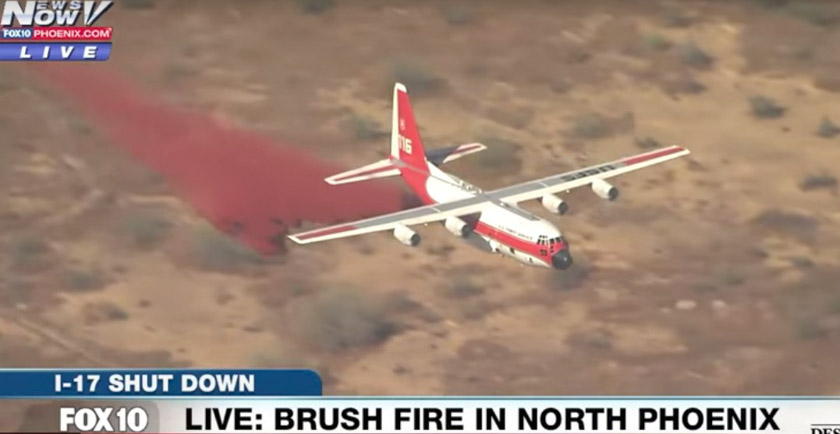
Air Tanker 116 HC-130H retardant
File photo of Air Tanker 116, an HC-130H, using a MAFFS unit to spray retardant on a fire near Phoenix, June 22, 2017. Fox 20 Phoenix.

We asked Forest Service Public Affairs Specialist Jennifer Jones for a plain text translation of the language in the solicitation:

This solicitation is for engineering services needed for the USDA Forest Service to have one HC-130H equipped with a Modular Airborne Fire Fighting System (MAFFS) available to fly wildfire suppressions this year (2018) as in 2015 and 2017. The current contract for these services expires May 31st.

Ms. Jones supplied an update on the future of the HC-130H air tanker program:

Section 1098(a) of the Fiscal Year 2014 National Defense Authorization Act (NDAA) required the transfer of seven HC-130H aircraft to the USDA Forest Service for use as Airtankers in wildfire suppression. Based on recent increased private sector investment in Next Generation Airtankers, the agency has determined that government-owned Airtankers are no longer necessary since private industry is capable of fulfilling the agency’s required Airtanker needs. As such, the President’s Fiscal Year 2019 budget notes that the USDA Forest Service will seek Congressional support to terminate the NDAA provisions pertaining to agency-owned HC-130H aircraft. Any changes or modifications to these provisions will require Congressional action.

So apparently this contract for seven people mostly working out of Elizabeth City, North Carolina, will be to support one aircraft. If, however, unlike Ms. Jones’ description, they could perform these services for the entire USFS Fire and Aviation Management aircraft fleet, including contracting, it could be a worthwhile investment.

We are reminded that in June, 2015, 522 days after the USFS HC-130H acquisition began, they came to a conclusion, according to a Briefing Paper. Here is a quote from the paper:

This is a new program for the Forest Service, one that we have never managed before (We don’t know what we don’t know).

Contract awarded to install retardant tanks in Forest Service HC-130H air tankers

This article first appeared on Fire Aviation.

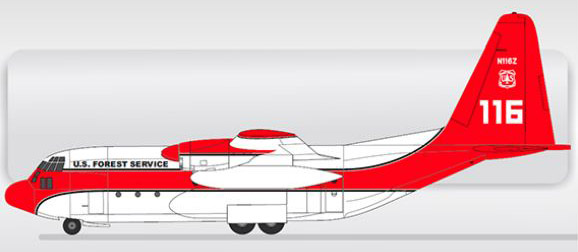
HC-130H paint design
This is the US Forest Service approved paint design that will be used on the seven HC-130H air tankers acquired from the Coast Guard.

After a solicitation process that dragged on for almost two years, the U.S. Air Force has awarded the contract to build and install retardant delivery systems for up to seven of the seven HC-130H aircraft that are being transferred from the Coast Guard to the U.S. Forest Service. 

The Coulson Group announced today that they received the contract. In one sense this is not unexpected because the company has installed and successfully operated two similar systems in C-130s — Tanker 131 and Tanker 132. In another sense, it is a surprise after the Government Accountability Office denied the company’s protest of the terms of the request for proposals in August of 2015.

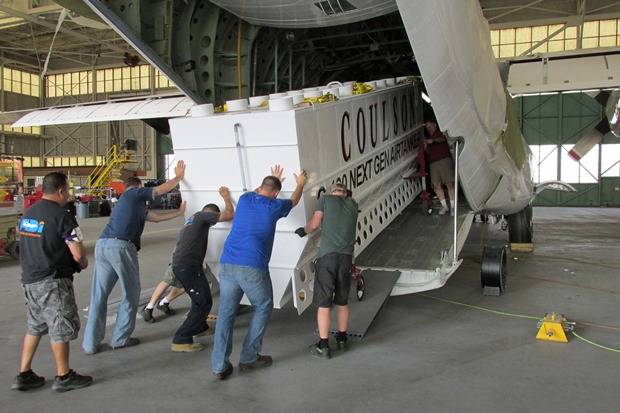
C-130 retardant tank unload
Coulson’s retardant tank being removed or installed in one of their air tankers, T-131, in 2013. Coulson photo.

“We are excited to have the opportunity to work with the United States Air Force to provide them with state of the art retardant aerial delivery systems (RADS) for their fleet of C-130s,” says Wayne Coulson, CEO and President of Coulson Aviation.

The 3,800-gallon retardant system will be gravity-based with retardant tanks that can be quickly removed, making it possible for the air tankers to also haul cargo or passengers.

One of the seven HC-130H aircraft began working out of McClellan Air Field near Sacramento last summer. Since it did not have a permanent retardant tank it borrowed one of the Forest Service’s eight Modular Airborne FireFighting Systems (MAFFS) that can be inserted into the cargo hold of a military C-130 to provide a surge capacity of air tankers during a time of heavy wildfire activity. The MAFFS pump the 3,000 gallons of retardant out of a pipe through the door using compressed air, rather than letting it drop out of the belly with the assistance of gravity as is done with conventional air tankers.

The Air Force is responsible for the retrofitting and performing the heavy maintenance that must be completed before the seven HC-130Hs are finally turned over to the USFS over the next three years. This contract is for the installation of one trial “kit”, one verification kit, and three production kits. There is an option for the installation of two additional production kits.

Coulson Aviation has 25 years of experience in aerial fire suppression and they operate both Type 1 helicopters and large fixed wing air tankers. Coulson is one of the few companies to hold multi-country aerial firefighting contracts, including Canada, the United States, and Australia.