
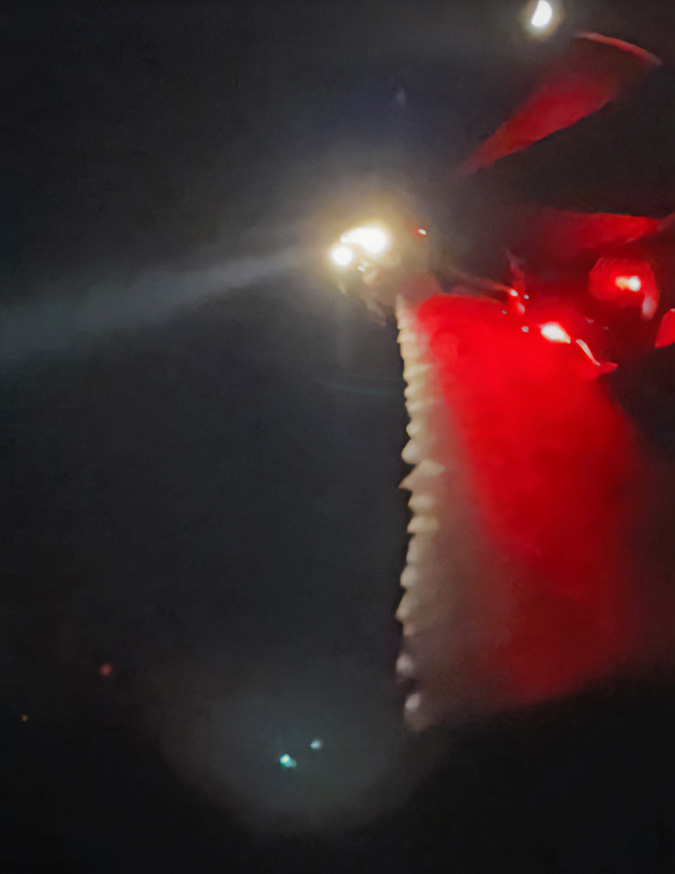
 CAL FIRE’s first night-flying helicopter mission was on the Electra Fire southeast of Jackson, CA July 6, 2022. Photo by CAL FIRE Battalion Chief Brian Ham.
Last night on the Electra Fire southeast of Jackson, California a California Department of Forestry and Fire Protection helicopter conducted the first ever night-flying mission for the agency.
It happened with one of CAL FIRE’s new S70i Firehawk helicopters, and was confirmed in a tweet today by @CAL_FIRE:
CAL FIRE’s S70i Fire Hawk helicopter completed the first ever night flying operation last night on the #ElectraFire in Amador County. Flying at night provides further air time & allows CAL FIRE to continue to set new heights in serving the communities of CA.
@CAFireScanner was one of the first to notice the activity at about 10 p.m. on July 6. He noted that radar tracking showed Copter 101 was making repeated trips to Lake Tabeaud, and that it was up twice for a total of about three to four hours.
#ElectraFire (Amador & Calaveras Co) – It would appear that Copter 101 from CAL FIRE is up for night time water drops – which would be a first for the agency’s new hawks? I’ve watched them on radar go back to Lake Tabeaud several times. pic.twitter.com/ITH919x7mK
— CA Fire Scanner (@CAFireScanner) July 7, 2022
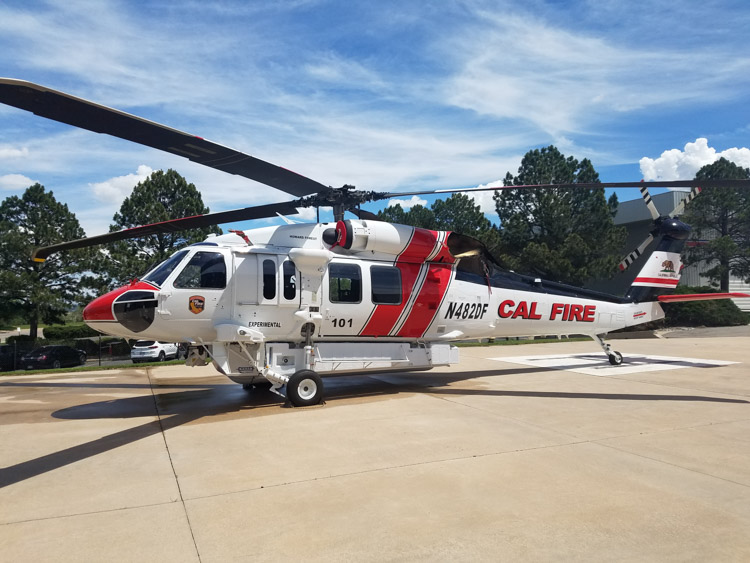 File photo of CAL FIRE Helicopter 101 after it went through flight tests at United Rotorcraft in Colorado. Its home base was slated to be Howard Forest in Mendocino County, California. Photo by James Wattenburger, June 30, 2021.
Since wildfire activity typically slows during the night, any suppression activity by ground or air-based equipment and personnel can pay larger dividends than comparable efforts in the afternoon when fires are burning hotter and faster with more resistance to control.
Los Angeles County Fire Department has been fighting fires at night with helicopters for decades, and the US Forest Service has dabbled in the practice off and on. Several other firefighting agencies in the state also have night-flying capabilities. The four helicopters in Southern California’s Quick Reaction Force are staffed 24 hours a day and travel with a mobile fire retardant base to enable the ships to drop water or retardant day and night.
In January we wrote, “California is already two-thirds of the way toward replacing CAL FIRE’s 12 Vietnam War-era Huey helicopters with new Sikorsky S70i Firehawks. Eight of the new ships are already in the state, but some may not have been officially accepted yet by the contracting officers. Four more are still being built by Sikorsky or outfitted for firefighting by a company in Colorado.”
CAL FIRE is progressive in their firefighting capabilities in some ways, but their aviation program has been very slow to evolve. In addition to sticking with their their limited capacity Hueys for years, their fixed wing fleet of air tankers still consists of S-2Ts that drop up to 1,200 gallons, while large air tankers under contract with the US Forest Service carry three to eight times the amount of retardant. By 2023 they may begin to see the first of the seven former Coast Guard HC-130H planes beginning to complete the 10-year conversion to air tankers, with a 3,000-gallon capacity.
